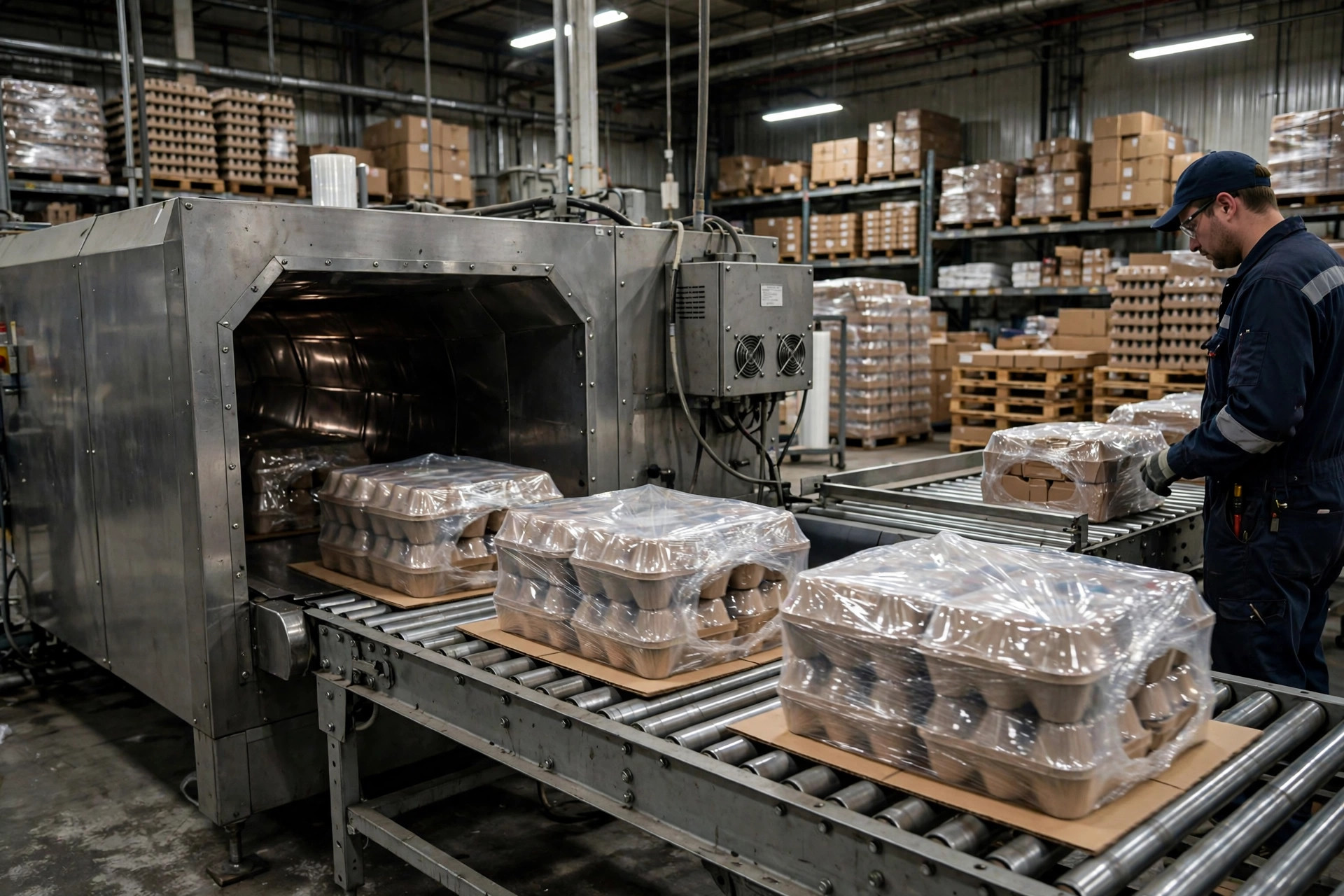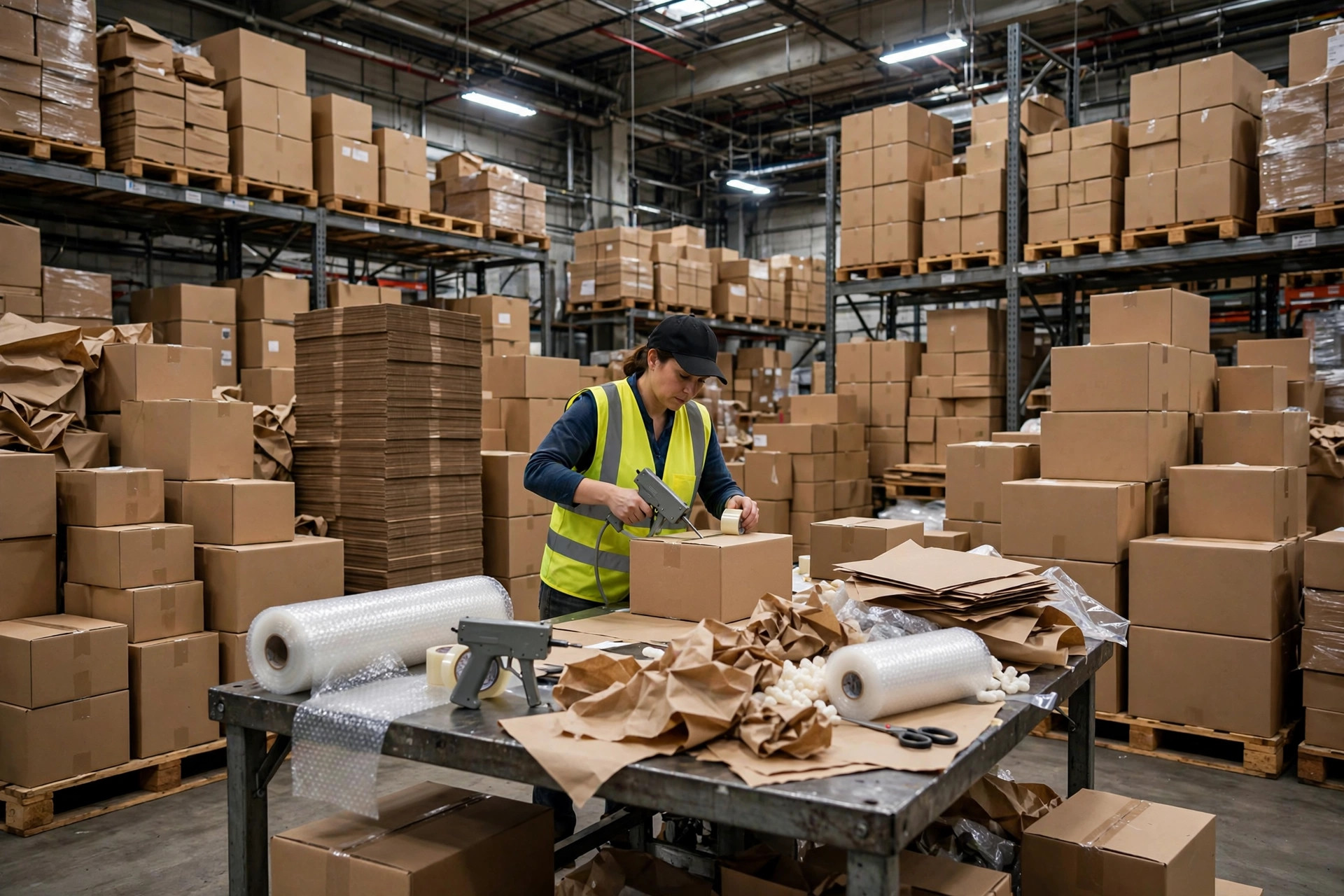
We small warehouses can't afford to burn money — but burning it in the wrong place costs even more. August 2025: we shipped auto parts to Texas, 30 kilos a box, strapped with the cheapest PP banding. At the customer's dock, 2 out of 5 boxes had snapped straps, parts scattered across the pallet. Rejected on the spot. Rework, reship, freight claims — one order cost us over ¥4,000. The boss (that's me) didn't sleep right for three days. What we saved on strapping wouldn't cover a fraction of it.
That's when I finally got it: packing strap — PP, PET, steel — is not "more expensive is better." It's "the right strap for the right freight." Mismatch it and the cheap one snaps, the expensive one crushes. Both are accidents.
The aftermath stung worse than the claim: after the rejection we sent two people on a 6-hour drive to the site, picking up scattered parts one by one, recounting, repacking — another ¥1,500 in labor and fuel. The customer's line waited on those parts and nearly blacklisted us. Every small warehouse knows: lose a big customer and they're gone. The damage money is trivial; the lost customer is the real bill.
PP, PET, Steel: Three Brothers, Three Tempers
Meet the family.
PP (polypropylene) is the youngest: cheapest of the bunch, a 10-kilo coil costs pocket change, comes in cheerful colors, feather-light. A 15 mm width breaks around 100–150 kilos. Pros: cheap strap, cheap machines — a semi-auto strapping machine runs a couple thousand yuan. Cons: poor elasticity, hates sunlight, goes brittle after half a year outdoors. Good for cartons under 15 kilos: apparel, e-commerce smalls, daily goods.
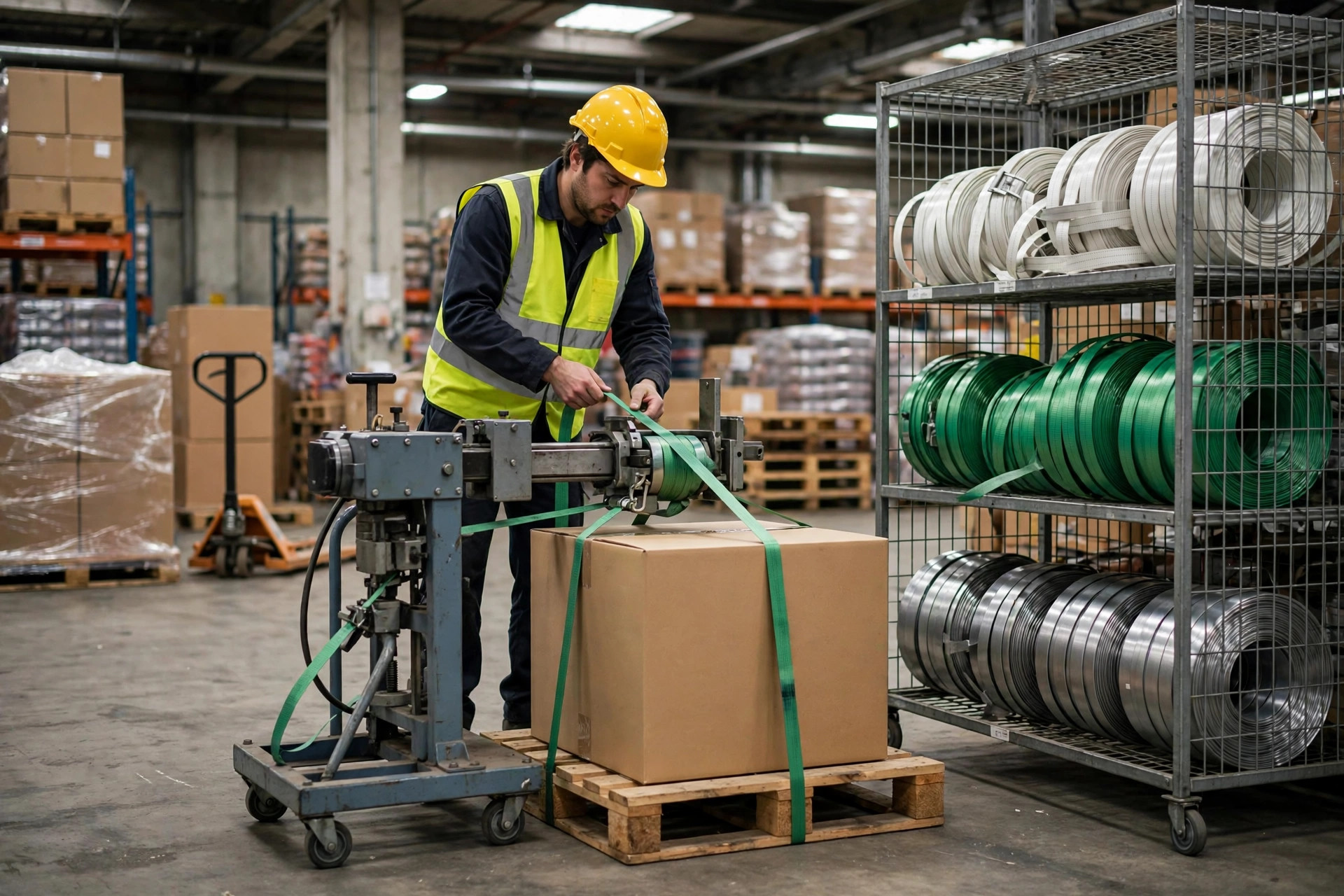
PET (polyester) is the middle child: dark green, stiff, a 16 mm width breaks at 400–600 kilos — near steel territory. Costs 2–3x PP, but it doesn't snap, doesn't loosen, shrugs off moisture. And the big one: safety. When PET fails it doesn't whip back at you like steel does. Good for 15–500 kilos: auto parts, building materials, pallet securing. 80% of our freight now goes out on PET.
Steel is the eldest: blued metal, strongest of all, still mandatory for the truly heavy and sharp-edged stuff — steel stock, stone, machinery. The downsides pile up: expensive, heavy, needs dedicated tools (tensioner, cutters, seals), and genuinely dangerous — a snapping steel strap is a blade. Cut hands are the mild outcome. Small warehouses like ours avoid it whenever we can.
One line: under 15 kilos, PP. 15 to 500, PET. Over 500 kilos or sharp-edged brutes, steel.
What the Wrong Strap Costs: Two Bloody Lessons
First one was us: 30-kilo auto-parts boxes on PP strap rated ~100+ kilos — a few highway bumps and snap. After switching to PET, the same 30-kilo boxes ride on 16 mm PET rated at 500 kilos, 10x-plus headroom, zero failures since. A coil of PET costs ¥60 more than PP. One damage claim cost ¥4,000. Even a kid can do that math.
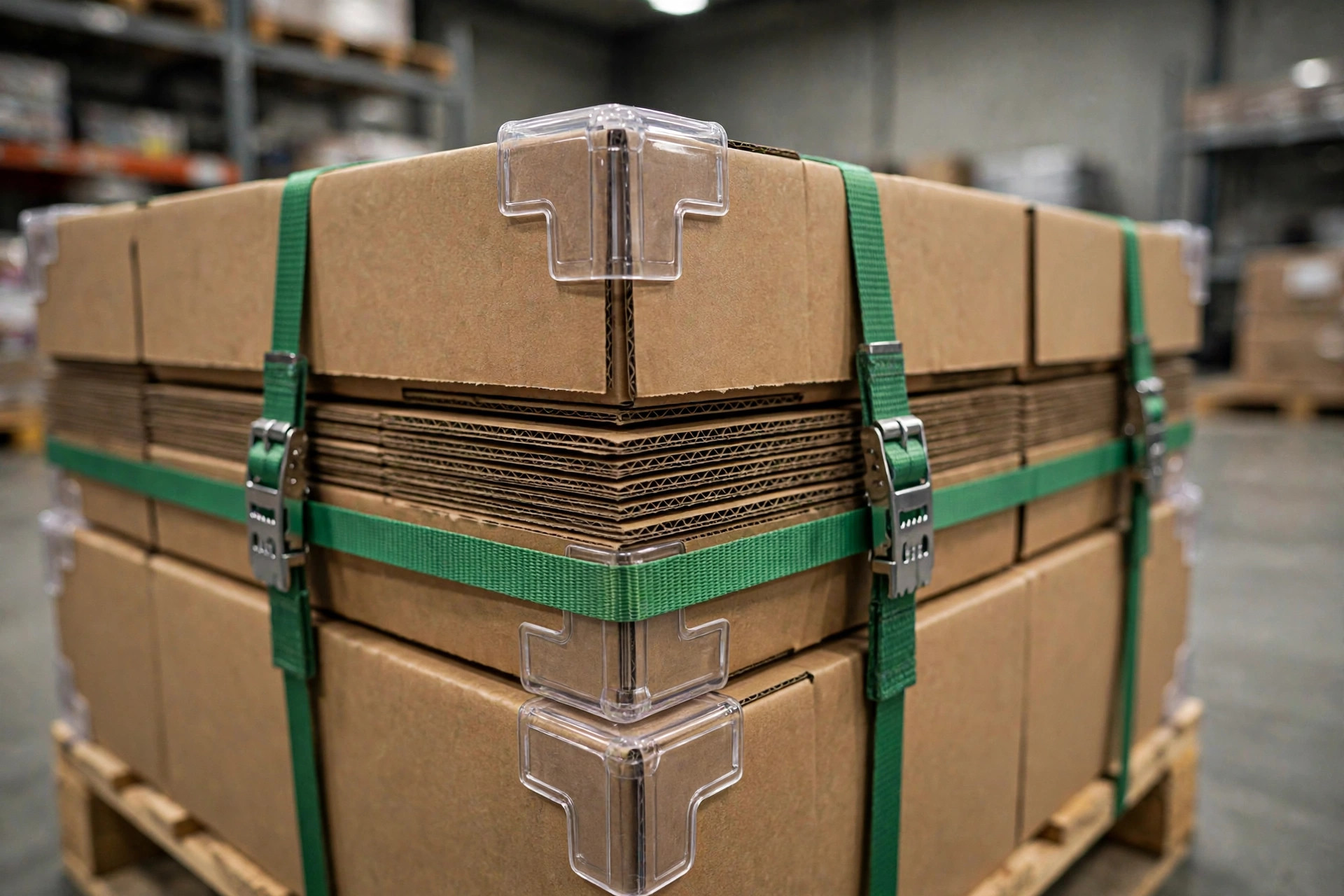
Second is Lao Zhang at the warehouse next door, shipping ceramic sanitaryware early in 2026. Scared of breakage, he went steel — "tighter is safer," he figured. The steel was so hard it crushed the carton corners, and the basins inside arrived cracked: 8% damage rate. He switched to PET plus edge protectors; damage fell under 1%. Zhang's lesson: a strap's enemy isn't just snapping — it's being too hard. For crush-sensitive goods like ceramics and furniture, softer PET with corner guards beats steel every time.
Packing Strap Selection Chart: Matching Strap to Freight
A cheat sheet for fellow small warehouses — tape it above the packing bench:
| Freight type | Weight | Strap | Width | Machine |
|---|---|---|---|---|
| Apparel / e-commerce smalls | <15 kg | PP | 12–15 mm | Semi-auto strapper |
| Auto parts / hardware / building materials | 15–100 kg | PET | 16 mm | Pneumatic / battery strapper |
| Full-pallet securing | 100–500 kg | PET | 19–25 mm | Battery strapper + edge guards |
| Steel / stone / machinery | >500 kg | Steel | 19–32 mm | Steel strapping tools |
| Ceramics / furniture (crush-sensitive) | Any | PET + edge guards | 16 mm | Battery strapper |
Counter-intuitive call: PET is eating steel's lunch. Ten years ago anything over 200 kilos defaulted to steel. Now that PET breaking strength has caught up, steel only survives for the extremes — steel stock, stone, that class. Our steel coil usage went from 30 coils in 2024 to 6 in 2025. What we saved wasn't just strap money — it was injury risk. One steel-strap injury's medical bills and downtime cost 100x the strap.
Money-Saving Hacks, Small-Warehouse Style
Three shop-floor tricks the big players would sneer at, and they genuinely save money. Actually, make it five:
One, don't max out the strapper tension. People think tighter is better; in reality an over-tensioned strap lives at its limit and one road bump snaps it. Our rule: tension where you can nudge the strap 1 cm with a finger and the box doesn't shift. Strap life doubles.
Two, don't oversize the width. If 16 mm does the job, don't grab 19 mm "to be safe" — strap is priced by the meter, 3 mm wider costs thousands extra a year. The chart's on the wall; nobody freelances.
Three, don't trash the partials. Half-coils and test-run strap off the machine get collected for returns and samples — one-way freight. Saves us 20-plus coils a year.
Four, buy strap in the off-season. Strap is plastic and steel; when raw materials rise, it rises. Every March–April we buy half a year's worth at once for a 5–8% discount. A few points, but it adds up to nearly ¥10,000 a year.
Five, the stretch-film-plus-strap combo. For full pallets, don't rely on strapping alone: two wraps of stretch film against shifting, then two PET straps to lock it down. Since October 2025 our pallet transit damage rate fell from 3% to 0.5%. Film costs a few yuan a pallet; what it buys is the whole pallet's safety.
And the machines have to match the strap, too. Three tiers: semi-auto (a couple thousand yuan, hand-fed, fine for PP under 200 boxes a day), pneumatic or battery handheld (¥3,000–8,000, high tension, PET's main partner), and full-auto (tens of thousands, for conveyor lines — big-player territory). We run two semi-autos for PP and one battery handheld for PET. The battery unit cost ¥5,800 in May 2025 and paid for itself in three months — before it, one person did 150 pallets a day on a manual tensioner with a dying arm; now it's 400 a day with even tension. Remember: machines exist to save people's arms, not to impress the boss. Run the labor math before buying; don't pay the "automation" vanity tax.
Small warehouses have their own way of surviving: pick strapping by breaking strength, not by ad copy; by damage cost, not by coil price. A coil costs pocket change; one damage claim costs thousands. Once that ratio clicks, you know exactly where the money goes.
By Xiao Ma, Small Warehouse Owner