Amazon changed the rules again. This time it's SIOC.
Starting January 15, 2026, small bulky and large bulky products that aren't SIPP-certified (SIOC is the Tier 2 certification level inside that program) get hit with a packaging fee of $1.51 to $4.04 per unit, averaging $2.07. When that email landed in my inbox, I nearly spit out my coffee. That's not "encouraging sustainability" — that's a knife to the throat telling you to get certified.
Fine. Twist my arm. I actually did SIOC back in late 2024, so let me open up my books and show you exactly what I saved and what it cost me.
My first SIOC ledger: my storage boxes, damage rate doubled
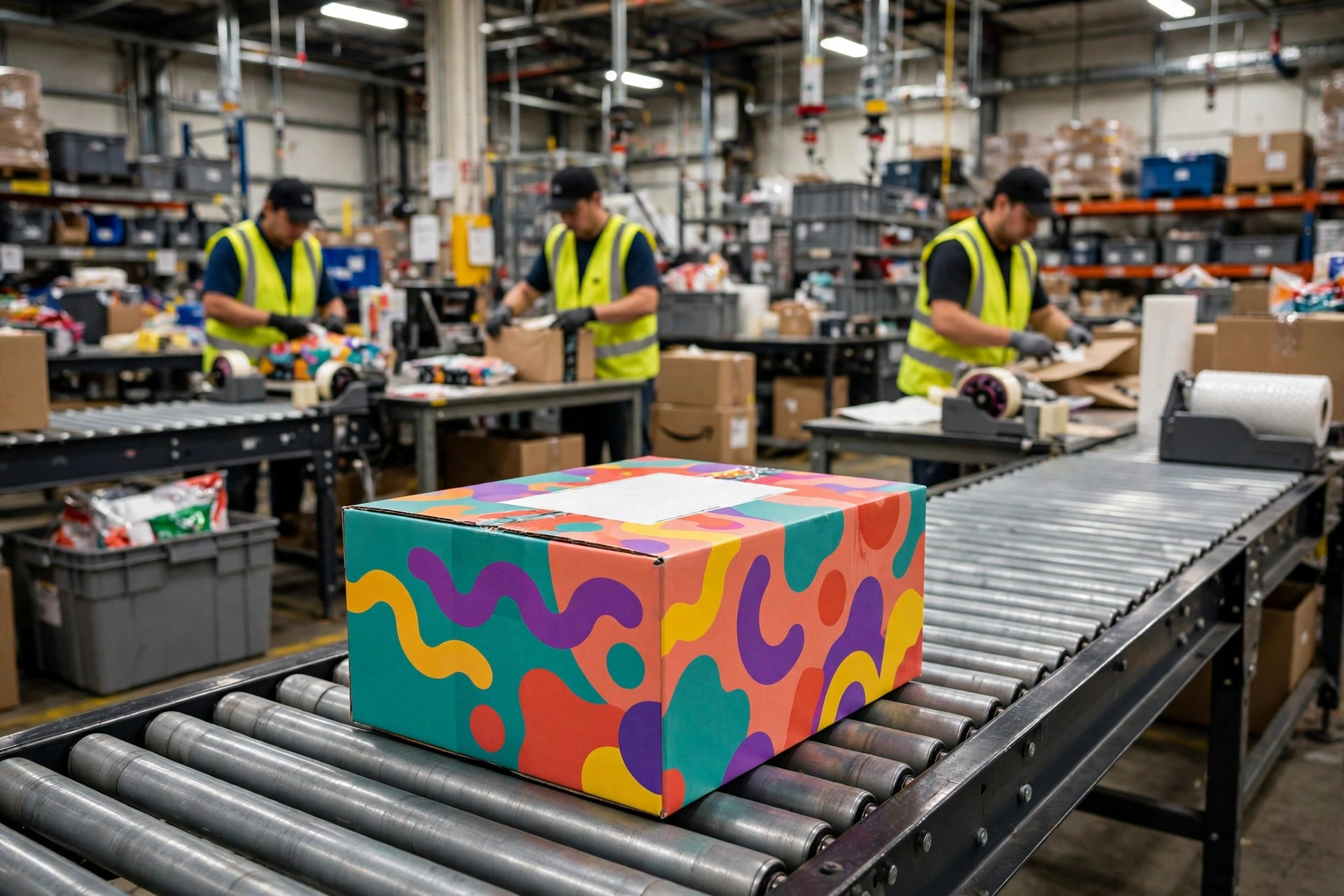
Quick explainer: SIOC means your product's retail box ships as the shipping box. Amazon adds no overbox. What you save: the outer carton, the dunnage, the packing labor, plus a fulfillment fee discount after certification ($0.04 to $0.23 per unit for standard size in 2026 — check Amazon's latest published rates for your size tier).
In November 2024, I certified a kitchen storage box for SIOC. Under 10 lbs, rigid, non-fragile — eligible for self-testing. Seventeen drop tests, before-and-after photos, submitted free, passed on the first try.
The savings were real. My old outer box plus bubble wrap plus packing labor ran about $0.90 a unit. After SIOC, that $0.90 vanished. Add a $0.12 per-unit fulfillment discount, and at roughly 3,000 units a month, I was saving over $3,000 a month — $30,000-plus a year. That's two extra months of inventory I could afford to stock.
But my damage return rate went from 1.1% to 2.6%.
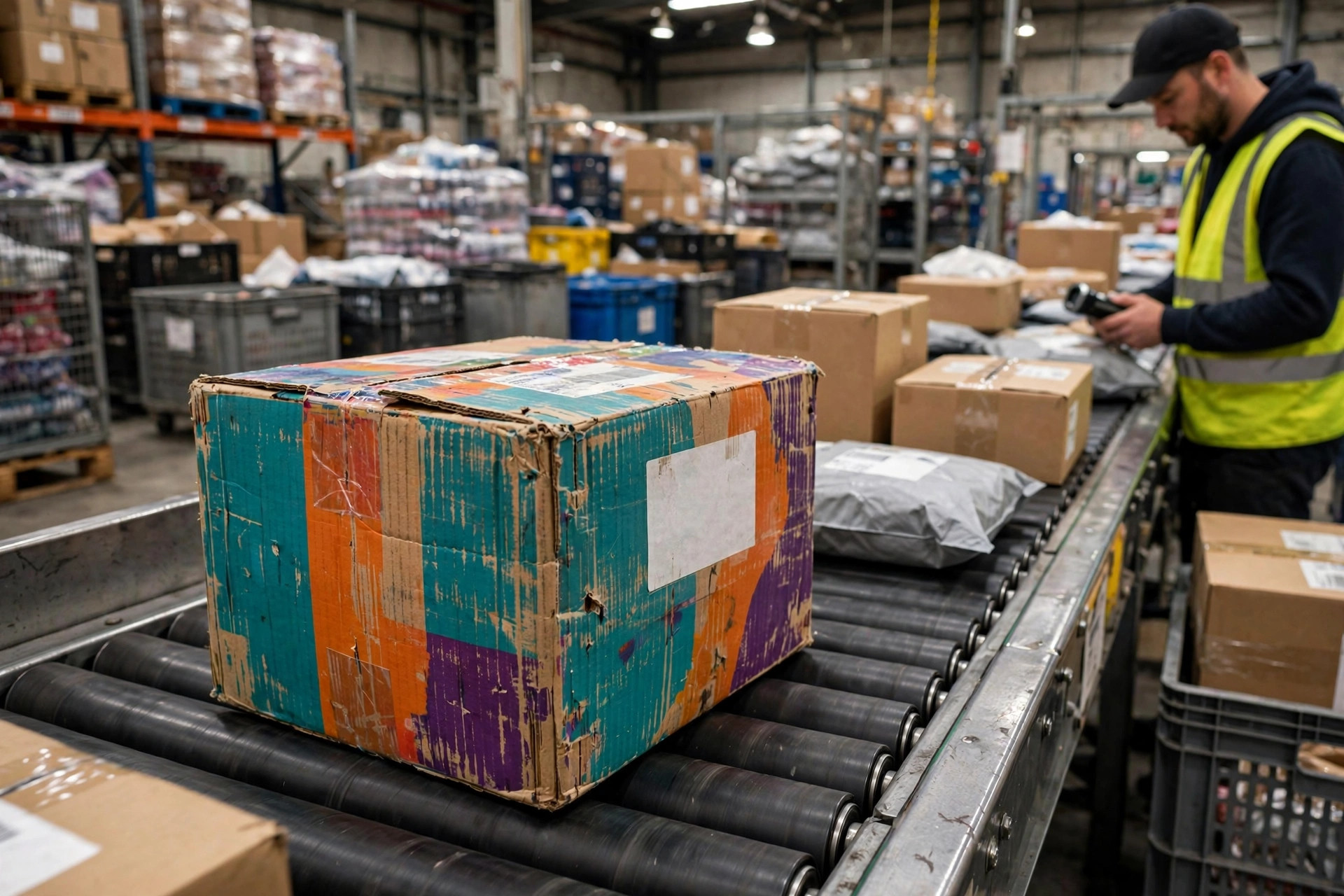
A naked retail box takes hits — scuffed corners are unavoidable. Most buyers don't care as long as the product is fine. But there's always a slice of customers who see one dented corner and hit "return," reason: damaged. My product sold at $28.99, and one return cost me about $6 all-in (return processing, markdown risk, lost-unit risk). At roughly 45 extra returns a month, that's $270 a month in new costs.
Net math: saved $3,060, lost $270 — still winning. But that "still winning" only holds because my damage rate rose just 1.5 points. If your product is more fragile or priced higher, this math flips fast.
My second SIOC ledger: a friend's glass lamp, testing money down the drain
A friend in Guangzhou selling glass lamps saw my savings and wanted in. Problem: glass counts as fragile, so no self-test — he had to send it to an APASS lab for the ISTA 6-Amazon test. It took two rounds to pass, and the lab fees ran into the low thousands of dollars.
And then? The lamps didn't break. But the reviews started filling up with "packaging looks cheap" and "box arrived crushed." Lamps are gift purchases for a lot of people, and when your retail box rides naked through the carrier network, the premium feel dies on arrival. Three months later he quietly put the overbox back on. Testing money: gone.
The lesson that case taught me: the biggest SIOC trap isn't damage — it's returns you can't resell. With normal FBA packaging, a returned unit just needs a fresh outer box. With SIOC, your retail box IS the shipping box. If it comes back beat up, that unit goes to the markdown pile. The higher your price point, the deeper this hole gets.
Show me the money: ships-in-own-container vs. standard packaging, per unit
| Cost item | Standard FBA packaging | SIOC |
|---|---|---|
| Outer box + dunnage + packing labor | ~$0.60–$1.50 | $0 |
| SIPP fulfillment discount | $0 | $0.04–$0.23/unit (standard size) |
| Certification cost | $0 | Self-test free; lab test charged per round |
| Damage/return rate | Baseline | Typically up 1–3 percentage points |
| Reselling returns | Swap the outer box | Damaged retail box = markdown only |
| Non-certified bulky packaging fee (from Jan 15, 2026) | $1.51–$4.04/unit | $0 |
See it now? After 2026, bulky sellers don't really have a choice — skip certification and you're paying around two bucks a unit in packaging fees. Standard-size sellers still have a choice, and that's where the math above decides.
The counterintuitive part: SIOC saves you pennies and gambles your brand
Most sellers only count the packaging savings. That's the wrong math. The real SIOC trade-off is this: you're trading your brand's unboxing experience for a few cents per unit.
Think about it. However beautiful your retail box design is, after the sortation line, the truck, and the front porch, it arrives looking tired. With an overbox, the buyer opened the outer carton and met a pristine retail box. Now the first thing they see IS the battle-worn box.
So my decision framework is four questions:
- Is it heavy? Over the 20-lb self-test line, fragile, expensive — skip it.
- Is it a gift-type product? If you charge a premium on unboxing experience — skip it.
- Is the price high? One return costs you $10-plus, and two extra points of damage rate eat the whole discount — think hard.
- None of the above? Daily consumables, tools, storage stuff — do it with your eyes closed. Self-test is free; leaving money on the table is dumb.
Pitfall checklist: five things if you're doing SIOC
- Redesign the retail box for naked shipping. One grade thicker flute, cross-seal instead of single tape, corner protectors. Still cheaper than your old box-plus-dunnage combo.
- If you can self-test, never pay for a lab. Under 20 lbs, non-fragile, no liquids, no sharp items — the 17-drop self-test is free. If you need a lab, calculate the payback period first; amortized per unit, it can take half a year of sales to break even.
- Plan your return disposition upfront. SIOC returns mostly can't be resold at full price — line up your clearance channels (outlet, discount sites) before the boxes start coming back, not after they're racking up FBA storage fees.
- Watch "damaged packaging" reviews like a hawk. First 30 days after SIOC, check reviews daily. A cluster of packaging complaints means your box isn't strong enough — reinforce it or go back to the overbox.
- Bulky sellers, stop hesitating. That packaging fee is per unit from January 15, 2026. A bulky product selling 1,000 units a month is looking at $20,000-plus a year in fees. Certification costs less than that, whatever the lab charges.
Amazon's play here is simple: it moved packaging cost off its own books and onto yours. You can absorb it yourself (do SIOC) or pay Amazon to absorb it (pay the fee). There's no free lunch — only math done right.
I tested this myself and it works — SIOC isn't magic, it's grade-school arithmetic. If the packaging savings plus the discount beat the extra damage and return costs, do it. If the math doesn't close, keep the overbox and don't fight your own wallet.
By Ah K, E-commerce Seller (5 yrs)