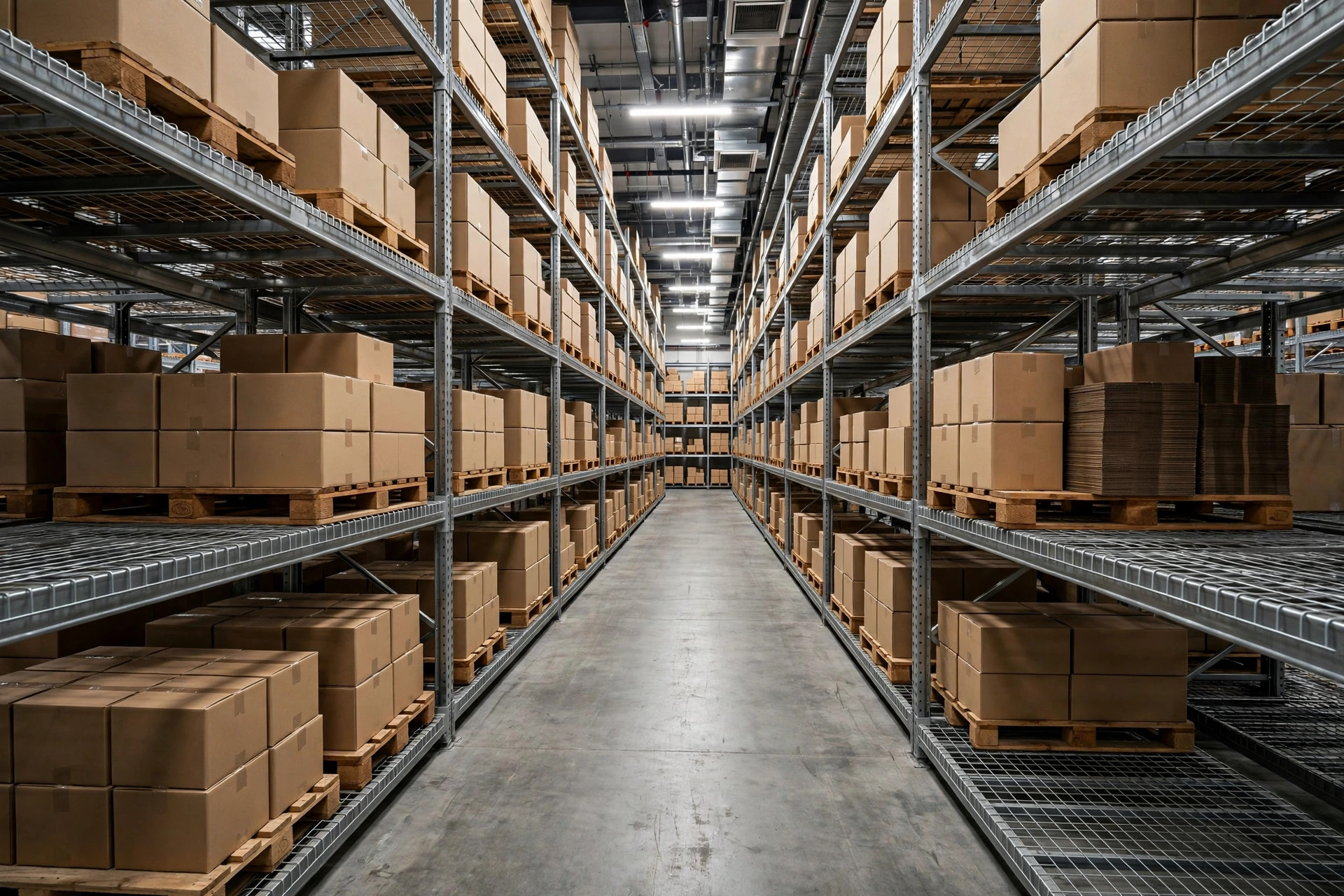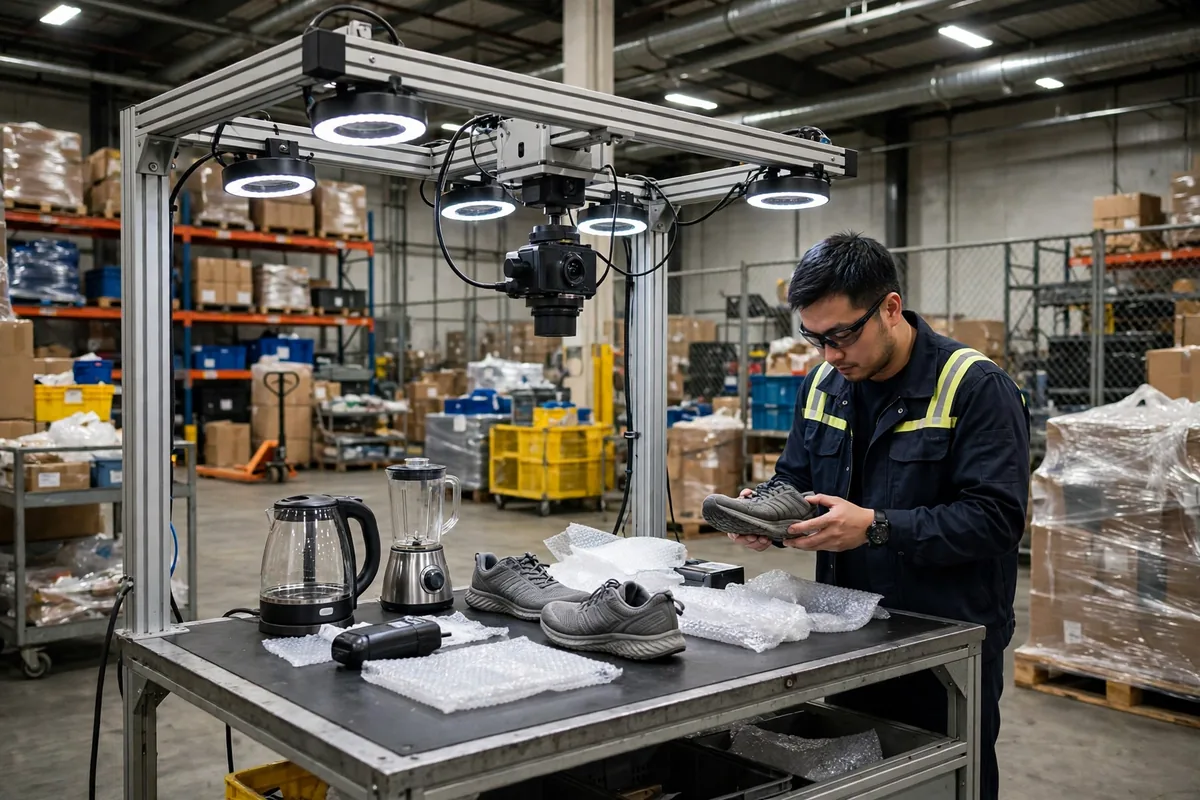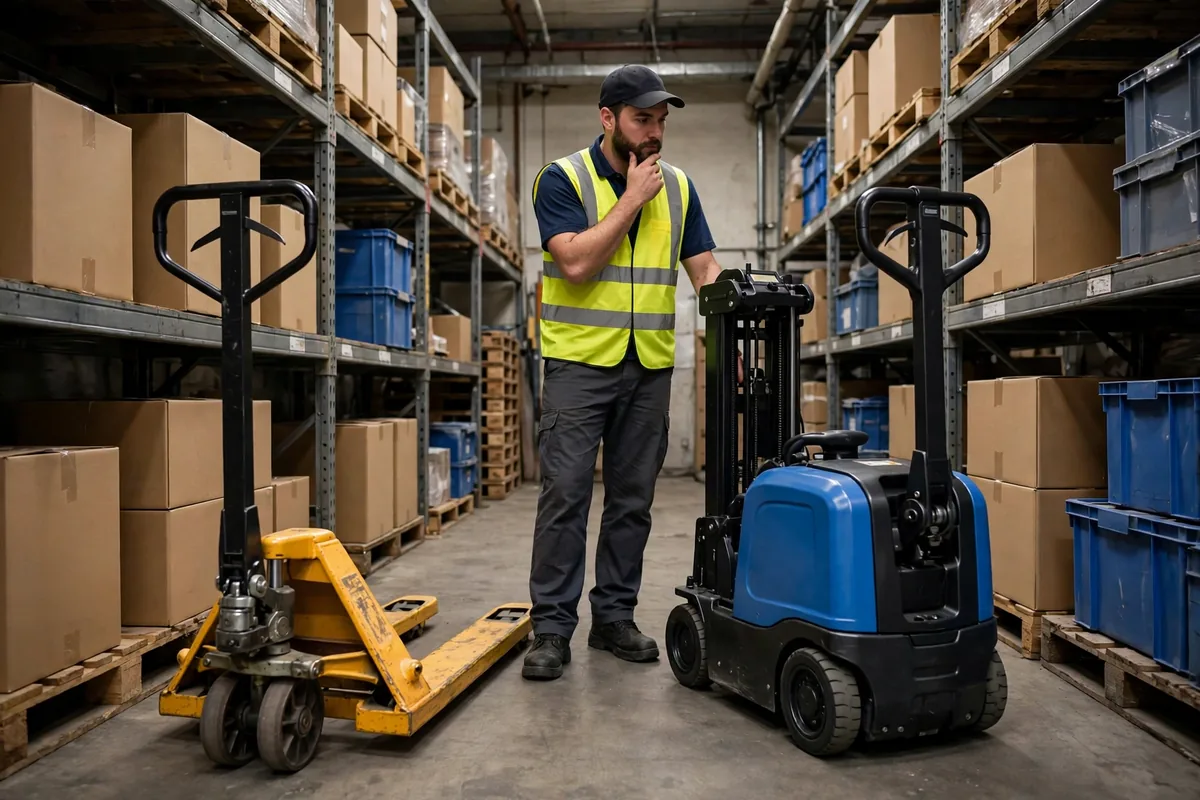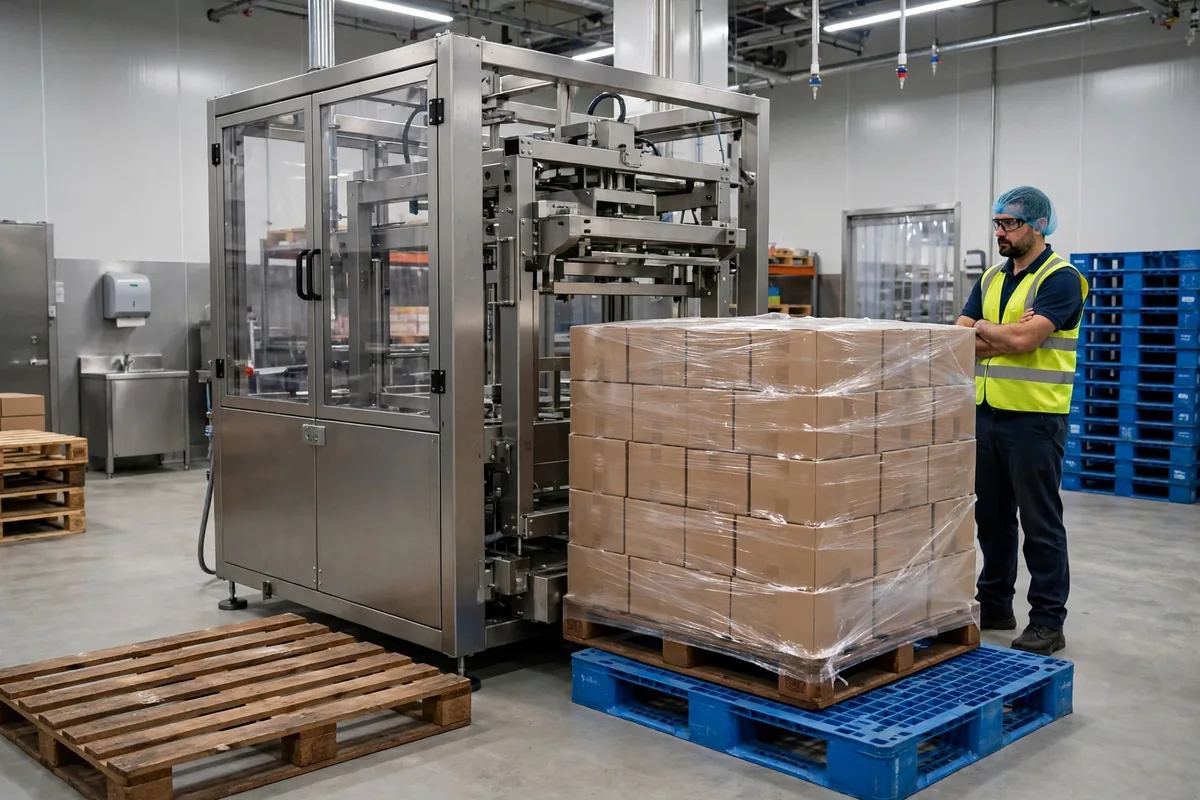
Let me be honest about how we ended up with wire decking for pallet racking: we did not choose it because we read a great white paper. We chose it because we ran out of good options and money at the same time. I run a small warehouse, about 3,000 square meters, the kind of place where the owner also sweeps the floor and argues with the forklift battery. A big facility can replace every deck in one purchase order. We small warehouses cannot burn that kind of money. Every deck is a decision, and every wrong decision sits on the rack staring at you for years.
Two winters ago we took on a new client with mixed freight: some full pallets, a lot of loose cartons, and a few awkward hand-stacked boxes. Our racks at the time were a patchwork — some pallet support bars, some old plywood panels a previous tenant left behind, and a few bays with nothing but the beams. The first week, a small carton slipped between the front and back beams and dropped onto the level below. No one was hurt, but the client watched it happen. That night I sat in the office pricing decks and doing the small-warehouse math that nobody puts in a brochure.
Start with the load: what wire decking for pallet racking actually has to hold
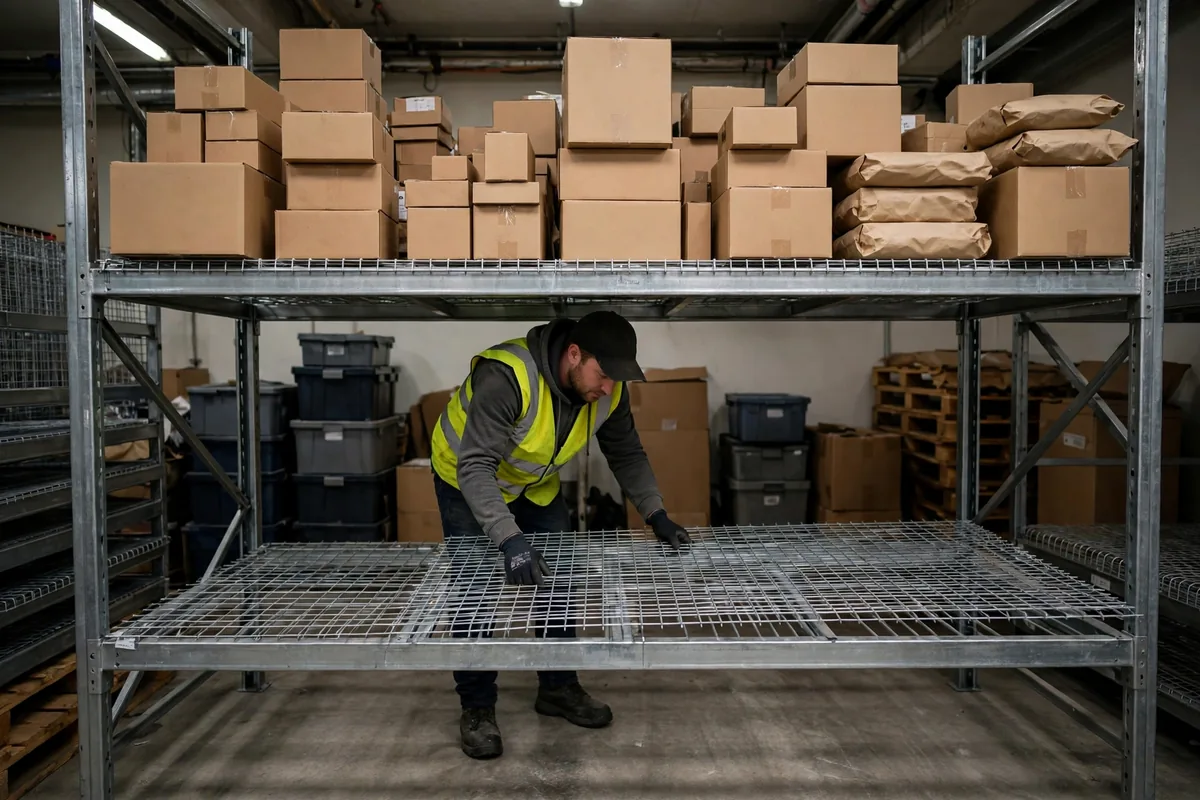
Wire decking is not one product. Decks differ by wire gauge, mesh spacing, and the number of support channels underneath, and those details decide what the deck can safely carry. The mistake small warehouses make is shopping by deck size alone — 42-inch deep, whatever width — and assuming capacity follows. It does not. The manufacturer's rated capacity assumes the load is spread evenly. A heavy carton concentrated in the middle of the deck is a different problem from a pallet distributing weight across the beams.
Here is my field rule, and treat the numbers as illustrative examples, not a substitute for the manufacturer's table — always confirm the rating with your supplier and the latest official guidance. Full pallets that sit properly on the front and back beams barely need the deck at all; the deck is there as a safety net for a misplaced pallet. Loose cartons are the opposite: the deck carries them all day. If most of your weight is loose cartons, buy for the carton case, not the pallet case. Check two things before you pay: the mesh opening must be smaller than your smallest regular carton, or that carton will sag and catch, and the support channels must match your beam step and rack depth. I learned the second point the expensive way in 2023, when a batch of second-hand decks arrived with channels that did not seat on our beams. They looked fine in photos. They rocked in person. We sent them back and ate the freight.
A counterintuitive point worth remembering: the strongest deck is not always the right deck. An overbuilt deck costs more, weighs more, and still will not fix bad slotting or an undersized beam. Spend first where cartons actually live. Our heaviest carton bays got new, properly rated decks. Low, full-pallet bays kept support bars for another year, and nothing bad happened, because the load path there was the pallet itself.
Why the fire conversation pushes you to wire decking for pallet racking
The second reason wire decking shows up has nothing to do with cartons. It is sprinklers. Water needs to fall through the rack levels to reach a fire below. Solid wood panels block that path, and in many jurisdictions and insurance reviews, solid decking in rack storage draws questions or outright requirements to change. I am not going to quote you a code section or a percentage, because rules vary by building, commodity, and local authority — check the latest official policy and your insurer before you argue with anyone. What I can tell you is the practical sequence, because we lived it.
During an insurance walk in 2024, our reviewer stopped at the bays with old plywood, took photos, and asked what the panels were and why they were there. Nobody fined us on the spot. But the follow-up letter made clear that solid panels were a problem to solve, and the local fire conversation pointed the same way. Wire decking lets water pass and does not add fuel the way wood does. That is why so many warehouses get told, in effect, wire or nothing. If a seller tells you wood is always fine everywhere, be skeptical. If a seller tells you wire is legally required in every building on earth, be skeptical of that too. Your building, your stock, your authority having jurisdiction — that is the answer that counts.
Wood has one more hidden cost small operators forget: it absorbs moisture, warps, splinters, and hides its condition. A wire deck shows you its damage. A bent wire is visible. A soft, swollen wood panel can look acceptable right up until a carton punches through a weak spot.
Wire deck, wood panel, or support bars: the honest split
Here is the comparison I wish someone had taped to my office wall, with costs as rough illustrative ranges only — get current quotes, because steel prices move.
| Option | Upfront cost | Best fit | Watch out for |
|---|---|---|---|
| Wire decking | Mid to higher per bay, varies by rating and size | Mixed cartons, sprinkler-sensitive storage, long-term bays | Wrong channel fit, buying capacity you never use |
| Wood panels | Low if you already have them, cheap to cut | Light, dry, low bays where local rules allow | Sprinkler blockage, moisture, warping, hidden rot |
| Pallet support bars | Lowest per bay | Full pallets only, budget staging | Useless for loose cartons, small boxes fall through |
Our split today looks like this, as an example mix, not a formula: most carton bays run wire decking, a small set of full-pallet floor-level bays still run support bars, and wood survives only in a light parts area away from the main rack rows, pending its own replacement. The trade-off is deliberate. Support bars are not a failed deck; for a proper pallet they are the economical answer. Wire decking is not a luxury upgrade; for cartons and sprinkler flow it is the functional answer. Paying wire prices to solve a pallet-only problem is how small warehouses waste money. Refusing wire where cartons and fire flow demand it is how we create a different, worse bill.
How a small warehouse swaps in phases without the pain
If your quote for the whole building makes you wince, phase it. We did three passes over about a year, and the order mattered more than the speed.
Pass one: the worst bays first. Any bay with falling cartons, damaged wood, or an insurer's photo attached to it goes first. That pass is small — in our case it was a handful of bays near the packing area — but it removes the daily risk and shows the client and the insurer that the problem is being closed.
Pass two: carton-heavy bays by pick frequency. Fast movers earn their decks first because they are handled most. Slow movers wait. Measure twice on this pass, literally: rack depth, beam step, and inside width, bay by bay, because older racks drift and one bay in a row is always the odd one.
Pass three: the remainder, bought when cash flow allows, ideally when a supplier runs a quantity break you can actually use. Between passes, support bars are a legitimate bridge for full-pallet bays. What I would not do again is buy the cheapest unrated decks online to fill the count. A deck with no clear manufacturer rating is a question mark you install at height. Saving a little per bay is not worth not knowing what it holds.
One last cheap trick that paid off: label the deck rating on the beam with a simple tag when you install it. Six months later nobody remembers which bays got the heavier decks. The tag ends the argument before someone loads a heavy carton onto a light bay.
Small warehouses survive by spending where the load, the risk, and the inspector all agree. Wire decking earned its place in our building bay by bay, not because a big-company catalog said so. Small warehouse, small way of living — and it works.
By Xiao Ma, Small Warehouse Owner