Here's a number to start with: back when I led integration projects, I measured paper-based picking error rates across a dozen warehouses. They hovered around 1%. Sounds small? At 100,000 pick lines a month, that's 1,000 mispicks. Each one — rework, reship, customer service back-and-forth — easily costs over $20. That's $20,000 a month, burned on a piece of paper.
So paperless picking, in my view, isn't "fancy automation." It's a tourniquet. Today I'll walk through the whole thing: how it works, where each technology fits, and the maintenance traps nobody warns you about.
Paperless Picking Principle: Why Paper Pick Lists Fail
Paper's failures aren't about "careless workers." The system is broken by design. Three root causes:
First, information latency. A pick list is obsolete the moment it prints — inventory shifted, wave plans changed, rush orders got inserted. Paper doesn't update itself. Second, zero validation. Grab the wrong item or the wrong quantity and the paper won't complain; everything rides on the picker's eyes. Third, occupied hands. One hand holds the list, the other grabs product; for bulky items the list ends up tucked under an arm. Think of it as a closed-book exam where you're not even allowed scratch paper. Errors aren't surprising — getting it right is luck.
Paperless picking has four mainstream routes, in rough generational order:
Paper → RF handheld terminals → Pick-to-light (PTL) → Voice picking.
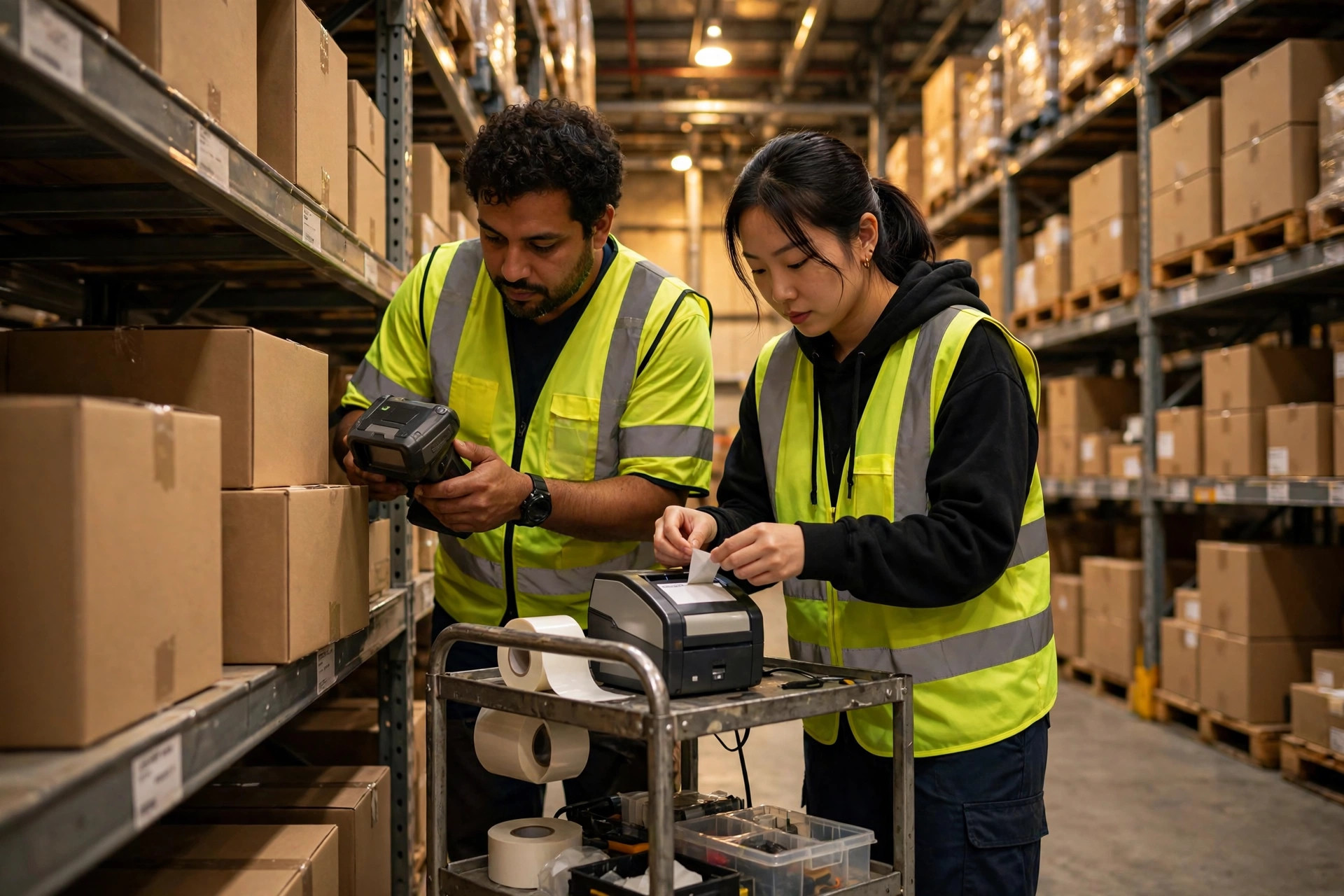
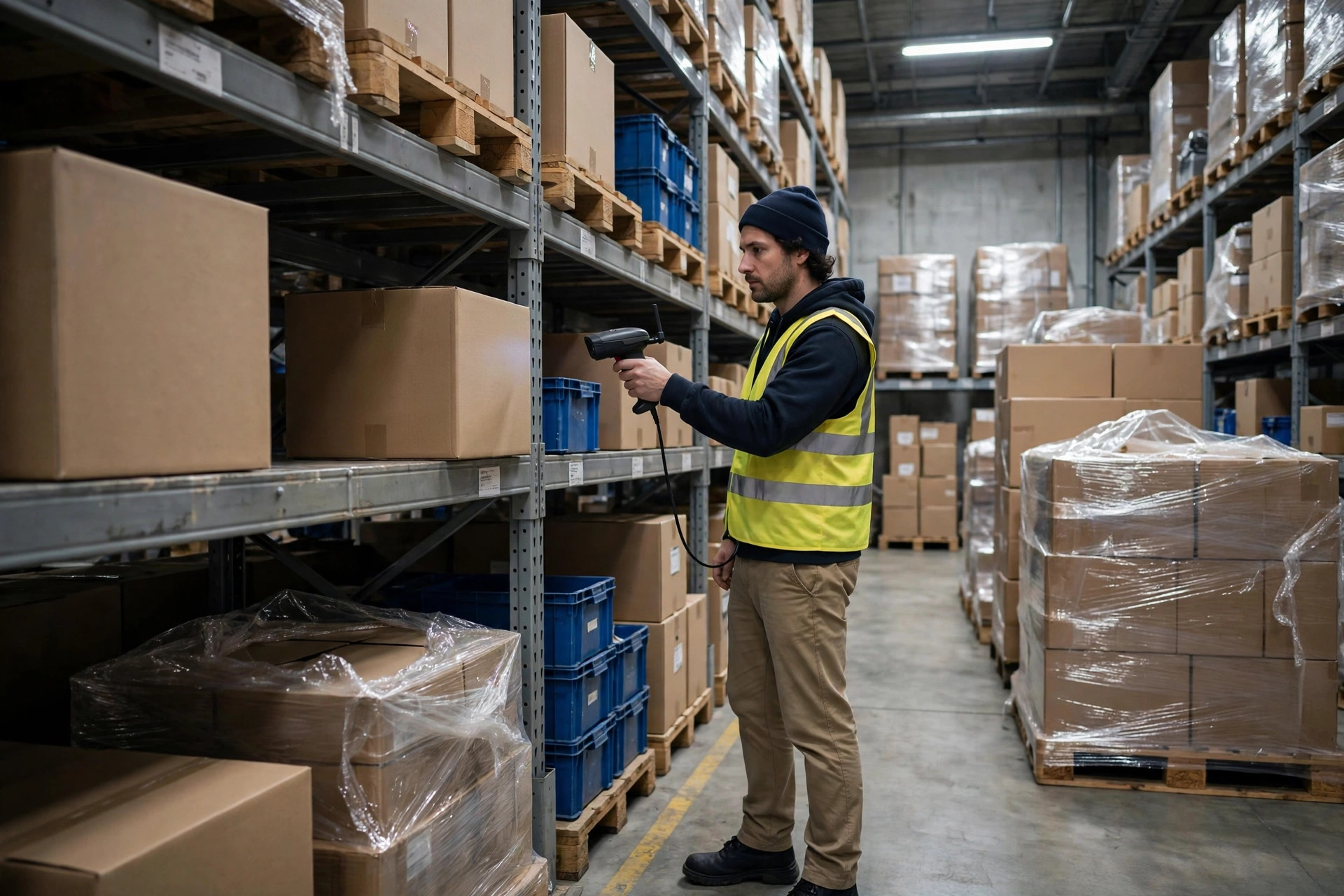
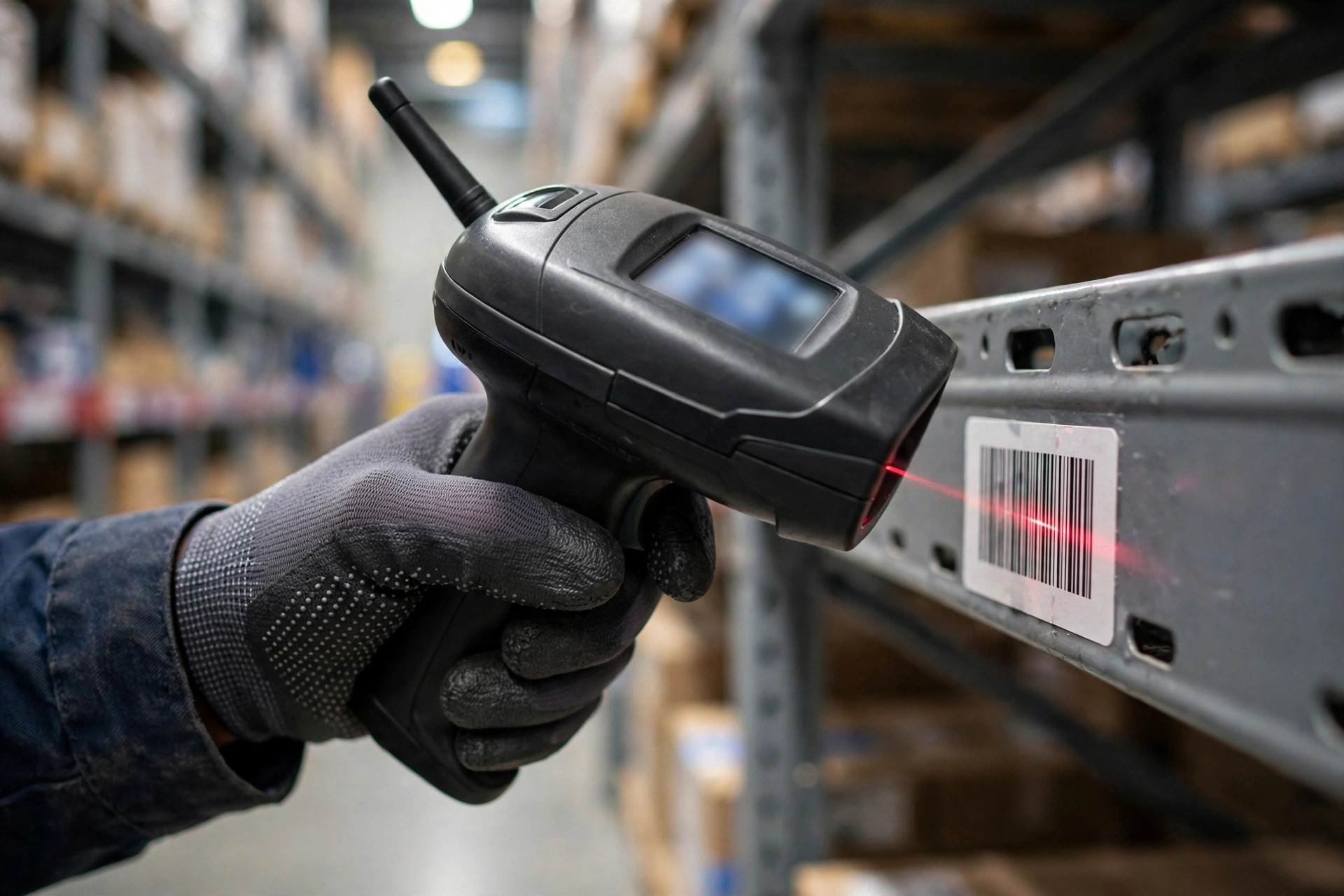
RF guns move the paper onto a screen and add scan validation, but eyes and hands stay busy — you're still looking down at a display and freeing a hand to press keys. It's like phone navigation that forces you to stare at the screen while driving. Not much safer.
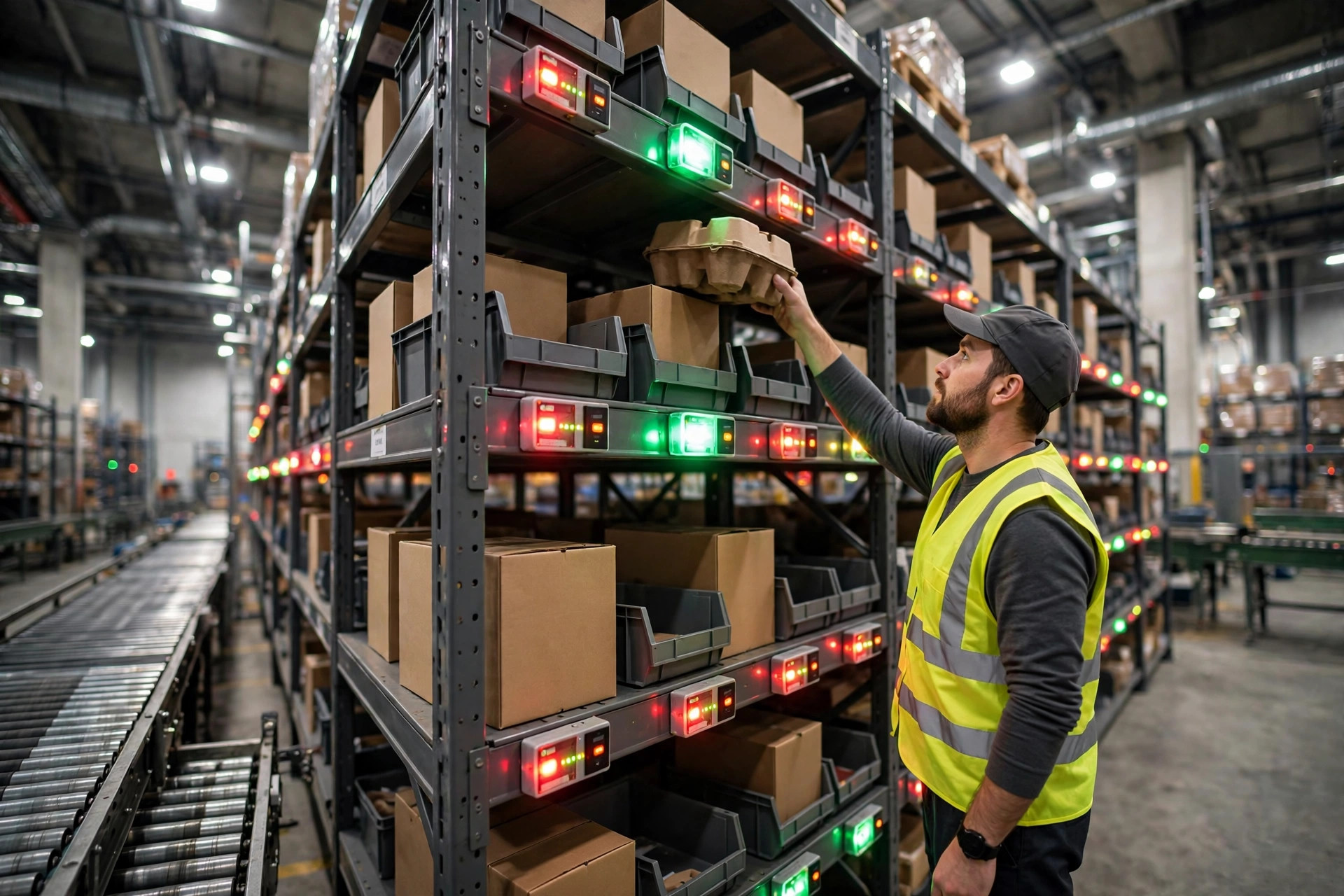
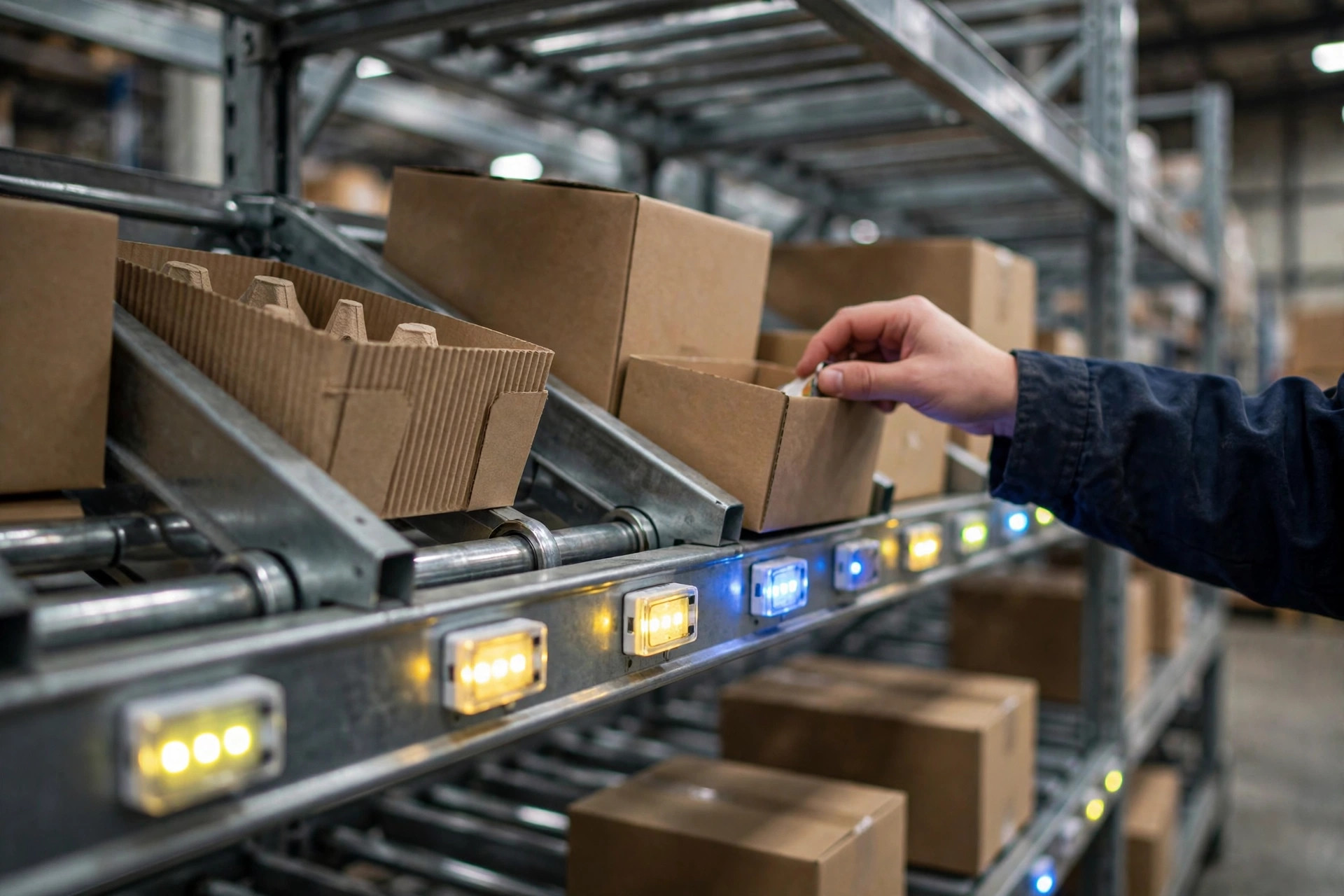
PTL takes a different path: a light on every slot, the system lights up where to pick, you press the light to confirm. Eyes freed, hands not. Great for each-picking, small items, high frequency.
Voice goes furthest: headset plus microphone, the system calls out the location and quantity, you speak back a check digit to confirm. Eyes and hands both free. It's like turn-by-turn voice navigation — you just watch the road. That's why freezer warehouses love voice: with thick gloves on, nobody's tapping a touchscreen.
Where Each Technology Fits: The Selection Dividing Lines
Some publicly reported numbers first, so we share a baseline. An industry case I trust: a California foodservice distributor moved from paper to voice, cutting errors from about 1 per 1,000 cases to roughly 1 per 14,000, lifting pick rate from 135 to 160 cases per hour, and halving training time. Vendor-published figures for paper-to-voice conversions typically claim 50–90% error reduction and up to 35% productivity gains — vendor numbers, so discount them by about 30% for your own building.
Here's my dividing-line table:
| Paper | RF Gun | Pick-to-Light | Voice Picking | |
|---|---|---|---|---|
| Per-person equipment cost | Near zero | A few hundred dollars per terminal | Most expensive — one display per slot | Mid-range — headset plus software license |
| Error change vs. paper | Baseline | Down 30–50% | Down 60–80% | Down 80–90% |
| Productivity change | Baseline | Up 10–20% | Up 20–40% (each-pick) | Up 15–35% |
| Sweet spot | Small warehouse, a few hundred orders/day | General purpose, the safe default | Beauty, pharma, e-commerce small-item each-picking | Full-case, freezer, hands-busy work |
| Don't bother when | Volume is tiny, SKUs are few | Slot labels are a mess (scanning garbage) | Low SKU count, sparse picking | Extremely noisy, very few SKUs |
I have no patience for fake requirements, so let me be blunt: if you're under 2,000 pick lines a day, under 3,000 SKUs, and shipping mostly full pallets, voice or PTL is burning money. Half the time paper's real disease is chaotic slot coding and no ABC slotting — fix those first. Voice will only make you fail faster and more uniformly.
In 2019 I worked on a project at a California food distributor, paper to voice. Error rate dropped from around 0.2% to below 0.05%, training compressed from two weeks to three days. The funny part: veteran pickers resisted at first — "talking to a headset makes me look stupid." Two weeks later nobody would take the headset off, because pick speed fed directly into piece-rate pay. Money doesn't lie.
The counter-example: a 3PL each-pick zone installed PTL, spent a fortune, lights blinking furiously — but the WMS wave strategy was still grouped by customer, so pickers ran all over the building. Productivity rose 8%. I regrouped waves by slot zone and it doubled. Remember: the lights are legs, the strategy is the brain. Equipment solves the "picking" problem; the WMS solves the "walking" problem.
Paperless Picking Maintenance Traps: Affordable to Buy Isn't Affordable to Own
Everyone prices the equipment. Nobody prices keeping it alive — that's the real trap in paperless picking.
Voice's trap is the headset. Headsets are consumables: batteries, mic windscreens, headbands fail faster than you'd think. Hygiene with shared headsets across shifts is a real issue — I've seen warehouses stock alcohol wipes for every shift change, and I've seen warehouses ignore it until nobody wants to wear the gear. Then there's noise: near compressor rooms and big fans, recognition accuracy drops. Always run a live floor test before signing, and don't trust lab numbers.
PTL's trap is cabling and the displays themselves. Light strips are a favorite target of forklifts; pallets shear them off routinely. Wireless tags run on batteries with roughly a two-year life — swapping batteries across hundreds of tags is half a day's work, and that zone goes dark while you do it.
RF guns are honestly the lowest-maintenance of the three: cracked screens, aging scan engines, all fixable. Best MTBF (mean time between failures) of the bunch.
One counterintuitive trap: the biggest risk in going paperless isn't the hardware, it's the WMS. Once voice speeds up picking, wave planning, replenishment, and exception handling have to keep up — if the system keeps directing pickers to an empty slot, they stand around waiting, and errors multiply in perfect formation. My order is always: tune the system first, then add devices. Putting voice on top of a broken process is like dropping a faster engine into a car with no brakes.
So is the money worth it? It comes down to one number: your current monthly mispicks × true cost per mispick (rework, reship, customer service — be honest, no discounting), versus the monthly amortized cost of the retrofit. Above 1.5x, go for it with eyes closed. Below 1x, go back and write a decent SOP for your paper process first — if you can't manage paper, paperless just helps you fail faster.
By Da Liu, Automation Engineer