A pallet exchanger rarely fails in the demo. It fails on a wet Tuesday in receiving, when three trucks are waiting, the plastic pallets are still in the wash rack, and the one machine you counted on starts drifting two centimeters to the left. I have stood on that dock more than once. The rent-or-buy question sounds like a finance question. On the floor, it is really a throughput and risk question.
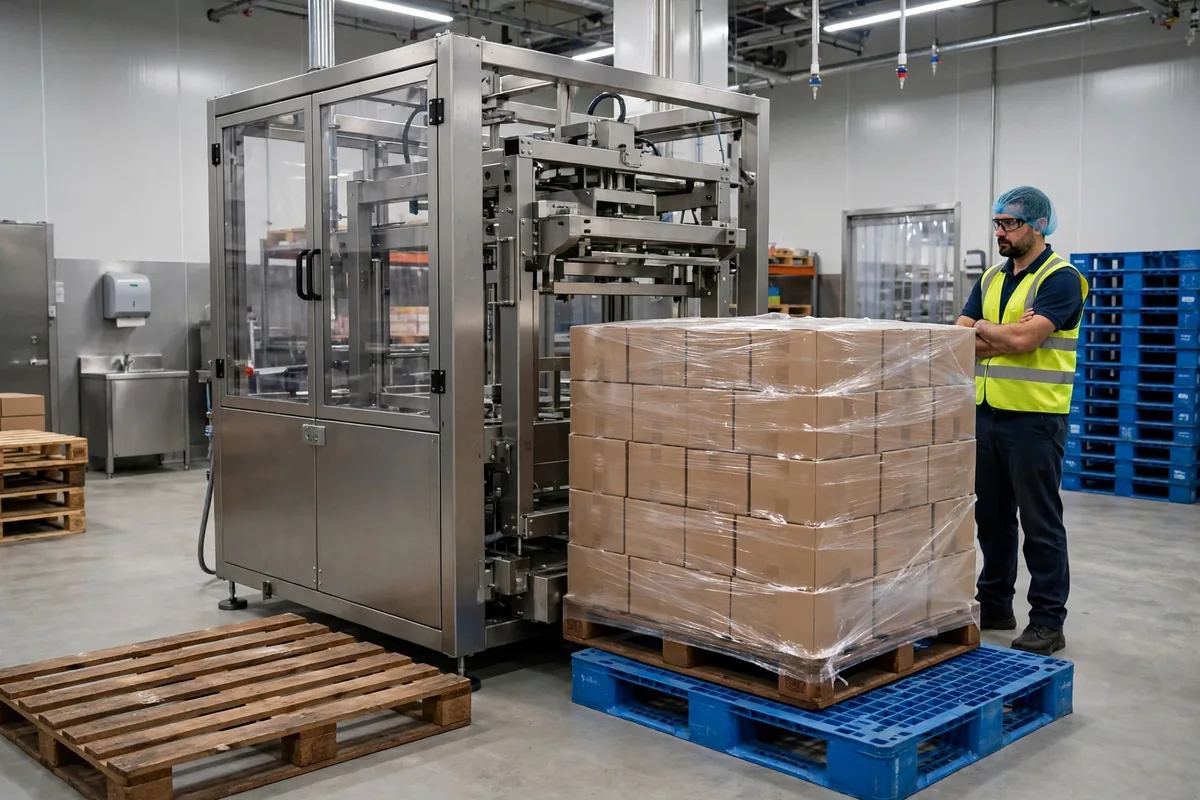
Think of the machine as a shoe-changing room at the door of a clean zone. Freight can arrive on whatever pallet the supplier had. Before it crosses the line, the load moves onto your house pallet. The goods do not change. The contamination risk stays outside. That simple transfer is why food and clean warehouses care about this equipment far more than a general dry-goods site does.
The one number that decides rental vs. purchase
Forget the brochure cycle time for a minute. Count your real exchanges per day, per shift, across a normal month and a peak month.
Use a hypothetical worked example, because rates vary by vendor and region and you should always confirm current pricing with the supplier. Assume a mid-range side-push unit carries a purchase price in the tens of thousands of dollars range, and assume monthly rent lands at a small percentage of that price, which is a common rental structure. The exact figures do not matter here. The ratio does.
At roughly 8 to 12 exchanges a day, bunched into a two-hour receiving window, a purchased machine sits idle most of the shift. Depreciation keeps running. Seals age. Sensors collect dust. Your utilization might be under 15 percent even if nameplate uptime looks fine. Renting wins in that profile, especially if volume is seasonal. A snack importer I worked with near Suzhou in 2023 ran fewer than 10 exchanges on a normal day and spiked to about 30 before a major sales event. They rented for two months, returned the unit, and spent the savings on an extra night-shift hand. Unglamorous. Correct.
At a steady 60 or more exchanges a day, across two shifts, long-term rental flips. Add up twelve to eighteen months of rent in that same hypothetical model and you are approaching a large share of the purchase price, without owning anything and without the freedom to modify the machine. Want to add a barcode interlock or adjust for a different house pallet height? On a rental, that conversation goes through the rental company first.
The awkward middle, say 25 to 45 exchanges a day with real swings, is where most sites get stuck. My rule is blunt: rent for one quarter and log three numbers — exchanges per day, damage rate, and minutes per exchange. One week of honest floor data settles arguments that a month of meetings cannot. If those numbers hold up, buy with confidence. If they collapse after peak, keep renting.
Downtime cost is the line item everyone forgets. In a food warehouse, receiving windows are tied to cold-room doors and production schedules. A machine down for two days is not just an inconvenience, it is blocked docks and temperature excursions waiting to happen. A rental contract usually gives you a swap-out clause. A purchased machine gives you whatever your service agreement and local spare-parts stock actually deliver. Ask about parts on the shelf in your region before you ask about warranty years. MTBF on a datasheet does not unload a truck.
Why food and clean warehouses exchange pallets at all
In a dry warehouse, exchanging pallets is often about standardization for racking or automation. In food operations, the first reason is hygiene.
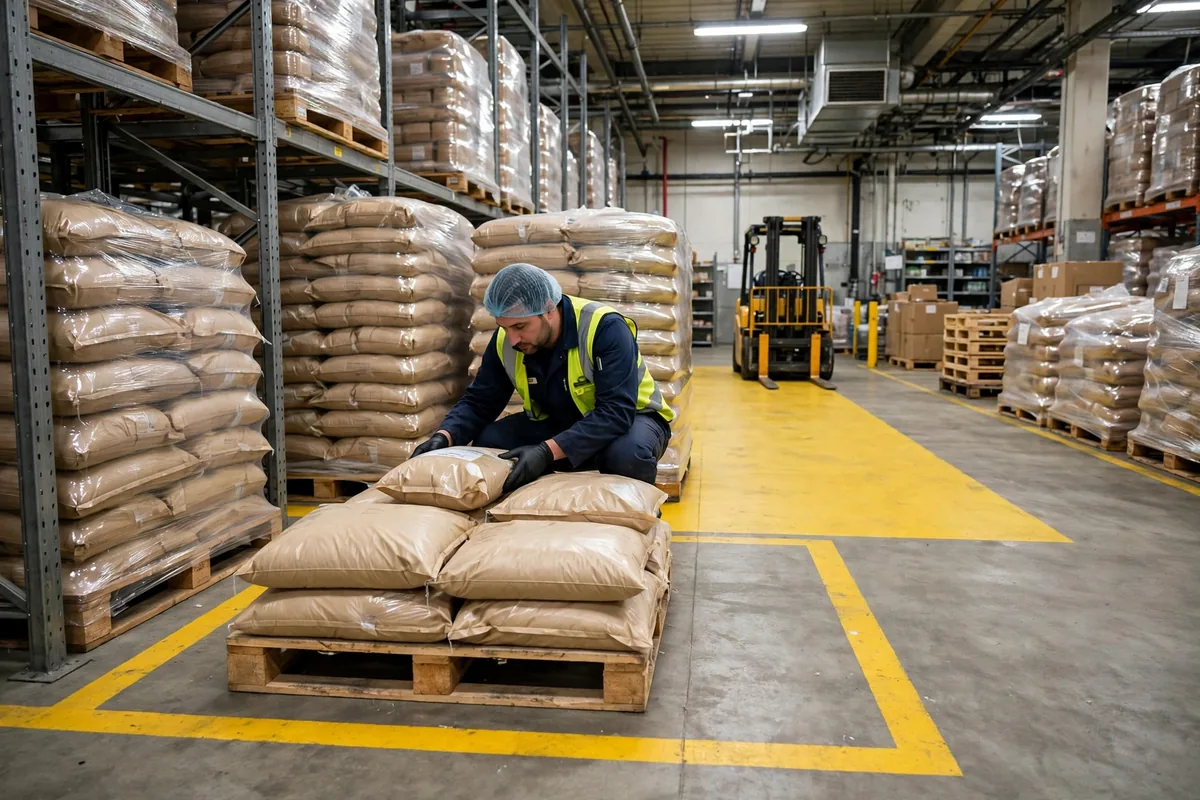
Wood pallets splinter. They absorb water. Nails work loose and tear film and bags. In the autumn of 2023 I visited a frozen dough plant in eastern China where inbound supplier pallets varied wildly in quality. Some came back damp from cold storage. Quality would not let those pallets into the packing area, full stop. Workers were manually restacking, around twenty minutes a load by the crew's own count, with torn bags pulled out along the way. After they fixed the exchange point at the airlock door, onto washable plastic house pallets, the audit conversation changed. The exchange point became a physical control, not a paper promise that outside wood never crossed the line.
There is a counterintuitive point here that buyers get wrong. In hygiene-driven exchange, raw speed is not the top priority. Stability is. A tipping-style transfer can be fast, but soft packaging and liquid loads deform when you invert them, and your damage rate quietly climbs. A clamp-and-slide or side-push pallet exchanger is a few seconds slower and far kinder to the load. I covered the structural differences in my earlier piece on choosing between a pallet inverter and a pallet changer, and that selection logic still applies. Read this rental math on top of it, not instead of it.
Plastic house pallets create their own discipline problem. They need washing and sanitizing on a cycle, and if the wash area sits far from the exchange point, operators will quietly reuse dirty pallets. That frozen dough plant learned this the hard way. The machine was fine. The flow was broken. Moving the wash rack to within a few meters of the exchanger and color-coding clean versus dirty pallets fixed more than a faster machine ever would have.
What ownership really costs after the invoice
Buying the machine is the halfway point, not the finish. In 2022 a beverage warehouse in southern China bought a unit and ran it hard on heavy full pallets of drinks, day after day, well above the comfortable everyday load the crew had discussed at purchase. Within two years the clamp arms were drifting out of sync and loads landed off-center for the wrapper downstream. Vendor and warehouse argued for weeks. The root cause was boring: chronic overloading plus a floor that had settled. No villain, just physics.
So if you buy, get the wear-parts list in writing before you sign. Clamp pads, chains, sensors, hydraulic seals — which are consumables, which are warranty, and what does each actually cost? Confirm current parts pricing with the vendor rather than trusting an old quote. Rentals quietly bundle much of that risk, which is their real appeal. The trade-off is control. A rental unit that has been beaten up at three previous sites will show it in cycle consistency, and your only remedy is asking for a swap.
Check utilities on site, too. Some models need compressed air. If your compressor has no headroom, the exchanger runs and every other air tool on the dock goes soft. A half-day site survey — power, air, floor flatness, dock height differences — prevents the most expensive surprises I see.
My recommendation for most food sites is rent first, buy second. Use the rental quarter to prove your daily volume, your damage rate, your wash flow, and your audit trail. Then negotiate a purchase holding real data instead of a forecast. And if your volume is genuinely small and seasonal, stay a renter without apology. An idle machine is not an asset. It is a very heavy reminder that you skipped the math.
Judge it on one number in the end: cost per exchange. Rent or depreciation, maintenance, power, and labor, divided by total exchanges. If that number clearly beats your manual restacking cost, proceed. If it barely moves, fix your process first. The machine is the last step, never the first.
By Da Liu, Automation Engineer