My verdict up front: warehouse rack inspection frequency set at once a year is, in practice, no frequency at all. I have walked into too many warehouses where the policy on the wall said annual, while an upright had been bent for three months and nobody had reported it. Racking rarely fails without warning. It gives signals first — cracked paint, a bowed upright, a missing safety clip — and the only question is whether anyone is looking when the signal appears.
There are two sides to this trade-off. Inspect carelessly and people tick boxes without seeing anything. Inspect too rarely and small damage accumulates until it crosses a line. My answer is never a single number. It is layers: the people closest to the rack look most often, and the people who understand structure make the final call.
The Bent Upright That Ruined a Peak Week
A home-goods warehouse I was asked to diagnose had roughly twenty thousand pallet positions, on the assumption figures the client shared with me, and on the surface it was well run. During my walk I found an upright in a back aisle with a clear inward dent low down, split paint, and a slightly distorted beam connector. I asked the supervisor when it had been hit. Nobody knew. I asked for the last inspection record. It was more than five months old and said, in full, no abnormalities.
Reconstructing it later, the story was simple. About three months earlier, on a night shift, a forklift had clipped that upright turning out of the aisle. The driver judged it minor and said nothing. The day supervisor did not walk that aisle daily, so he never saw it. By the time I found it, that upright, under the internal grading practice we were using, belonged in the stop-and-unload category. The bay was emptied, the aisle closed, and the original supplier had to assess it. There was no matching upright in local stock, so between waiting for the part and doing the work, the disruption ran for days. Temporary outside storage, double handling and overtime added up, on the finance team's case figures, to a sum in the low six figures in local currency terms — excluding service penalties for two days of late orders. The upright itself, as a part plus labour assumption, would have cost a few thousand. The lesson is blunt: the expensive thing is never the inspection. It is being forced to stop and repair at the busiest moment of your year.
Setting Warehouse Rack Inspection Frequency in Three Layers
The warehouse rack inspection frequency I set for clients is always three layers stacked together. Think of them as three sieves, each finer than the last.
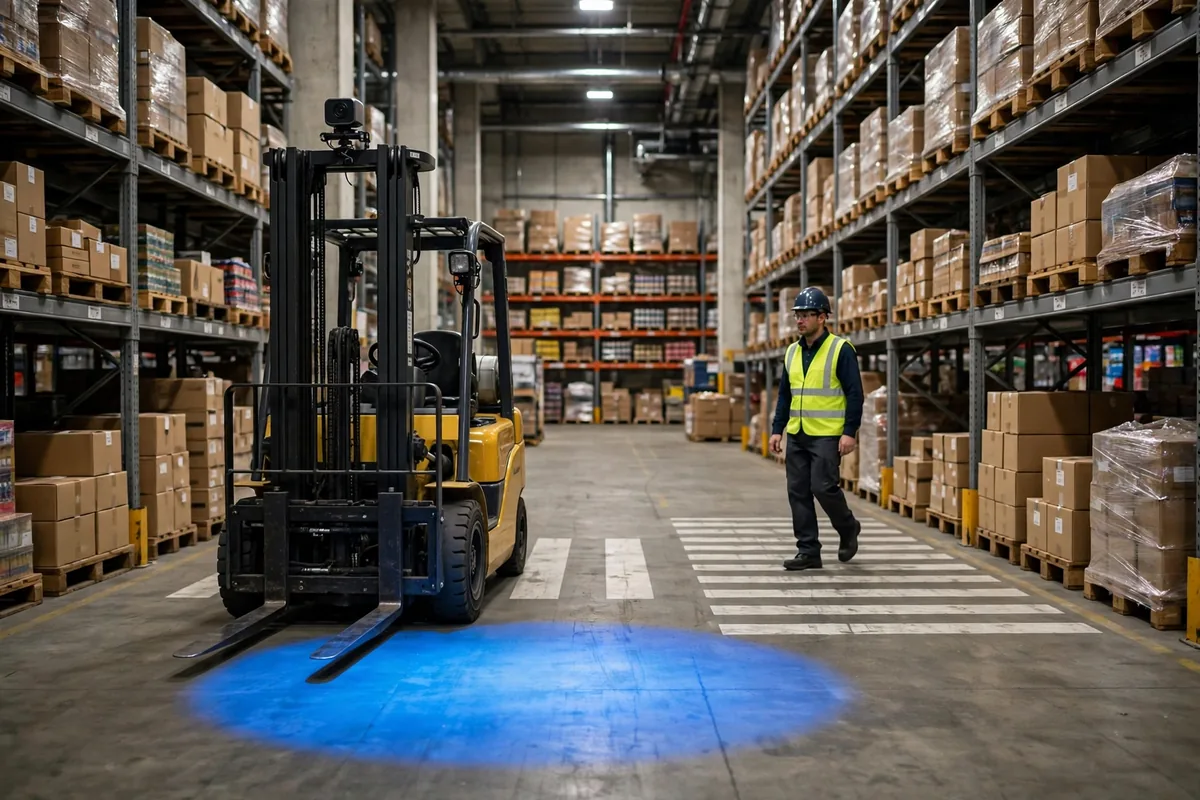
Layer one is daily visual awareness, owned by the people doing the work. Forklift drivers and pickers are in the aisles every hour, so they see damage first. Their job is not to judge severity. Their job is to report any hit, scrape, paint loss or visible bend in the same shift, with a photo and a location. Keep it to thirty seconds — a scan, a photo, done. If this layer fails, every later layer is just mopping up.
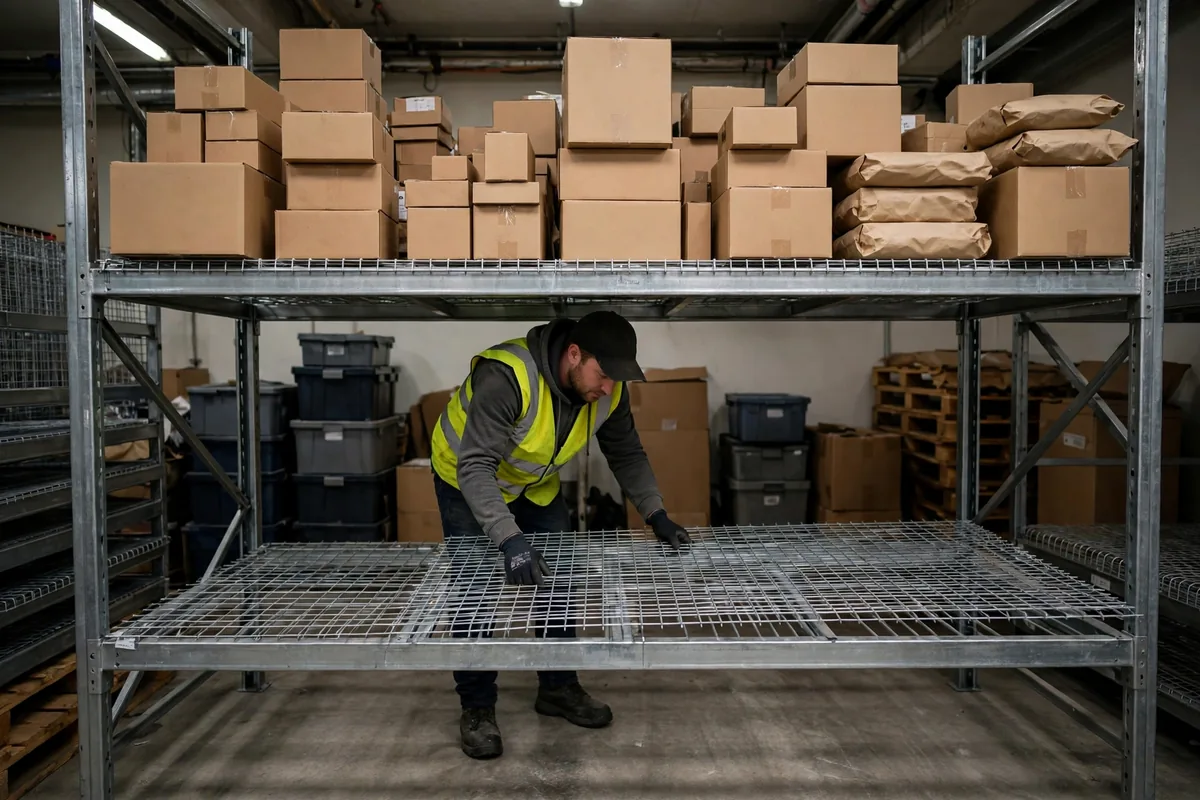
Layer two is a monthly systematic walk, done by one or two named people. They walk every aisle with a checklist: the bottom metre of each upright, beam connectors and safety clips, base plates and anchors, and the condition of barriers and upright protectors. Every finding gets a location, a photo, a grade, an owner and a re-check date. In a high-traffic site I tighten this layer to every two weeks for the busy zones. In a quieter site, monthly is enough. Frequency follows risk, not the calendar — that sentence is the whole philosophy.
Layer three is a professional deep inspection at least once a year, by the rack supplier or an experienced third party. They look at different things: upright plumb and drift, accumulated distortion across a run, whether the load configuration still matches the original design, and whether anyone has quietly changed beam levels. This layer produces a formal report and the stop, repair or replace decisions. Your own team, however conscientious, cannot substitute for it, because some checks need instruments and the original design data.
Here is the framework I pin on the wall:
| Layer | Who inspects | Reference frequency | What they check | Action on a finding |
|---|---|---|---|---|
| Daily visual | Drivers and pickers | Daily, with the work | Hits, paint loss, obvious bends | Report same shift, photo and location |
| Systematic walk | Named warehouse inspectors | Monthly; busy zones every two weeks | Uprights, beams, clips, anchors, protection | Grade, log, set re-check date |
| Professional check | Supplier or third party | At least annually | Plumb, load configuration, cumulative distortion | Formal report; stop, repair or replace |
Grading Damage: A Green, Amber and Red Practice
Inspection falls apart when two people look at the same upright and disagree about whether it matters. The green, amber and red scheme below is an internal management practice used in many warehouses I have worked with — a house tool for decisions, not a legal standard. Confirm your thresholds against your rack supplier's documentation and professional advice.
Green means minor: paint damage or a light knock, no visible bending, beams and connectors intact. Log it, photograph it, and re-check it next round. Today's photo is the baseline that tells you tomorrow whether it got worse.
Amber means watch closely: a visible slight bend or local dent, a slightly distorted connector, a missing safety clip or damaged protection. Reduce load or stop putting heavy pallets in that bay, tag it, and get a professional review within a fixed deadline. Amber is where I have seen the most failures, because everyone thinks it can wait. Amber left without a deadline becomes red on its own schedule, not yours.
Red means stop now: a clearly bent, twisted or torn upright, a dislodged or badly distorted beam, loose or pulled anchors, or a run that visibly leans. Unload it, close the aisle, barrier it off, and let nobody store into it until a professional says repair or replace. There is no negotiation at red.
A second case shows the other side. A regional auto-parts warehouse had a manager who was stubborn about amber deadlines: every amber finding needed a review conclusion within seven days. On one walk, an upright with a slight inward bend was graded amber. At re-check, measurement showed the deformation had grown slightly in a week, so it was raised to red, unloaded and replaced. The supplier's engineer later said that, left through a peak season of repeated knocks, that upright could have become a serious failure under full load. That site paid for one upright and half a day of work. Compare that with the home-goods case: one paid a small bill on its own schedule, the other paid a large bill on the damage's schedule. The only difference was whether anyone chased the amber.
Warehouse Rack Inspection Frequency: Four Things Everyone Forgets
First, night shift and new starters. A new driver who clips a rack at 2 a.m. and does not know reporting is required starts your next incident. Reporting must be in day-one driver training, and night supervisors need the same authority to close an aisle as day managers.
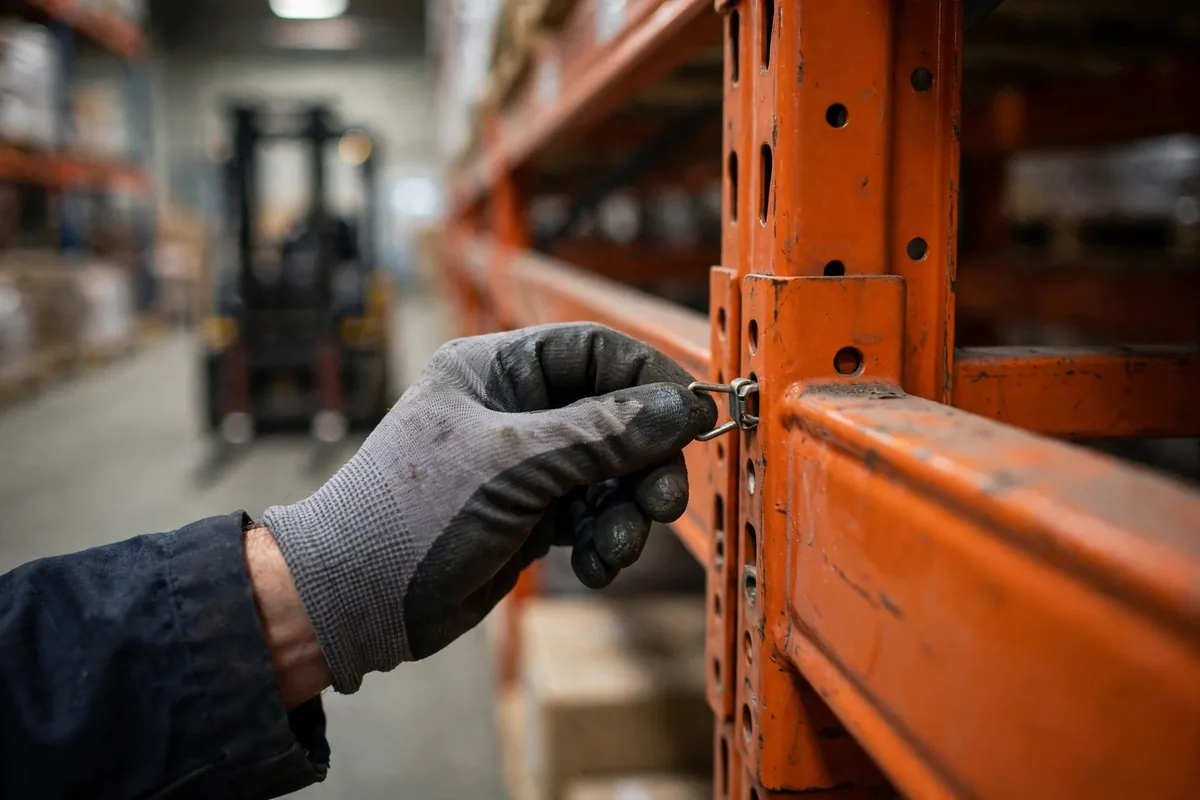
Second, beams and safety clips get skipped. Everyone stares at uprights. When I walk a site I crouch and look at connectors, and the rate of missing safety clips is consistently shocking. A clip costs almost nothing, and without it a beam can be dislodged by an uplift from a pallet. Give clips their own line on the checklist.
Third, records with no photo and no location are useless. No abnormalities written five months ago tells you nothing when you are trying to work out when damage appeared or whether it is growing. A phone photo plus a bay and level reference costs almost nothing now.
Fourth, repairs are never closed out. A replaced upright is not the end: the next monthly walk should re-look at that run, check neighbouring uprights, and close the record. Inspection without closure is an open loop.
If you have nothing in place today, start in this order: fix the reporting rule (hit it this shift, report it this shift), name the monthly inspectors, write the grades and stop authority on one page, then book one professional inspection to clear the backlog. Tighten frequency zone by zone afterwards. Do not start by buying a system.
Racking is patient. Ignore it all year and it will choose its own moment — usually your busiest week — to demand your attention. So tell me: will you pick the time to inspect it, or will you let it pick the time to stop you?
By Lao Mi, Supply Chain Veteran (20 yrs)