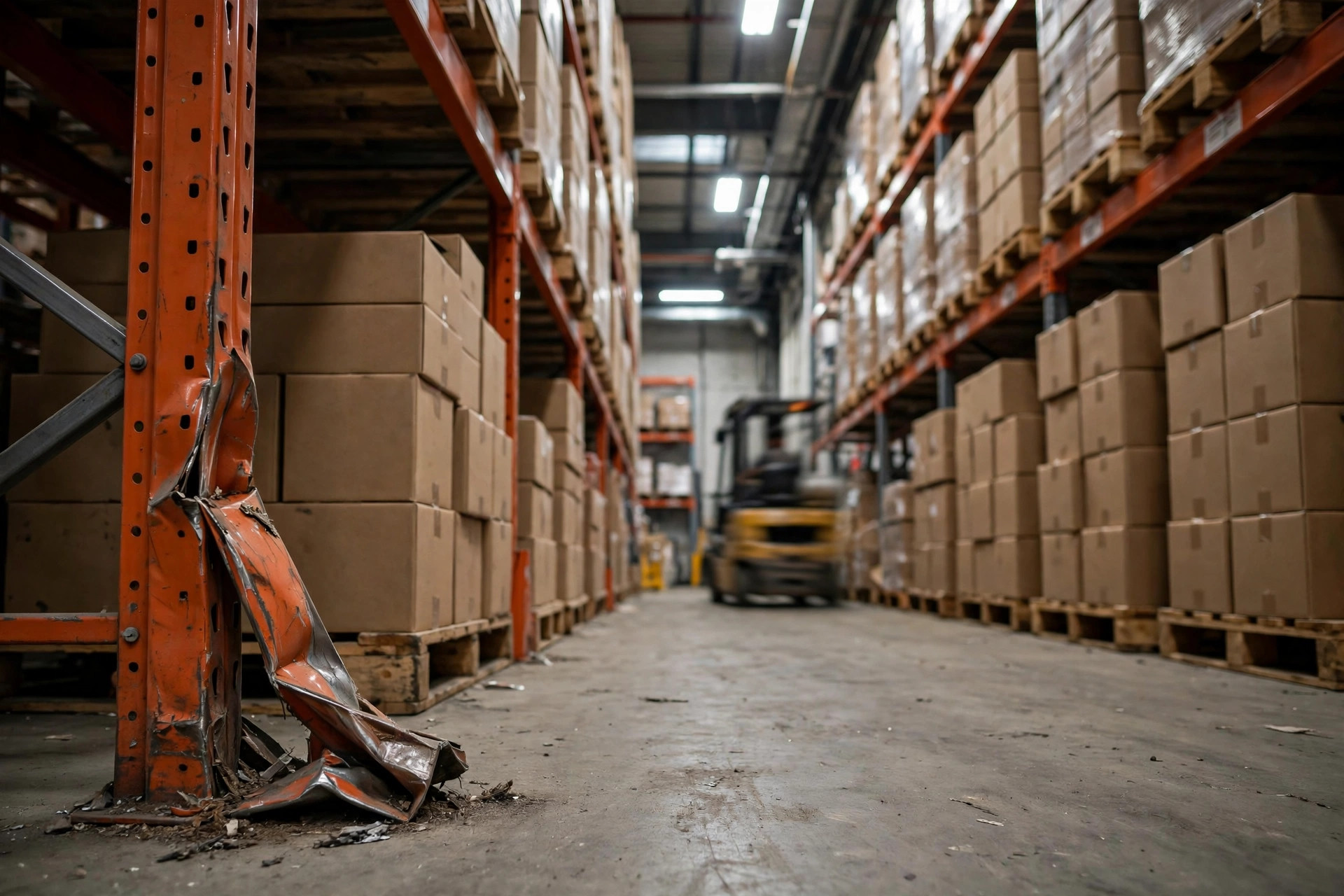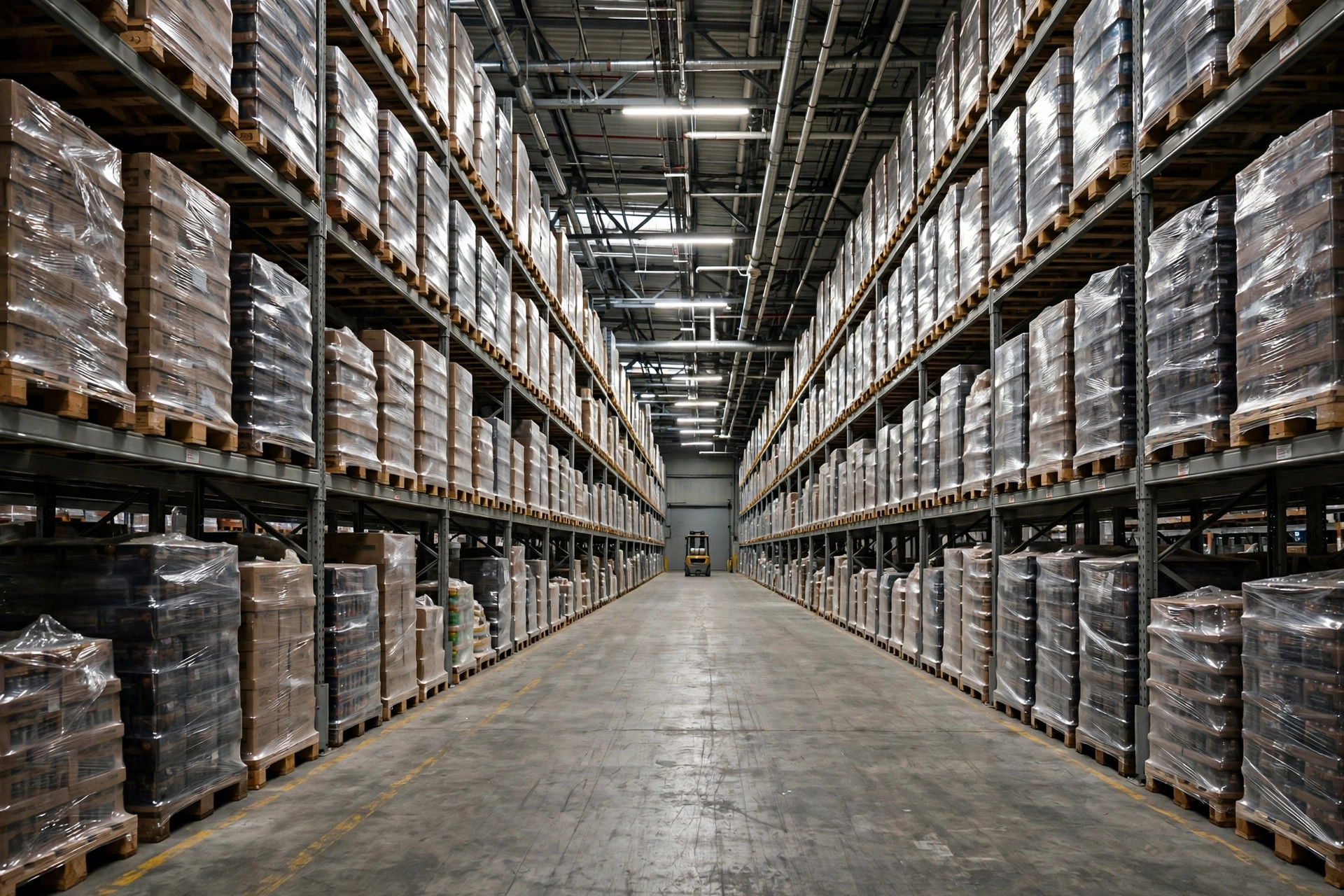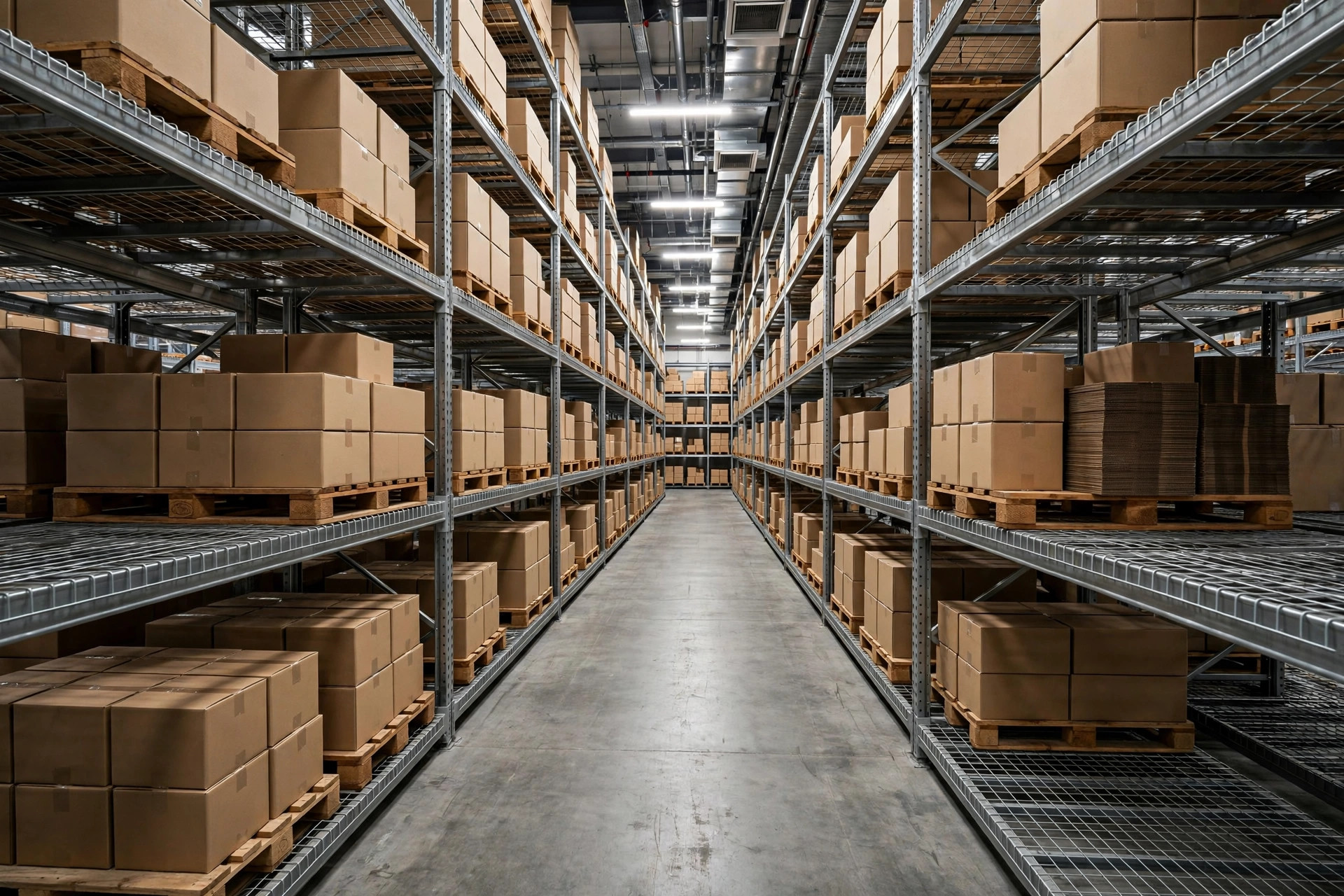
Real talk: 90% of cross-border sellers have never once thought about what's holding their pallets up on the rack.
Until one day the 3PL emails you: one of your pallets fell. Cartons cracked open, $8,000+ in product value gone. Then you read the contract and find the line: "damage caused by pallet quality issues" — not covered. That money is on you.
That's what we're talking about today: wire mesh decking vs pallet supports, the two ways to deck a pallet rack. Pick wrong, and it's not just freight that drops. It's cash.
My Painful Lesson: That One Pallet in 2024
October 2024, a 3PL warehouse on the US East Coast. I had a pallet of Bluetooth speakers — 40 cartons — sitting on beams with two pallet support bars across the middle. Seemed fine. Bars are holding it, right?
Then the middle bottom board of the pallet cracked from moisture damage. The whole pallet sagged, and the beam edges sliced open a dozen-plus cartons. Roughly $8,000 in product value. Two months of claims back-and-forth. The 3PL pulled out the contract: pallet-quality-related damage is excluded. I ate the loss.
Afterward I asked the warehouse manager: "What if it had been wire mesh decking?" He said: "It wouldn't have sunk at all. The mesh catches the whole thing. Worst case, it tilts a little."
One sentence. I swapped every deck in my overseas warehouse after that.
Wire Mesh Decking vs Pallet Supports: What's Actually Different
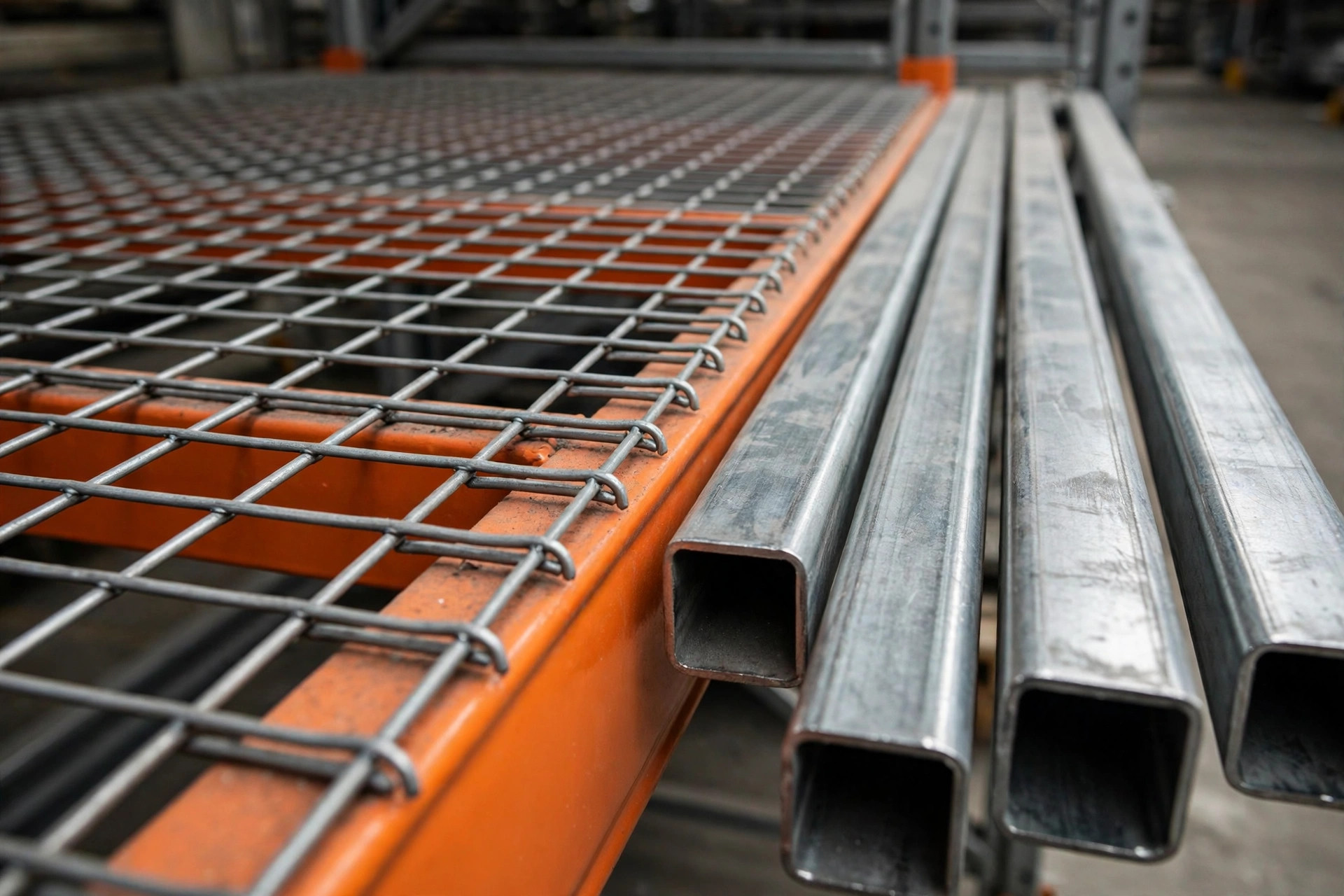
There are three ways to put a pallet on rack beams: drop the pallet straight on the beams (cheapest, riskiest), add two pallet support bars (bars cradle two edges of the pallet bottom), or lay wire mesh decking (a full mesh panel, pallet sits on top).
The difference in one line: supports hold two edges; mesh decking catches the whole surface.
Pallet supports are cheap — around twenty-something bucks a pair. A wire mesh deck runs $30 to $50, depending on size and capacity. But here's what cheap costs you: the moment a pallet breaks or a board loosens, supports can't save you. The freight falls straight through. Wire mesh is different — the deck carries the full pallet footprint, so even if one board snaps, the load stays put.
And here's something most people don't know: mesh decking is water-permeable. US fire codes have rules for high-bay racking — if your decking blocks water, sprinkler flow can't reach down, and some warehouses get told to install in-rack sprinklers. That's serious money. Wire mesh lets water pass through, so that problem never shows up.
Let's Do the Math: Wire Mesh Decking vs Pallet Supports
| Pallet Supports | Wire Mesh Decking | |
|---|---|---|
| Cost per pallet position | ~$20+ (a pair) | ~$30–$50 (one panel) |
| Load surface | Two edges only | Full surface |
| When a pallet breaks | Basically no help — freight falls | Mesh catches it — no fall |
| Small items / loose cartons | Fall through the gap | Caught by the mesh |
| Fire sprinkler permeability | Open between bars, fine | Mesh openings let water through, fine |
| Best for | Standard pallets, heavy freight, quality pallets | Odd-shaped goods, loose cartons, small items, high-value freight |
Do the math: one pallet worth $8,000. Wire mesh costs about $20 more than supports. One dropped-pallet claim pays for the price difference on 400 pallet positions. The math is simple. The psychology is hard — because you pay for decking today, and you pay for the dropped pallet in some hypothetical "someday." Human nature loves that trap.
The Counterintuitive Part: You're Not Paying for Strength, You're Paying for Forgiveness
Most people think wire mesh costs more because it's "stronger." Wrong. Both options are rated to hold your freight. The difference is what happens in the bad moment.
Supports are a "nothing goes wrong" solution: pallet's fine, forklift doesn't clip it, boards stay dry — no problem. But if any one link fails, there's no second chance. Wire mesh is a "something went wrong but you're covered" solution: pallet cracks, cartons shift, small items slide — the deck catches them.
Here's the thing about cross-border: your freight sits in a 3PL you can't see or touch, handled by forklift drivers who don't work for you. In a "can't see it" scenario, forgiveness is everything. And here's the counterintuitive conclusion: the farther your freight is from you, the more you should spend on decking. Your own warehouse, where you walk the aisles every day — supports save you money, fine. A 3PL or overseas warehouse you can't supervise? Don't cheap out on wire mesh.
Whose Fault Is It When Freight Falls? Get It in Writing First
Back to the painful question: freight falls in the 3PL and breaks — who's liable?
I've read three 3PL contracts. Same answer every time: damage from pallet quality or packaging problems is excluded. Who picked the decking, what configuration, at what rating — the contract doesn't say. It's a gray zone. Freight falls, the warehouse says "bad pallet," and you have zero leverage.
So here's what I do: before signing, be the awkward one. Ask the warehouse for a decking layout sheet — which zones use wire mesh decking, which use pallet supports, rated capacity for each — and attach it to the contract. Specify that high-value freight goes in the wire-mesh zone. Get that one clause in, and you have something to stand on when the arguing starts.
Three Pitfalls I've Personally Hit
- Don't use plywood as decking. I've seen small warehouses lay wood planks across beams. They mold, they rot, and the fire inspector will have a field day. The remediation costs ten times what wire mesh would have.
- Measure your beam depth before buying supports. Too short and they don't seat; too long and they stick up — and your pallet slides right off. Don't ask me how I know.
- Mixing both is fine, but zone it clearly. Heavy standard pallets on supports, odd-shaped or high-value freight on wire mesh. The worst move is going all-one-type for simplicity — saving pennies to bury a landmine.
One last habit: every quarter, have the warehouse manager send you a photo of the high-bay racks. Ten minutes — check for bent decks, cracked pallets. This one I can vouch for: in March 2025, one of those photos caught a batch of moisture-damaged pallets. We swapped 60+ before anything happened.
Rack decking looks boring, but it's the last line of defense between you and "my freight fell." The wire mesh decking vs pallet supports question doesn't have its answer in the price list. It's in your freight value — and in how far away your warehouse is.
By Ah K, E-commerce Seller (5 yrs)