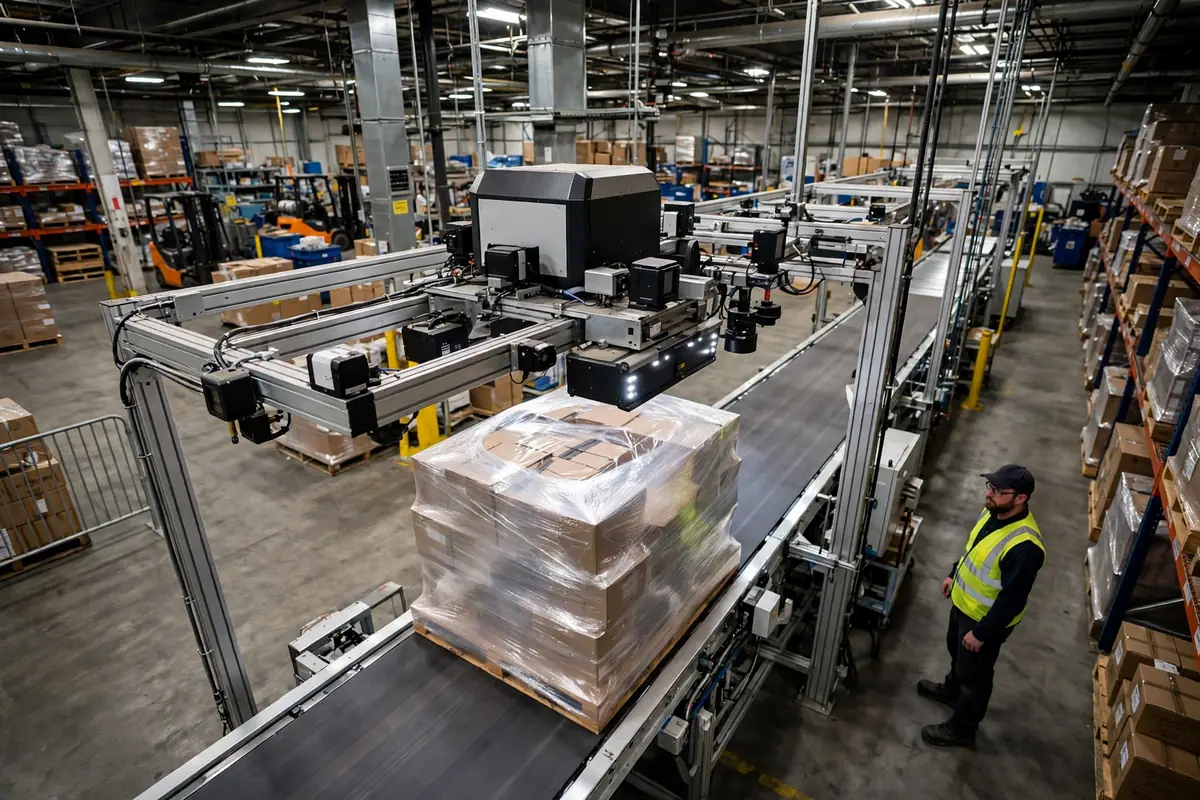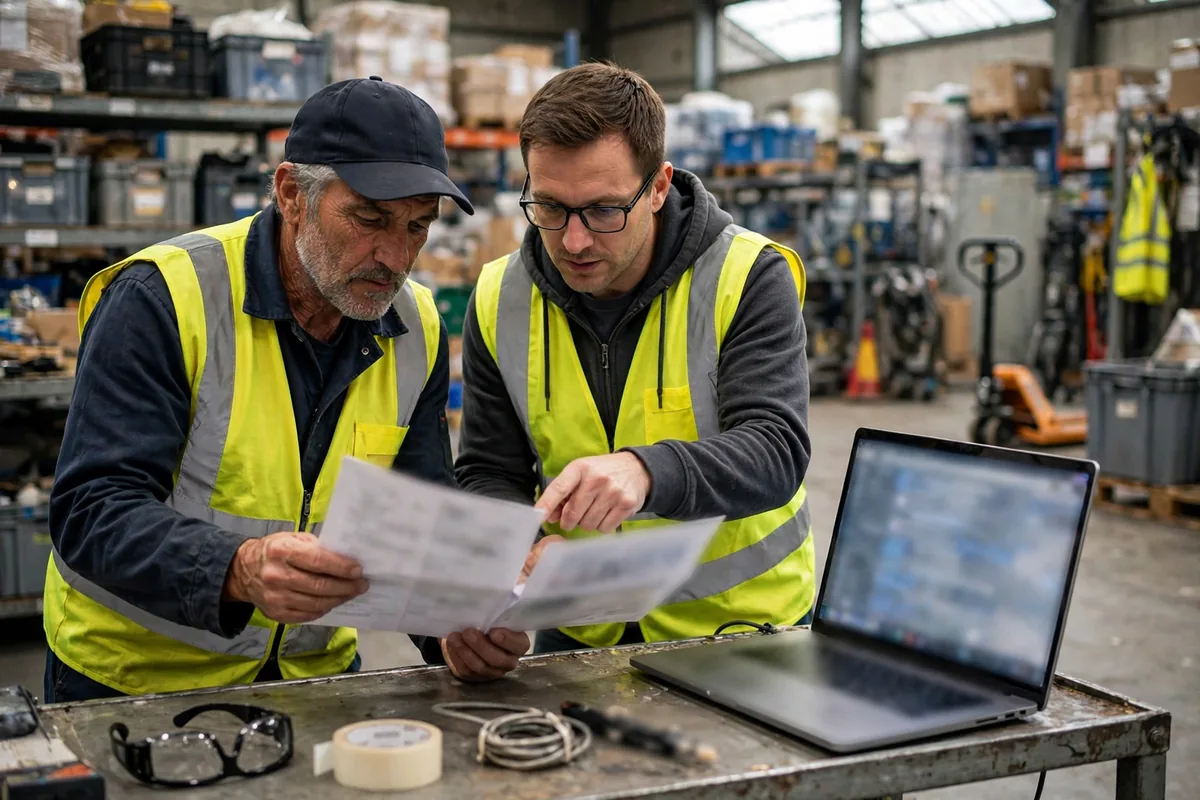
Let me start with our reality: an ai vision returns grading warehouse sounds like something a giant fulfillment network buys, not something a 3,000-square-meter warehouse with a handful of packing benches can afford. We cannot burn that kind of money. The vendor demos I watched showed conveyors flying and robot arms flipping products while grades popped up on a dashboard. Then I looked at our returns mountain and laughed. Then I got back to work, because returns grading is exactly where a small warehouse like ours hurts most.
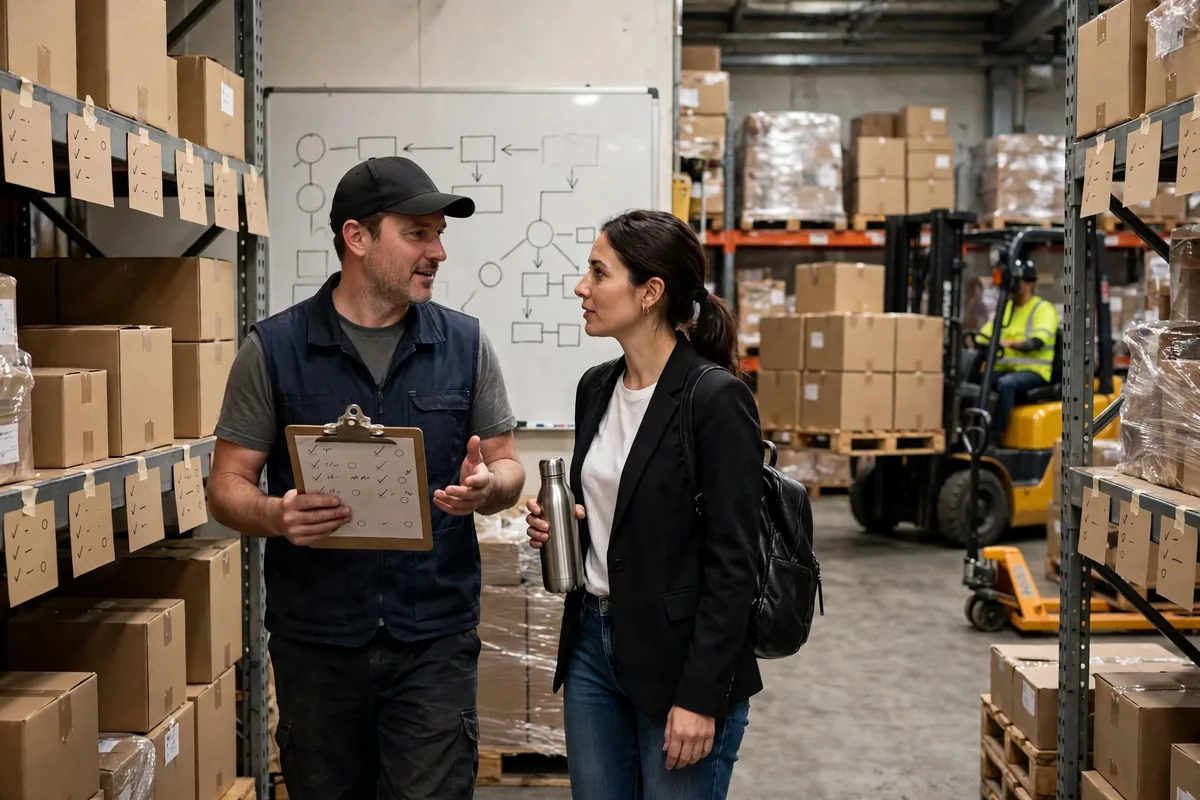
Every return has to be graded. Grade A goes back on sale as it is. Grade B needs light work — a new box, a wipe, a missing cable replaced. Grade C is parts, clearance or scrap. Two experienced workers used to do all of that by eye and by hand. At peak, tired eyes get generous. C-grade stock leaks into B and earns a second complaint; good A-grade stock gets downgraded out of caution and the margin quietly evaporates. I did not test AI because it is fashionable. I tested it because I could not hire a third person who actually knows how to judge returned goods.
Our low-budget pilot: ai vision returns grading warehouse on one bench
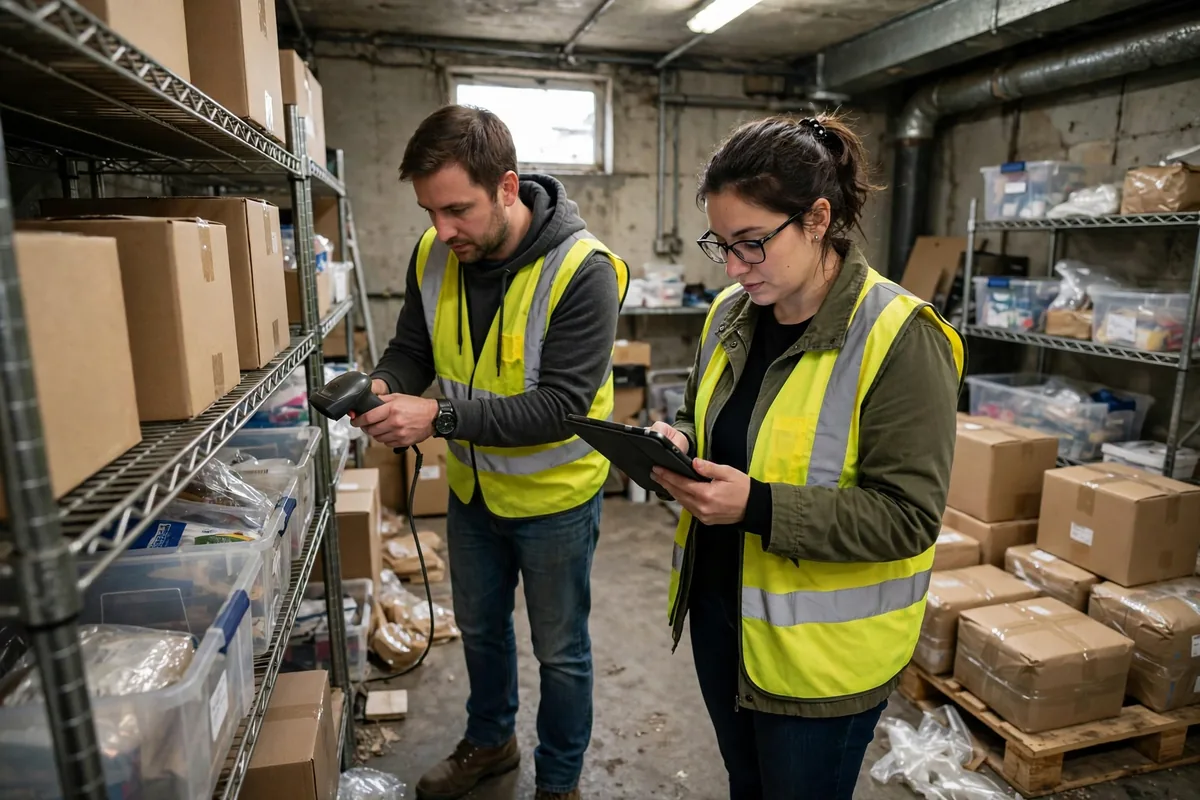
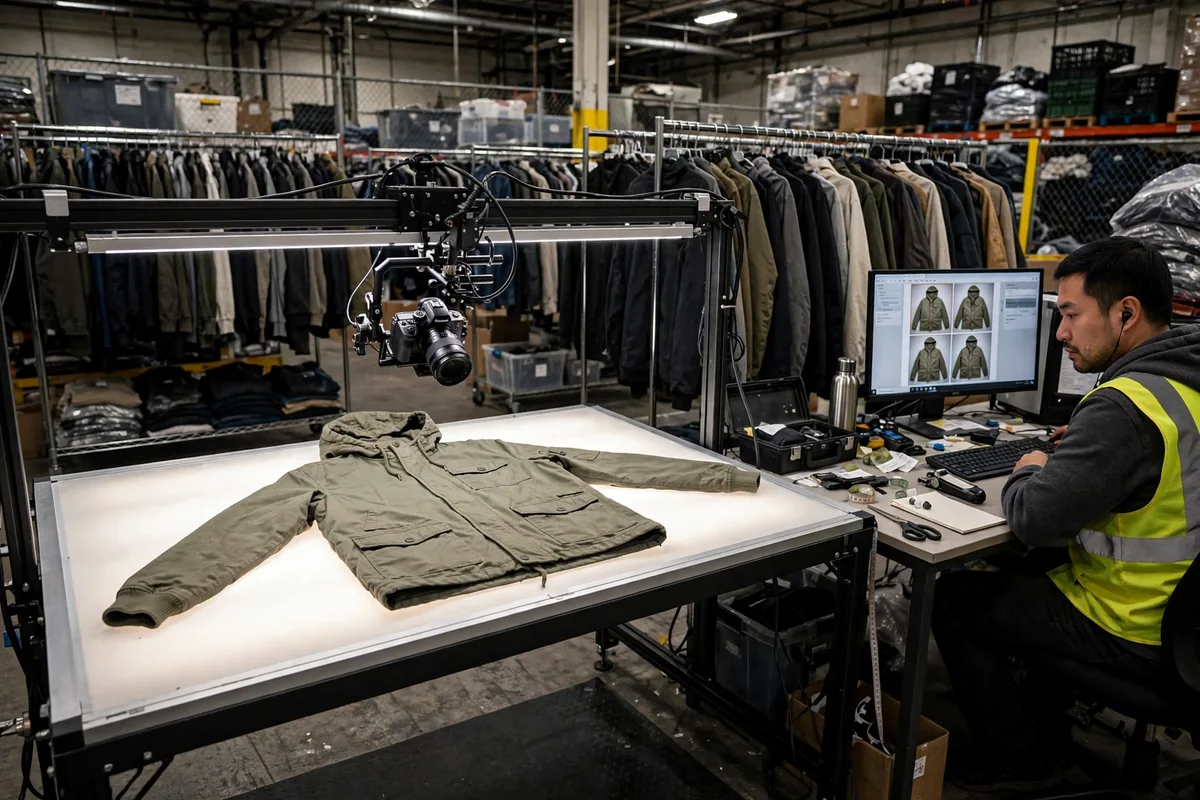
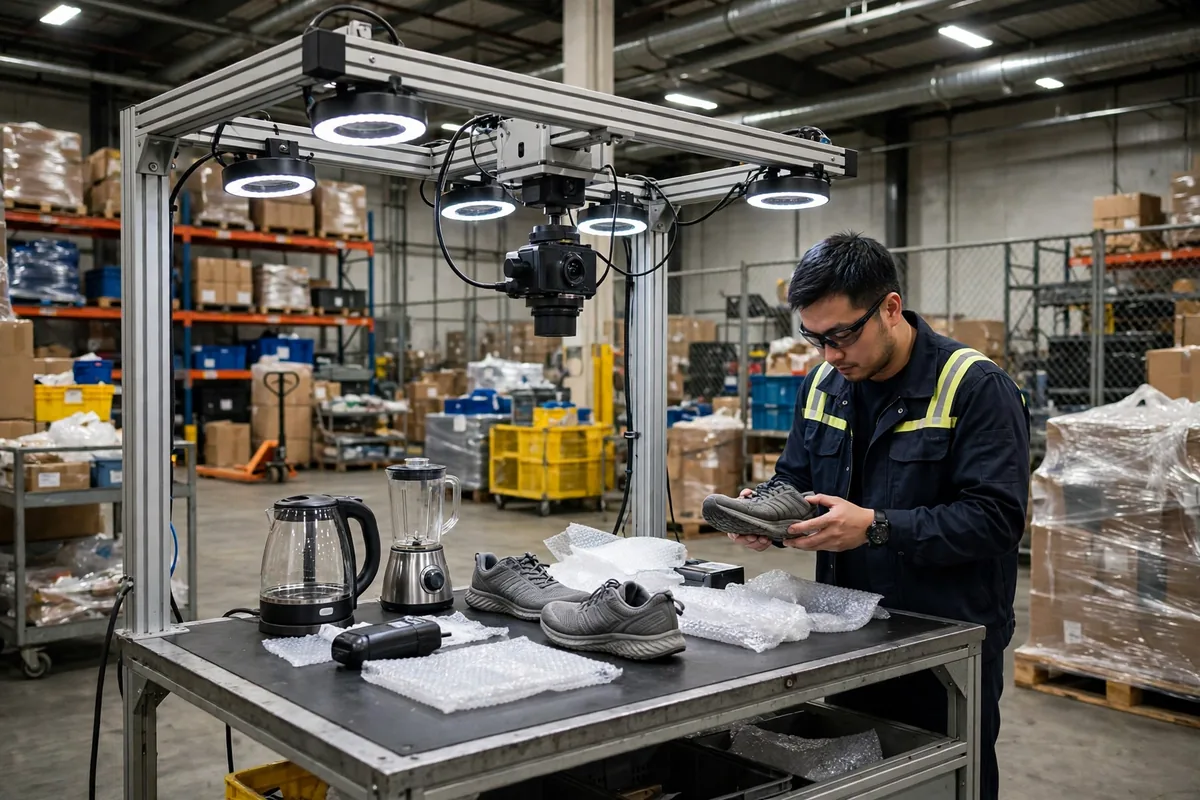
I did not buy a system. I could not afford to, and I was not willing to gamble. The pilot ran on a small-warehouse budget, and every figure here is our pilot assumption, not a vendor quote: one inspection bench with a camera, returns photographed as they pass, the software suggesting a grade from visible defects, accessory completeness and packaging condition, and humans reviewing only the low-confidence items plus a sample of the graded ones. We limited the pilot to two categories: hard-shell small appliance accessories and standard storage products. Clothing was excluded — and day one, when I tried a few garments anyway, taught me why.
The pilot ran four weeks, and for the first two I stood at that bench checking grades myself. Case one: a batch of returned electric kettle bases, just over a hundred units. The old way, two workers needed most of a day to inspect them all. With the camera pre-sorting, roughly half came out as high-confidence A and went through sampling, about a third landed in B, mostly damaged packaging and light scratches, and the remainder fell into C — which genuinely contained cracked bases. Humans focused on B, C and the A sample, and total handling time on our roster dropped by a clearly noticeable margin. What impressed me was not speed. It was consistency. At four in the afternoon, when human graders are fading, the machine applied exactly the same standard as at nine in the morning. Machines do not get tired. That is a real advantage.
Case two humbled me fast. A batch of returned colored storage boxes — rose red and orange — came back under our warm warehouse ceiling lights. The camera could not separate true fading from lighting, and graded a run of dull, apparently faded boxes as A. Our packing lead spotted it first: "Ma, these colors are wrong." I doubled the A-grade sampling rate on the spot and we caught the problem units. That day I learned the core truth: vision AI reads pixels, not products. Its understanding of color and light lives on a different channel from yours.
Where it misjudges: an ai vision returns grading warehouse error list
After four weeks, our mistakes fell into three honest buckets.
Bucket one is color. The system is unstable on color difference, fading and batch variation, especially reds and off-whites — shades a human catches in one glance while a camera guesses through white balance. Change a ceiling light, let daylight drift in, and the judgment drifts with it. Our fix was embarrassingly low-tech: a fixed light source hooded over the inspection bench, a standard color card in the photo zone, and a calibration check every morning before work starts. Small money, big protection.
Bucket two is soft goods. On clothing and fabric, wrinkles and stains look alike to a camera. A returned hoodie with wear creases was graded C as "stained," while a genuinely oil-stained piece hid its stain inside a fold shadow and passed as B. Soft goods deform too much; the same flaw changes appearance with every angle. In week two I removed apparel from the pilot entirely and went back to human grading. Forcing it to try is what costs money.
Bucket three is everything it cannot see at all. Smell, function and internal damage are invisible to it. A returned fan with a perfect shell graded A — plug it in and the motor rattled. A power bank with an unmarked case was quietly swelling along a curved edge the photos never showed. So our rule is absolute: for anything electrical, AI grades appearance only, and a human power-on test remains a separate gate. The two gates never merge. If a vendor tells you vision alone can own returns quality control, invite them to spend three days grading real returns in my warehouse first.
| Grade | What happens after the AI suggestion | Human job | Best-fit goods |
|---|---|---|---|
| A | Sampled, then back on sale | Sampling plus power-on test for electricals | Hard goods, standard items, intact packaging |
| B | To the rework bench: rebox, clean, replace parts | Confirm the rework for every unit | Light scratches, damaged packaging |
| C | To a holding zone, never straight to scrap | Experienced grader makes the final call | Damage, missing parts, suspected faults |
| Unsure | System parks it automatically | Human grades all of it | Soft goods, color-sensitive items |
That table is our whole framework: AI routes, humans decide. Sampling guards A, experience guards C, and everything uncertain gets parked. It sounds conservative, but in returns, one wrong A costs a second complaint plus return shipping — enough to erase the savings on many correctly graded units.
The small-warehouse math: three numbers decide it
We do not talk about payback periods and other big-company words. We watch three numbers. First, skilled hours: in the pilot categories our experienced graders stopped inspecting everything and only handled hard cases and samples, and their freed hours went into B-grade rework, which started moving noticeably faster instead of waiting in a pile. Second, misgrading losses: if that faded-box batch had shipped, the estimated second-return cost on those orders would have exceeded a month of pilot cost on our assumptions — which is why the fixed light and color card are not optional extras, they are insurance. Third, volume: if your returns are a few dozen pieces a day, do not bother; a good grader handles them between other jobs and the bench maintenance eats your saving. In our experience the pilot only started to make sense once returns held steady in the hundreds-per-day range — that is our warehouse's judgment, so run your own volume through it before believing me.
There is also an invisible return: evidence. With a photo and a grade stored for every return, I could finally argue with upstream sellers using proof. One product came back with packaging damage every time — that is a packaging design problem. Another had an absurd C rate — that is a product problem. Before, it was my word against theirs. Now I send photos. Meetings feel different now.
Advice for warehouses our size
First, pick categories before you pick tools. Hard goods, standard items, nothing color-sensitive — start there. Let soft goods and color-critical products skip the AI, and skip the headache. Second, fix light and the photo zone before you blame the model: fixed lighting, a color card, one consistent camera angle. Skip those three cheap things and the most expensive model will still drift. Third, keep human final judgment and sampling forever. Trust AI to route; do not yet trust it to decide, and never let it replace the power-on gate for electricals. Fourth, pilot in small steps and reconcile weekly: how many misgrades did sampling catch, how many hours did you actually save, did any C grades turn out innocent? Track those numbers for four full weeks before you decide. Ignore the mega-warehouse demo video.
We kept the bench after the pilot, still running only those two hard-goods categories. Apparel stays human. Color-sensitive boxes get double sampling. People ask whether AI will replace our graders. Replace them with what? It is a tireless intern with mild color blindness who cannot touch the product. Give it a master to supervise it and it is genuinely useful. Leave it alone and it will confidently cause trouble.
Small warehouses survive our own way: no full automation, no giant system, just one bench and two categories, money spent exactly where it cuts — stay alive first, then get smarter slowly.
By Xiao Ma, Small Warehouse Owner