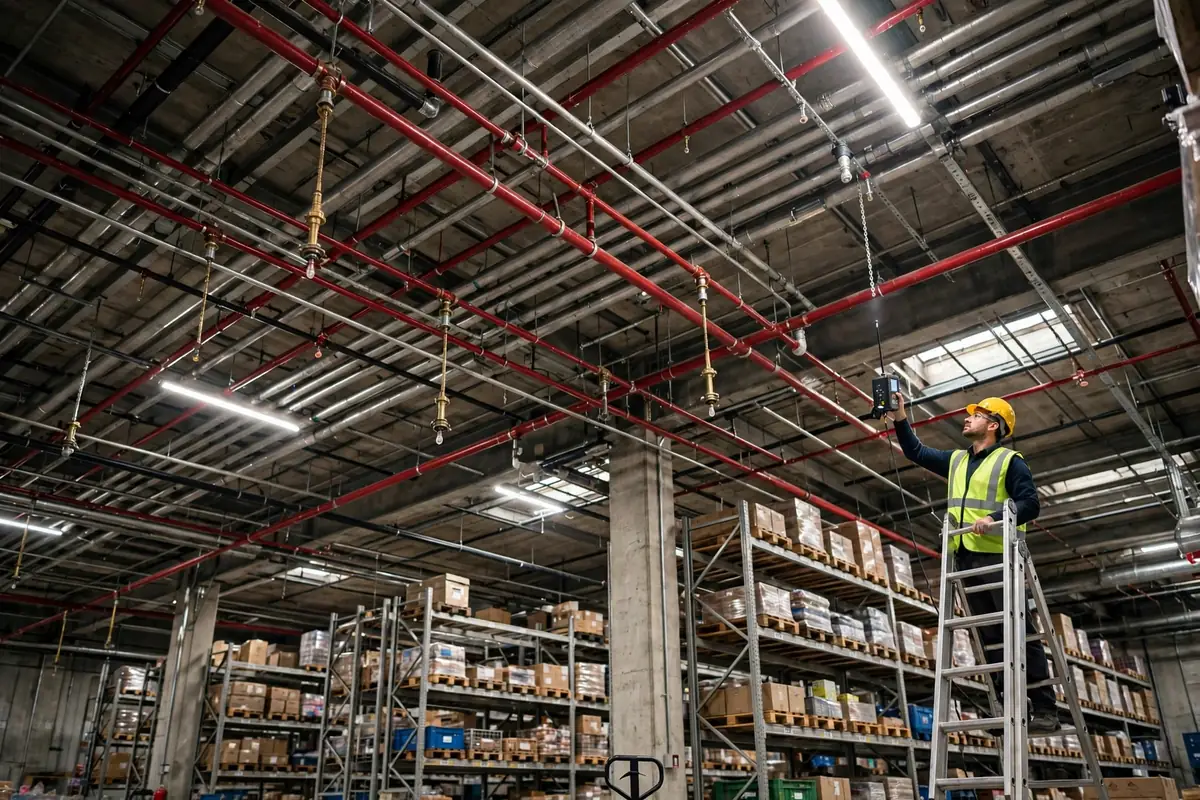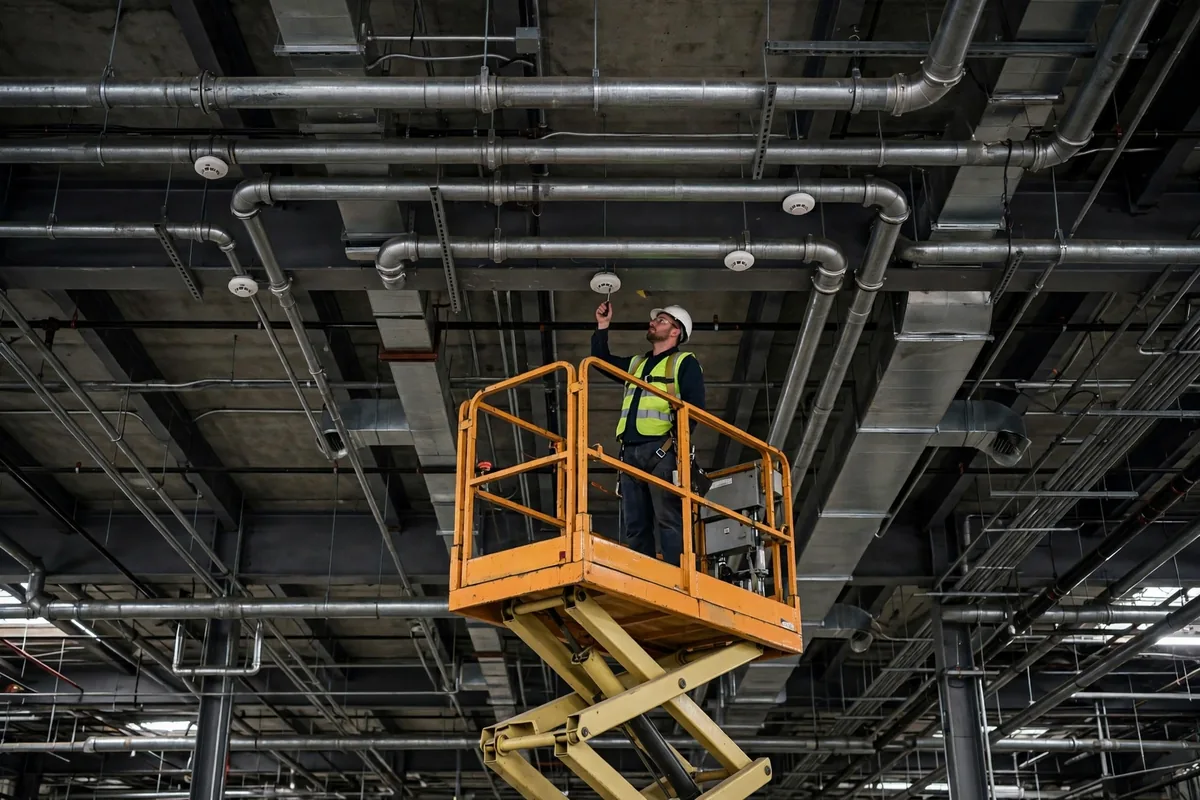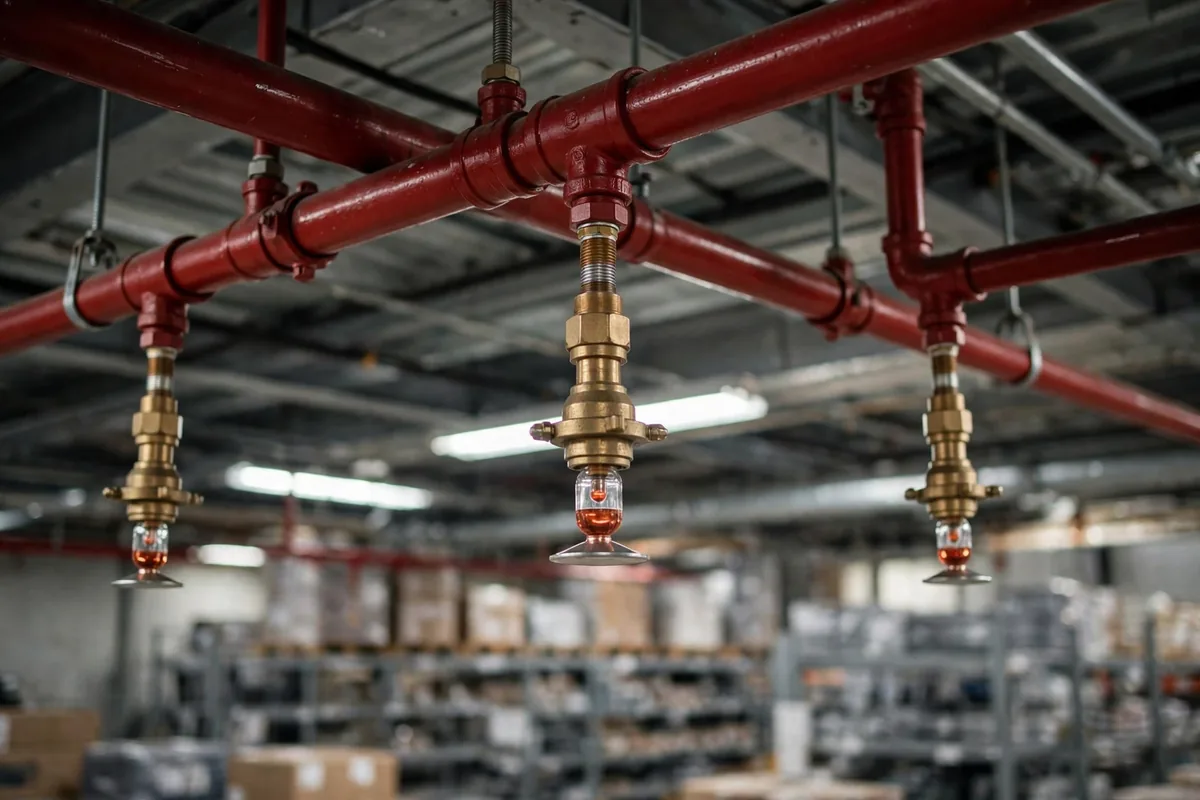
Last fall, a 3PL warehouse in California's Inland Empire got its annual sprinkler inspection report back: 17 deficiencies, and the repair quotes added up to more than a month's rent. The owner put the report on my desk and asked one question: which of these do I have to pay for now, and which can wait? Ten minutes of reading gave him the answer, and it saved him real money. That is the first thing to understand about a sprinkler inspection report. It is not a document you sign and file. It is a bill with a deadline on it, and reading it wrong means paying for the same problem twice.
The report comes out of NFPA 25, the standard for inspection, testing, and maintenance of water-based fire protection systems. The checks run on several clocks: weekly or monthly looks at valves and gauges, quarterly tests on waterflow alarms, a full annual inspection, and an internal pipe examination every five years. The annual report is the scorecard from that full inspection — every sprinkler head, valve, gauge, and main drain test in one place. If you want the full schedule of what gets checked and how often, the NFPA 25 sprinkler inspection and maintenance guide on this site lays out the frequencies; this article picks up where that one stops, with the defects and what they cost you.
Sprinkler inspection reports: read three pages first, not the whole report
An annual report can run dozens of pages. Do not read it front to back. Go to three places first: the summary page, which says whether the system passed or passed with deficiencies; the deficiency list, which grades each item and names its location; and the contractor's recommendations, which give the fix and the price. Once you have read those three, you know roughly what this round costs and how long you have. The rest is record-keeping.
The most common mistake I see is reading "passed with deficiencies" on the summary page and relaxing. Passed with deficiencies does not mean nothing is wrong. It means the system still works, but every item on the list carries a correction deadline, and both the fire department and your insurer recognize that deadline. A warehouse in Dallas, about 80,000 square feet, learned this in 2024: three minor deficiencies sat untouched on its report, and when the insurer came to inspect before renewal six months later, those same three items were still open. The premium went up a tier, and the extra premium over one year cost twice what the fixes would have cost. That is money spent for nothing.
Sprinkler inspection deficiencies come in three grades
NFPA 25 sorts noncompliant conditions into three buckets: critical deficiencies, non-critical deficiencies, and items that need further investigation, with a system that cannot operate at all listed separately as impaired. The sorting rule is simple: would this problem stop the sprinklers from working in a fire? A closed control valve, a cut-off water supply, or a large number of failed heads is critical. A head partly blocked by racking, a few missing spare heads, or a gauge that reads off is usually non-critical. A third group covers things the inspector could not see clearly, like internal pipe corrosion — the report flags them for investigation, and they get graded after that.
| Grade | Typical examples | Correction window | Cost of waiting |
|---|---|---|---|
| Critical deficiency | Closed control valve, water supply interrupted, many failed heads | Fix immediately; a fire watch may be required until it is fixed | Fire department can order the system out of service; insurer may deny a claim |
| Non-critical deficiency | Obstructed heads, missing spares, drifting gauge | Correct within a reasonable timeframe, per local fire department rules | Becomes a repeat item at the next inspection; premiums may rise |
| Needs investigation | Internal pipe corrosion, hidden leaks | Investigate first, then grade and set a deadline | Can come back as a critical deficiency at double the cost |
One thing to be clear about: NFPA 25 itself does not set a single nationwide number of days for each grade. Critical deficiencies must be corrected immediately; non-critical ones within a reasonable timeframe, and the actual number of days comes from your local fire department and your insurer. If the report gives a date, follow the report and local rules. If it gives no date, ask the fire department and the insurer as soon as the report arrives. Do not guess.
Early in 2025 I ran the numbers for a warehouse in Phoenix: two critical deficiencies and nine non-critical ones. The critical items were fixed the same day for under $10,000. Of the nine non-critical items, four were heads blocked by new racking — moving the racking and replacing six heads cost a little over $3,000. The expensive surprise was one of the other five: a section of corroded main that needed replacing, quoted at more than $20,000. All amounts above are hypothetical examples used to show the costing method; actual rates depend on current official pricing.
Here is the counterintuitive part: the most expensive deficiency is usually not the most serious one. Critical deficiencies look alarming, but there are few of them and the fix is clear, so the money is spent once and visibly. The real money pit is the non-critical deficiency that gets left alone. Every re-inspection adds a visit fee, every renewal with open items risks a premium increase, and every fire department re-check risks a forced correction with a fine. The small items on the report grow into big ones while you are not looking.
The re-inspection and who pays for it
Fixing the items is not the end of it. The contractor comes back to re-inspect, and the file only closes when the re-inspection passes. There are two kinds: a re-check of only the items that were fixed, which is cheap, and a full re-run of the whole system, which costs nearly as much as an annual inspection. Ask which one you are getting before you sign the repair contract, whether the re-inspection fee is inside the repair quote, and whether a failed re-inspection means paying for another visit. If you do not ask those three questions, the number on the quote is just a starting price.
Who pays is worth settling before the work starts, especially if you lease the building. The sprinkler system belongs to the landlord's asset or the tenant's responsibility — the lease has to say which. I have seen a tenant stuck with a $10,000-plus pipe replacement caused by the landlord's aging system, because the lease said the tenant handled routine maintenance and the landlord only handled structural repairs. The two sides argued for two months while the system ran with open deficiencies, and all the risk sat with the tenant. Writing inspection, correction, and re-inspection responsibility into the lease before signing is far cheaper than arguing about it later.
One more thing people overlook: keep the reports. NFPA 25 requires records to be kept — monthly records for roughly a year and a bit, annual records for about two years, with exact periods set by local rules. That sounds like paperwork, but when an insurer reviews a claim or the fire department comes back, a continuous run of reports over several years is itself your proof of compliance. Lose the reports and your compliance history has a gap in it.
So here is the bottom line, in numbers. When the report lands, read the summary, the deficiency list, and the recommendations. Sort the items by grade: critical items get fixed the same day, non-critical ones go into a plan inside the deadline your local rules set, and anything needing investigation gets investigated before it gets priced. Settle the re-inspection scope and fee before signing, and settle who pays before the work starts. The correction money has to be spent either way — the only choice is whether you spend it once, on your schedule, or several times, on someone else's.
By Lao Zhou, Logistics Cost Analyst