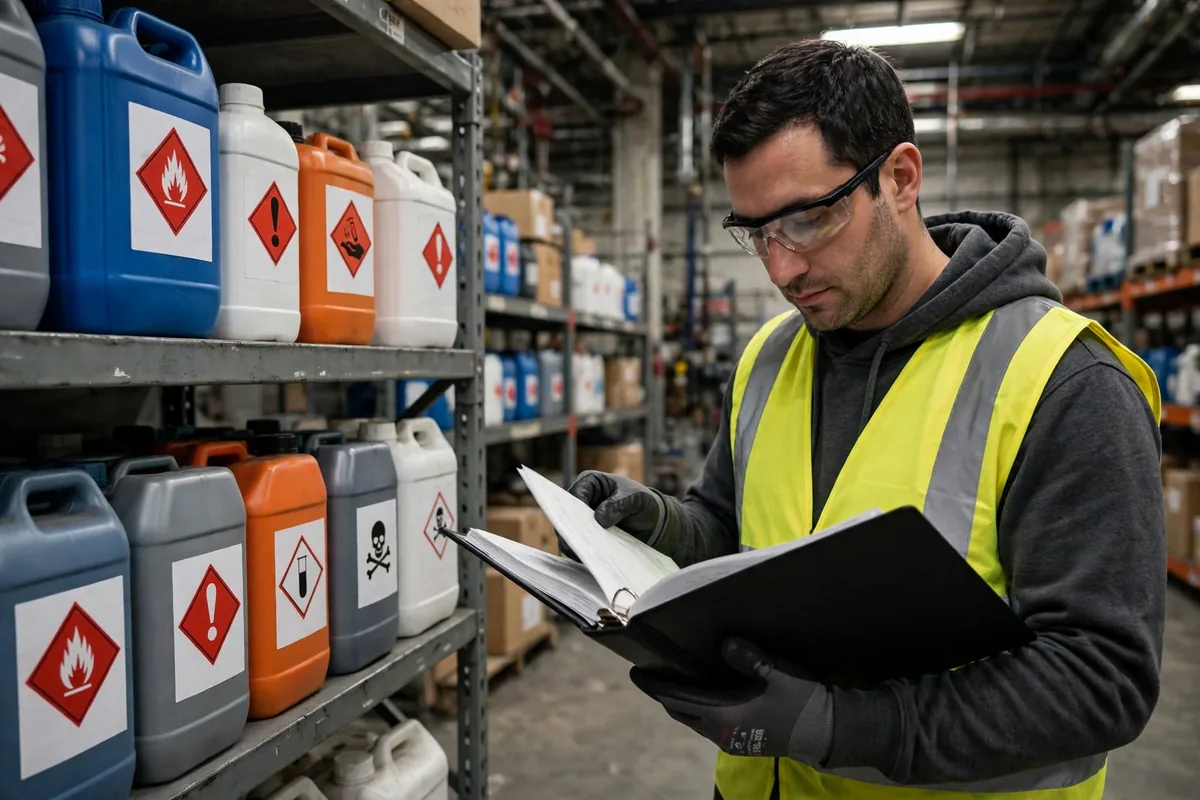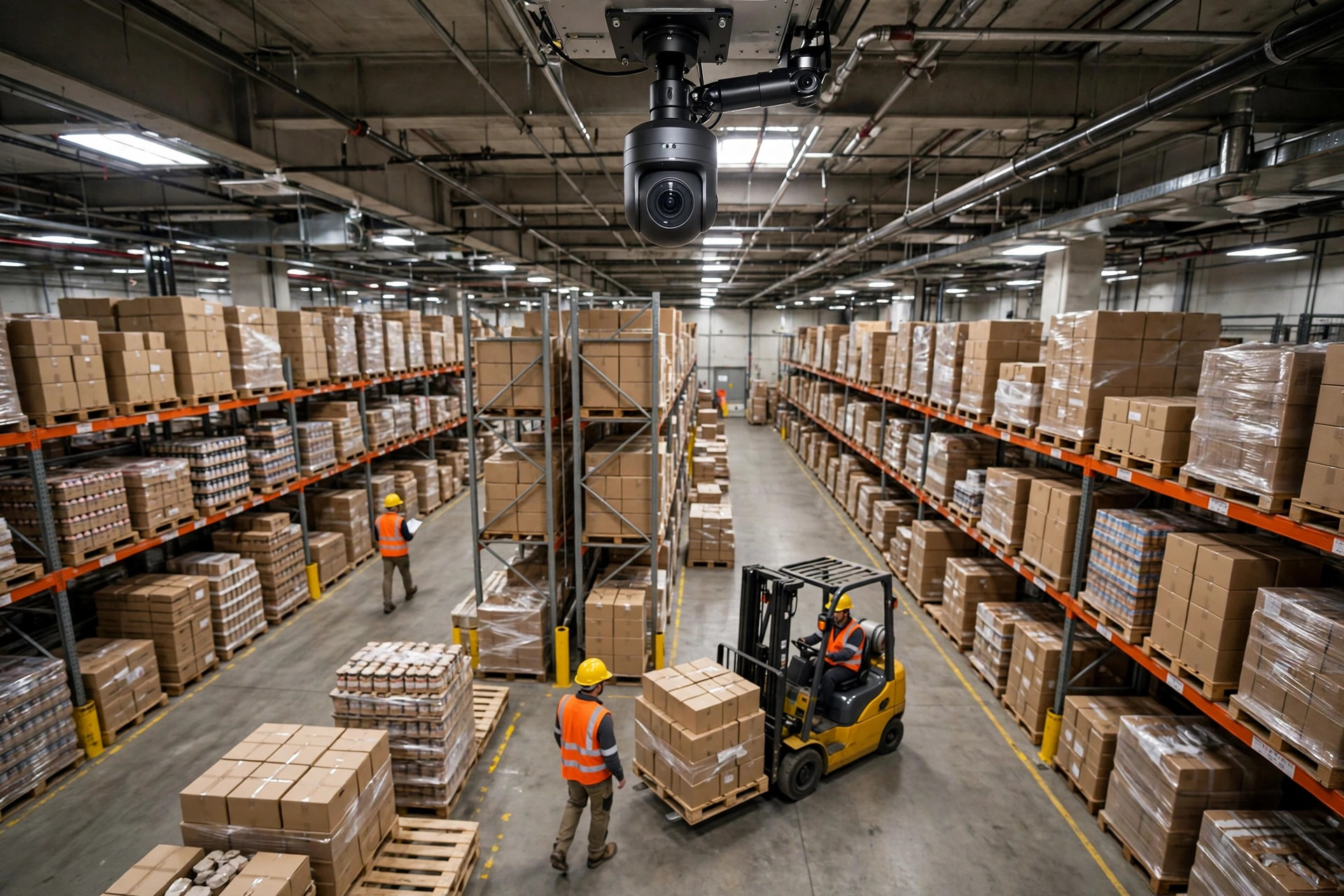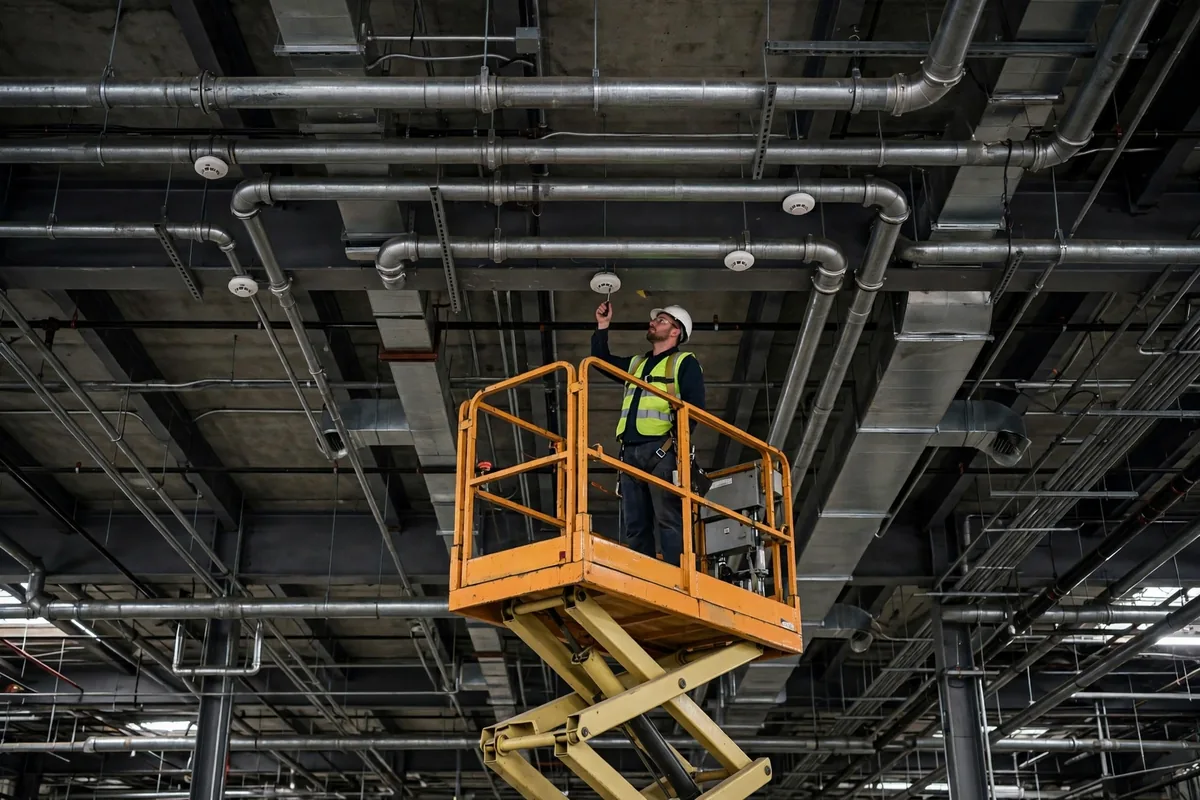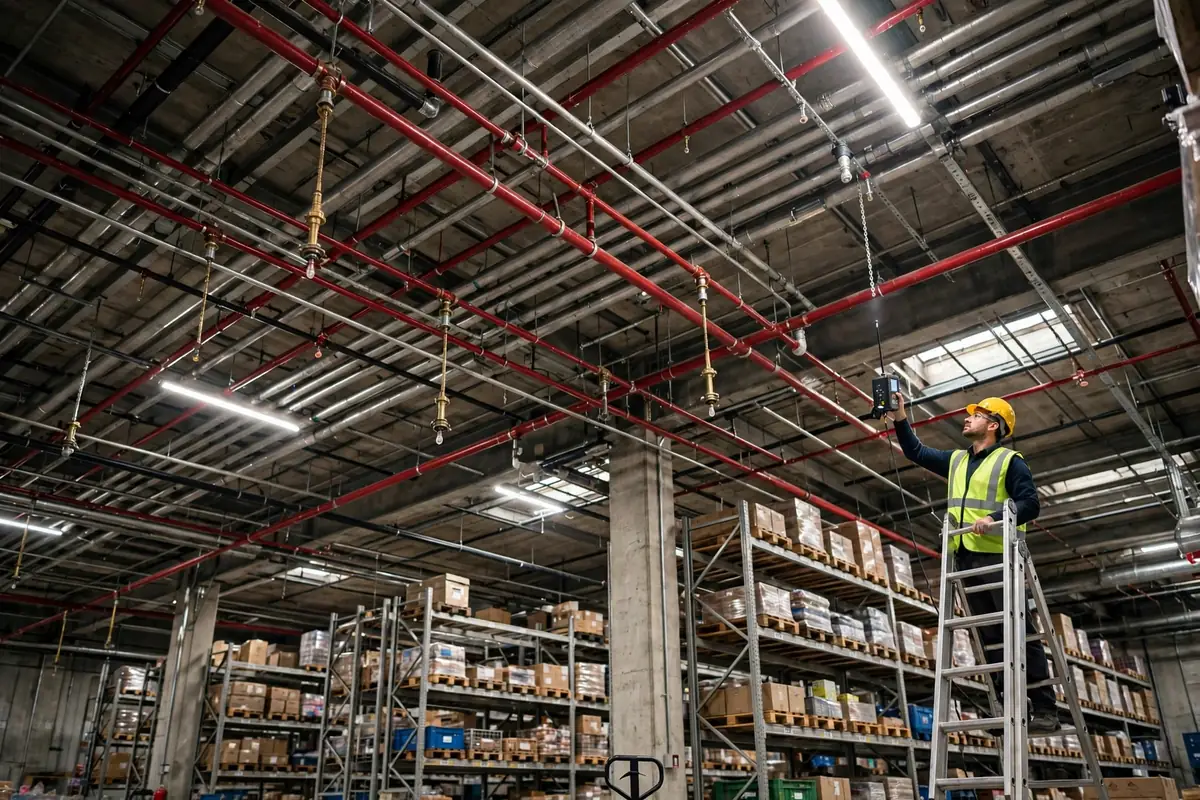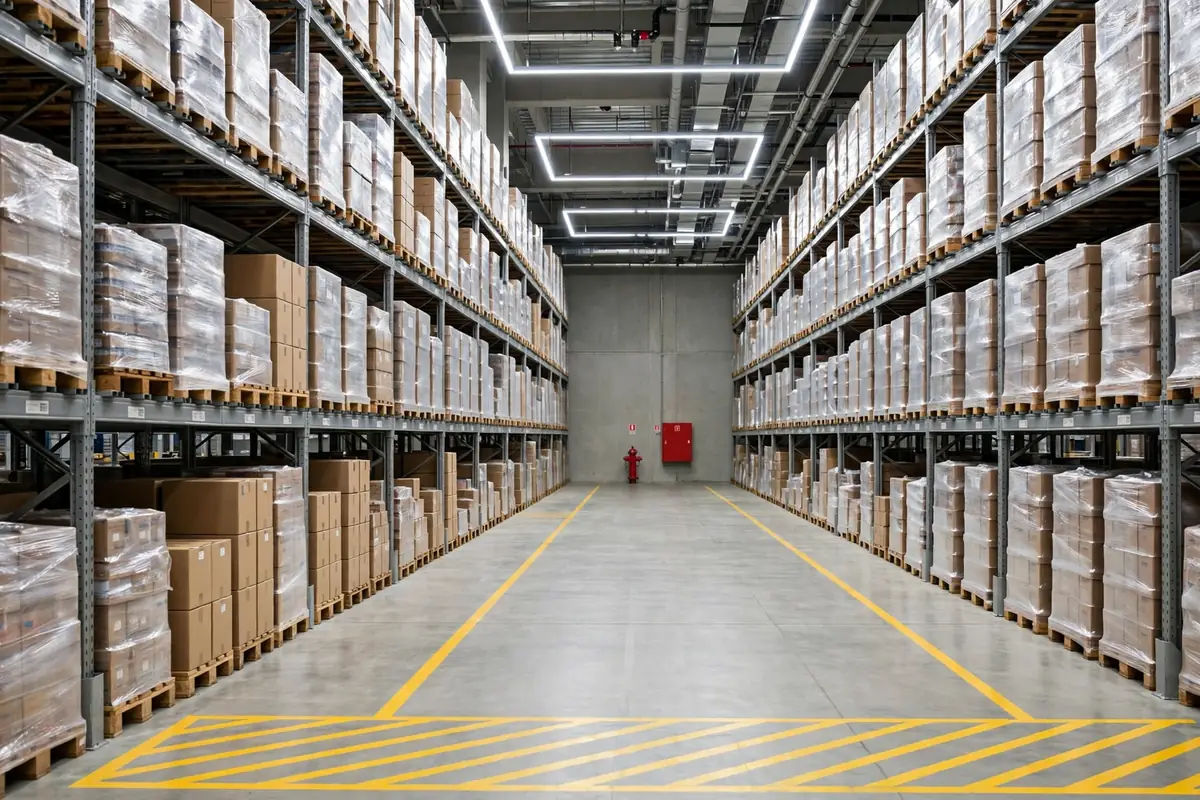
Let me tell you something about warehouse fire lane blocked fines: on an ordinary day, nobody sees the lanes. On the day something catches fire, they are the only road that matters. After fifteen years on the road, I have been in hundreds of warehouses, and I have seen dock doors blocked like parking lots, evacuation routes stacked with returns, and — the worst one — a fire hydrant buried behind three layers of cartons with the extinguisher cabinet hidden behind a pallet of promotional goods. The warehouse manager told me it was "just for one night." I drove away that evening thinking: if a fire starts here at midnight, the firefighters will have to move boxes before they can fight the fire. How is that supposed to work?
The afternoon I sat outside a dock door for ninety minutes
It was one autumn afternoon a couple of years ago — an illustrative scenario. I pulled up at a mid-sized warehouse in California at three in the afternoon with a full load, and the fire lane by the door had three trucks waiting to unload plus a row of freshly arrived pallets. I honked three times. Nobody moved. The warehouse manager came out looking miserable: the building was bursting at the seams, the overflow area was full, and there was nowhere else to put anything. I sat there for ninety minutes while my whole delivery schedule fell apart, with two more drops still to make that day.
Here is what that afternoon tells you. That is how warehouse fire lane blocked fines start: not with one person being careless, but with a warehouse running out of room and nobody having the authority to say no — so the lane becomes the most convenient "temporary" empty space in the building. The trouble is, nothing placed there temporarily ever leaves on time. One pallet today, a row tomorrow, and three months later that lane has grown into a permanent storage spot. New hires walk in and assume it was always meant for freight.
Warehouse Fire Lane Blocked Fines: Which Lanes Can Never Be Blocked
Let me draw the red lines first, because these do not bend by a single inch.
Evacuation routes and exits. OSHA 29 CFR 1910.36 and 1910.37 set the minimum exit-route width at 28 inches, and the route must stay clear along its full length. Twenty-eight inches sounds like plenty until two people try to carry a stretcher through it sideways — add one carton and nobody gets through. The International Building Code sets a default corridor minimum of 44 inches; confirm against your local fire authority's requirements.
Fire apparatus access lanes. If the fire truck cannot get in, nothing else inside the building matters. No parking, no pallets, no staging in the lane — not even "five minutes while I unload." The fire department can write a ticket for a blocked apparatus lane on the spot.
Clearance below sprinklers. Nothing may be stacked within 18 inches below a sprinkler head. Stack goods up to the head and the water lands on the freight instead of the fire — which means the sprinkler might as well not be there. Eighteen inches is a hard number; a tape measure settles it in seconds.
In front of hydrants and extinguishers. The space in front of a hydrant or an extinguisher cabinet has to stay open for someone to actually use it. An extinguisher you cannot reach is the same as no extinguisher. OSHA 29 CFR 1910.176(a) says it plainly: aisles and passageways must be kept clear and in good repair, free of obstructions. That is a regulation, not a suggestion.
Warehouse Fire Lane Blocked Fines: Three Different People Can Write You a Ticket
The expensive part of warehouse fire lane blocked fines is that more than one authority can come after you.
OSHA can cite you under 1910.176(a). A real case: Dayton Parts was cited under this rule in 2016 for blocked aisles, with an initial penalty of $7,000. Under OSHA's 2026 penalty schedule, a serious violation can run to about $16,550 per item — check the latest standard on OSHA's official website. One ticket, five figures. That would rent an overflow area for months.
The fire department can hit you with a correction notice plus a fine, and in serious cases order the building shut until it is fixed. Any warehouse owner can do the math on what a day closed costs.
The insurer does not need to write a ticket at all. It can raise your premium — or deny the claim after a fire, arguing that blocked lanes and obstructed sprinklers meant you failed to maintain the building. If it comes to that, the fine is the least of your problems.
Run a hypothetical example of the small numbers: one inspection finds three blocked spots, and the fix — repainting lines, clearing the lanes, renting a temporary overflow corner — costs a fraction of a single penalty. The fine runs five figures; the fix runs three. Anyone can do that math.
How freight grows on a lane. After fifteen years of watching this, the causes are always the same four.
Peak-season overflow. Volume surges, slots run out, and the lane is the first place the extra freight goes. The overflow arrives easily and never leaves, and once peak season ends nobody remembers to clear it.
Temporary staging that becomes permanent. "Just for one night" is the most dangerous sentence in a warehouse. One night without anyone objecting, a second pallet joins it the next day, and by day three it is a habit. There is no such thing as temporary — there is only managed and unmanaged.
Returns and stranded freight with nowhere to go. Damaged goods, returns, and freight awaiting a decision are the worst offenders, because they sit outside the system and occupy no slot. Nobody owns them, so they drift toward the lane.
Nobody walks the lanes. Plenty of warehouses have no "lanes" item on their walk-through checklist. The daily walk checks whether freight is in place, never whether the road is open. Lanes get blocked slowly, a pallet at a time, and by the time anyone notices, they are blocked solid.
Four low-tech habits that keep fire lanes clear
None of these are fancy. Fancy does not survive in a warehouse.
Paint the floor, and nothing goes outside the lines. Yellow lines along the lanes, red boxes in front of hydrants. The line is the rule. With the lines painted, a new hire knows on day one where freight cannot go, without anyone having to shout about it.
Walk the lanes daily, and put lanes on the checklist as their own item. Walk them at opening and at closing: evacuation routes, apparatus lanes, hydrants, and the space below sprinklers, four stops, one checkmark each. Anything in the way gets cleared the same day, never left for tomorrow. This only works if it is written into the shift handover sheet, not left to goodwill.
Give overflow freight a designated home. There has to be one marked corner where overflow is allowed to go, even if it is small and far away. Without it, overflow will find the lanes. With it, the lanes stay protected.
Post the cost of a ticket on the wall. Put OSHA's penalty figures and the Dayton Parts $7,000 story on the break-room door so everyone knows whose money a blocked lane burns. A fine posted on the wall works better than a fine written in a policy manual.
Here is the counterintuitive part: an empty lane is not wasted space. It is the cheapest insurance a warehouse can buy. An empty lane looks useless 365 days a year, and on the one day it is needed it pays back every square foot of rent it ever occupied. Trading that lane for a few extra pallets of storage means betting the whole building to save a few pallets of rent. That is a losing bet every time.
An old saying fits here: better safe than sorry, but the plain version is simpler — a lane would rather sit empty than grow freight. On the day you need it, you will be glad nobody took the shortcut.
By Shifu Zhao, Trucking Veteran (15 yrs)