Let me give you the conclusion first: OSHA has never published a standard shopping list for spill kits. Plenty of warehouses spend a few hundred dollars on an off-the-shelf kit, hang it on the wall, and assume they're compliant — then an inspector walks in and they eat a citation anyway. Bluntly put, OSHA doesn't care that you bought a kit. It cares whether what's inside matches the chemicals in your building, and whether your people know how to use it. Those two things are what inspections actually test.
This cuts both ways. On one side, plenty of warehouses under-prepare: a mop and a pair of gloves pass as a "spill kit." On the other side, some spend real money but put the kit in the wrong place or hand it to untrained people — money spent, citation earned anyway. I've seen too many warehouses fail from both directions.
Fall 2023, Ontario, California. An 80,000-square-foot 3PL warehouse, forklift battery charging area, roughly two gallons of sulfuric acid electrolyte on the floor. The shift worker grabbed the universal spill kit off the wall — absorbent pads, yes; neutralizer, no. Inside: generic pads and one pair of ordinary rubber gloves. The acid hit the pads and they started smoking; the gloves went soft and hot in under a minute, and the worker dropped everything. They ended up calling a hazmat cleanup contractor: over $6,000, plus half a shift lost. The inspector later asked three questions: what chemicals do you actually store here? Is this kit matched to those chemicals? What training did the person who touched it have? Three questions, zero answers. Thirty days to remediate, and the whole emergency response setup got rebuilt from scratch.
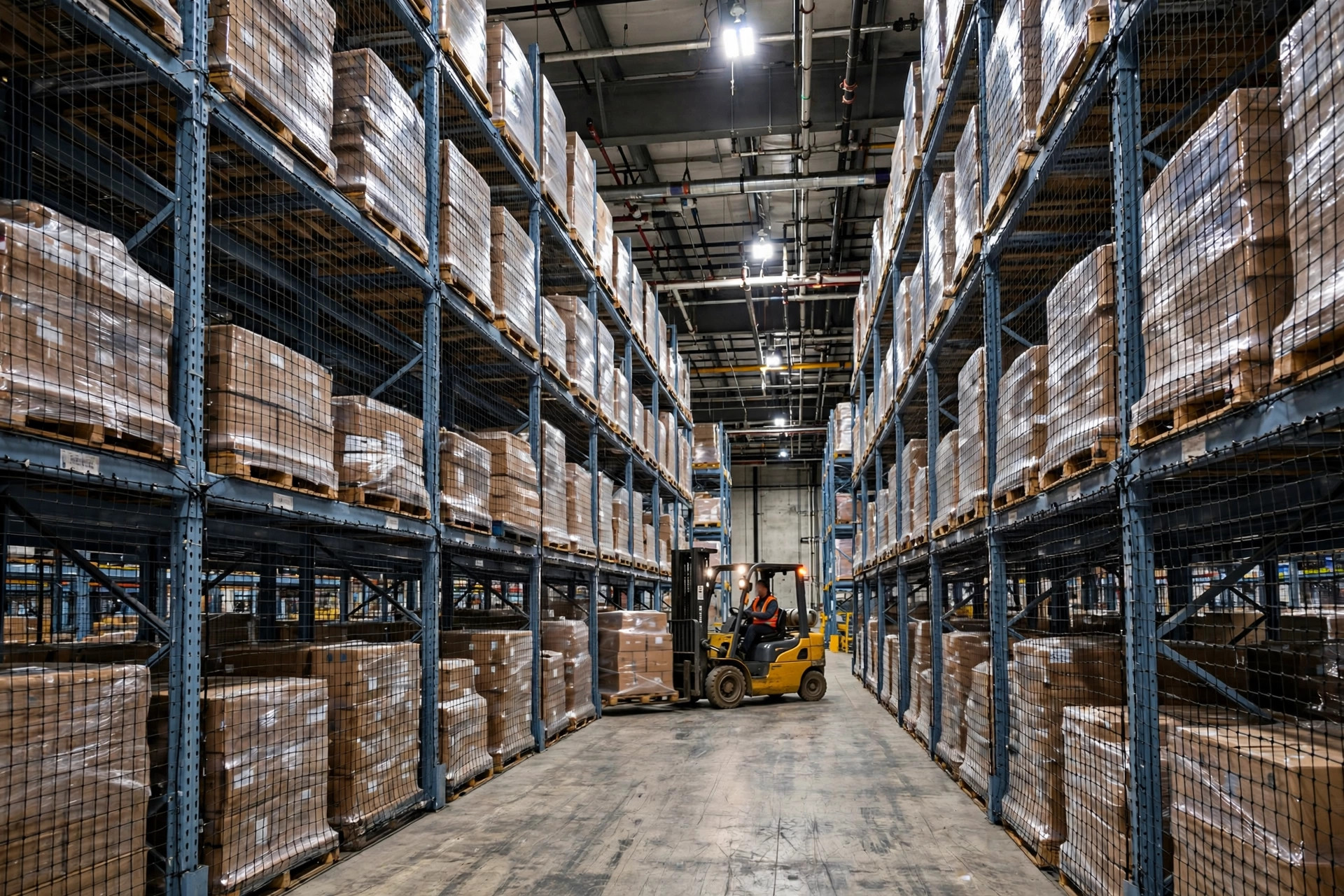
Another one, early 2024, an e-commerce warehouse I visited. They actually had a decent kit — the problem was it hung near receiving, a good 130 feet from the chemical cabinet, with two rows of racking in between. We timed the drill: from "spill discovered" to kit in hand, over seven minutes. With real sulfuric acid, seven minutes is enough to eat a pit into the concrete and push acid fumes into the next work zone. Inspectors never just check whether you own a kit. They check whether someone can lay hands on it within 30 seconds of the leak.
What OSHA Actually Requires for Spill Kits
The governing standard is OSHA 1910.120 — HAZWOPER (Hazardous Waste Operations and Emergency Response), with paragraph (q) covering emergency response to hazardous substance releases. Here's the counterintuitive part: 1910.120 never lists what goes inside a spill kit. It requires exactly three things: a written emergency response plan, protective equipment and gear matched to the hazard, and people trained to tiered levels. The kit is just what those three things look like once implemented.
The second key distinction: incidental release versus emergency. A small spill your people can safely handle through routine procedures — a knocked-over bottle of cleaner — falls under the HazCom standard, 1910.1200 (hazard communication: safety data sheets plus training). Only a release big enough to trigger evacuation or outside help activates the 1910.120 emergency response machinery. Most warehouses fail at both ends: nobody knows what to wipe up a small spill with, and nobody knows where to run for a big one.
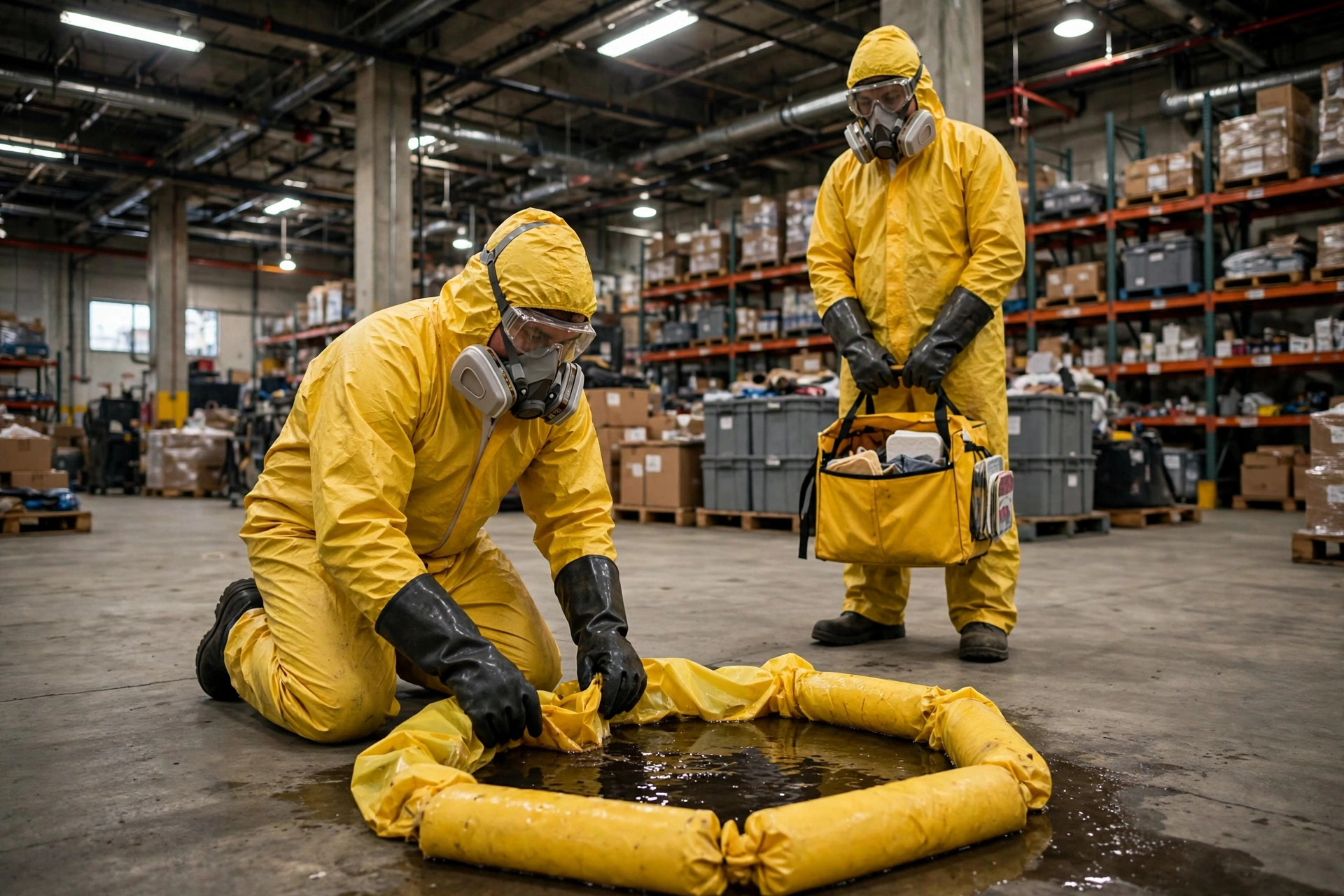
Training tiers decide who is allowed to touch anything. Awareness level: recognize, alarm, evacuate — hands off. Operations level: don the PPE, perform defensive moves like containment. Letting an untrained person jump in multiplies the employer's liability; but even awareness-level people must know where the kit hangs and what the alarm number is. As for penalty amounts, OSHA adjusts them periodically — check the current figures on OSHA's official site. I won't quote a number here, because any number I quote could be wrong.
Match the Kit to the Chemical: A Decision Table
The logic runs one direction only: inventory your chemicals first, then work backward to what the kit must contain. Reverse the order and every dollar is wasted.
| Chemical type | Must have in the kit | Never use |
|---|---|---|
| Acids (forklift battery sulfuric acid, etc.) | Acid neutralizer, acid-resistant pads/pillows, chemical-resistant gloves, goggles plus face shield | Regular mops (exothermic reaction), latex gloves (no chemical resistance) |
| Alkalis (industrial cleaners) | Alkali neutralizer, absorbent pads, chemical gloves | Never mix acid and alkali neutralizers |
| Oils (hydraulic/lube oil) | Oil-only pads and socks (repel water), spill berms | Water-absorbent material — it spreads the oil further |
| Solvents/flammables | Non-sparking tools, non-sparking absorbents | Wiping first and thinking later — first move is cut power, ventilate, evacuate |
| Universal backup (every kit) | Caution tape, labeled waste bags, SDS copies, emergency contact card | Expired neutralizer, moisture-damaged pads |
Spill Kit Placement: Location Matters More Than Contents
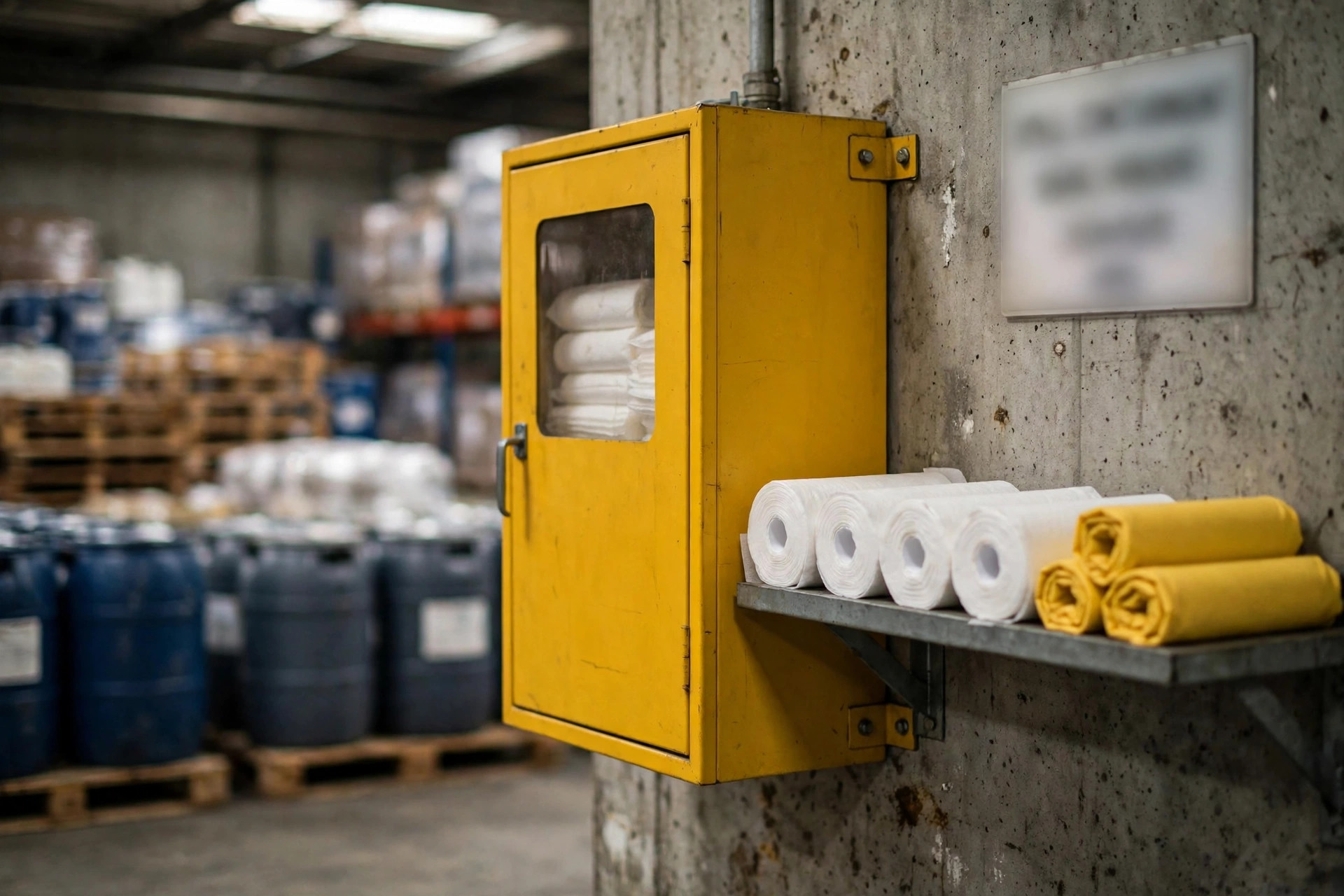
A correctly stocked kit is only half the job. The other half is placement, and there are three hard rules. First, within a 30-second walk of every leak risk point — next to the chemical cabinet, the battery charging area, the hazmat staging zone. Second, signage visible enough to find under dim night-shift lighting. Third, inspect monthly — moisture ruins absorbent pads, neutralizers expire, and the emergency contact card goes stale the day someone quits.
Run a drill every quarter, and practice exactly three moves: find the kit, suit up, contain the spill. Don't practice "clean it all up" — cleanup belongs to operations-level personnel, and drilling the wrong skill teaches unqualified people to take risks. Then make it a named roster: awareness training for everyone, two to three designated operations-level responders per shift, names written into the emergency plan. Inspectors love to quiz the night shift. If a worker can't point to the kit, everything else was theater.
Doing the Math: What a Compliant Spill Kit Really Costs
A universal kit runs roughly $60–120 off the shelf; a chemical-specific kit runs $300–800 depending on how many chemical types you cover; neutralizer refills run $40–70 a bucket; chemical gloves $15–30 a pair. A mid-size warehouse stocking two or three matched kits plus consumables is looking at roughly $1,000–2,500 all in.
Now the other side of the ledger: one hazmat contractor visit starts around $5,000 (ballpark); one inspection remediation, with the whole crew pulled off work, costs more in hidden labor; OSHA penalties follow whatever OSHA currently publishes. This cuts both ways: the kit itself is cheap money — the real cost is training. You can order a kit; you can't order people who dare to use it and know how. A small warehouse doesn't need six kits like a big facility. Match the one or two highest-risk chemicals first, get the drill smooth, then expand.
Next time an inspector walks in, don't rush to show off your spill kit. Ask yourself one question first: the three people on tonight's shift — if something leaks, do they know where the kit is, and would they dare touch it? If you can't answer that, the most expensive kit on the market is just wall decoration.
By Lao Mi, Supply Chain Veteran (20 yrs)