Last January, forty coolers of dry ice nearly gave me a heart attack in my own warehouse — on a Friday night at 8 p.m.
Here's what happened. A fresh-food e-commerce client dropped an urgent order: forty coolers of dry ice arrived at 7 p.m., the driver unloaded and vanished, and the coolers sat in a neat row by the freezer door. Roller door down. Overnight. Next morning I arrived first, lifted the door halfway, and a wave of cold fog rolled out. I happened to be holding a handheld CO2 meter — delivered the day before on a hunch. I stuck it through the gap: 2,800 ppm. My blood ran cold.
I threw the door all the way open, aimed two fans at the entrance for twenty minutes, and only went in when the reading dropped below 700. All forty coolers intact, client's goods fine. But standing in that cold air, one thought crystallized: I need to actually understand dry ice. One bad incident and my little warehouse is done.
What makes dry ice scary is that it's silent
First, my predicament. My warehouse is about 3,000 square meters — a baby next to the big guys. Late 2024, a fresh-food client asked: "Can you store dry ice?" My eyes lit up — dry ice clients pay premium rates, and taking the jobs others won't is exactly how a small warehouse survives. Then reality hit: about dry ice, I knew nothing beyond "it makes white smoke."
After a crash course, it boils down to one sentence: dry ice is frozen carbon dioxide, minus 78.5°C, and it skips the liquid phase entirely, turning straight into gas — sublimation. The gas is colorless and odorless; you can't see where it goes. Worse, CO2 is heavier than air, so it pools low and stays there. You think you've ventilated the room, but there's still a layer of it hugging the floor.
Let me get the numbers right, so nobody argues: OSHA's permissible exposure limit for CO2 is 5,000 ppm as an 8-hour average; NIOSH recommends the same 5,000, with short-term spikes kept under 30,000. Normal outdoor air sits around 400 ppm. In plain English: above 5,000, don't hang around; short bursts above 30,000 and your body starts sounding alarms.
Why do I care so much? Because my buddy Chen, who runs a warehouse in Texas, had an incident during the August 2024 heat wave. Two of his guys went into a sealed freezer to stack dry ice coolers and pulled the door shut behind them — nice and cool inside. Within twenty minutes, one was dizzy and the other nauseous. Hospital, oxygen, two days of downtime — close to ten grand in medical bills and lost work. Chen told me later: "What kills me isn't the money. It's that fifteen minutes of training would have prevented the whole thing."
The big-company playbook for dry ice? My small warehouse can't burn that kind of money
After my scare I asked around about how the "pros" handle it. The full package: hardwired multi-point CO2 monitoring, exhaust system retrofit, plus a third-party risk assessment. The quote: nearly $20k for monitoring, $8k and up for ventilation work, $3k for the consultant. I laughed out loud — my small warehouse can't burn that kind of money. That would wipe out a full year of profit from my dry ice business and then some.
But then again — does spending big actually buy safety? Not necessarily. I've seen a big facility with the full system where an alarm went off for three days and nobody cared — the sensors were mounted up near the ceiling, at smoke-detector height. CO2 sinks. Mount it that high and it will never, ever trigger. So here's my first counterintuitive takeaway: a CO2 monitor belongs 30 centimeters off the floor, at ankle height. Install it like a smoke detector and you've bought an expensive decoration.
I ran the numbers — the "pro" setup versus my budget version:
| Item | Big-company setup | My budget version |
|---|---|---|
| CO2 monitoring | Hardwired multi-sensor network, ~$18,000 | 2 handheld meters, ~$300 |
| Ventilation | Exhaust duct retrofit, ~$8,000+ | 2 industrial fans + door-open procedure, ~$200 |
| Signage & training | Third-party safety consultant, ~$3,000 | Homemade signs + 15-min briefing, ~$0 |
| Total | ~$29,000 | ~$500 |
A 58x price gap. Is it 58x safer? I doubt it. Safety is 70% people and 30% equipment. If nobody cares, even the fanciest system is furniture.
Four cheap fixes for dry ice, under $500 total
Here's my budget playbook — four moves, under $500 total, running for over a year with zero incidents.
Move one: two handheld CO2 meters, $150 each. One rule: before entering the dry ice area, stick the meter in and read it. Above 1,500 — open the doors, ventilate, nobody goes in. That 1,500 is my own internal red line, way stricter than the regulation. The law is the floor; I've only got one life, so I stay conservative.
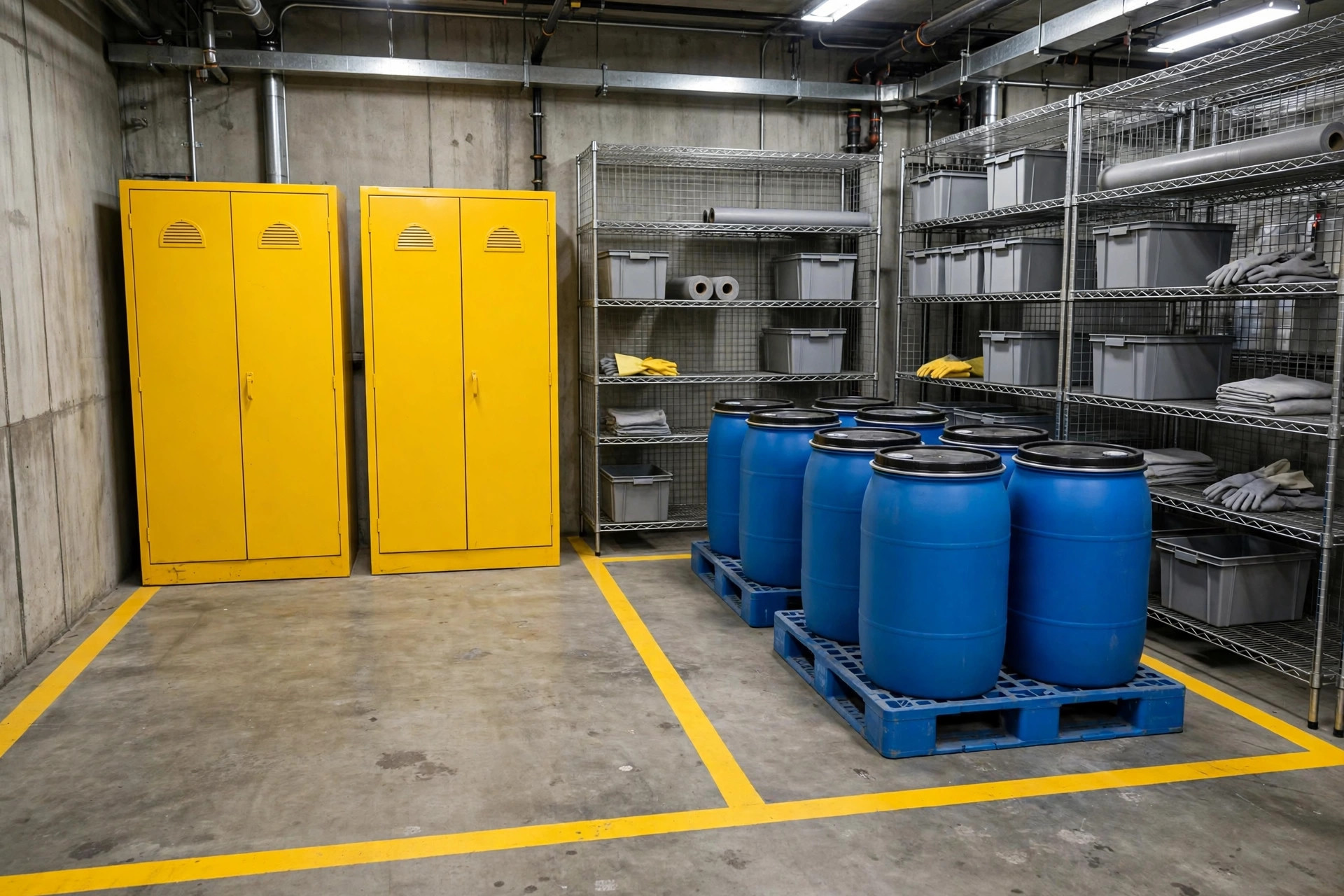
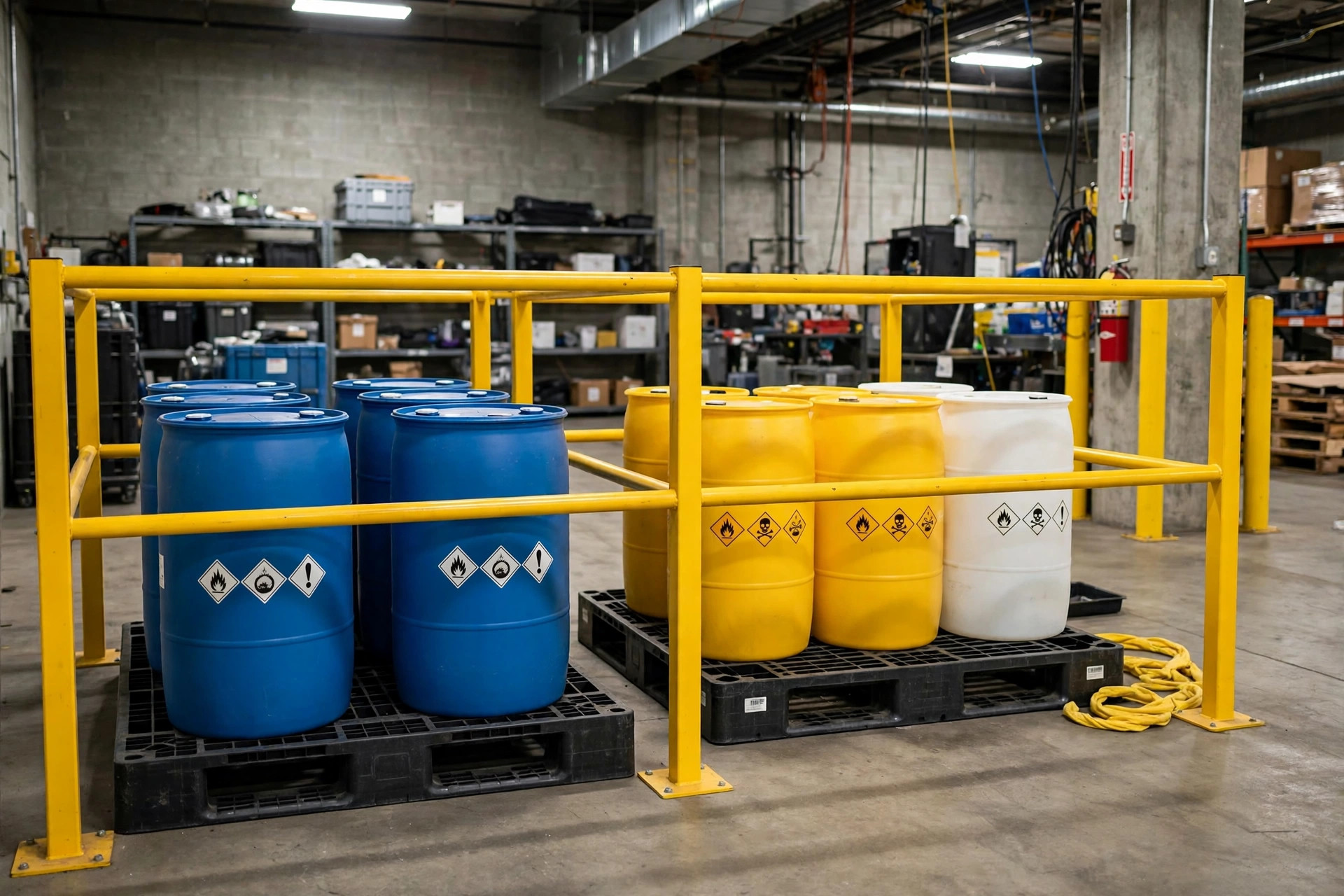
Move two: a dedicated dry ice zone. The best-ventilated spot near the roller door, yellow lines on the floor, and never mixed with regular refrigerated goods. The biggest risk of mixing isn't CO2 — it's a worker grabbing a dry ice cooler barehanded and getting frostbite, or opening one and catching a faceful of gas. Separate them and half the chaos disappears.
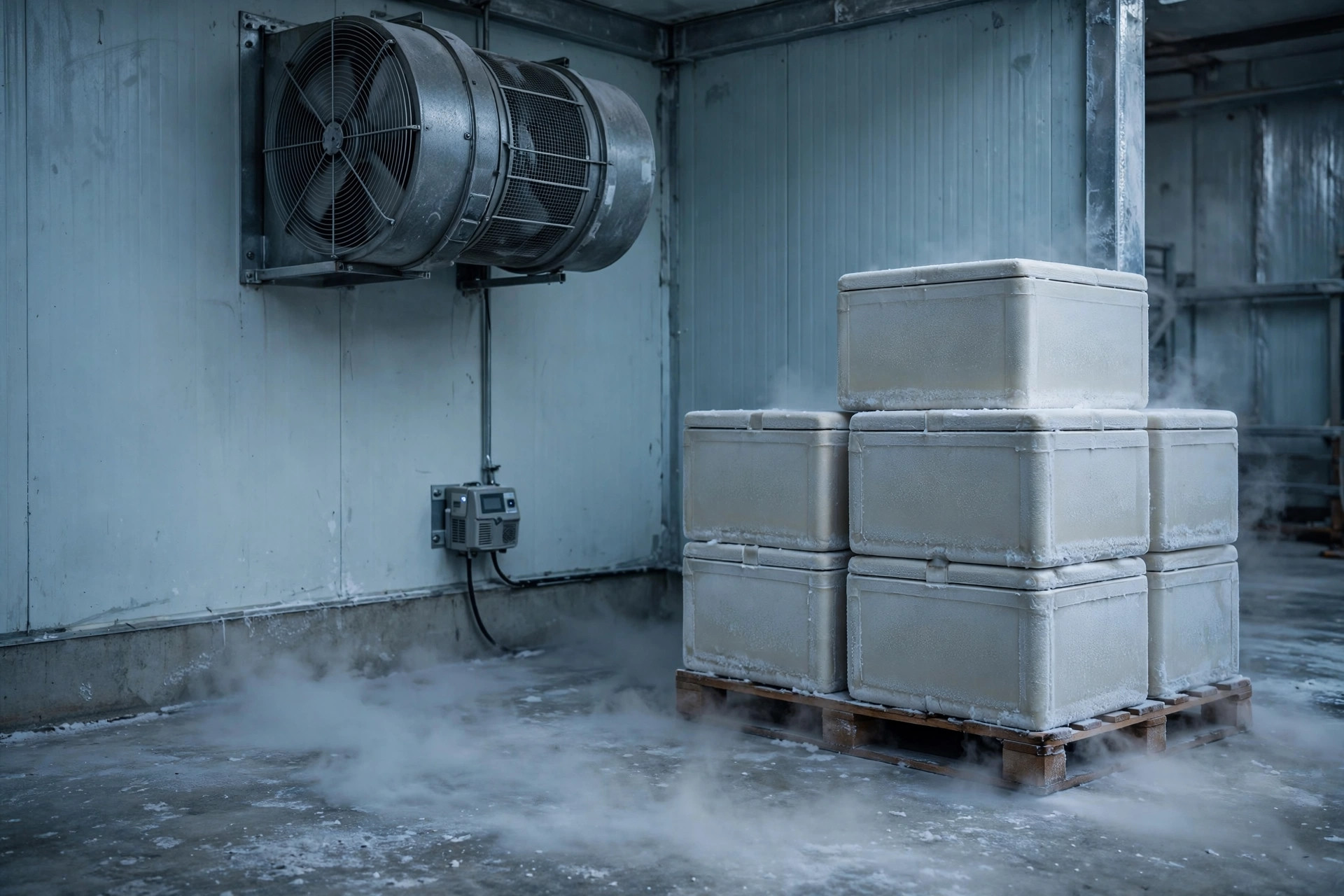
Move three: no dry ice stays overnight. Sublimation is a function of time — halve the time, halve the risk. Client orders go out the same day, as fast as possible. Bonus: we don't stockpile dry ice, shrinkage drops, and clients think we're efficient.
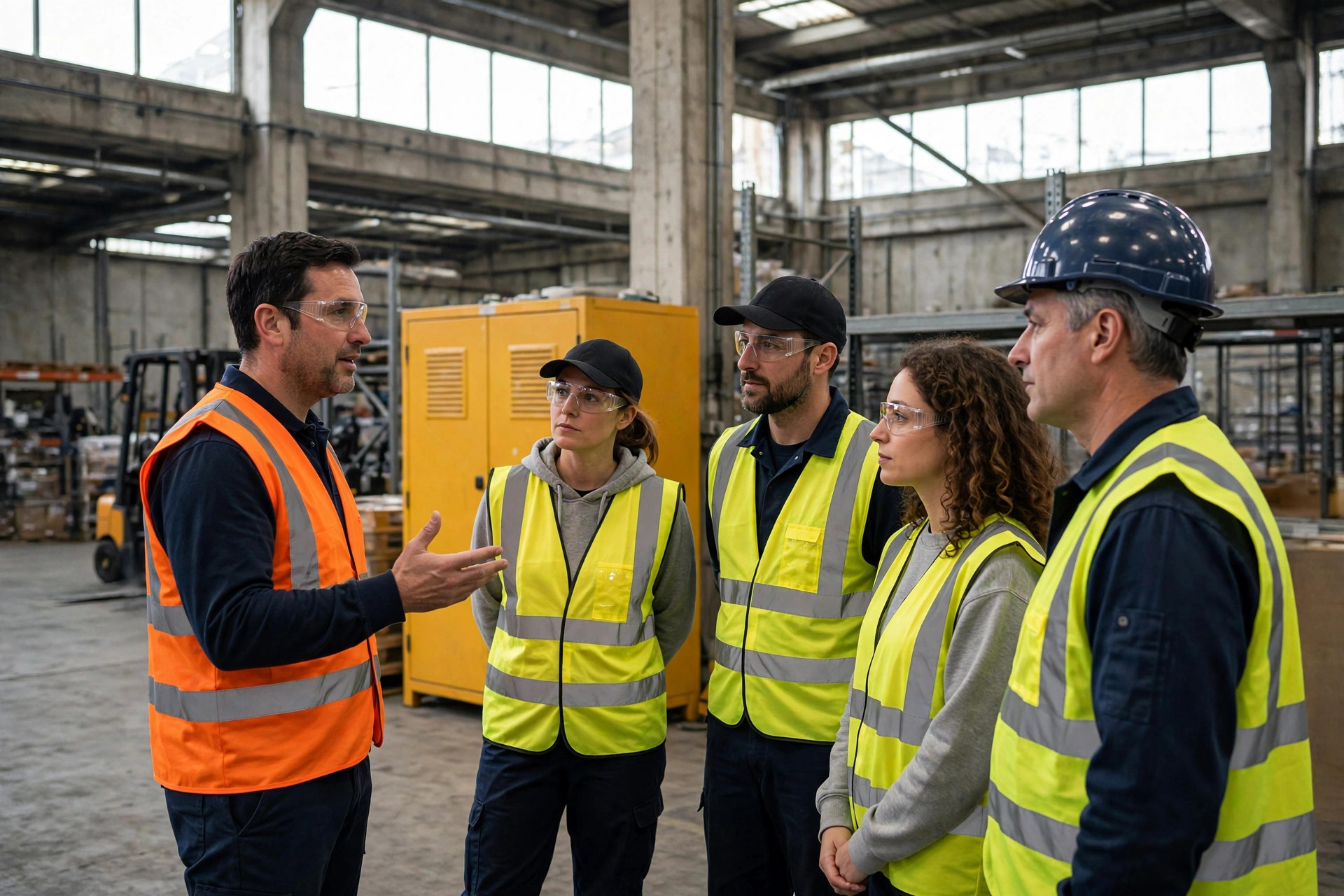
Move four: signage plus training, fifteen minutes total. Every new hire learns: CO2 is colorless and odorless, dizziness means get out now, the meter reads at ankle height, and every dry ice cooler wears a sticker saying "don't close the door, don't breathe deep." I designed the stickers myself — printed on A4, laminated, fifty cents a pop.
The results? Dry ice clients went from one to three, and small cold-chain orders keep growing. One client's exact words: "You guys are more careful than the big warehouses." I almost laughed — we're careful because we can't afford not to be. A big warehouse has a legal department when something goes wrong. For us, one incident means closing the doors for good.
Straight talk for fellow small-warehouse owners
First: buy the meter before you take the dry ice order. In that order. Three hundred bucks for a life is cheap.
Second: don't worship "storing it well" — worship "moving it fast." Inside a freezer, dry ice actually sublimates slower, since it's colder in there. But a freezer with the door shut is a sealed box, which is far more dangerous. The real fix isn't better storage; it's shorter dwell time. Counterintuitive, I know — but a year of doing this backs it up.
Third: mount the monitor low. Thirty centimeters. Remember that number. Mounted high, it's as good as nothing.
Fourth: keep dry ice away from regular refrigerated goods, and get the signage up. Frostbite counts as a workplace injury too — bare skin on dry ice means frostbite, so gloves are non-negotiable.
People ask me: "Xiao Ma, will inspectors accept your budget setup?" Honestly? Regulations care about outcomes — concentrations within limits, workers unharmed, records kept. My meters get photographed and logged daily, training has sign-in sheets, and we've never crossed 1,500. The inspector looked it over and couldn't find a thing to flag. The big-company playbook isn't for us, but we haven't lowered the safety bar one inch.
Small warehouses have their own way to survive.
By Xiao Ma, Small Warehouse Owner