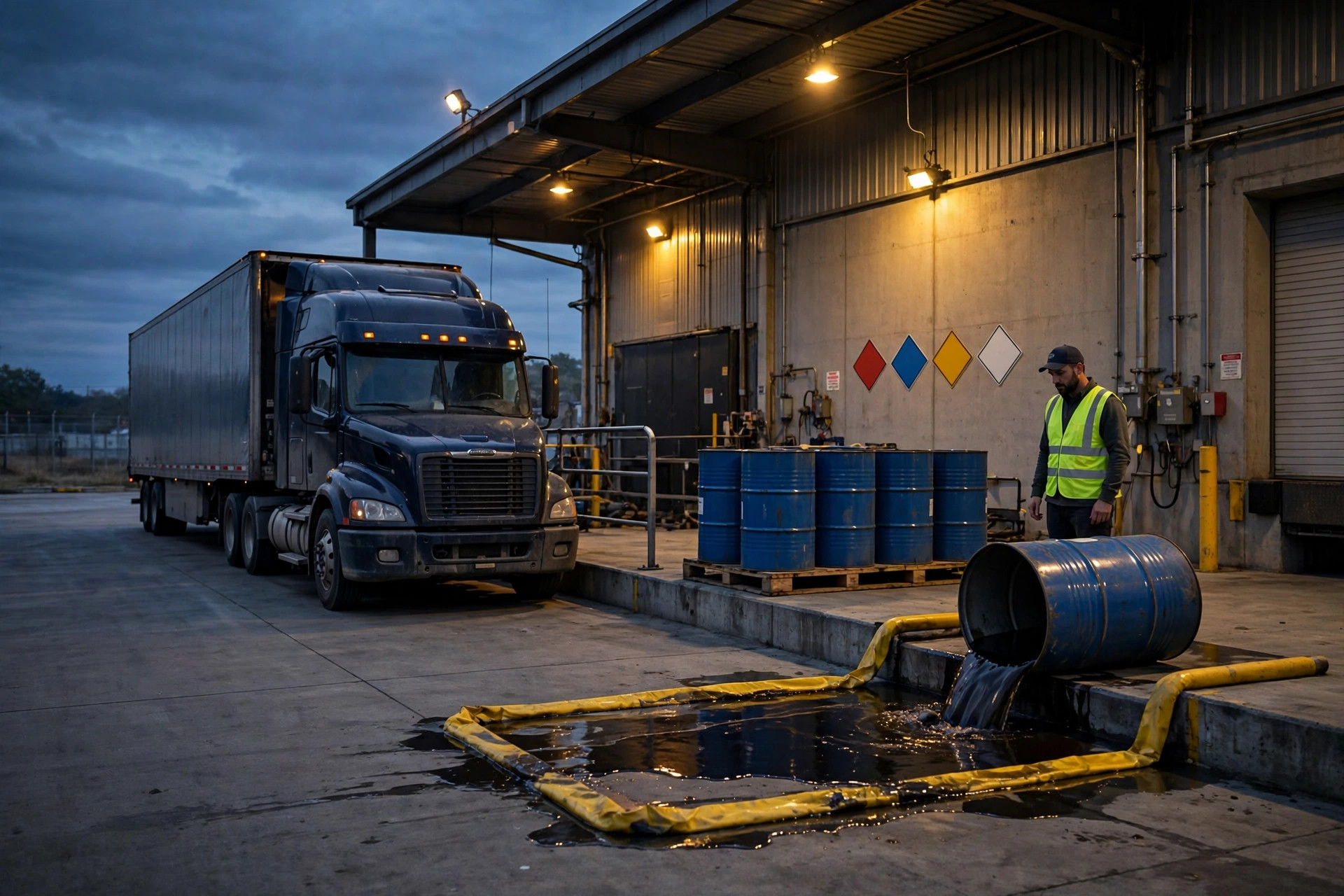
Let me tell you something. After all these years on the road, the scariest thing I ever saw wasn't on the highway — it was inside a chemical warehouse where I was picking up a load. A standard forklift was carrying two drums of solvent to a staging area. It took a turn, the pallet shifted, one drum slid off and its lid cracked open a seam. The smell spread instantly. The whole warehouse evacuated, and nobody dared go back in for half an hour. Nobody got hurt that day — pure luck. That's when I learned: moving hazmat "just across the warehouse" follows rules no looser than the open road.
Too many warehouses inspect hazmat strictly at receiving, then treat internal moves as "our own business" — grab any forklift and go. That's the wrong idea. In-warehouse transport is where accidents happen most: short distances, high frequency, and people everywhere.
Explosion-proof: check the truck first, then the cargo
First, the forklift. For flammable and explosive hazmat, neither a standard internal-combustion truck nor a standard electric truck will do — you need an explosion-proof forklift. It looks like a normal truck; the difference is all hidden: explosion-proof motors, switches, and junction boxes, anti-static tires, and an EX rating plate on the body. Here's a rough-and-ready check: look for the EX mark on the nameplate. No EX mark, and you're running naked with flammables.
Some small warehouses say they only move a drum or two occasionally and can't justify an explosion-proof truck. Fine — then at minimum: never use an internal-combustion forklift for flammables (exhaust sparks are genuinely lethal), and temporarily clear the route and eliminate ignition sources. But honestly, the word "occasionally" doesn't hold up well in an accident investigation report.
Speed limits: 5 km/h inside the warehouse is worth more than 120 on the highway
Second, speed. Hazmat moves inside the warehouse need their own speed limit, separate from general cargo. In the warehouses around here, hazmat transport is typically capped at about 5 km/h, dropping to walking pace at turns and pedestrian crossings. Don't call it slow — two drums of liquid on the forks, one hard brake, the liquid sloshes, the center of gravity shifts, and a tip-over happens in a blink.
Then the route. Hazmat transport routes must be fixed, drawn out, and posted on the wall. They steer clear of crowded areas, charging stations, and hot-work zones. From the dock to the hazmat storage, take the long way around rather than cutting through the picking area. The most disciplined warehouse I ever saw marked its hazmat route with yellow dashed lines and painted "HAZMAT LANE" on the floor — a driver couldn't take a wrong turn if he tried.
Securing: if the drum tips, the first two don't matter
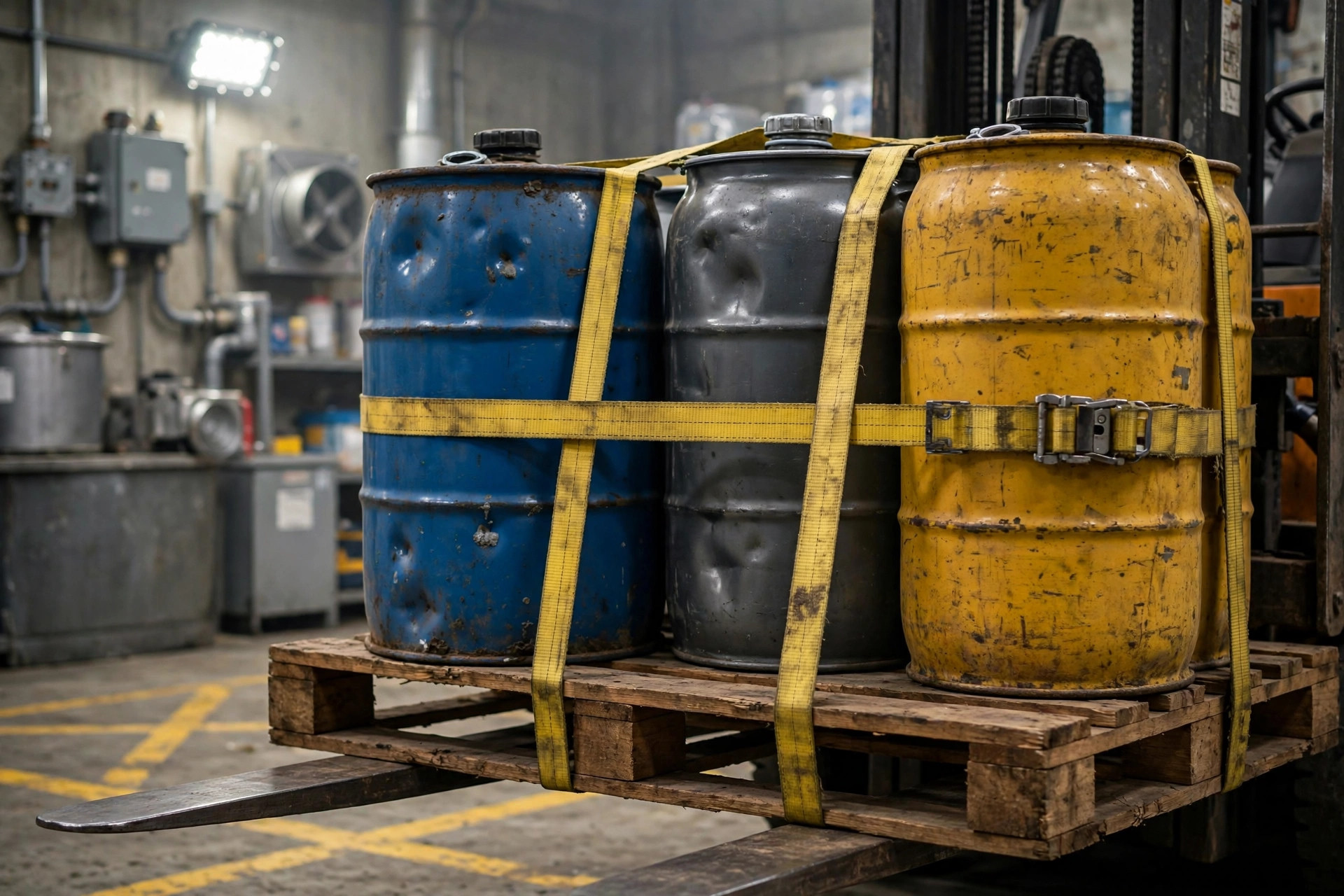
Third, securing the load — the easiest step to fake. You've got the explosion-proof truck, you've slowed down, but the drums aren't secured. One tilt, one fall, same disaster. Steel and plastic drums on pallets get strapped or stretch-wrapped at the corners, lids up, tightened. Loose small bottles and cans travel in spill-containment pallets or secondary containers — never directly on the forks.
And one iron rule: incompatible hazmat never rides together. Acids with bases, oxidizers with flammables — bump them around on one truck, a little leak mixes, and the consequences are unthinkable. Before dispatch, the warehouse keeper checks compatibility against the SDS. Don't skip it. Which combinations are forbidden — go by the product SDS and current regulations; I won't list them here.
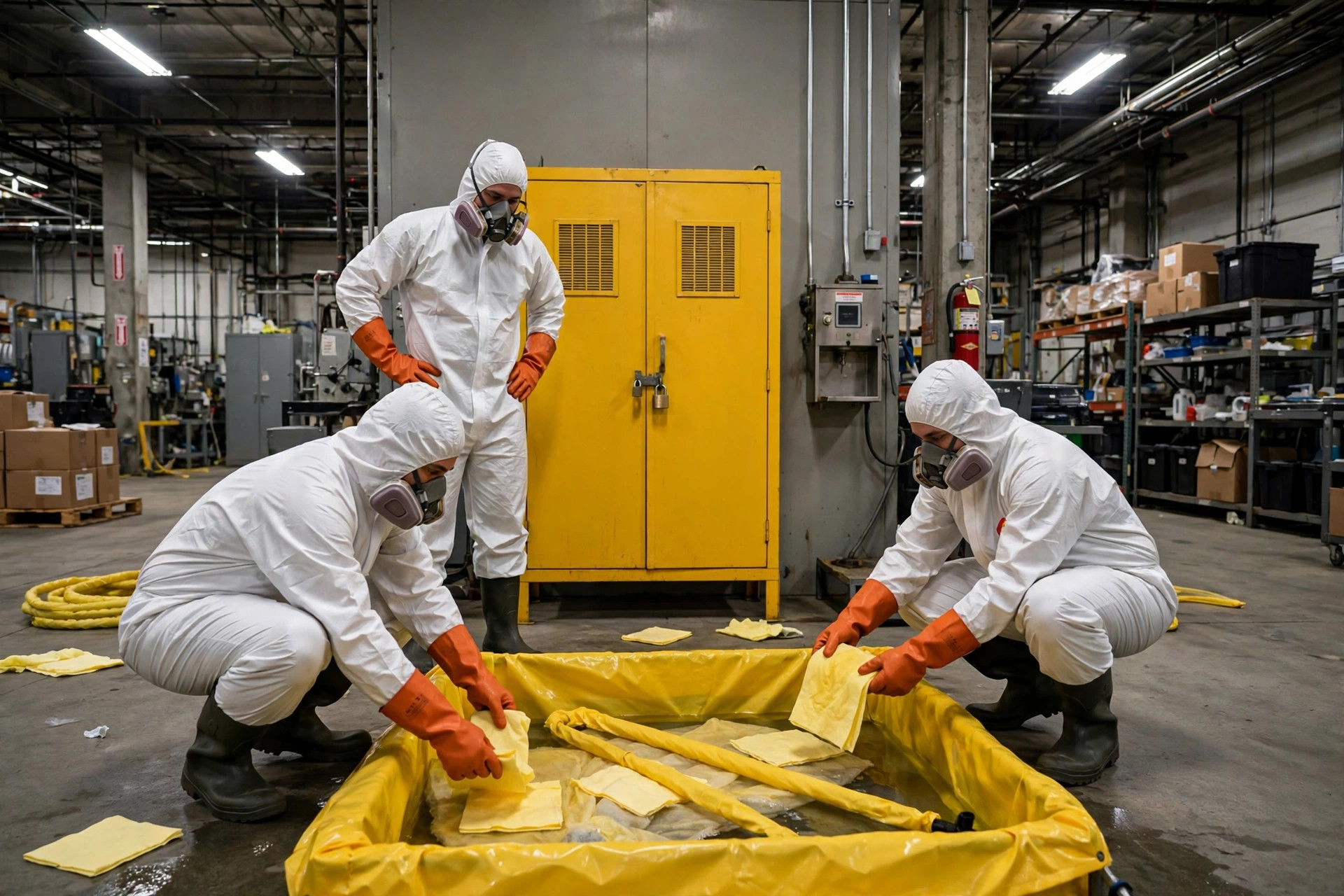
Let me tell you about a textbook response I witnessed. In 2022, delivering to a chemical park in Suzhou, I caught their emergency drill: a simulated solvent drum leak during in-warehouse transport. Alarm sounds, both ends of the transport route get closed off, the escort lays out absorbent pads, fire sand, and non-sparking shovels within minutes, the leaking drum gets righted into a secondary container — the whole thing under 15 minutes, calm and orderly. I asked their manager the secret. One thing, he said: they drill for real every month, not as a checkbox exercise. Same route, same explosion-proof forklift as daily operations — even the traffic cones' positions are fixed.
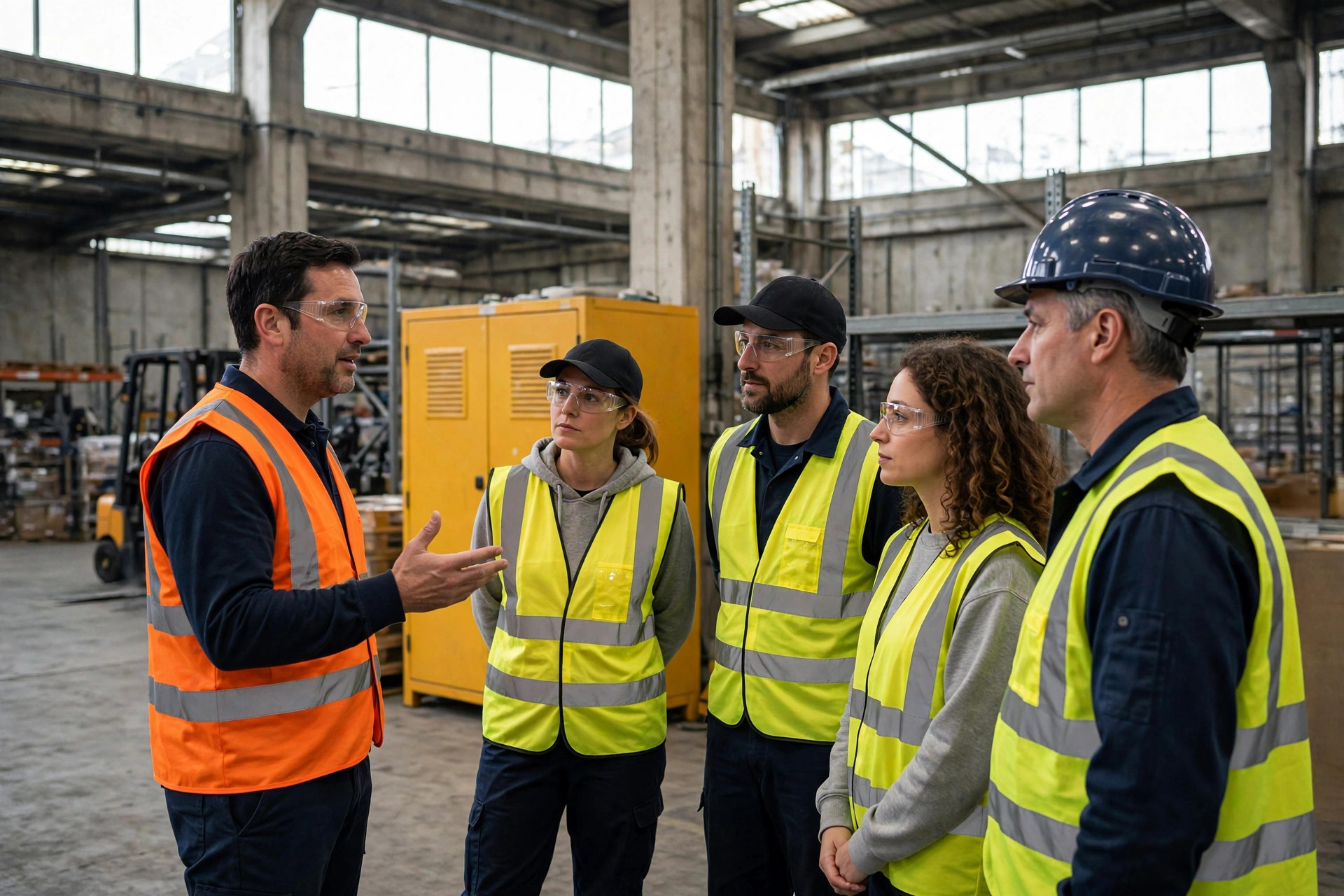
That's why the escort role is non-negotiable. For in-warehouse hazmat transport, the driver drives and the escort rides along — one watches the road, one watches the cargo. The escort must know the SDS, know how to use the spill kit, and know where the nearest eyewash and emergency shower are. Many small warehouses cut the escort to save labor, leaving the driver to watch road and cargo at once. Let me tell you: one accident, and the labor saved won't cover a fraction of the cost.
An old saying to close: for in-warehouse hazmat transport, explosion-proofing is the baseline, speed limits are the safeguard, and securing is the detail. Get all three right and you block eighty percent of accidents at the door. The remaining twenty percent comes down to people — driver training, escorts, emergency drills. Cargo can be slow. You only get one life.
By Shifu Zhao, Trucking Veteran (15 yrs)