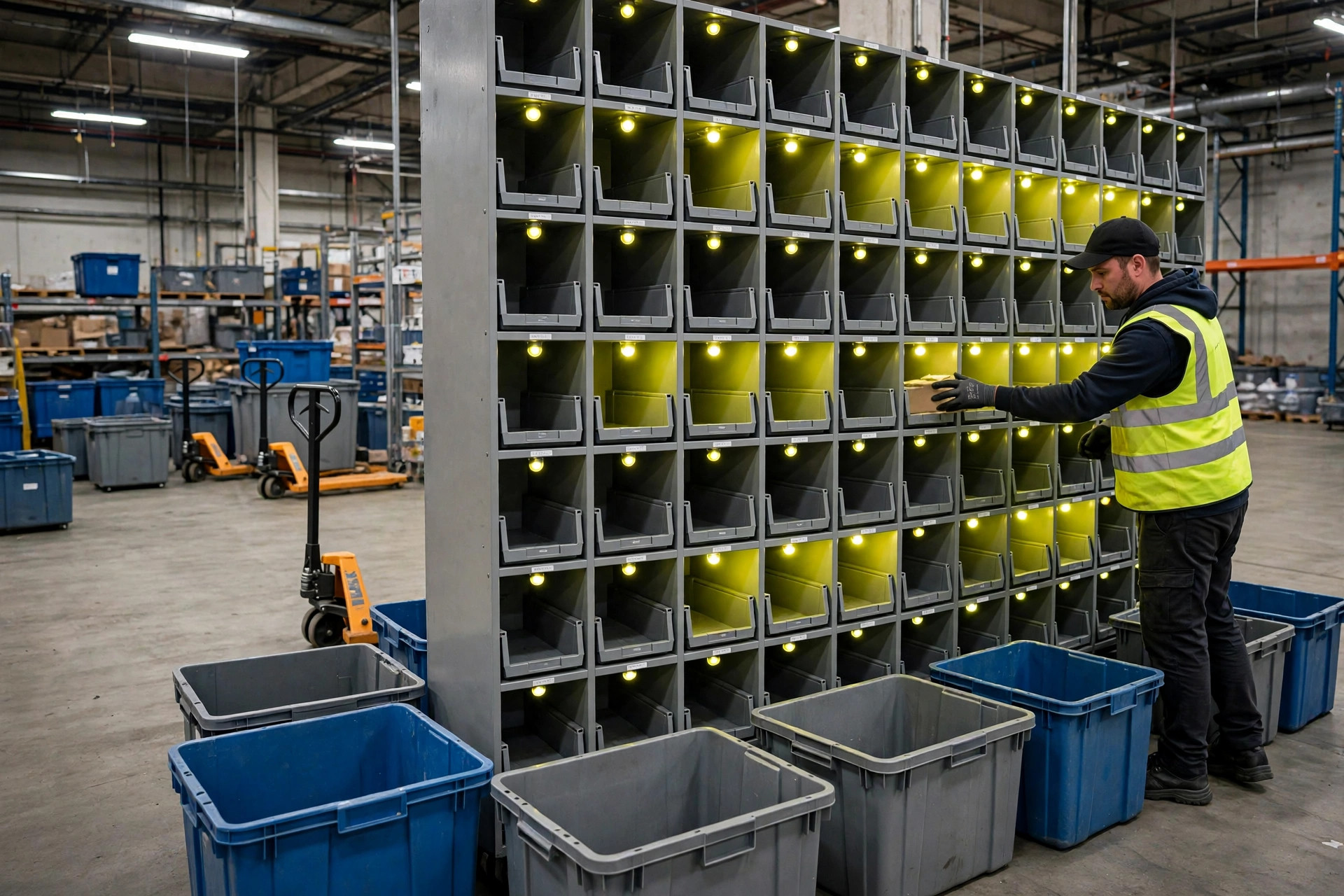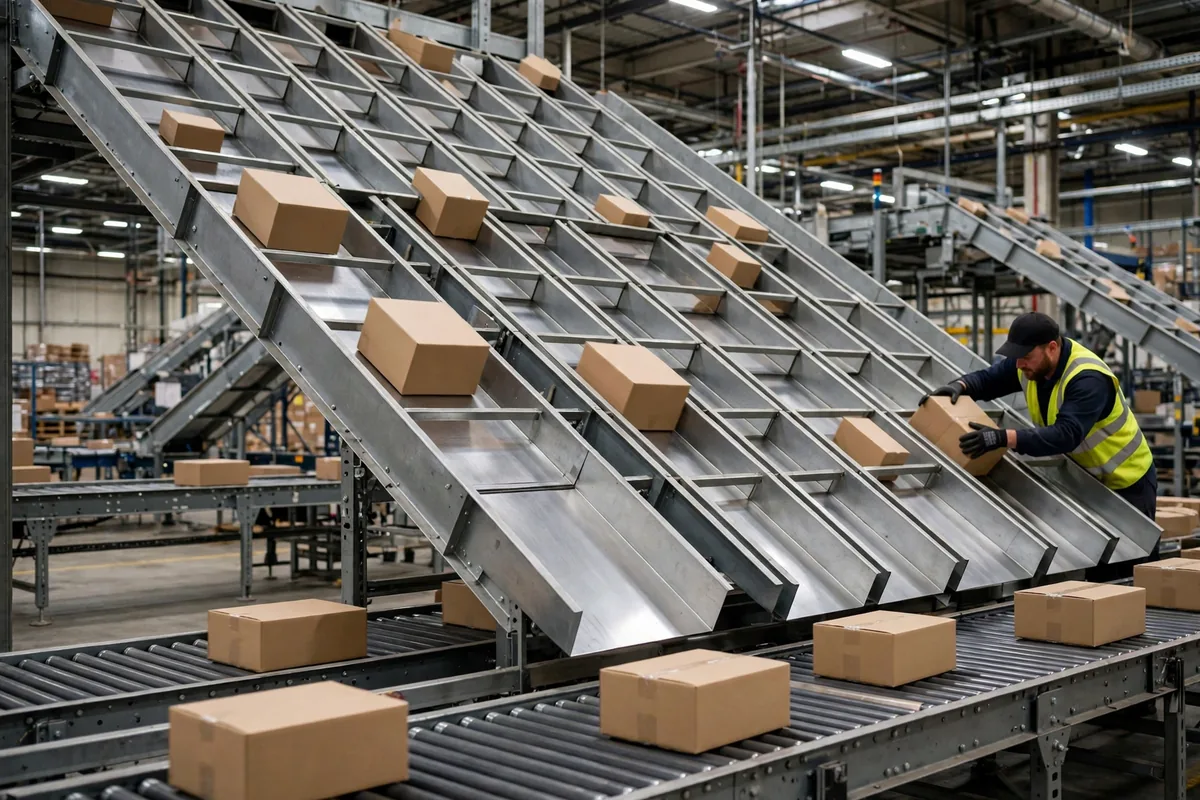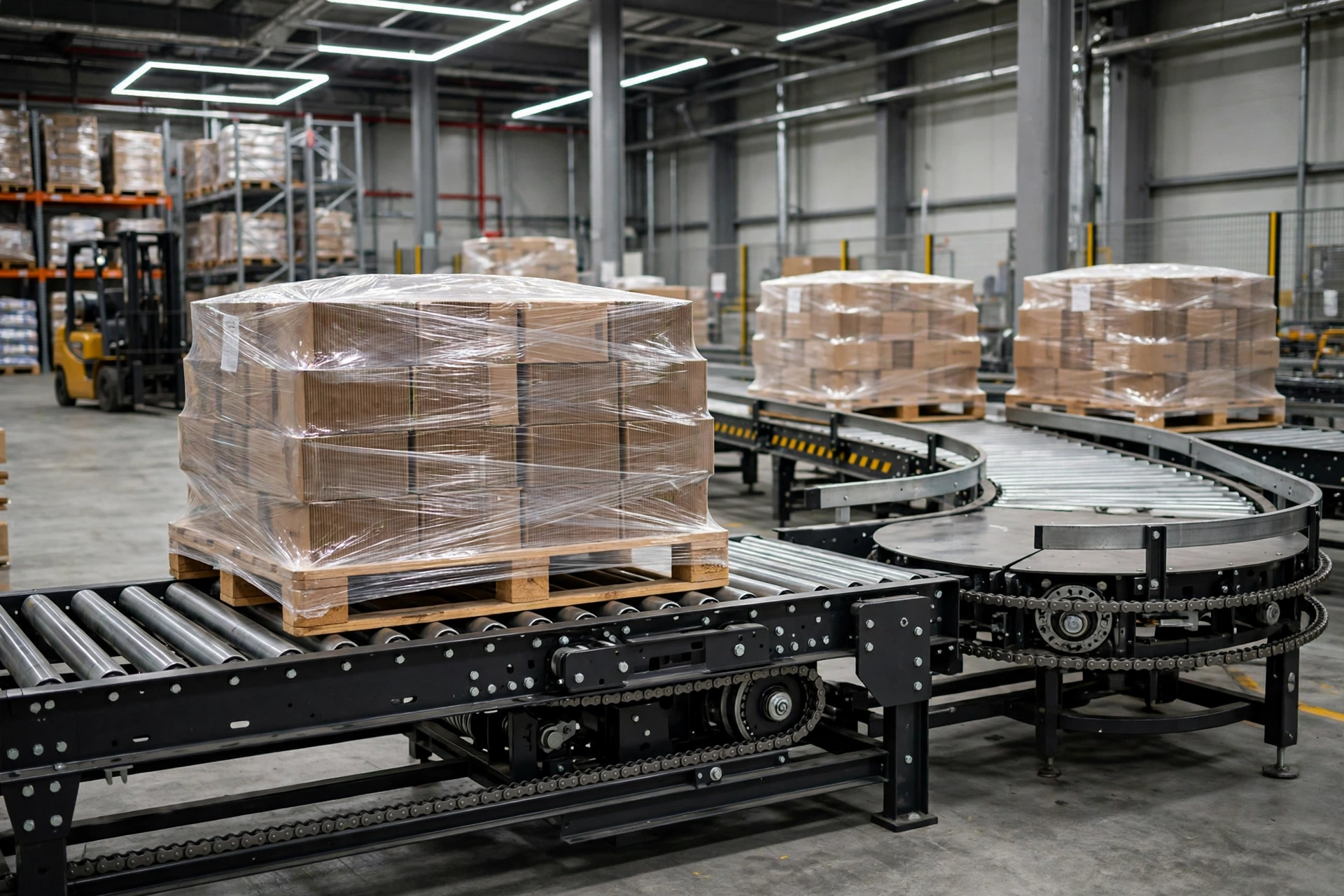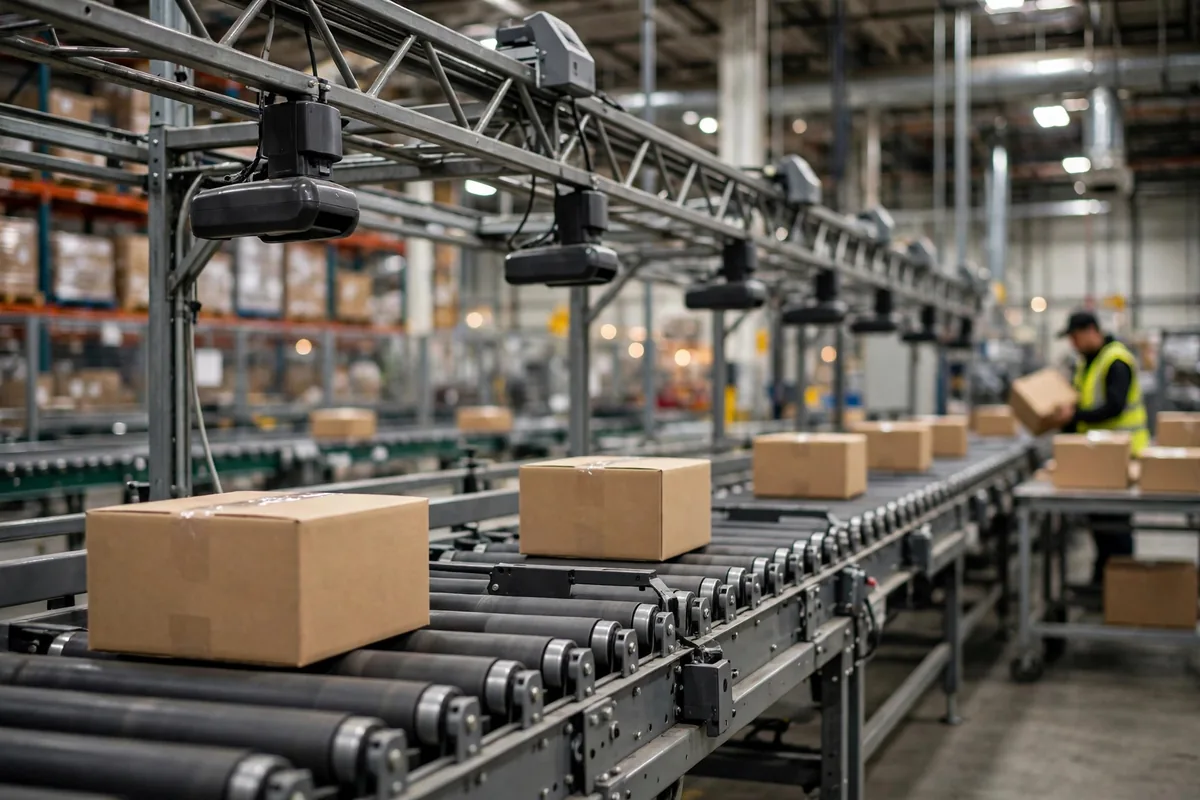
Last fall I spent half an afternoon standing beside a sorter in a 3PL warehouse in Dongguan, watching the barcode misread counter climb. The line was not running particularly fast. Parcels came through one after another, and roughly one in every twenty or thirty was kicked to the exception lane. Two people at that lane were working flat out: scan it by hand, re-label it, put it back on the line. Whatever cycle time the sorter had saved, the exception lane ate straight back. That is what a warehouse sorter barcode misread usually looks like in real life. The machine is not broken. Barcode angle, label placement, belt speed, lighting, and dust have teamed up to squeeze the read window shut.
Think of it this way: the scanner and the barcode have a date. The barcode has to show up at the right moment, at the right angle, and stay long enough for the scanner to recognize it. If any one of those is off — late, tilted, dirty — the date fails. On a sorter, that date has to happen several times a second, so the margin for error is far smaller than with a handheld scan.
Why a Warehouse Sorter Barcode Misread Is Rarely One Problem
Misreads are rarely caused by a single factor. In my experience, four variables matter, and they drag each other down: barcode angle, label placement, belt speed, and environment. Angle is the one most people underestimate. A label sits on the side of a parcel, the parcel rotates a few degrees on the belt, and suddenly the scanner is no longer looking at a flat barcode but at a squashed, slanted one. A laser scanner tolerates far less tilt than a camera-based reader. It is like trying to read a book held at a slant: the words are the same, but recognizing them takes much more effort.
Label placement is the second trap. A label stuck across a box flap, over a tape seam, or around a curved corner is wrinkled or broken before the scanner ever sees it. No angle correction fixes that. At the Dongguan site, the worst misreads came from odd-shaped cartons: labels were stuck low on the side, and the belt edge kept creasing the bottom of the label as parcels moved. You do not fix that by tuning scanner parameters. You fix it by going back to the labeling standard.
Speed is the third variable, and it multiplies angle rather than adding to it. The faster the belt, the less time the barcode spends inside the read window, so a small tilt that would be forgiven at low speed becomes a miss at high speed. The same tilt of around 15 degrees might get two or three attempts at low speed and only one fleeting chance at high speed. Lighting and dust are the final accomplices: overhead light throws a bright glare spot across a laminated label, and dust slowly fogs the scanner window. Both creep up on you — the misread rate looks fine today and doubles next week.
That creep is exactly why maintenance matters more than most people think. I will come back to it, because the cheapest fix in this whole story is a cleaning cloth and a weekly habit.
The Angle-by-Speed Matrix: Decide What to Fix First
The worst way to troubleshoot misreads is to change everything at once. My usual order is: labels first, then angle, then speed, and only then scanner selection. That order is not a guess; it is sorted by repair cost, cheapest first. Fixing the labeling standard costs almost nothing. Correcting angle takes half a day. Slowing the line costs throughput. Replacing the scanner costs the most.
Here is the angle-by-speed framework I draw for clients. The numbers are typical magnitudes — always check the equipment manufacturer's manual for your own machine:
| Belt speed (typical range) | Small tilt (within about 10 degrees) | Medium tilt (about 10–25 degrees) | Large tilt (above about 25 degrees) |
|---|---|---|---|
| Low (around 1 m/s) | Generally reads reliably | Occasional misreads; check labeling | Noticeable misreads; fix angle first |
| Medium (around 1–2 m/s) | Occasional misreads; check lighting and dust | Misreads climb; adjust angle and speed together | Do not brute-force it; cut the tilt before talking about speed |
| High (above about 2 m/s) | Depends on a camera reader and good labeling | Misreads spike; slow down or fix labeling | Rework labeling and parcel orientation first |
The counterintuitive part of this table is the part most warehouses get backwards: on a high-speed line, the cheapest fix is often not a more expensive scanner. It is slowing down slightly, or straightening how parcels enter the line. No scanner, however expensive, can buy back the extra milliseconds a barcode needs inside the read window. Yet I keep seeing sites do the reverse — they buy the expensive scanner first, the misread rate drops a little, and the labels are still stuck across a box flap.
A second case makes the point from a different direction. Early this year, an e-commerce warehouse in Ontario, California saw its sorter misread rate jump just before peak season. The scanners were fine, the speed had not changed. The culprit turned out to be a new batch of laminated labels: overhead light hit them and threw glare straight back at the reader. The fix was almost embarrassingly cheap — tilt the light above the scanner, add a small shade, and the misread rate fell back the same day. The lesson I take from that case is simple: when misreads spike, ask what changed most recently. A new label stock, a new carton size, a moved light — any one of those can overturn the balance you had.
The Real Cost of a Misread Lives at the Exception Lane
People usually measure misreads by the misread rate alone, and that is the wrong number to watch. The real cost sits at the exception lane. A misread parcel has to be pulled off, scanned by hand, judged, and put back on the line — a process that takes several times longer than a normal sort. Worse, when misread parcels pile up at the exception lane, they start choking the main line, and effective throughput drops with them.
When I do the math for a client, I use one number: the exception-handling labor consumed per hundred misread parcels. If the exception lane is burning an extra hour or two a day on misreads, that cost per parcel may already exceed what you lose by slowing the line a little. That is the test I leave people with — and it is the way I judge almost any automation spend. A warehouse sorter barcode misread is worth fixing, and worth fixing to a certain level, when the labor it eats at the exception lane, converted into money, already exceeds the cost of the fix. If it does, fix it. If it does not, live with it for now and spend the money on the free stuff first, like the labeling standard.
Now the maintenance trap, because this is where the money quietly leaks. Do not wait for the misread alarm before cleaning the scanner window. Dust accumulates slowly, and so does the misread rate; by the time you notice, the exception lane has been working overtime for two weeks. My rule is to put three ten-minute jobs on a weekly routine: wipe the scanner window, check the lighting, and spot-check label placement. Ten minutes a week beats a peak-season incident.
Scanner selection follows the same logic. A laser reader is cheaper but narrow on angle tolerance; a camera reader costs more but handles tilted labels and high speed with far more grace. Choose by how messy your parcel orientation actually is, not by which quote looks better. And be blunt about one pseudo-need I hear constantly: a site with mostly uniform cartons and tidy labels does not need the top-end camera array just because the brochure says "zero misreads." Zero misreads is a marketing number, not an engineering one. Buy the tolerance your parcels actually need.
A sorter misread is not a mystery. It is four numbers — angle, speed, labeling, and environment — that have to balance. Get the label straight and the angle honest first, then talk about speed and scanners. Once that equation balances, the misread rate comes down on its own.
By Da Liu, Automation Engineer