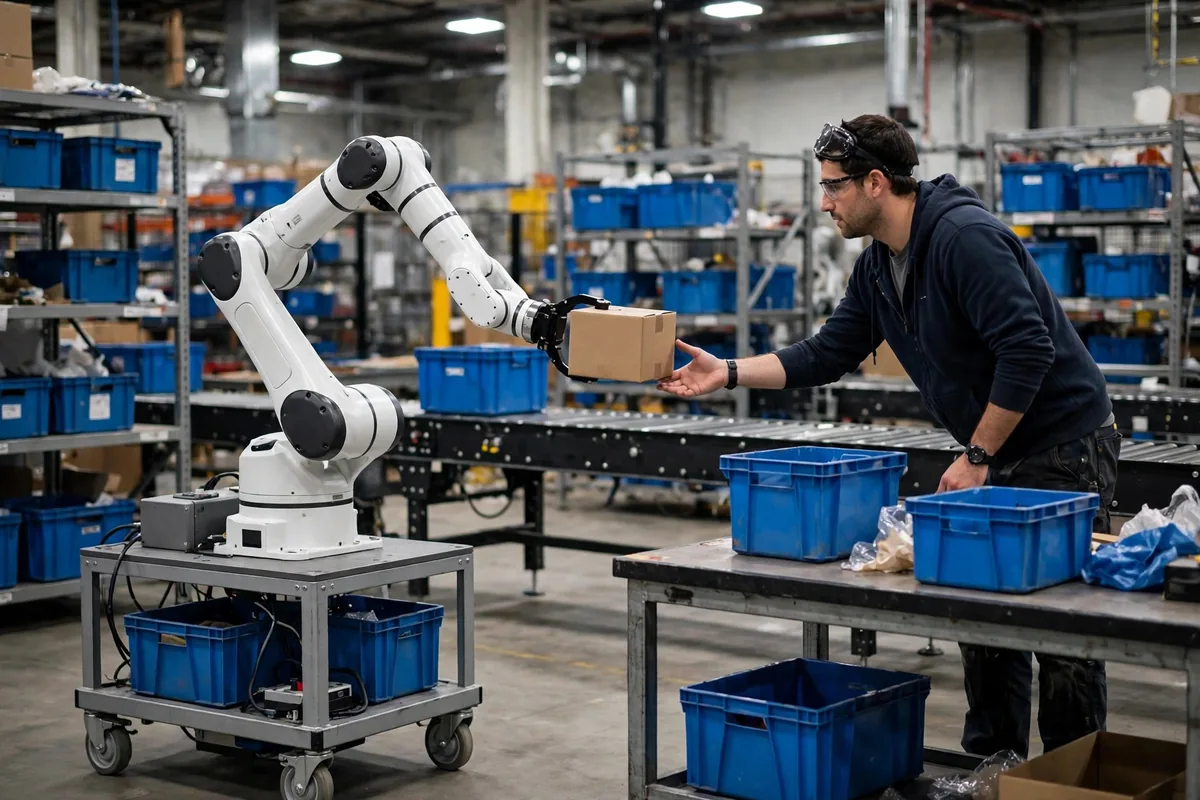
Let me be blunt: a collaborative robot is like giving your picker a partner who never calls in sick, never complains, and is not actually that fast. You can think of it this way — the cobot is not there to replace the human. It is there to take half of the bend, reach, and place cycle off the human's plate. Anyone who bought one expecting it to out-pick a veteran picker was disappointed. Anyone who bought one expecting it to keep working after everyone went home thought it was money well spent.
Start with the parameters, because parameters do not lie. Take the most common mid-size collaborative arm on the market: maximum payload 12.5 kg, reach 1,300 mm, pose repeatability of plus or minus 0.05 mm, six rotating joints, 17 built-in safety functions, rated to PLd Category 3 under EN ISO 13849-1 and EN ISO 10218-1. And note the catch — that 12.5 kg includes the gripper. If the gripper weighs 2 kg, the payload left for the product is 10.5 kg. I have lost count of the projects where someone sized the arm for the product weight alone and met the overload alarm on day one.
The Collaborative Robot Cobot Picking-Rate Math, in Numbers
In picking, takt time is everything. Here is the comparison table. These are illustrative figures for typical conditions — a hypothetical example, to be confirmed by on-site measurement:
| Method | Cycle time per piece | Pieces per hour | How long it runs |
|---|---|---|---|
| Skilled human picker | ~8–12 s | ~300–450 | One 8-hour shift, with breaks |
| Cobot, human-robot picking | ~15–20 s | ~180–240 | 20 hours nonstop, stops only for replenishment |
| Fixed automation sorter | ~3–5 s | ~700–1,200 | 24 hours, but only standard pieces |
See the point? The cobot is slower per piece than a human, and far slower than fixed automation. Its case is not speed — it is attendance. A human works effectively maybe six-plus hours out of an eight-hour shift; the rest goes to breaks, handoffs, walking, and searching. A cobot, as long as it has power and material, runs from 6 a.m. to 2 a.m. When you do the math, the question is not "who picks more per minute" but "who picks more per day, without errors."
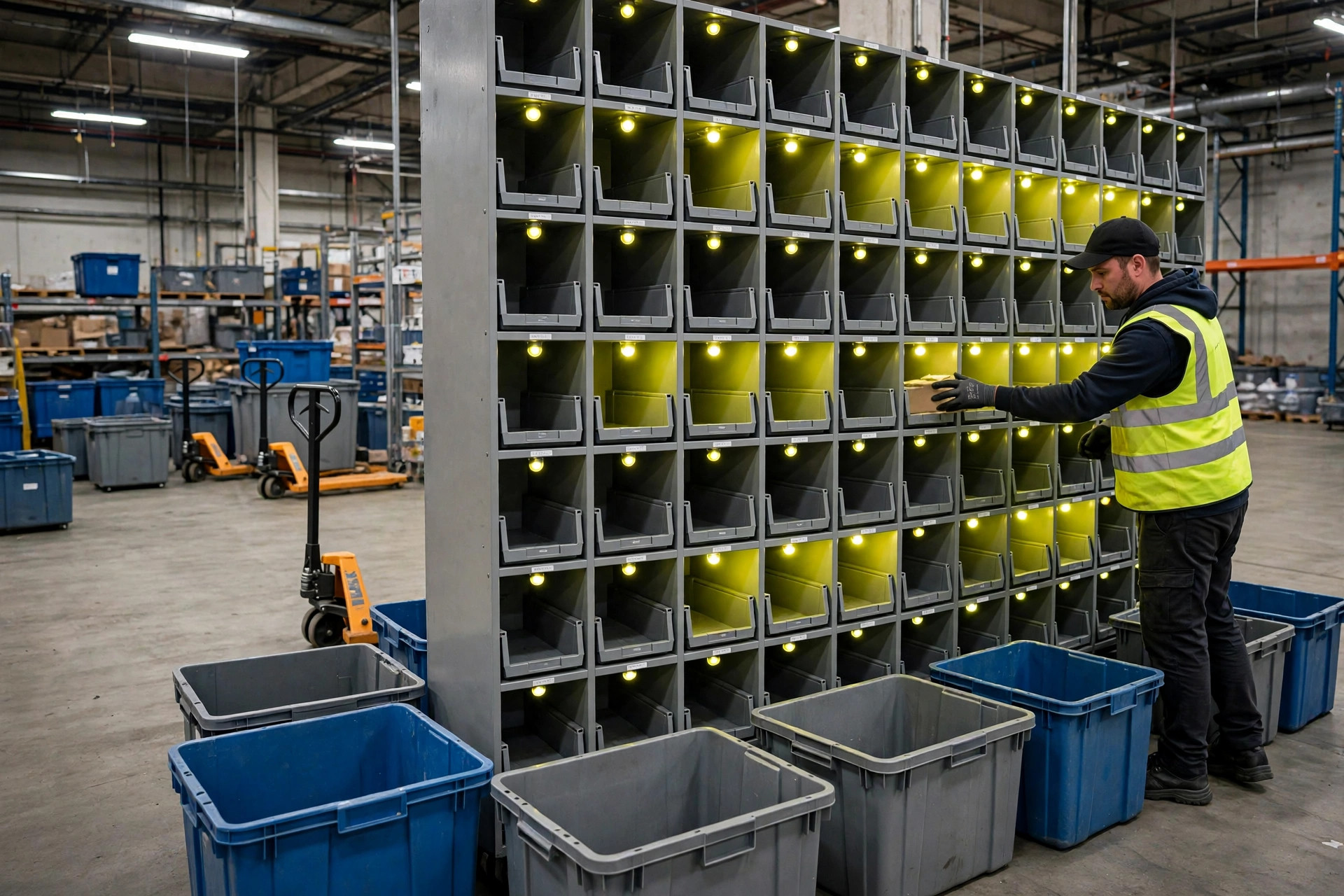
First case: April 2025, a 3C accessories e-commerce warehouse in Suzhou, about 8,000 orders a day, roughly 6,000 SKUs, mostly small items under 3 kg each. They installed four collaborative arms for put-to-light style picking — the arm takes the item from the tote and places it in the put wall, while the human only verifies and packs. In the first month, each arm ran about 210 pieces per hour — slower than the sales pitch promised. But the night window from 10 p.m. to 2 a.m., previously unstaffed, added more than 3,300 pieces a night across the four arms. The second month's numbers were more interesting: the picking error rate fell from 4 per thousand to 0.8 per thousand. An arm does not put product A into slot B. A tired human does. The verification and customer-complaint costs they saved were worth more than the extra pieces picked.
Second case, the opposite outcome: November 2024, a home-appliance parts warehouse in Guangzhou, where a single item routinely weighed over 15 kg. They wanted cobots too. I said it straight in the design review: a 12.5 kg arm, gripper included, cannot even lift one microwave oven — what exactly would it pick, the instruction manual? They switched the plan to AMR transport plus manual picking, spent zero on arms, and got a better result. That is where the dividing line sits: if a single piece exceeds 70 percent of the arm's rated payload, do not force it. The margin is there for the gripper, for acceleration, and for safety — not for the sales brochure.
Safety: "No Fence Needed" Does Not Mean "Nothing to Manage"
This is the most counterintuitive point in the whole article, and the misconception I most want to kill: a collaborative robot is not inherently safe. Safety is a property of the entire application, not of one component. The technical specification ISO/TS 15066 is explicit about this — it defines four collaborative modes: safety-rated monitored stop, hand guiding, speed and separation monitoring, and power and force limiting. The "work side by side, no fence" setup most warehouses mean runs on power and force limiting: the arm stops on contact, and contact force stays below injury thresholds.
But the same specification requires a risk assessment of the whole application — arm, end-effector, workpiece, speed, and layout together. Swap the gripper, pick a heavier part, turn the speed up one notch, and the assessment has to be redone. In July 2025, a Shanghai warehouse learned this the hard way: they changed the end-effector from a suction cup to a gripper jaw without redoing the assessment, and the jaw's edge cut an operator's forearm in a collision. The arm itself was within limits. The changed edge geometry made the whole application non-compliant. Remember this: the day you remove the fence, the risk assessment becomes your fence.
Deployment cost needs the same honest accounting. The arm is only part of the bill — gripper, vision, racking changes, WMS integration, safety assessment, and training together often run 1.5 to 2 times the price of the arm itself. A hypothetical example: one mid-size cobot fully integrated lands at around 60,000 dollars. Running two shifts with four extra night hours at 200 pieces per hour, 250 working days a year, that is 200,000 extra pieces a year. At 0.15 dollars of labor saved per piece, that is 30,000 dollars a year, a two-year payback. Not a beautiful number — but if you cannot hire for the night shift, or if error-driven customer complaints are already eating your margin, payback period stops being the only criterion.
Which Warehouses Should Not Buy a Collaborative Robot
Here is a decision framework. If two of these three apply, do not buy a cobot: first, daily volume under 2,000 orders — too little work, the arm spends half its time waiting for product. Second, SKUs dominated by large, heavy, or odd-shaped items, where payload and gripper adaptation cost more than the benefit. Third, a picking process that is not under control yet — messy slotting, chaotic waves, high stockout rates. Automation amplifies chaos; it does not cure it.
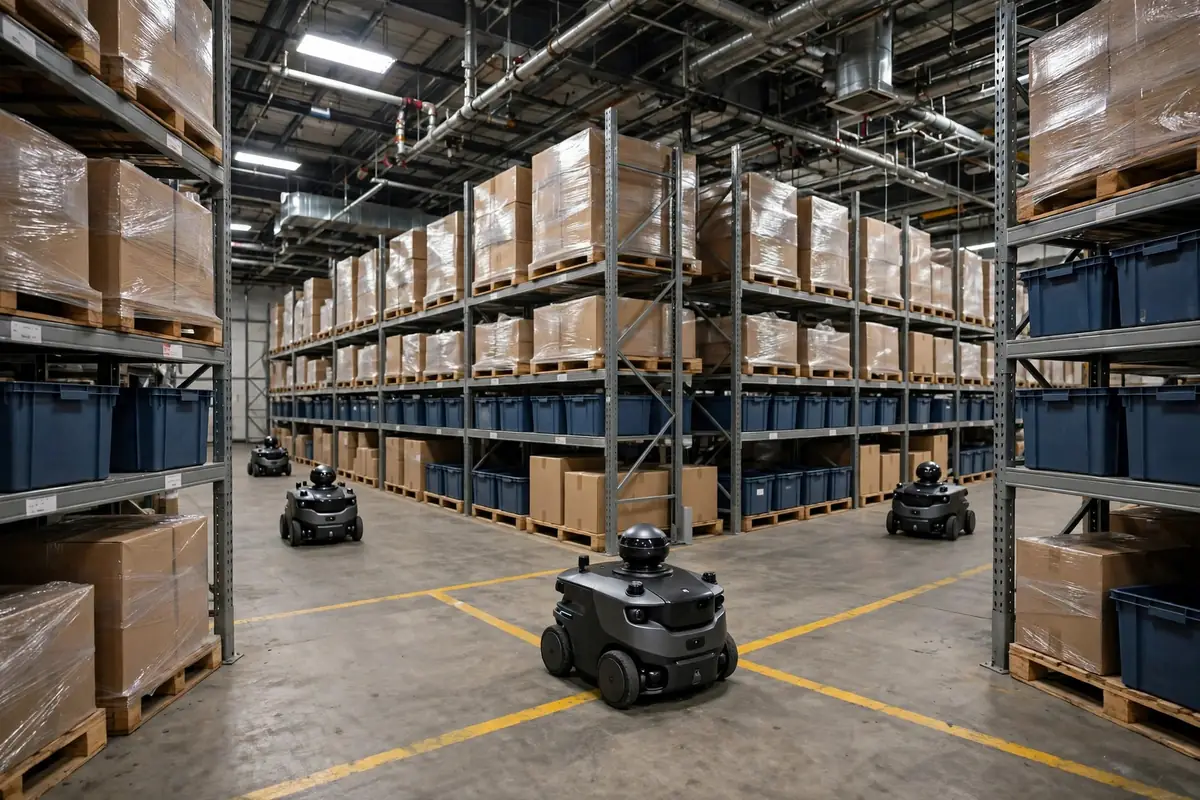
Conversely, the sweet spot is clear: small items, many SKUs, stable waves, night-shift demand, and hiring difficulty. For that warehouse, two to four arms doing put-wall or verification work cost an order of magnitude less than fixed automation, deploy in weeks instead of months, and can be moved when the SKU mix changes. That is the cobot's real selling point: not speed, but flexibility — small steps, fast payback.
So look at this one number: your picker's effective pieces per hour, multiplied by the night-shift hours you cannot staff. If that gap cannot be closed by hiring, and cannot be afforded by overtime, then the cobot's math works. If daytime staffing is fine and there is nothing to pick at night, save the money and fix your slotting and wave planning first — that is the best investment you can make right now.
By Da Liu, Automation Engineer