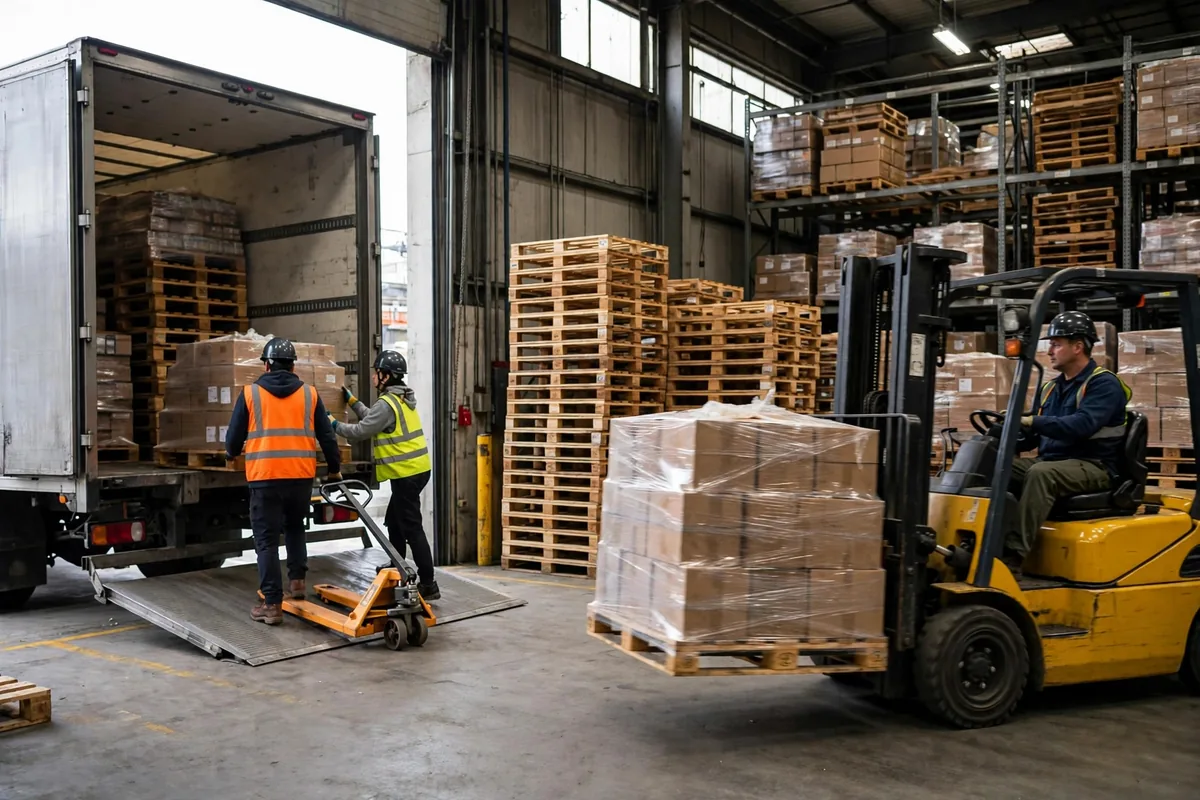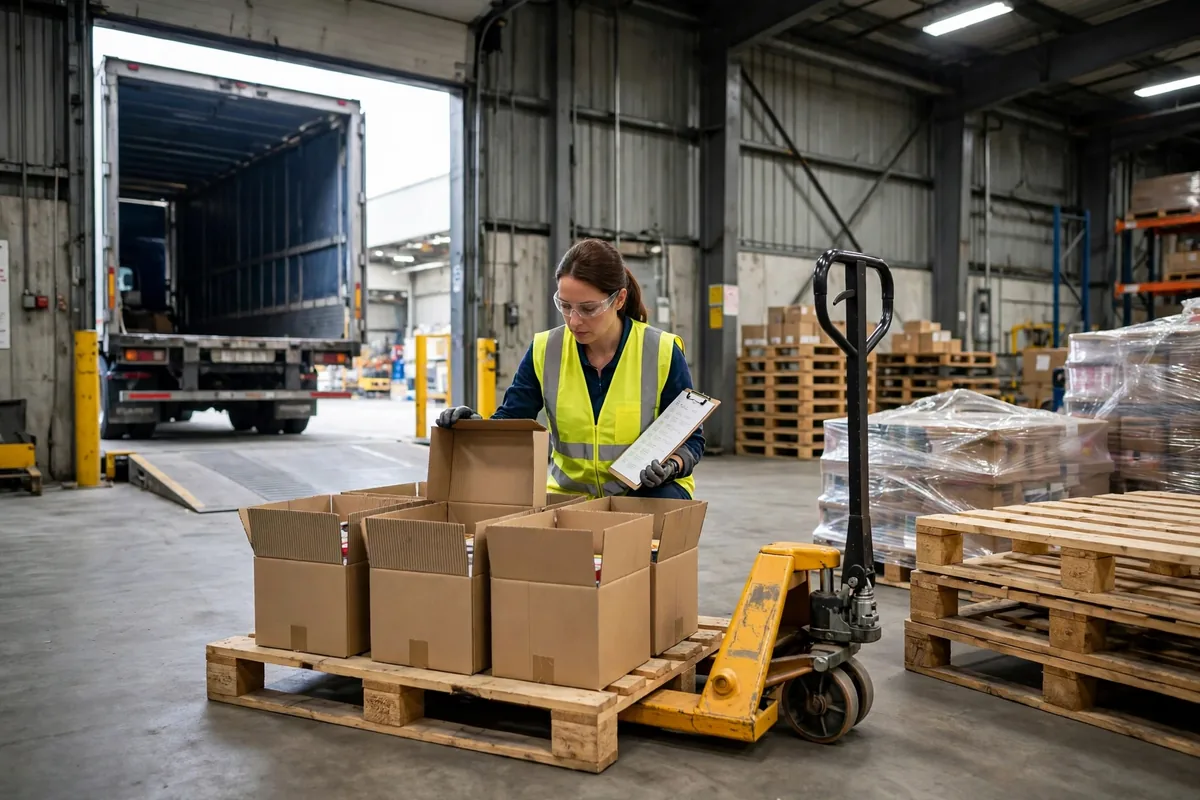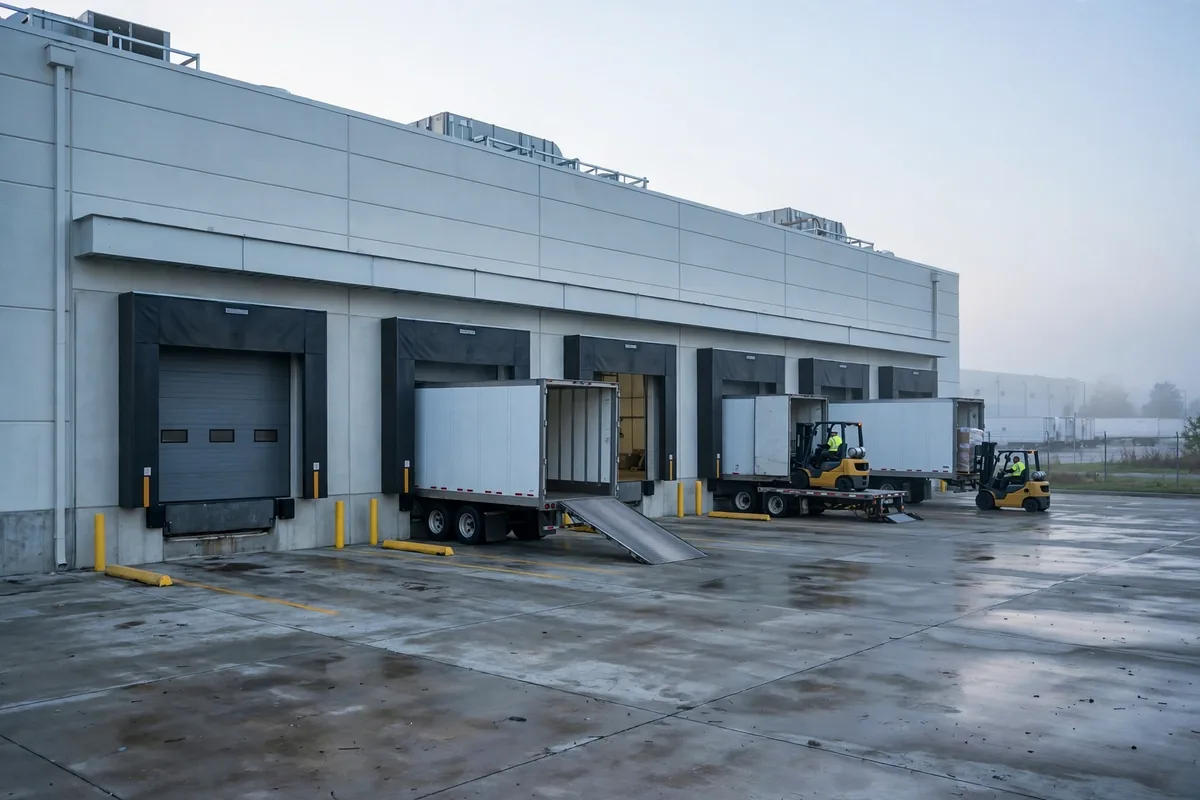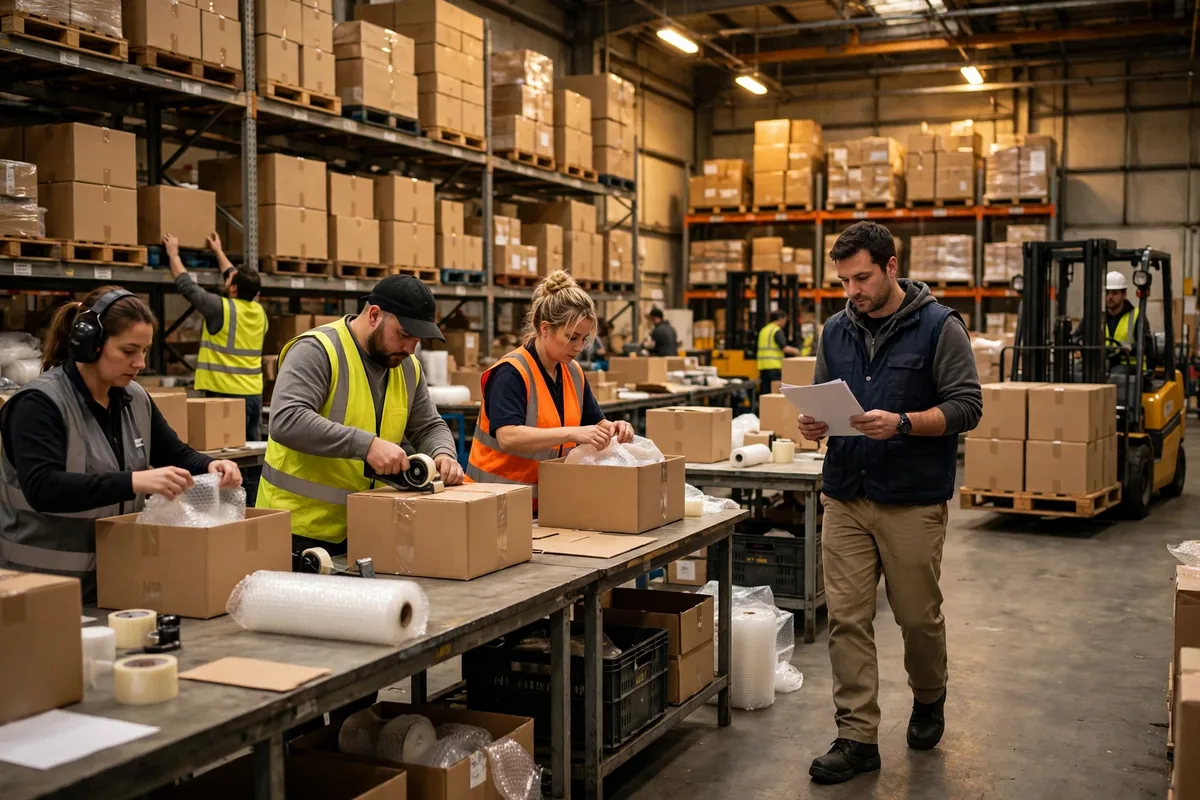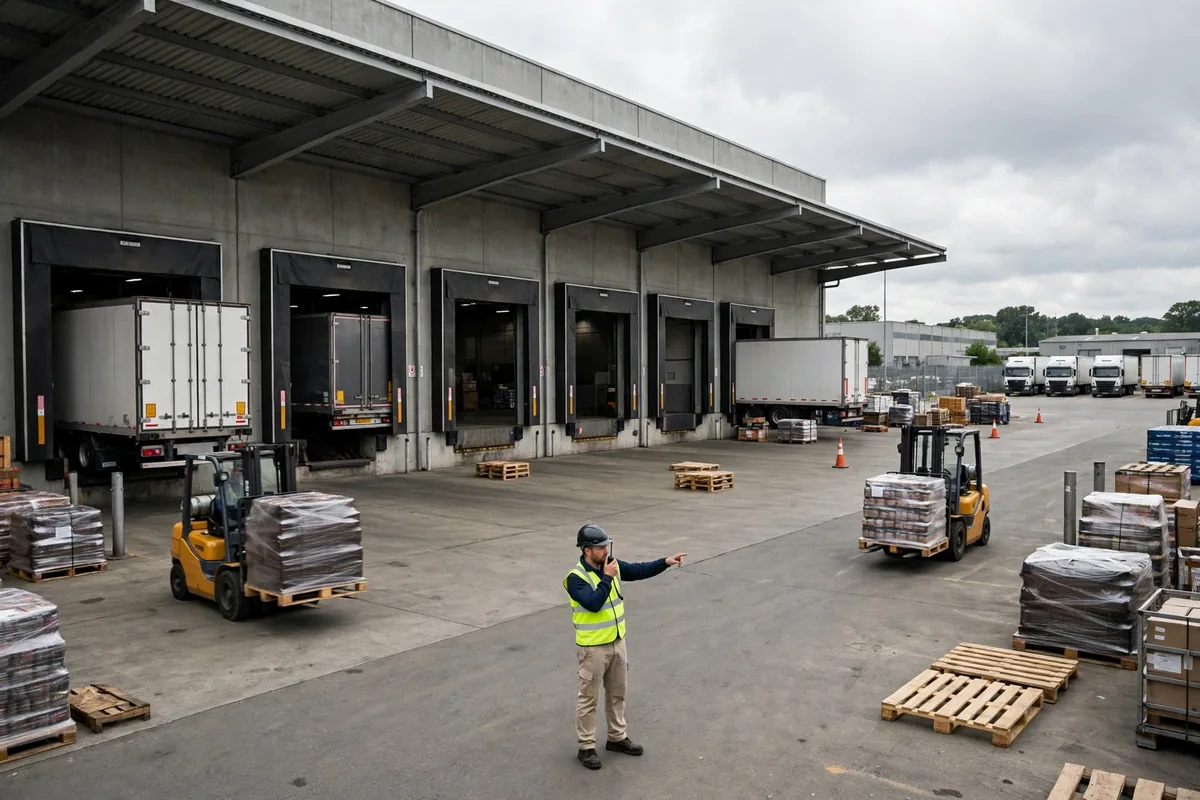
Let me tell you something from fifteen years behind the wheel: the worst traffic jam I know is not on the highway. It is in a warehouse yard, and warehouse shared dock door scheduling is what decides whether you dock on time or wait an hour at the gate. I once arrived at a facility a little after eight in the morning and found more than a dozen trucks already there, inbound trucks, outbound trucks, and cross-dock freight all trying to use the same dock area. The dispatcher was shouting into a radio, forklifts were turning around in the aisle, and the loading crew was running back and forth between two jobs. My truck waited over an hour just to back into a door. The freight was fine. The paperwork was fine. The problem was pure warehouse shared dock door scheduling: too many trucks, too few doors, all at the same hour.
Plenty of warehouses share doors between inbound and outbound. Small ones have no choice; there are only so many doors. Big ones do it too, because in peak season the dedicated doors run out, an inbound door gets borrowed for outbound, and an outbound door gets used to unload. The doors are shared. The trucks are not coordinated. That is where the trouble starts.
Warehouse Shared Dock Door Scheduling Means Counting Three Conflicts
The first conflict is the arrival peak. Suppliers like to deliver in the morning, so their trucks roll in around eight or nine. Outbound carriers like to load in the morning too, because they need to catch linehaul departures, and the earlier they load the better. Two waves arrive in the same window, and the doors cannot take both. Cross-dock freight makes it worse: it arrives, gets unloaded, and has to leave on another truck, so it occupies a door and an aisle for the better part of a shift while putaway freight and outbound freight fight over the same opening.
The second conflict is people and equipment. There is one loading crew, and inbound wants them, outbound wants them, and cross-dock wants them. Whichever side shouts loudest gets the crew, and the other side waits. Forklifts, pallets, and dock plates are shared the same way. A truck half unloaded gets abandoned at the door when its forklift is called away to load an outbound truck, and a half-unloaded truck sitting on a door blocks every truck behind it.
The third conflict is the truck nobody planned for. The appointment truck arrives late, the unannounced truck arrives early, or a carrier swaps in a bigger trailer that does not fit the assigned door. This happens every day, and a schedule can be rewritten several times before lunch. A shared dock does not suffer most from being busy. It suffers from being chaotic. Busy and orderly can be managed. Chaotic cannot, no matter how many doors you have.
I have watched this play out two ways. At one consumer goods warehouse in the Midwest, the doors were shared and the plan looked clean on paper: all inbound in the morning, all outbound in the afternoon. In peak season the inbound trucks did not all arrive in the morning; they dribbled in through midday, right when the outbound trucks started arriving early. The two waves collided at noon, and the dock area jammed so badly the forklifts could barely turn. The fix was not more doors. They moved the inbound window earlier, pushed the outbound window later, and left a buffer slot in between just for clearing the floor. Time windows work, but only if they carry slack. A window packed solid is no window at all.
The opposite mistake is just as common. Another warehouse split its doors hard: some doors inbound only, some outbound only, no exceptions. On normal days it worked beautifully. Then a promotion hit, inbound exploded, and the outbound doors sat empty while inbound trucks queued outside. The dispatcher could see the empty doors and could not use them. The fix was flexible door assignment: normally split, but when an inbound wave hits, an outbound door converts to inbound, with one rule, that a converted door is announced an hour ahead and is not converted back during the same shift. Same doors, livelier schedule, shorter queues.
Three Shared Dock Door Scheduling Methods, and What Each One Costs You
There are three standard ways to run a shared dock, and each one trades something away:
| Method | What it buys you | What it costs you | Best for |
|---|---|---|---|
| Time windows | Inbound and outbound never meet | One late truck wrecks the whole sequence | Warehouses whose peaks already fall at different hours |
| Split doors | Clear responsibility, no fighting over doors | One side idle while the other side queues | Warehouses with enough doors and steady volume on both sides |
| Appointment windows | Predictable arrivals, labor planned ahead | Someone has to run the appointment system, and walk-ins suffer | Warehouses with many truck visits and cooperative suppliers and carriers |
No single method carries the day on its own. Time windows fear late arrivals, split doors fear uneven volume, and appointments fear nobody enforcing them. The best-run shared dock I have seen mixes all three: a broad time-window framework, flexible door splits, appointments for the big suppliers and carriers, and one or two flex doors held back for the unexpected. A schedule drawn down to the minute looks impressive and dies on first contact with reality. A schedule with slack in it is a schedule that can actually be executed.
Here is the counterintuitive part, and I mean it after all these years: it is better to let a truck wait outside the yard than to wave every truck inside at once. A truck inside the yard occupies an aisle, occupies people, occupies a forklift. Once the yard is jammed, unloading and loading both slow down, and every truck ends up waiting longer. A truck waiting outside can be released in order, one at a time, and the dock keeps moving. Many warehouses, afraid of driver complaints, wave trucks in the moment they arrive, and the yard jams so badly that drivers wait even longer. Holding the line at the gate is not rudeness. It is the only way the dock keeps flowing.
Beyond the Schedule, Three Things Drivers Actually Notice
First, tell drivers the truth in advance. What time they can dock, how long the wait will be, and where to wait, sent straight to their phones, beats leaving a driver guessing at the gate by a mile. Drivers do not mind waiting. They mind not knowing how long the wait is.
Second, keep cross-dock and putaway traffic out of the same aisle. Cross-dock freight is about speed, in and out. Putaway freight is about order, step by step. Two forklift streams in one aisle will collide sooner or later. Separate the routes if you can, and separate the time windows if you cannot.
Third, keep flex doors for the unplanned truck. A schedule with no flex door looks beautiful and collapses the moment something unexpected happens, forcing a full reshuffle. One or two doors held in reserve are the cheapest insurance a shared dock can buy.
A shared dock is not a door problem. It is a time problem. Stagger the arrivals, separate the people and equipment, and leave room for the truck nobody expected, and the feeling of not having enough doors fades on its own. In warehouse shared dock door scheduling, you are not counting doors. You are counting hours, and the hours are where the money goes.
By Shifu Zhao, Trucking Veteran (15 yrs)