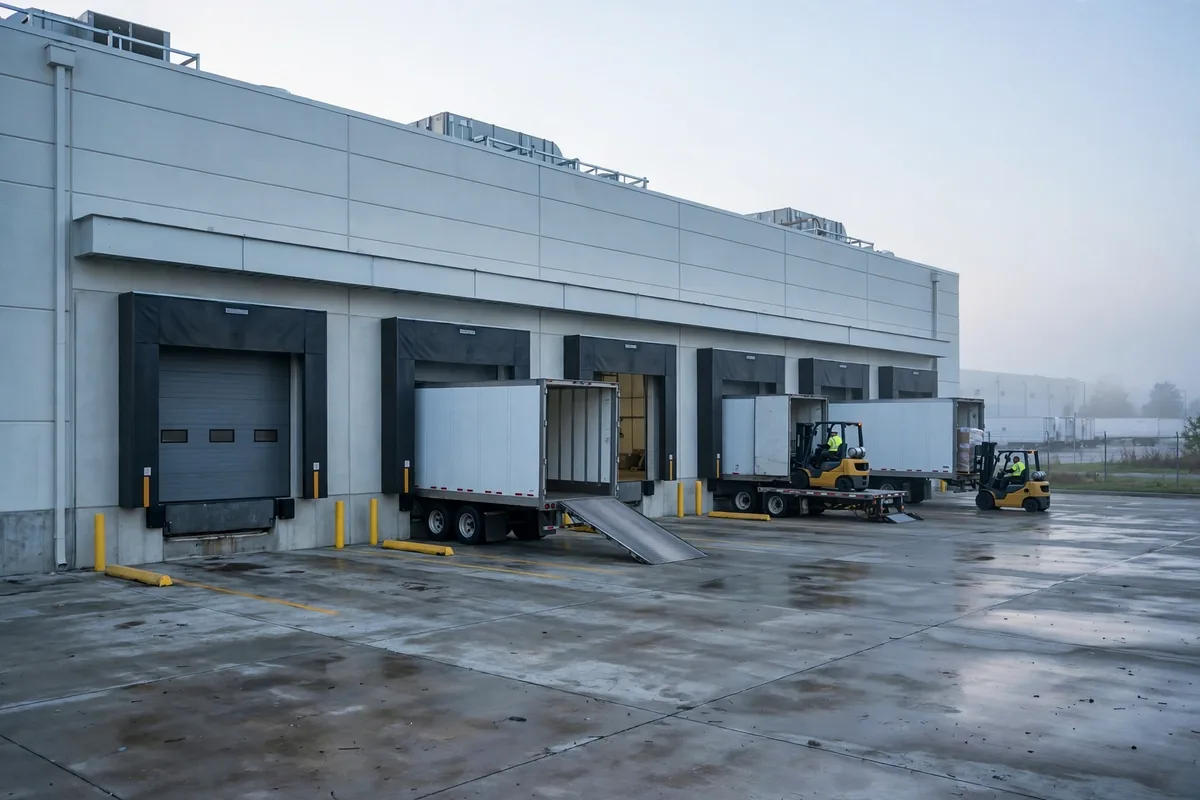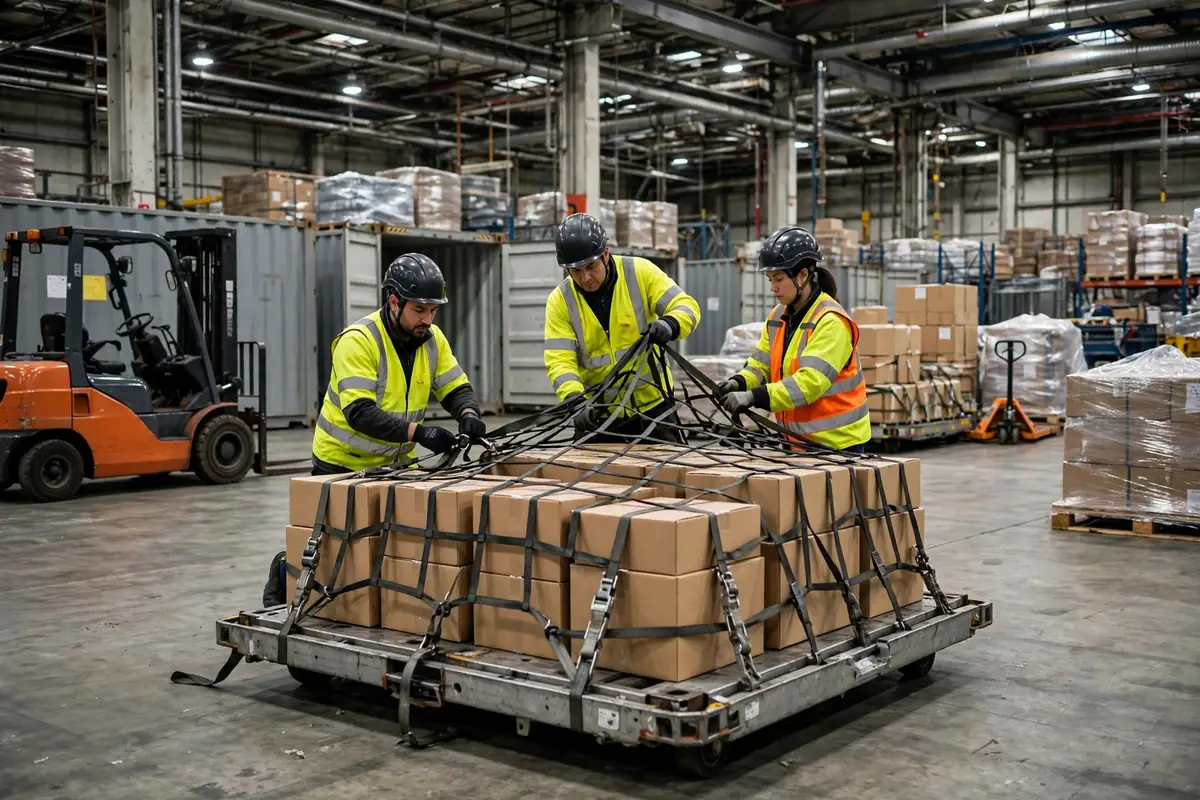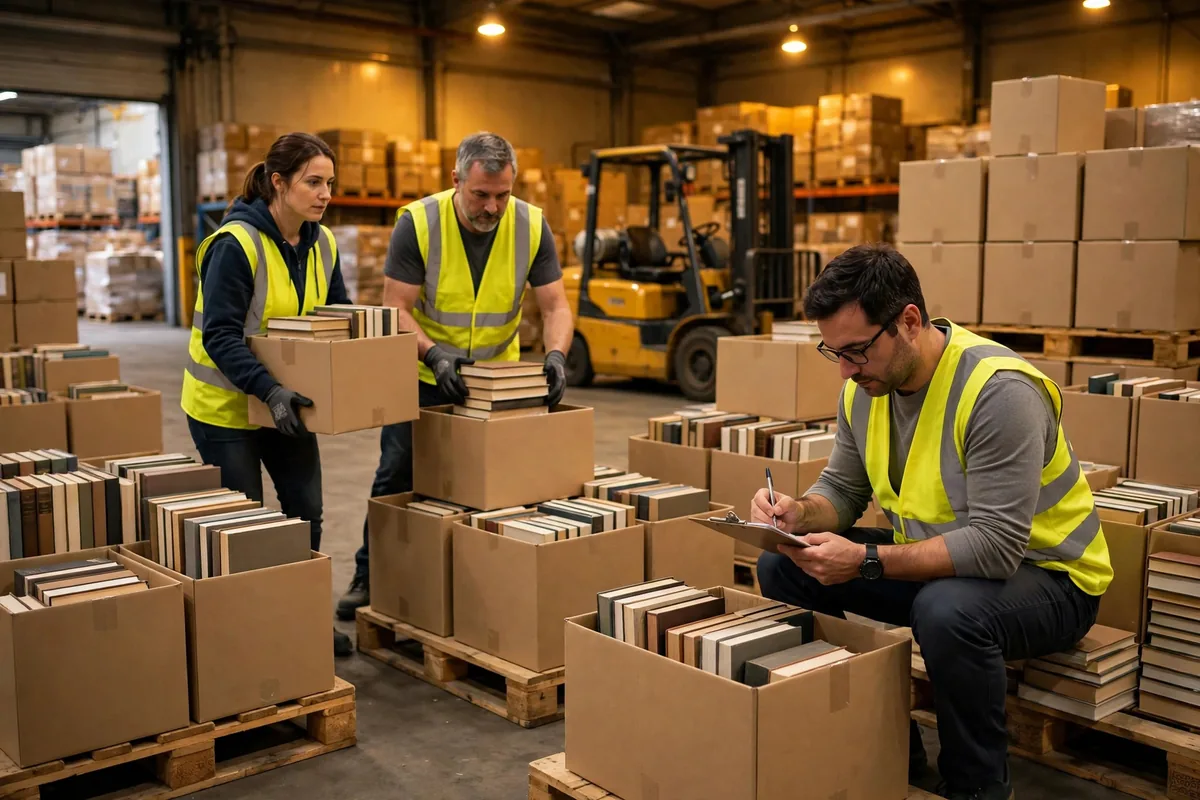
Last fall, a batch of slow-moving books was scheduled for transferring books between warehouses — from a publisher's Dongguan warehouse to my little 3,000-square-meter place. I told the publisher's coordinator, don't worry, I'll count everything when the truck arrives. The truck showed up at 9 p.m. Two of us, one forklift, one transfer sheet, and 48 pallets of books. We finished counting at 1 a.m.: 37 copies short, 12 damaged, and 3 cartons with the wrong titles on them. That night taught me something: the truck ride is the easy part. The real work starts after the truck arrives.
Big warehouses talk about transfers as systems that auto-generate tasks and book dock doors. A small warehouse talks about transfers as short hands, dim lights, and a single sheet of paper — and when there's a discrepancy, you argue it out yourself. This is my small-operator playbook for closing out a book transfer. It costs nothing. It's crude. It works.
Receiving After Transferring Books Between Warehouses: Count Before You Sign
The driver is always in a hurry, and a hurried driver is a warehouse manager's worst enemy. He opens the doors and hands you the paperwork to sign. Once you sign, the goods are yours — every shortage and every damaged copy after that is on you. So my iron rule is: inspect first, sign second, and sign for what you actually received, not what the paperwork says.
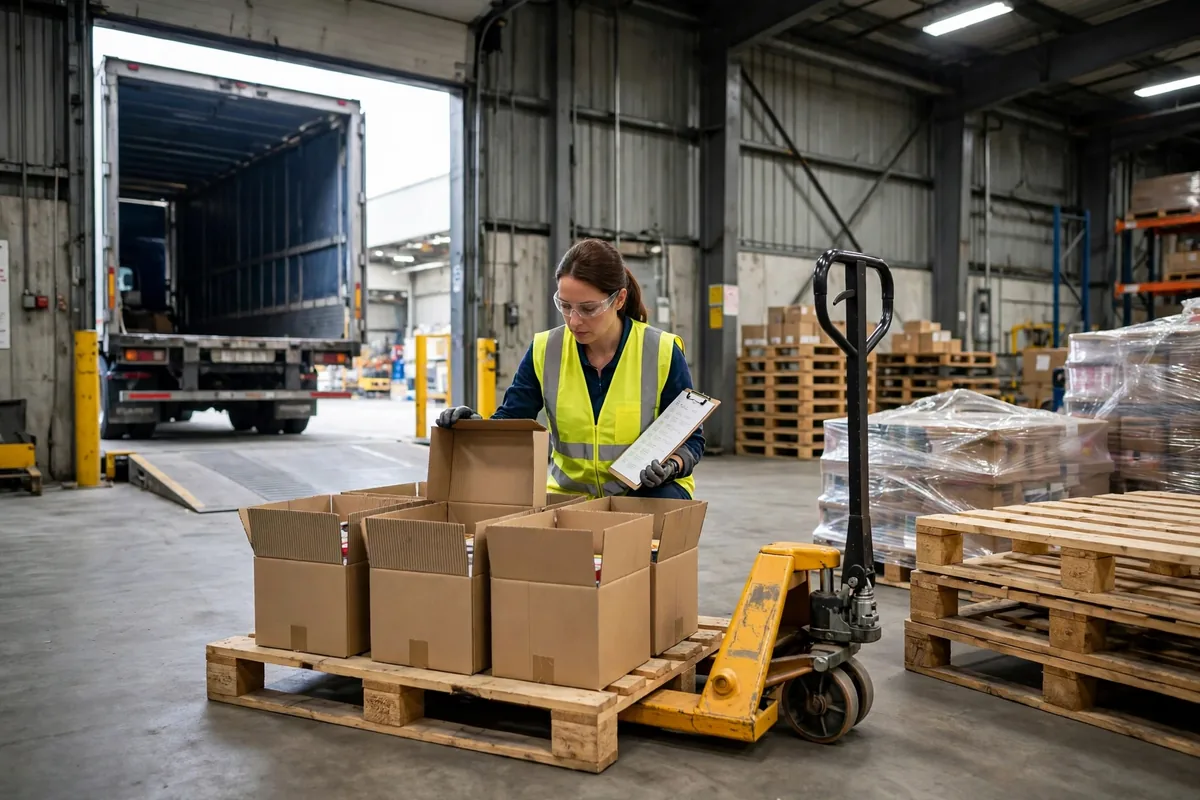
My crude method has three steps. First, check the outside before opening a single carton: seals intact, cartons uncrushed, pallets upright? In November 2025, 2 of the 48 pallets had broken seals. I photographed them on the spot and had the driver sign the back of the printout — that one move saved me at least two weeks of arguing later. Photograph the broken seal, the whole pallet, and the carton label, and staple the photos to the discrepancy note. Second, count cartons, not copies. For sealed cartons, count the cartons and check the label — title and quantity — against the sheet. Only open a carton when the label doesn't match; loose cartons get counted copy by copy. Two of us cleared 48 pallets in about 4 hours that way. Copy by copy, we'd still have been counting at sunrise. Third, write every discrepancy on the receiving slip right there: how many short, how many damaged, which titles are wrong, in duplicate, one copy for the driver and one for me. "We'll sort it out later" means nothing. Ink on paper means something.
Here's the counterintuitive part: receiving slowly actually saves money. People think signing fast saves the driver's waiting time. What it really does is hand you the bill. Here's a hypothetical worked example: a transfer short 37 copies and with 12 damaged, at an average list price of 40 yuan and a cost of roughly 20 yuan per copy after discount, the goods loss is under 1,000 yuan. But if you signed first and found the problem later, the other side can simply deny it — and then you either eat the loss or spend two or three days on phone calls, camera footage, and emails. The labor alone costs more than the 1,000 yuan. Half an hour of slow receiving buys you a discrepancy somebody actually owns. That's a good trade.
The Discrepancy Note Is Where the Money Lives
A discrepancy note isn't written for your boss. It's written for both sides' accountants. I learned this the hard way: my early notes said "some copies missing," and finance sent them straight back — nothing to book against. Now my note has exactly five columns: title, ISBN, quantity on paper, quantity received, and difference, plus a remarks column for the cause — damaged, wrong shipment, short. If the cause isn't clear yet, I write "under review," but the numbers get fixed the same day.
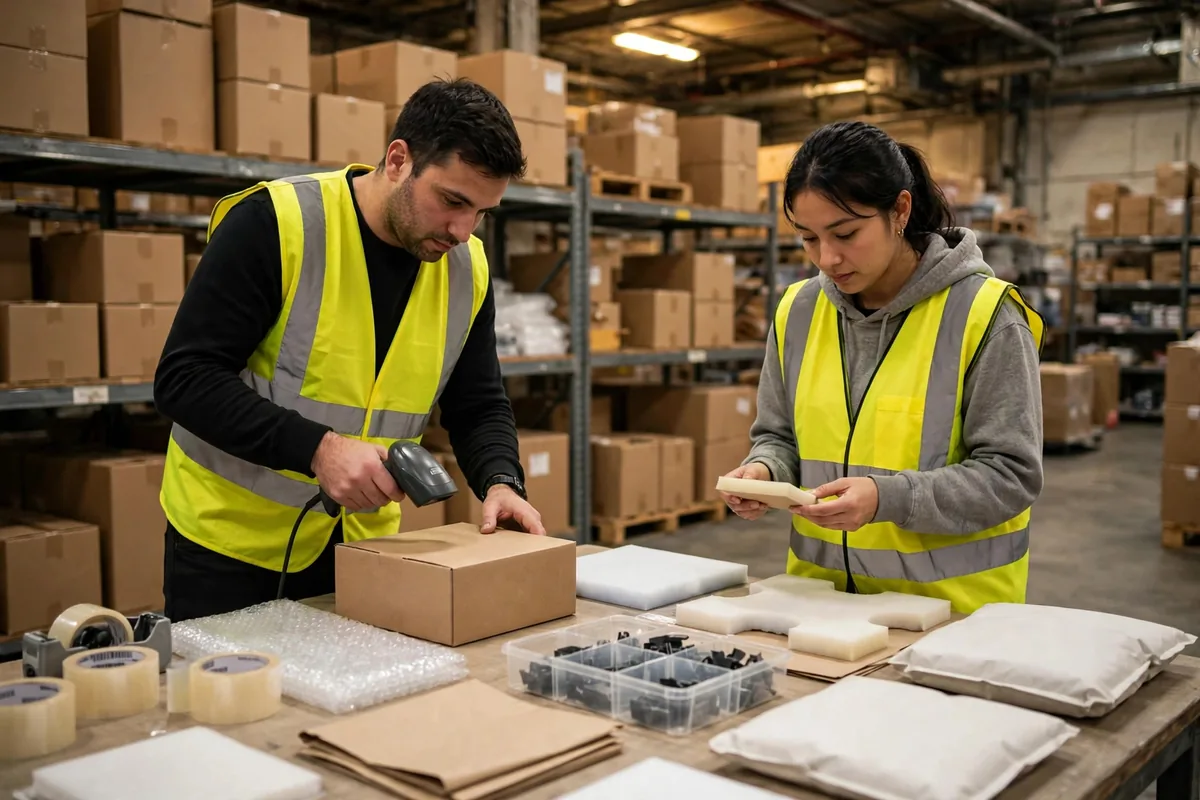
Here's how that 37-copy shortage closed out. The 12 damaged copies went into a separate damaged-goods zone, photographed and logged, waiting for the publisher to confirm disposal or return. The 3 mislabeled cartons stayed in a holding area, unreceived, while I sent the discrepancy note and photos to the other side; the next day they confirmed it was a labeling error, the books were right, and once the labels were swapped the cartons went into stock. The truly short 37 copies? The shipper checked their loading footage, confirmed a layer was missed at loading, and the replacement copies came on the next truck. The whole process ran on one principle: every discrepant copy gets a destination — received, disposed of, replaced, or claimed. Nothing sits in a "deal with it later" pile.
Damaged stock gets its own close-out too. Of the 12 damaged copies, 8 only had scuffed covers; the publisher said sell them at a discount, so I booked them as a separate damaged-price line. The other 4 had water-damaged pages — disposal only. I photographed them and cleared them only after the publisher's stamped confirmation came back. Damaged stock left vague on a shelf is the worst kind: six months later nobody remembers which shipment it came from. Every Friday I run a weekly reconciliation: both sides produce a sheet — received, discrepancy, in-transit — and we tick it off line by line. Anything that doesn't tick gets asked about that same week, not saved for month-end, when the camera footage has already expired. The prevention side matters too — how to keep multi-warehouse transfers from causing stockouts covers the first half of the story. But once the truck arrives, prevention turns into close-out.
Closing the In-Transit Balance: The Last Mile of a Book Transfer
Most small-warehouse bookkeeping messes come down to two words: "in transit." The books leave Dongguan, and the in-transit stock sits on Dongguan's books. They arrive at my place, I receive them, and only then does the in-transit balance clear to zero. In between, both sides show the same books, and a stock count turns up one phantom in-transit line and one missing physical line. That gap is the unglamorous half of transferring books between warehouses: nobody photographs it, but it is where the books go wrong.
My close-out routine is three things. First, clear the in-transit balance on the day of receipt — never wait for the weekend batch. One day late is one day of wrong counts. Second, tie the three document numbers together: the shipping note number, the receiving slip number, and the discrepancy note number. Finance can trace the whole transfer by following the numbers. Third, keep damaged stock on its own ledger line: the damaged copies never enter sellable stock, and once the publisher's disposal confirmation arrives, write them off immediately. Don't let damaged copies sit in sellable stock for three months until nobody remembers which shipment they belonged to.
Here's a comparison for fellow small operators — a hypothetical example of one transfer of 5,000 copies worth about 100,000 yuan:
| Close-out method | Receiving time on the day (assumed) | Discrepancy acceptance (assumed) | Follow-up labor (assumed) |
|---|---|---|---|
| Sign first, count later | 0.5 hours | Low — the other side often denies it | 2–3 days of arguing |
| Count by carton, note discrepancies on the spot | About 4 hours | High — signed, with photos | Under half a day |
| Count every copy | 8+ hours | Highest | Under half a day |
The middle option fits a small warehouse best: it costs almost nothing extra, it just moves the counting to before the signature. Counting every copy looks safest, but a small warehouse doesn't have the hands for it — push that hard and the night shift collapses and next day's shipping suffers. The trade-off is the point: it's not about being as detailed as possible, it's about being detailed enough that discrepancies get owned and the books balance.
Three suggestions for other small operators. First, don't buy expensive receiving tools: an old phone, printed discrepancy forms, a marker pen — enough. Second, clear discrepancies the same day: settle what you can, and for the rest write "under review" with a named owner — never let it sleep overnight. Third, agree the rules with the shipping warehouse before the transfer: how discrepancies get accepted, whether photos count as evidence, and which truck carries replacements. Don't negotiate the rules after the discrepancy shows up.
Closing out a book transfer comes down to one sentence: counts must match, every discrepancy must have a destination, and the in-transit balance must clear to zero. A small warehouse has no big system to catch its mistakes, so paper, photos, and a signature have to do the job. Get that right, and the next shipment can arrive with your mind at ease.
A small warehouse has its own way of surviving.
By Xiao Ma, Small Warehouse Owner