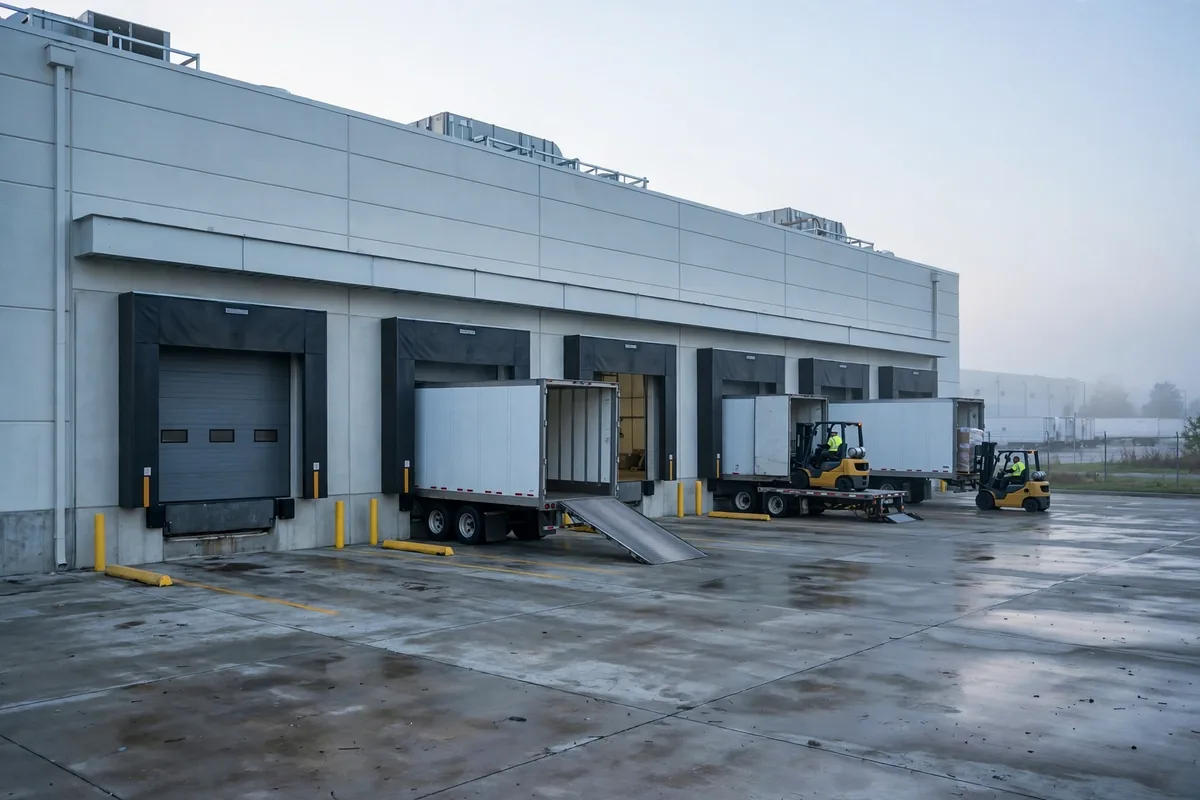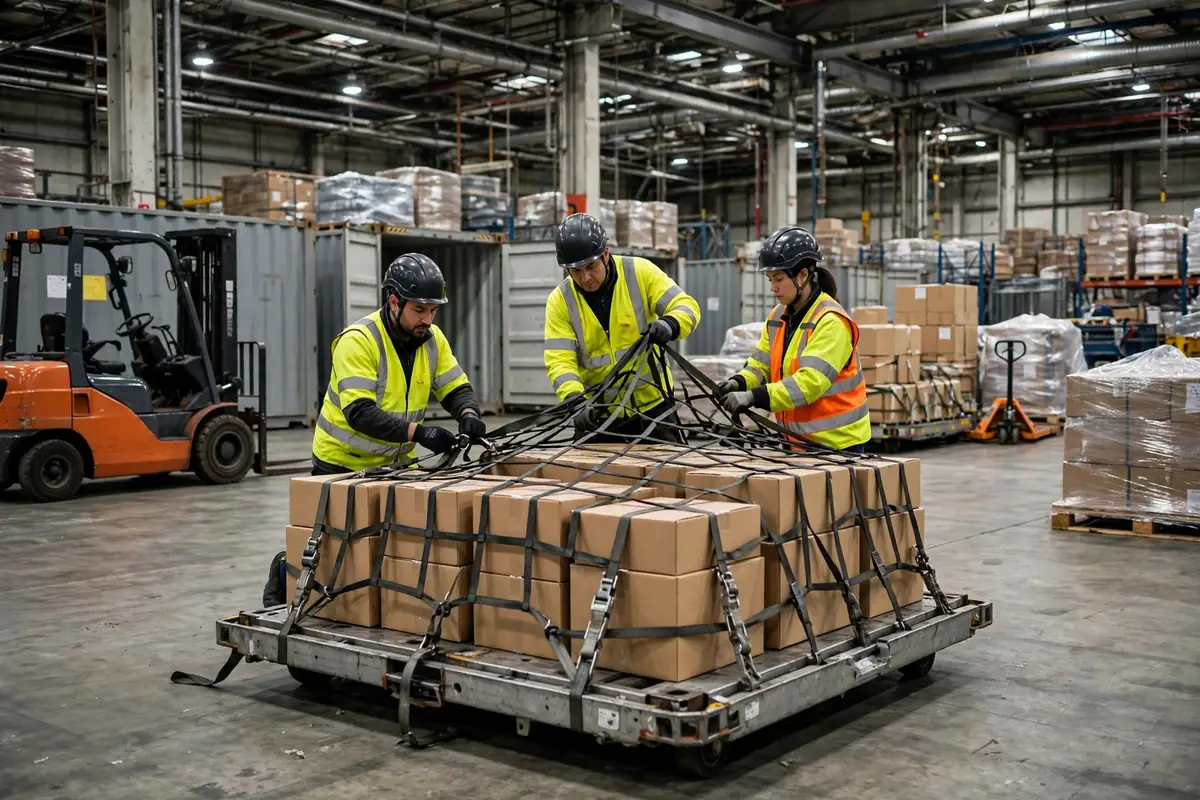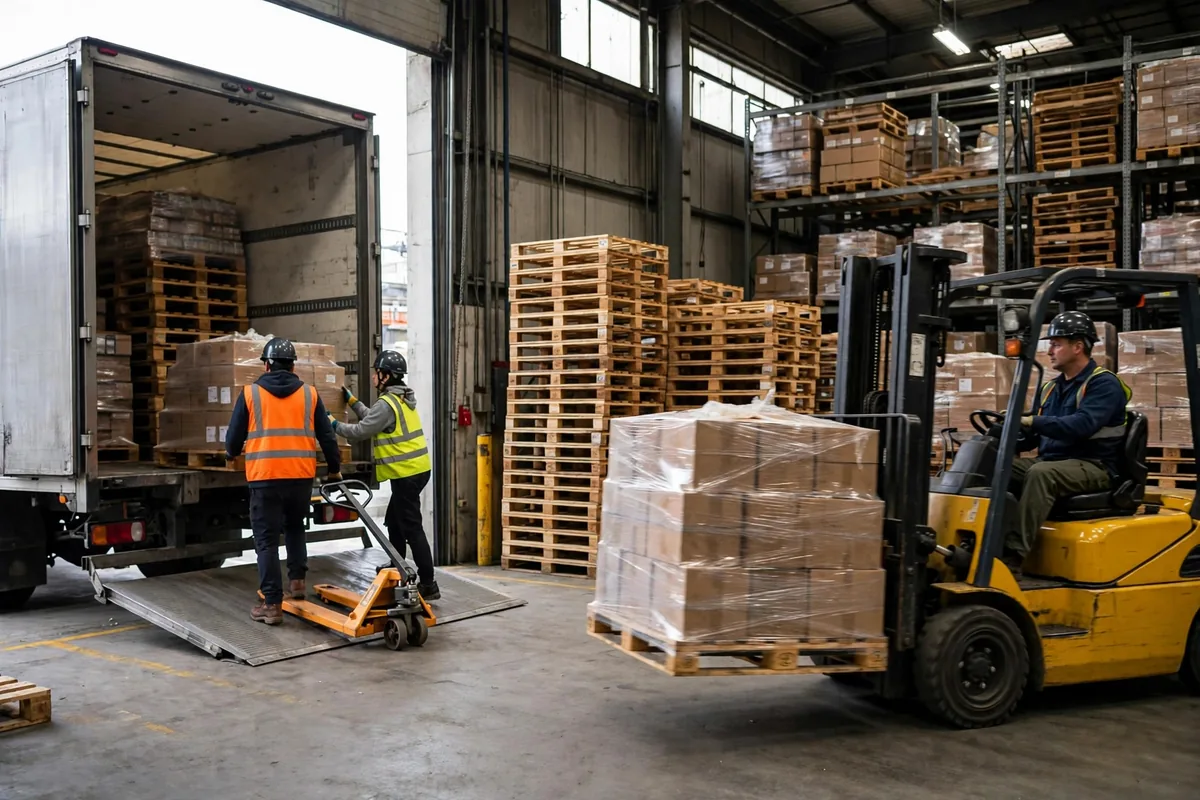
Let me tell you something. After all these years on the road, the thing I dread most isn't traffic on the highway. It's pulling up to a warehouse and finding the dock already jammed solid. Trucks can't get in, freight can't come off, the receiving crew is standing in a staging area with nowhere to put anything, and the putaway forklifts are behind them honking. Everybody blames everybody else. I've watched that scene play out more times than I can count, and it always goes the same way: warehouse receiving and putaway fighting over the same strip of concrete.
One morning I got to a warehouse in Southern California around four-thirty. My appointment was five o'clock. The two trucks ahead of me still hadn't left. Pallets were stacked all over the dock. Three receiving folks were checking one pallet while a forklift driver tried to squeeze past them to get to the racks. He leaned out and shouted for them to clear a path. They shouted back: clear it to where? There's no room. I sat in my cab watching the clock. An hour went by and my truck still hadn't backed into a door. I had another pickup after that one, and I ended up calling the shipper to move it. He asked me what went wrong, and honestly, I didn't know who to blame.
Here's what that morning taught me. Receiving and putaway aren't fighting over who's right. They're fighting over the same road. Receiving has to pull freight off the truck and set it in staging. Putaway has to pull freight out of staging and carry it to the racks. Both jobs share one aisle and one staging area, and when the timing collides, they collide. Tell receiving to hurry and they'll say there's nowhere to put the freight. Tell putaway to hurry and they'll say the road is blocked. Both sides are telling the truth. The problem is the layout — the road in and the road to storage were never separated in the first place.
When Receiving Meets Putaway, the Layout Takes the Hit
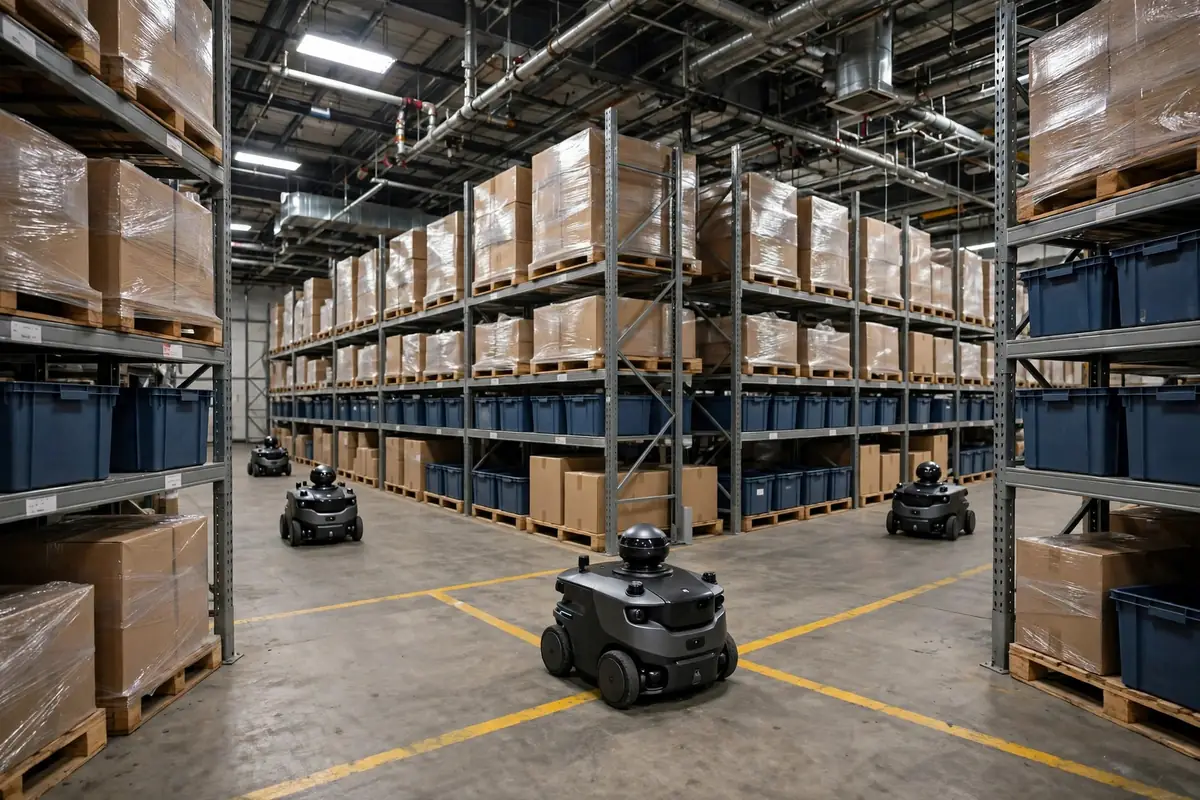
A lot of warehouses look like this: a row of dock doors, an open patch of floor behind them that serves as staging, and the racks beyond that. It looks smooth on paper. In real life, the moment inbound volume spikes, staging fills up first, and the overflow spills into the aisle. The aisle narrows, the putaway forklifts have to detour, and when they can't detour, they stop and wait. The longer they wait, the more receiving rushes, and the more receiving rushes, the more freight lands in the aisle. It's a loop, and it feeds itself.
I've seen worse. One warehouse ran receiving and shipping out of the same row of doors. Inbound trucks and outbound trucks arrived at the same time in the morning. Forklifts cut across the floor one way while order pickers pushed carts the other way. The whole dock looked like a rush-hour intersection. The manager told me that from ten to noon every day, basically nobody could move fast, and the whole operation ran on people shouting and waving each other through. That isn't a management problem. That's a road built wrong.
The numbers below are an illustrative scenario, meant to show the math, not an industry benchmark. Take a mid-size warehouse getting 40 trucks a day, with unloading and checking averaging 40 minutes per truck. That's more than 26 hours of receiving work in a single day — two people can't finish it. Meanwhile, if a forklift takes six minutes round trip from staging to the racks, 400 pallets a day means 40 hours of forklift work. Both teams are fully loaded, and they're sharing one road. A collision isn't bad luck. It's arithmetic.
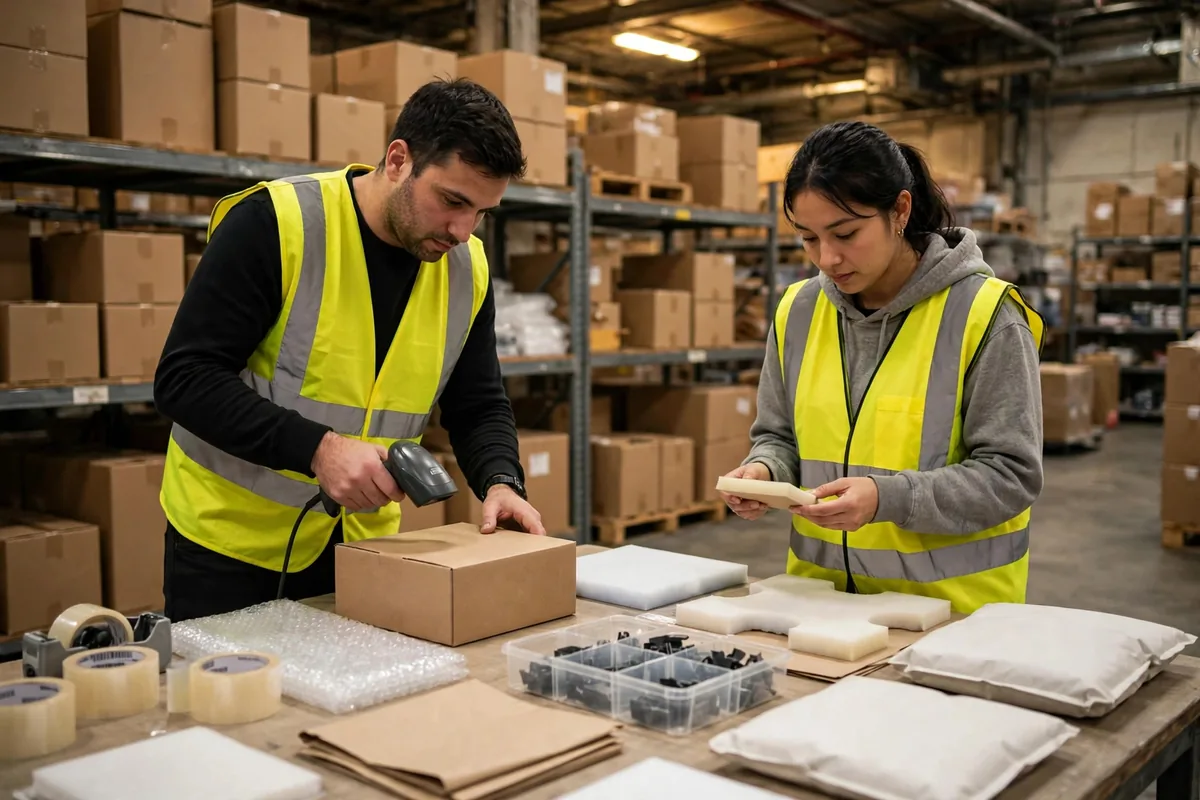
There's another thing people don't talk about: the two teams are often measured against each other. Receiving gets judged on how many trucks got unloaded today. Putaway gets judged on how many pallets got put away. The faster receiving unloads, the fuller staging gets, and the harder putaway's job becomes. The faster putaway moves, the more it has to fight through staging to grab freight, and the less room receiving has to work. Set the targets against each other and the people will follow. I tell warehouse owners this all the time: however you set the scoreboard, that's how the floor will argue.
Fix the Receiving and Putaway Layout and the Fight Fades
So how do you fix it? I'm not a layout designer. I just know what I've seen work on the road.
First, separate the in from the out. The receiving doors and the putaway routes shouldn't share one main aisle. If you can, put receiving at one end and let putaway enter the rack area from the other side, with staging sitting between them. If a big rebuild isn't possible, at least mark staging into bays — one bay for inspection, one for goods waiting on putaway — and paint a one-way forklift lane down the middle that nobody is allowed to stack freight in. Painting the line is easy. The hard part is making sure nobody stacks freight on it, and that takes a manager walking the floor every day for a month until it becomes habit.
Second, stagger the peaks. Receiving peaks and putaway peaks shouldn't land in the same two hours. Plenty of warehouses get most of their inbound in the morning, right when picking and shipping are also at full speed, and four jobs pile into the same window. One warehouse I know fixed this the simple way: they gave suppliers arrival windows, with only two big deliveries in the morning and the rest after one in the afternoon, while putaway cleared yesterday's leftovers first and started on new freight after ten. Just that shift cut the forklift stand-offs at the dock way down. Drivers were happier too, because appointment times started meaning something again.
Third, split off the freight that never needs a rack. Some goods arrive today and leave tomorrow, or even the same day. Don't put them away at all. Carve out a cross-dock area near receiving, label them there, and send them straight to shipping. Cross-docked freight never touches the putaway route, and putaway's workload drops overnight. This one works especially well in e-commerce warehouses, where a hot item can arrive in hundreds of pallets — putting it all away just to pick it all back out is pure wasted motion.
Of the three, changing the layout costs the most and helps the most. Staggering costs almost nothing but depends on suppliers keeping their windows. Cross-docking pays off fast but only if the system's location logic is straight first. Which one a warehouse should start with depends on where it's actually stuck. If staging is the jam, mark the bays and guard the lane. If timing is the jam, stagger the arrivals. If volume is the jam, split the flow. Don't just buy more forklifts and add more people. The more people you add to a bad road, the more crowded it gets.
| Fix | Cost | How fast it helps | What kills it | | Separate flows, mark staging bays | Medium, one-time | About a month | Lines nobody enforces | | Stagger arrival windows | Almost nothing | One to two weeks | Suppliers ignoring windows | | Cross-dock fast movers | System changes needed | Two to three weeks | Wrong labels, wrong shipments |
At the end of the day, when receiving and putaway fight, it's never really about temper. A hot-tempered crew will fight in any warehouse, and a good-natured crew will still lose its patience on a bad layout. Build the road right and both teams can do their jobs and still share a smoke at the end of the shift. Build it wrong and no amount of meetings about teamwork will move the freight sitting on the dock.
Next time you're in a warehouse, don't start with the reports. Stand at the dock for ten minutes. Watch whether forklifts keep meeting head-on in the same spot. Watch whether staging freight keeps creeping into the aisle. Watch whether the receiving crew keeps turning around to let someone through while they're trying to work. Those ten minutes will tell you more than a full day of meetings. Get the road right, and the people will follow.
By Shifu Zhao, Trucking Veteran (15 yrs)