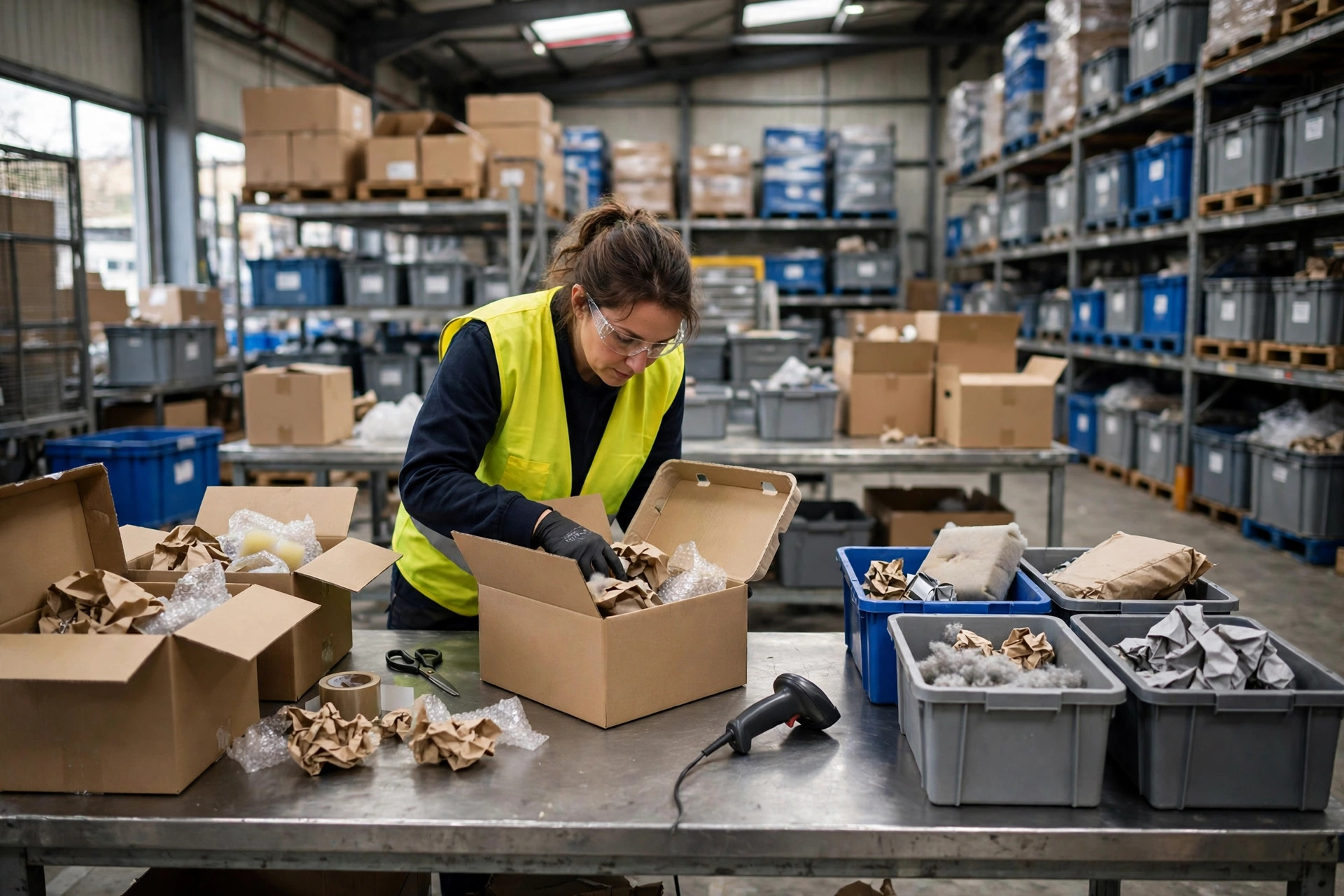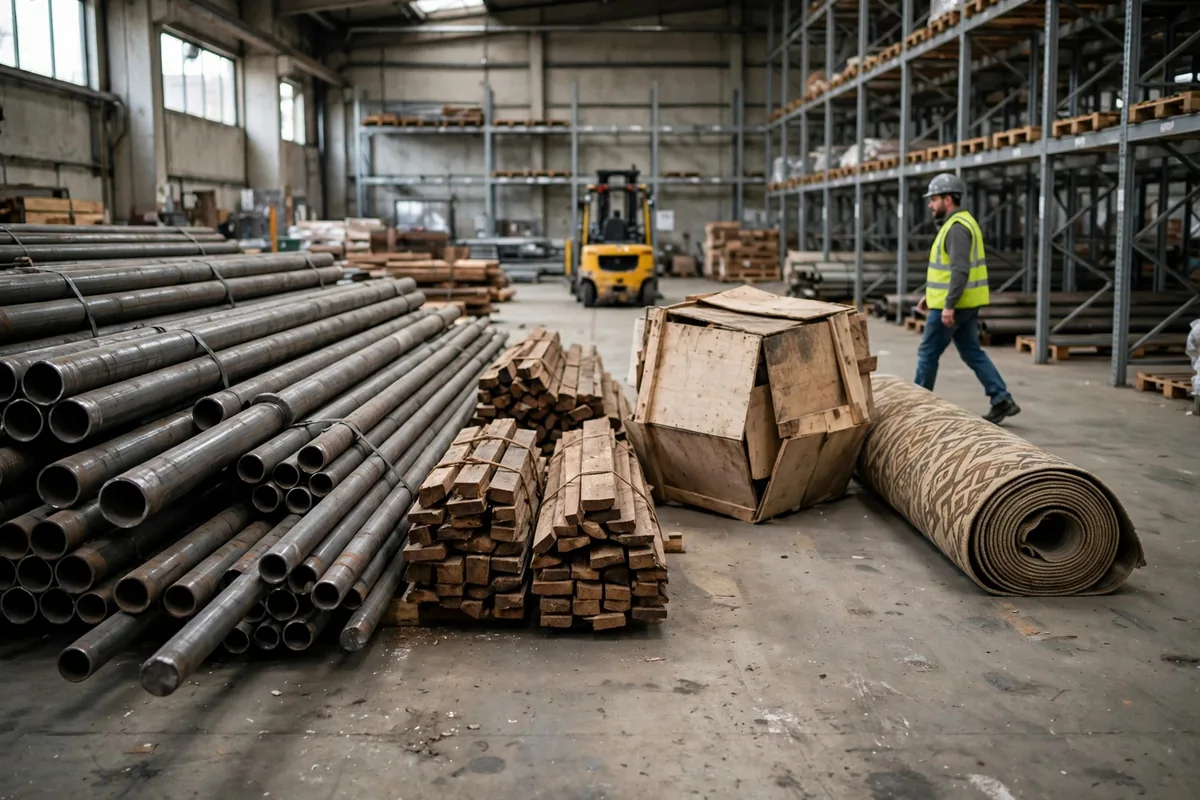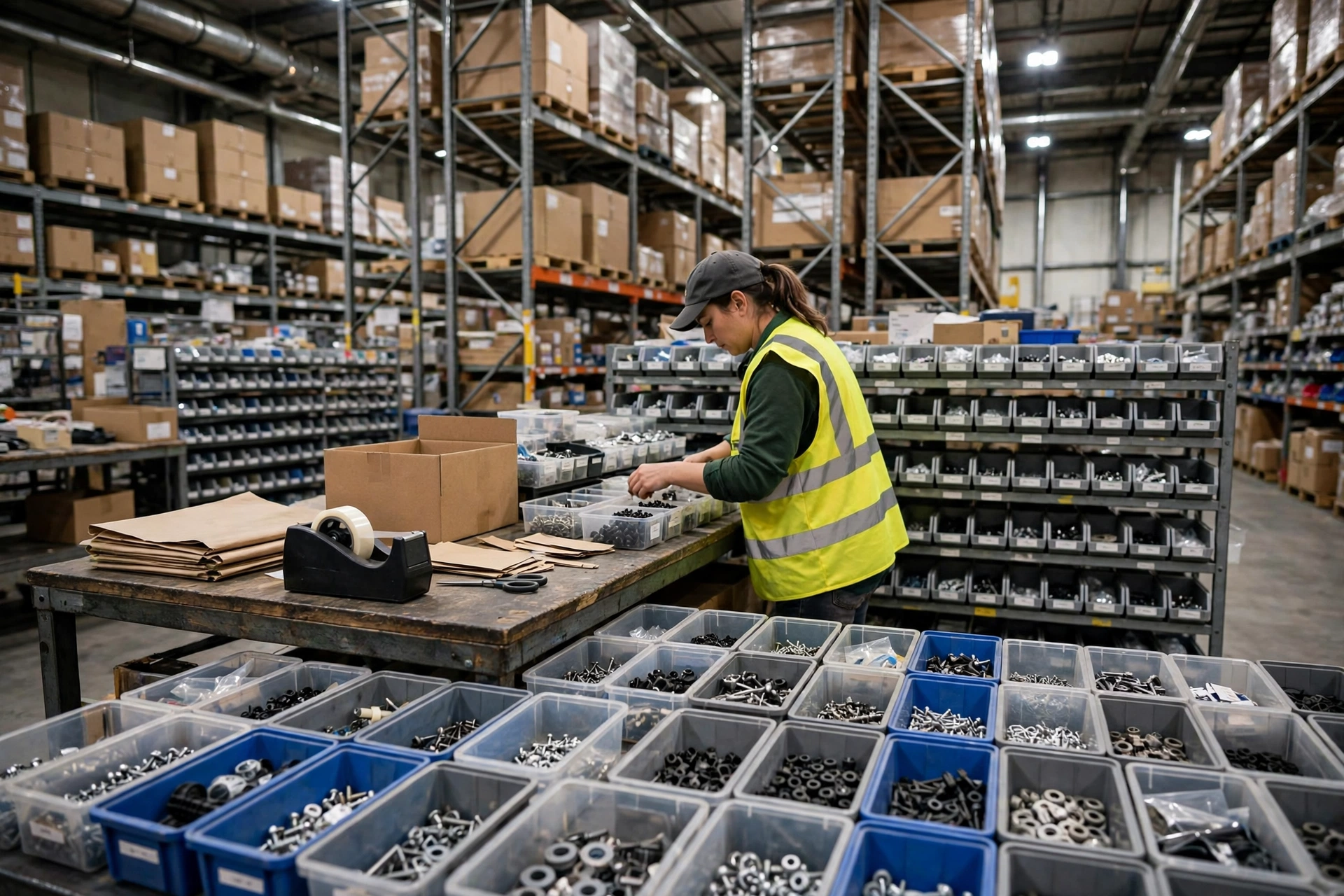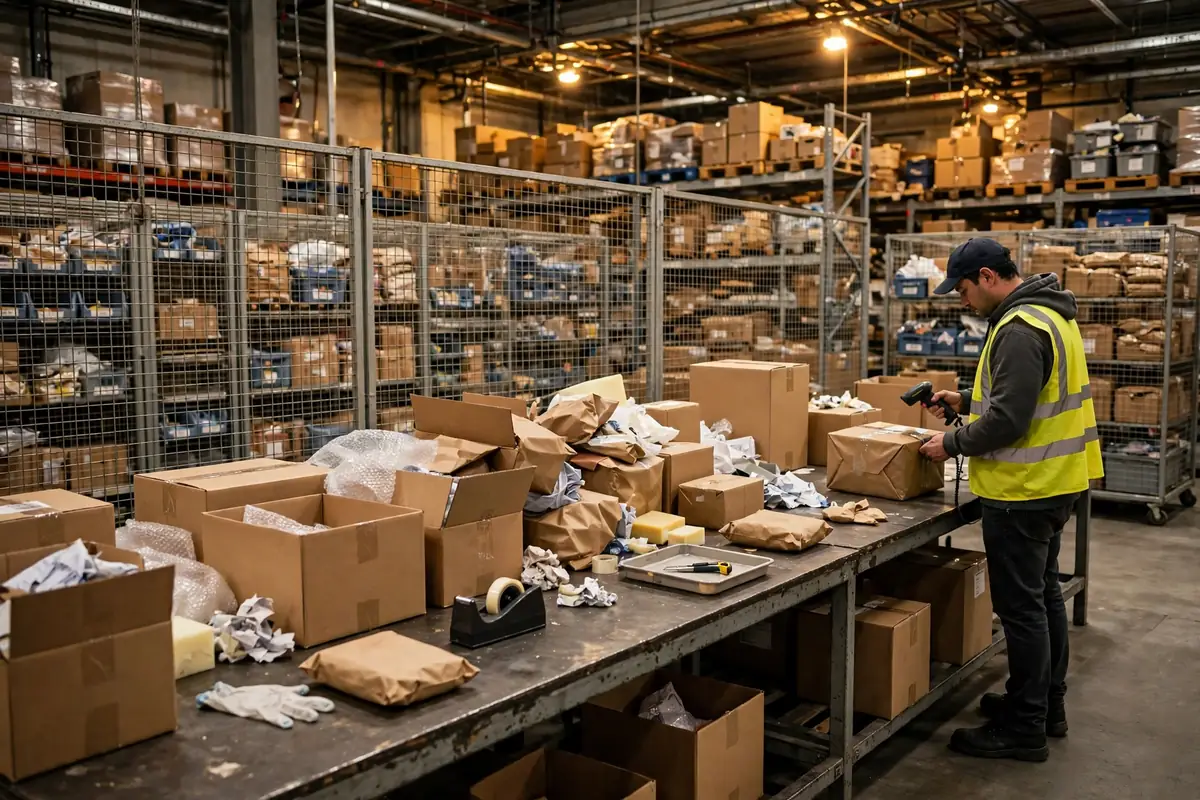
Let me put it plainly: returns slotting is not the warehouse's spare corner. It is the flood zone. Without a flood zone, returns drown the good stock, pickers dig through returned boxes to find shippable goods, and outbound orders pay the price. To put it bluntly, the first rule of returns slotting is one sentence long: returns never live with good stock. Not sometimes. Never.
Count the cost before you talk about the fix. According to the National Retail Federation and Happy Returns 2025 report, about 19.3% of online sales value comes back as returns, and total U.S. retail returns were projected at $849.9 billion for 2025. Roughly one dollar in five of online sales takes a trip back to the warehouse. Worked example (illustrative example): a warehouse shipping 10,000 orders a day sees around 1,900 returned items a day at that rate, and if each return occupies a slot for three days on average, the returns zone permanently holds about 5,700 items. Without a home of their own, those 5,700 items go into good-stock slots, block pick paths, and sleep in the receiving staging area. The bill for returns slotting is not the cost of the returns zone itself. It is the cost of every good-stock slot the returns steal.
I have seen too many warehouses learn this the expensive way. After Thanksgiving 2023, an apparel e-commerce warehouse outside Los Angeles (illustrative example) took back more than 20,000 garments in a single week. The returns zone filled in three days, and the overflow went straight into the good-stock pick area. Pickers pushed carts around piles of returns, average pick time climbed from 4 minutes to 7 minutes per order, and more than 300 orders shipped late at the tail of peak season. Worse came at month-end: returns and good stock shared the same slots, system inventory stopped matching physical inventory, and the count came up more than $20,000 short. It took two weeks to trace the gap to returns sitting in the wrong slots. About half the profit from that peak promotion went into filling the hole.
Why Returns Slotting Must Stay Away From Good Stock
Mixing returns with good stock costs you three ways, and each one costs more than setting aside a separate zone. First, mis-ships. A returned item looks exactly like a good one. A picker cannot tell them apart by eye, so a defective unit that failed inspection gets shipped as good stock, the customer sends it back, and one item rides three freight legs while you pay for all of them plus the customer service calls. Second, inventory distortion. Returns change status every day — waiting for inspection today, waiting for repair tomorrow, scrap the day after. Mixed into good-stock slots, the system cannot keep the count straight, and count variances snowball. Third, traffic jams. Returns processing means opening boxes, photographing, labeling, and re-checking. Good-stock picking means speed. Two crews fighting over the same aisle makes both of them slow.
Separation is not a wall. It is three lines that stay clear. Physically separate: the returns zone gets its own racking and floor markings. Systematically separate: returns slots carry their own location prefix, and pick tasks never route to a returns slot. Accountably separate: the returns team owns the returns zone, the picking team owns good stock, and it is obvious at a glance whose freight is sitting where. The zone does not need to be big. It needs to be in the right place: against the receiving dock, three steps from the inspection bench, and at least one aisle away from good-stock picking.
Returns Slotting in Three Zones: Hold, Inspect, Return to Stock
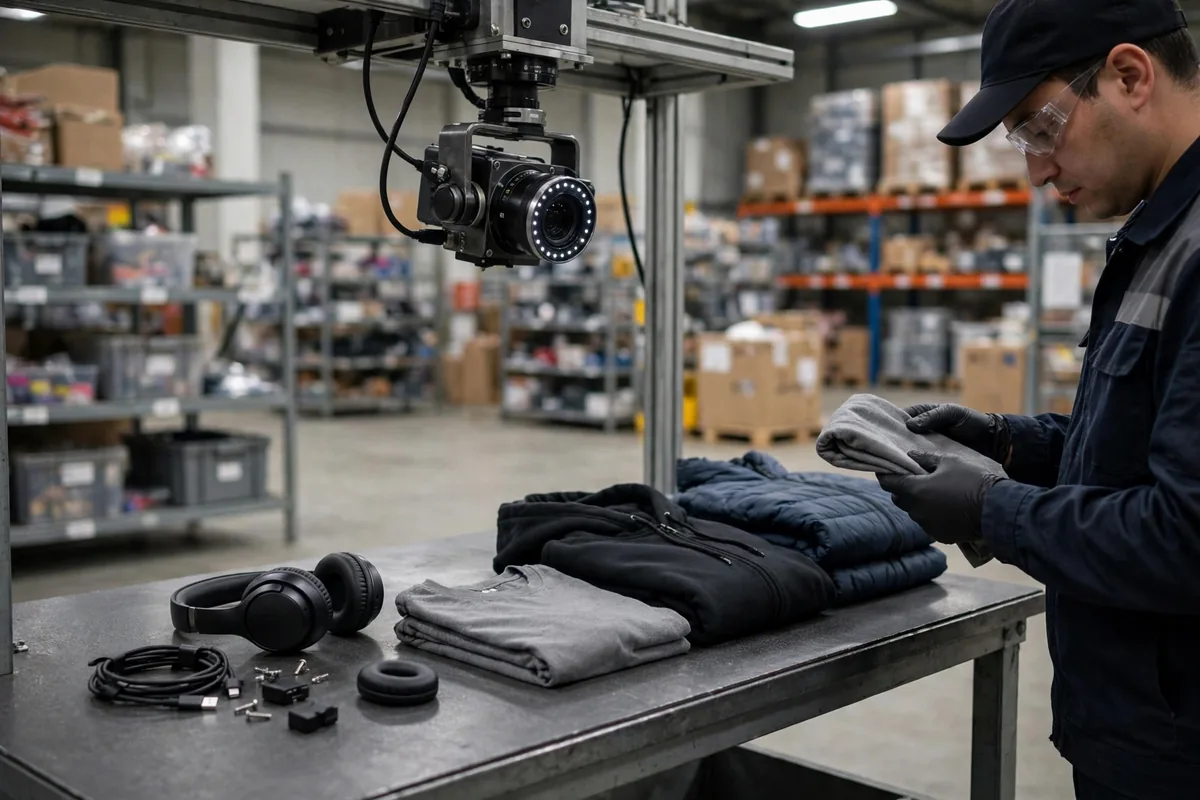
Returns move in one direction only: receiving → hold → inspection → return-to-stock or scrap. Never backward. The hold zone takes freight that just arrived, unopened and uninspected, and nobody touches it. The inspection zone is the bench, the camera station, and the repair bench, where an inspector decides the fate of every item. The return-to-stock zone holds inspected goods waiting to go back onto good-stock shelves, and the moment the system confirms them, they move. Scrap and supplier returns get their own corner with red tags, and the value is written down on the books right away. Dead freight should not pretend to be live stock.
Size the three zones by your returns mix, not by splitting the space evenly. Apparel returns are mostly wrong sizes, inspection is fast, and the return-to-stock zone needs to be big. Electronics returns are mostly functional faults, testing is slow, and the inspection zone needs to be big. Fresh food and personal care returns mostly go straight to scrap, so the scrap corner needs to be big. Before setting the split, pull three months of return-reason data: what share passes inspection, what share needs repair, what share is scrapped. Cut the space to match. A warehouse without that data can start at 40% hold, 40% inspection, 20% return-to-stock, and adjust after a month of running it.
Location coding has to follow the same discipline. Returns slots get their own prefix, so one scan tells the gun this is returns freight, and the picking system skips it outright. Hold-zone freight cannot change status by hand — only an inspector's scan releases it to return-to-stock. Return-to-stock freight gets scanned once more before it goes back on the shelf, and if the order number does not match, the system locks it. The rules look fussy. They save you from the overnight count-reconciliation sessions.
When a Return Sits Too Long, Clear It
The worst thing about a returns zone is not that it fills up. It is that freight moves in and never leaves. Every return needs a dwell limit, and anything past its date gets escalated. Suggested internal limits (example values — set your own by category): apparel hold no more than 3 days, electronics inspection no more than 7 days, return-to-stock waiting no more than 2 days. When a limit hits, the system pushes the ticket to the returns team lead. Three more days with no movement, it goes to the operations manager. A time limit without an escalation path is a poster on the wall. Nobody obeys a poster.
Write two clearance triggers in stone. The first is a space trigger: when the hold zone passes 80% full, start overtime clearance the same day and push occupancy back under 60%. The second is a time trigger: any return sitting in the returns zone longer than 30 days gets escalated for a decision, no matter the reason — markdown and clear it, or scrap it. The logic is simple: a return loses value every day it sits. Apparel goes out of season, electronics get replaced by the next model, and a month of delay can cut the remaining value in half. Clearing is not losing money. It is stopping the bleeding.
| Cost of one good-stock slot occupied by returns for a day (illustrative example) | What it means |
|---|---|
| Slot rent and storage cost | The good stock that should live there has nowhere to go |
| Extra picker walking time | Longer pick time per order, lower outbound capacity |
| Mis-ship and second-return freight and service cost | One defective unit shipped out rides three freight legs, all at a loss |
| Count variance and month-end reconciliation time | Returns in the wrong slot make the count gap grow every month |
There are two sides to this: a returns zone drawn too big wastes space, and one drawn too small chokes. Inspection too strict slows the flow back to stock, and too loose ships defects. My call is to keep the returns zone tight and clear it often, rather than ever letting returns move in with good stock. A tight returns zone hurts the returns team, and they will find a way to process faster. Returns living in good stock hurt the whole building's outbound flow, and nobody escapes that. In 2024, a beauty e-commerce warehouse (illustrative example) showed the other side: pre-inspection and post-inspection freight shared one row of racking, divided by a cardboard divider. More than 200 jars of face cream that had failed inspection went out as good stock. Complaints and refunds added up to more than $40,000, and the returns lead was reassigned. A cardboard divider cannot do the job of a real separation.
Judge your returns operation on three numbers: inspection pass rate, average dwell days, and return-to-stock rate. Pass rate tells you about product quality. Average dwell days tells you about the health of the returns zone. Return-to-stock rate tells you how much money you clawed back from returns. Post all three on the wall at the entrance to the returns zone every week. A team lead who looks at them every morning learns more than from any meeting.
So tell me honestly: is your returns zone a flood zone, or is it an illegal extension built on top of your good stock?
By Lao Mi, Supply Chain Veteran (20 yrs)