We are a small warehouse, and we definitely cannot afford to burn money on that — that is my first reaction every time somebody suggests an automated storage system. Three thousand square meters, seven or eight people, second-hand racking, one forklift that is fairly new and one that is very old. And yet it is exactly warehouses like ours that keep getting the jobs that make your head hurt: six-meter pipes, two-meter-wide panels, round coils, and one time a display stand from a customer that looked like a giant kite. Oversized and odd-shaped items make up less than 5% of what we ship, but they can eat 30% of our energy. Where do you put them? How do you move them? Is it even worth clearing space for them? This is the answer our little warehouse worked out the hard way.
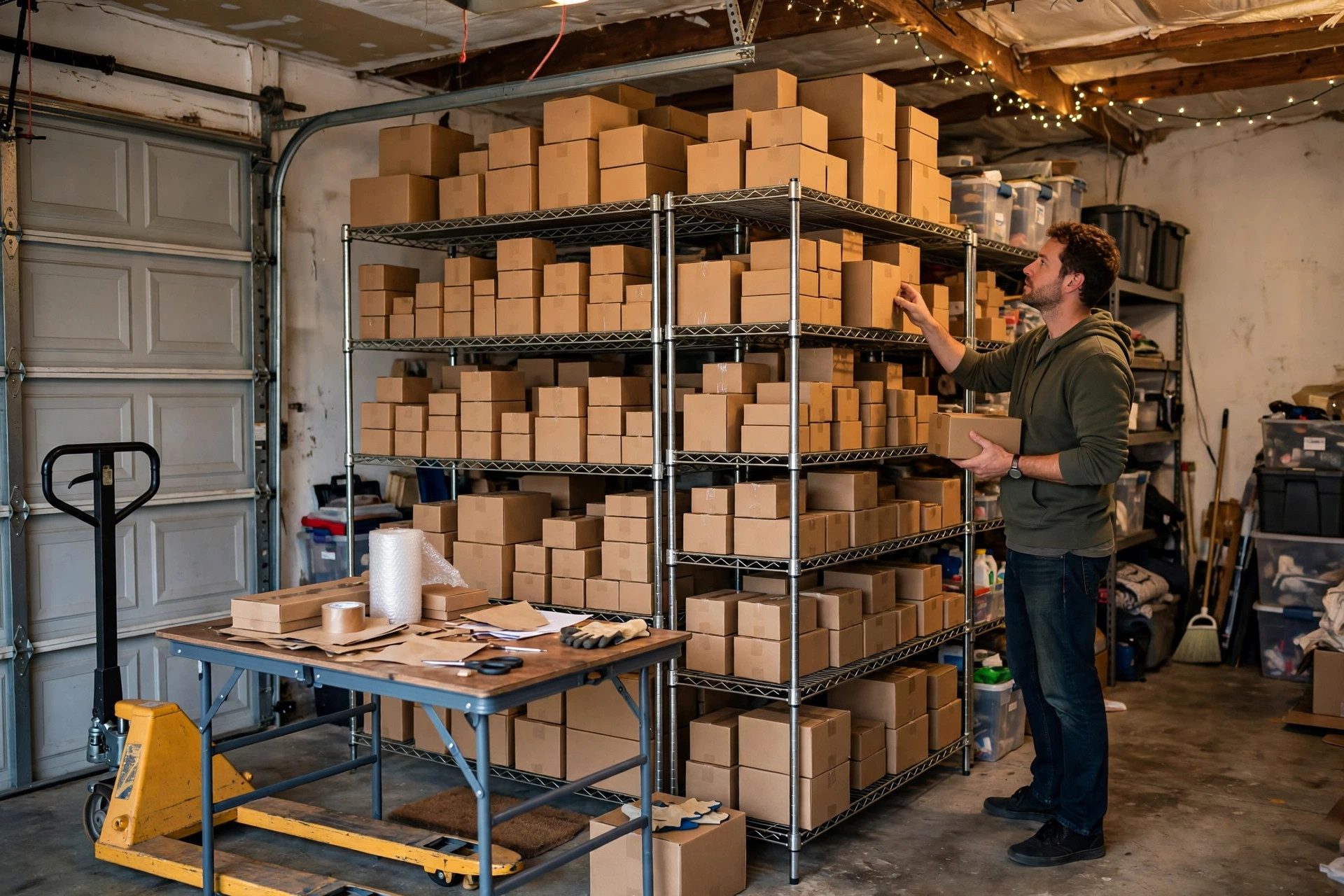
Let me start with our predicament. Last autumn, a long-time building-materials customer called and said he had a batch of extra-long pipes for us — the longest six meters, 40 bundles, each one close to 200 kilos. I was standing at the warehouse door eating a steamed bun, and I nearly dropped it. Our racking has 1.2-meter beam levels, our pallets are 1.2 meters square — where does a six-meter pipe go? Put it on the rack and two meters stick out each end, blocking the whole aisle. Put it on the floor and the forklift cannot even turn. That day I sat by the warehouse door and did the math: turn the job down and the customer might walk away for good; take it and the whole warehouse needs rearranging. In the end we took it. A small warehouse does not dare turn down orders. Turn one down and who pays next month's rent?
The floor-stack zone: first stop for oversized freight
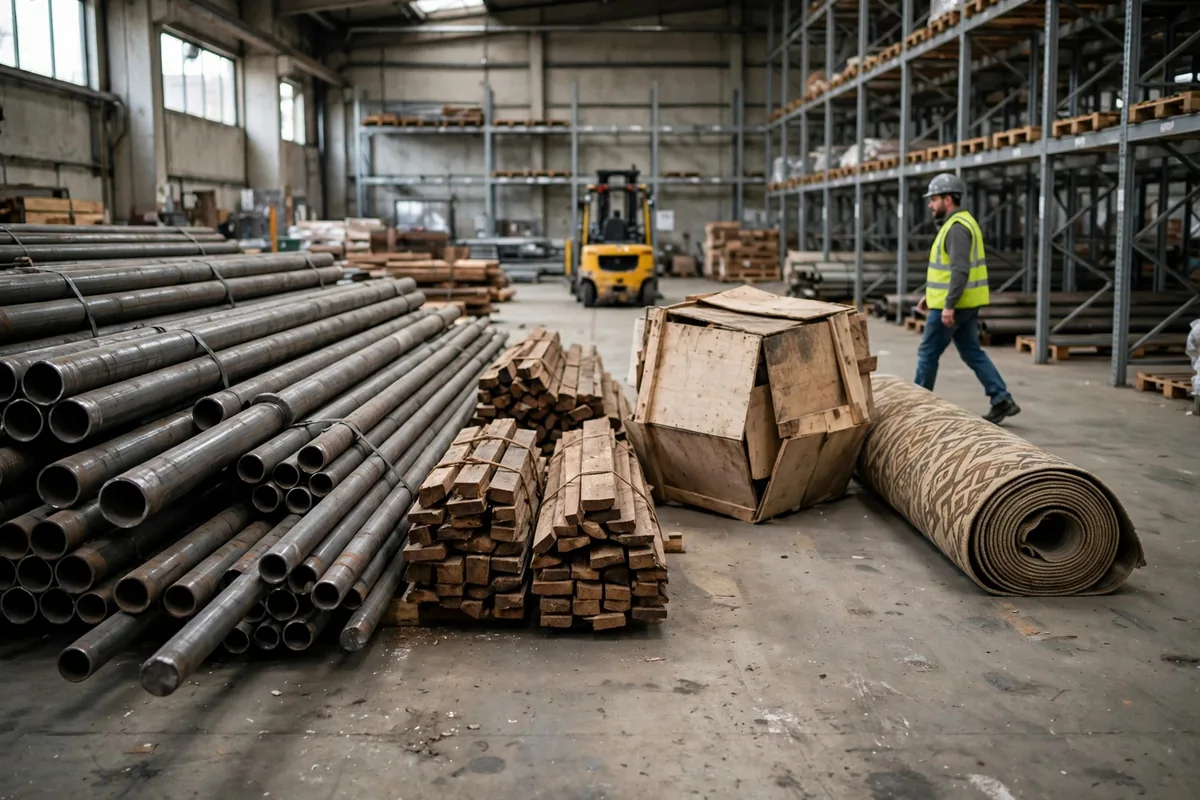
Our solution sounds crude when I say it out loud: we cleared a floor-stack zone. The patch of floor at the very back of the warehouse, against the wall — about 200 square meters, previously full of slow-moving odds and ends — we emptied it and split it into three long strips. Extra-long items lie flat against the wall, pipes and profiles lined up by length. Odd-shaped items and round coils go in the middle strip, chocked with timber blocks so nothing rolls. Overweight items go in the strip closest to the door, so the forklift does not have to travel far.
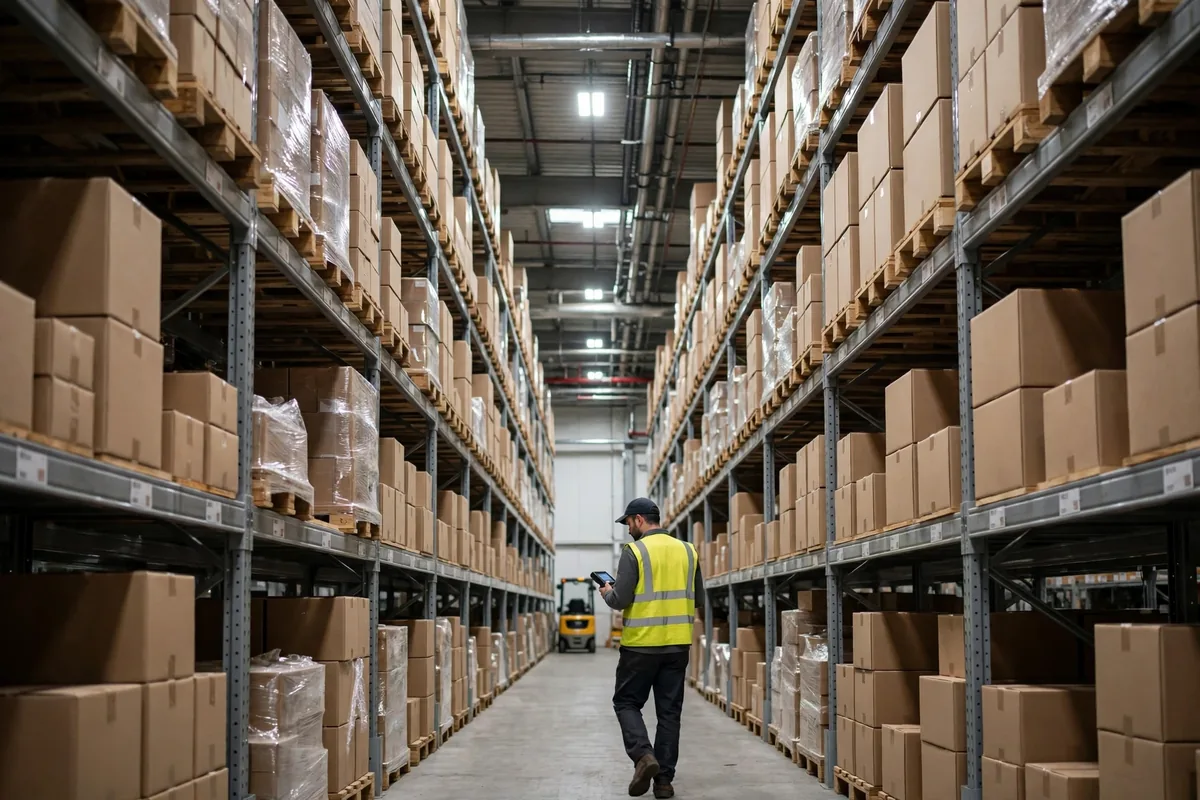
The floor-stack zone runs on three rules, and every one of them was learned by stepping on a rake. First, know your floor loading. Our slab is ordinary concrete, and point loading is limited, so heavy items sit on steel plates or thick timber to spread the weight — never straight onto the floor. Once, trying to save time, we set a casting of over two tons directly on the slab. The next day there was a hairline crack in the floor, and the repair cost a few thousand yuan. It still hurts to think about. Second, the floor-stack zone must keep a picking aisle — leave enough room between rows for a forklift to get in. Third, floor-stacked goods get location codes too. Our codes are embarrassingly simple: D1-A-03, where D means floor-stack, A is the row, 03 is the position. Crude, yes — but when you need to find something, five minutes is enough.
There is one more trick with location codes for odd-shaped items: put the dimensions in the code. Our system notes read "6-meter pipe, 40 bundles, wall row A," so the picker can tell at a glance which forklift to take and which attachment to bring, without walking over to look first.
Cantilever racking: the one thing a small warehouse grits its teeth and buys
The floor-stack zone solved half the problem. The other half was the long-but-not-heavy freight that wastes floor space unless it stands upright. At the end of last year we gritted our teeth and bought two sets of second-hand cantilever racks for under 20,000 yuan. For a small warehouse like ours, that is serious money. I agonized over it for a whole week before buying.
Cantilever racking is, simply put, a row of uprights with arms sticking out. Long items rest on the arms, both ends clear of the floor, and picking is easy. We bought single-sided racks, set against the wall, with 1.2-meter arms, each level rated for two to three tons — treat that as an illustrative manufacturer figure and always go by the nameplate and on-site acceptance. Once they were up, the six-meter pipes finally had a proper home, and nearly a hundred square meters of floor opened up. Finding a bundle of pipe used to take half an hour of digging; now it takes three minutes.
Cantilever racks are not magic, though. They only suit long, straight items. Odd-shaped pieces, big square crates, round coils — those still go back to the floor-stack zone. And they demand careful forklift work: picking a long item means aligning both ends and lifting slowly. Our rule is that only two veteran operators handle long-item picks. Newcomers watch for a month before they touch the controls.
Moving the big stuff: cheap tricks and hard red lines
Moving oversized and odd-shaped items is where our little warehouse refuses to cut corners. Big companies have every attachment and overhead crane you can name. We do not. We have one 3-ton forklift, one aging 2-ton forklift, and a few people willing to think.
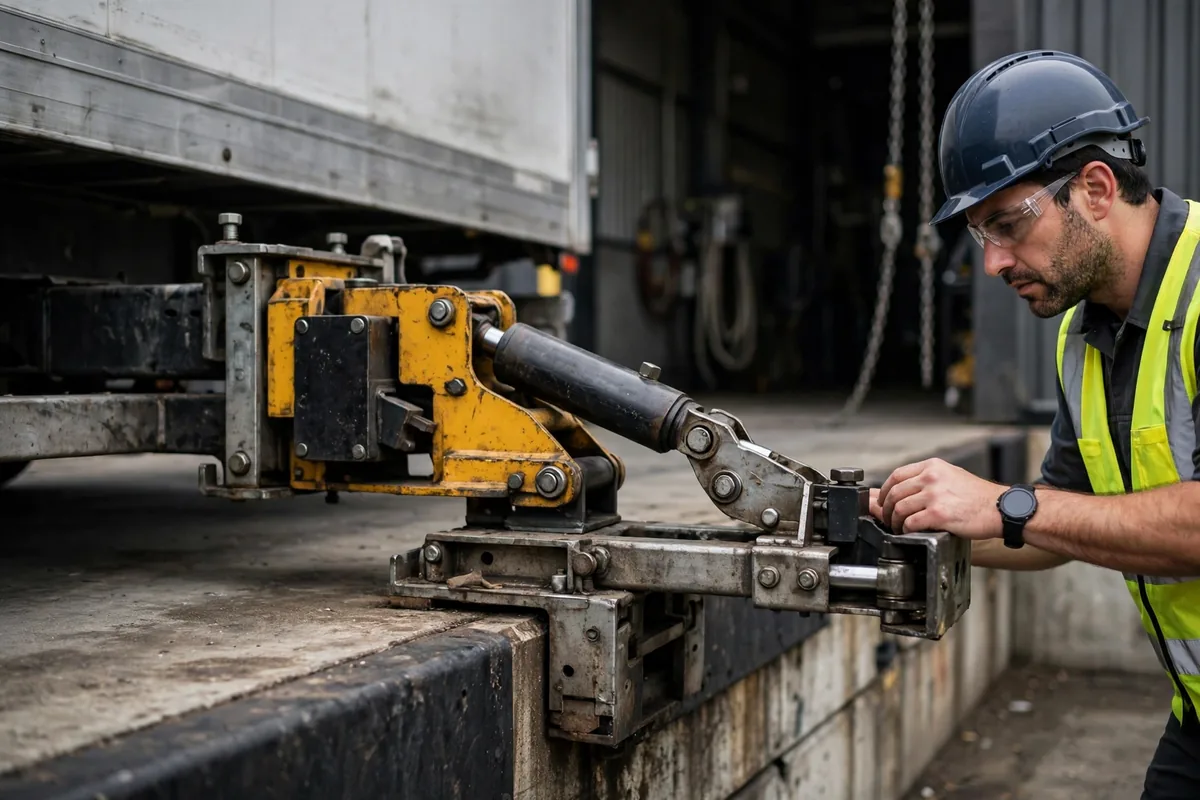
For extra-long items on a truck, we use two-person teamwork plus fork extensions. One person drives, one walks alongside watching both ends, slow and steady, never rushing. Fork extensions are off-the-shelf parts, and they make a six-meter pipe far more stable — but there is a catch: extensions shift the load center, so the rated capacity drops. How much it drops depends on the forklift manual and the attachment nameplate, never on gut feeling. We nearly tipped a forklift once because a new operator did not do that math: he lifted a bundle that was too heavy and the front wheels came off the ground. Since then, every overweight item gets weighed before it goes on the forks, and the weight ticket is stuck to the freight. Nobody gets to wing it.
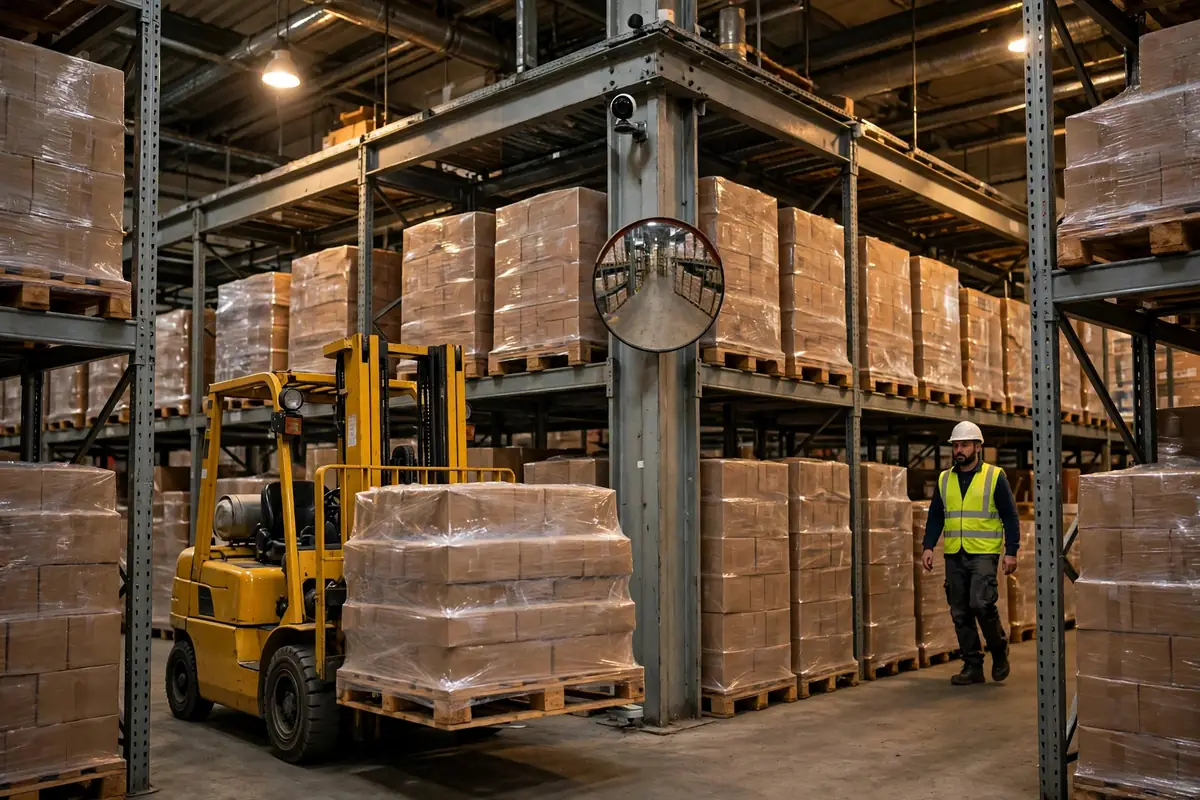
Aisle width is another red line. Our main aisle is 3.5 meters, and a forklift carrying a six-meter pipe needs its turning radius worked out in advance. If a turn cannot be made, do not force it. We painted a yellow "long-item turning zone" on the floor: clear the surrounding freight before turning, even if it takes ten extra minutes, rather than smashing racking or hitting someone. And one more rule: while an oversized item is being moved, nobody stands within three meters. We made that rule after a colleague caught a glancing blow from a pipe on his leg and spent half a month recovering.
Is a dedicated zone for 5% of your oversized freight worth it?
I have done this math properly, so here are our illustrative scenario numbers. Oversized and odd-shaped items are under 5% of our shipments, but the floor-stack zone plus cantilever racks take about 8% of our floor area. Setting them up cost a little over 20,000 yuan one-off, plus extra labor and maintenance of just under 1,000 yuan a month. At first glance, that looks like a losing deal: 5% of the freight, 8% of the floor.
But that is the wrong way to count. First, that 5% of freight comes with our most stable customers. The building-materials customer I mentioned stayed with us precisely because we take his extra-long pipes, and his regular freight now accounts for about a fifth of our revenue. Turn down the odd-shaped items and you do not just lose that 5% — you lose the whole customer. Second, before we had a dedicated zone, odd-shaped items were dumped everywhere: blocking aisles, crushing other freight, impossible to find. With the zone in place, damage is close to zero and finding things takes a fraction of the time.
Here is the counterintuitive part: small warehouses sometimes have an advantage with oversized items. Big warehouses run on rigid processes — odd-shaped freight needs approvals, system changes, re-slotting, and they often just say no because it is too much trouble. We are flexible. Freight arrives today, we clear a floor-stack zone tomorrow. That "yes, we will take it" energy is exactly why many customers choose a small warehouse. Big companies have their way of surviving. Small warehouses have theirs. Taking the jobs other people turn down is one of ours. Oversized freight is not scary. Having no rules is. Mark the zone, buy racking within your means, set the red lines, write clear codes — do that, and the odd-shaped stuff pays. Small warehouses have their own way of surviving.
By Xiao Ma, Small Warehouse Owner