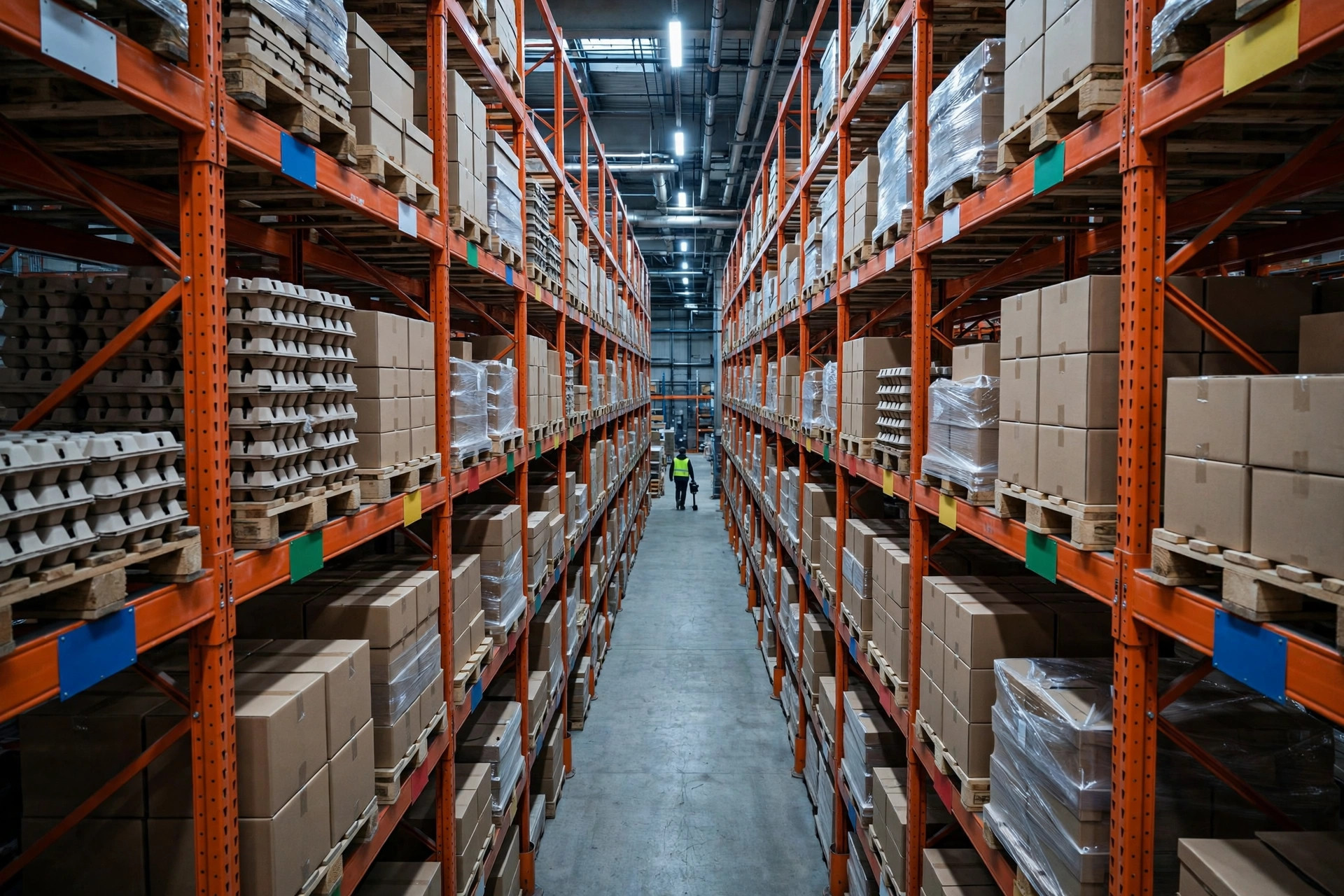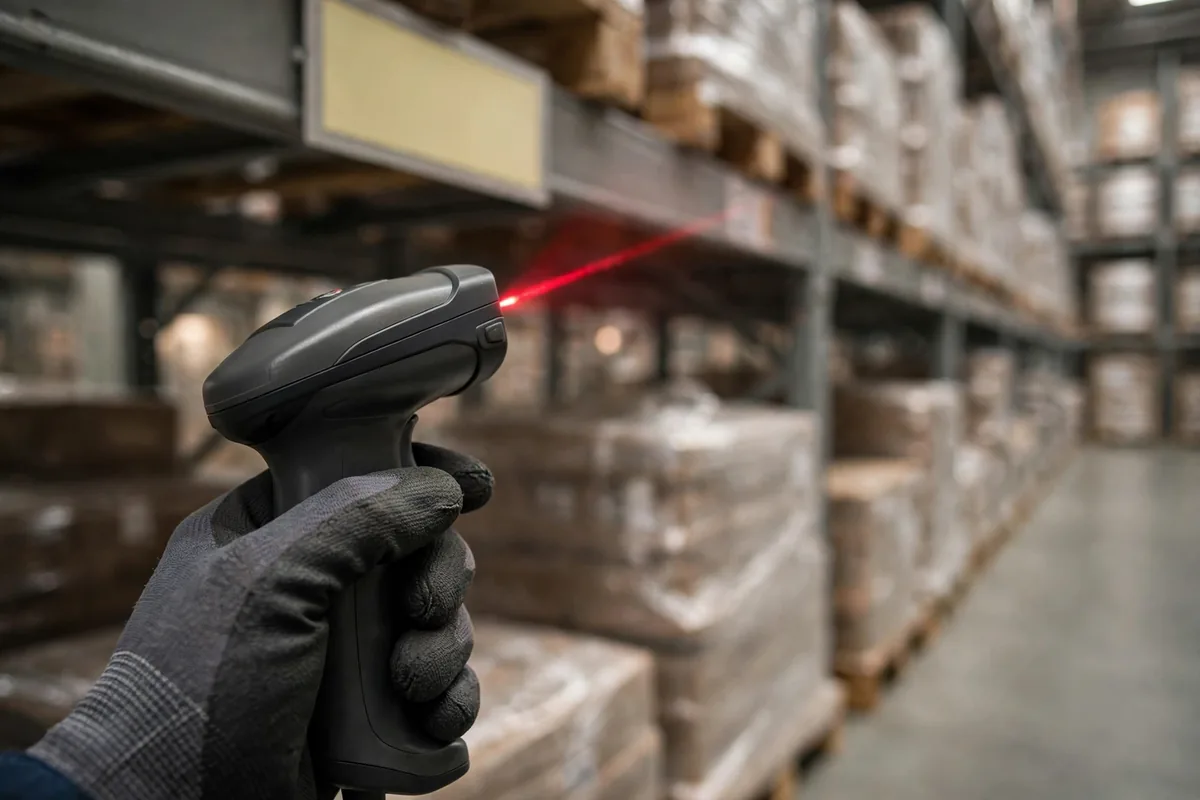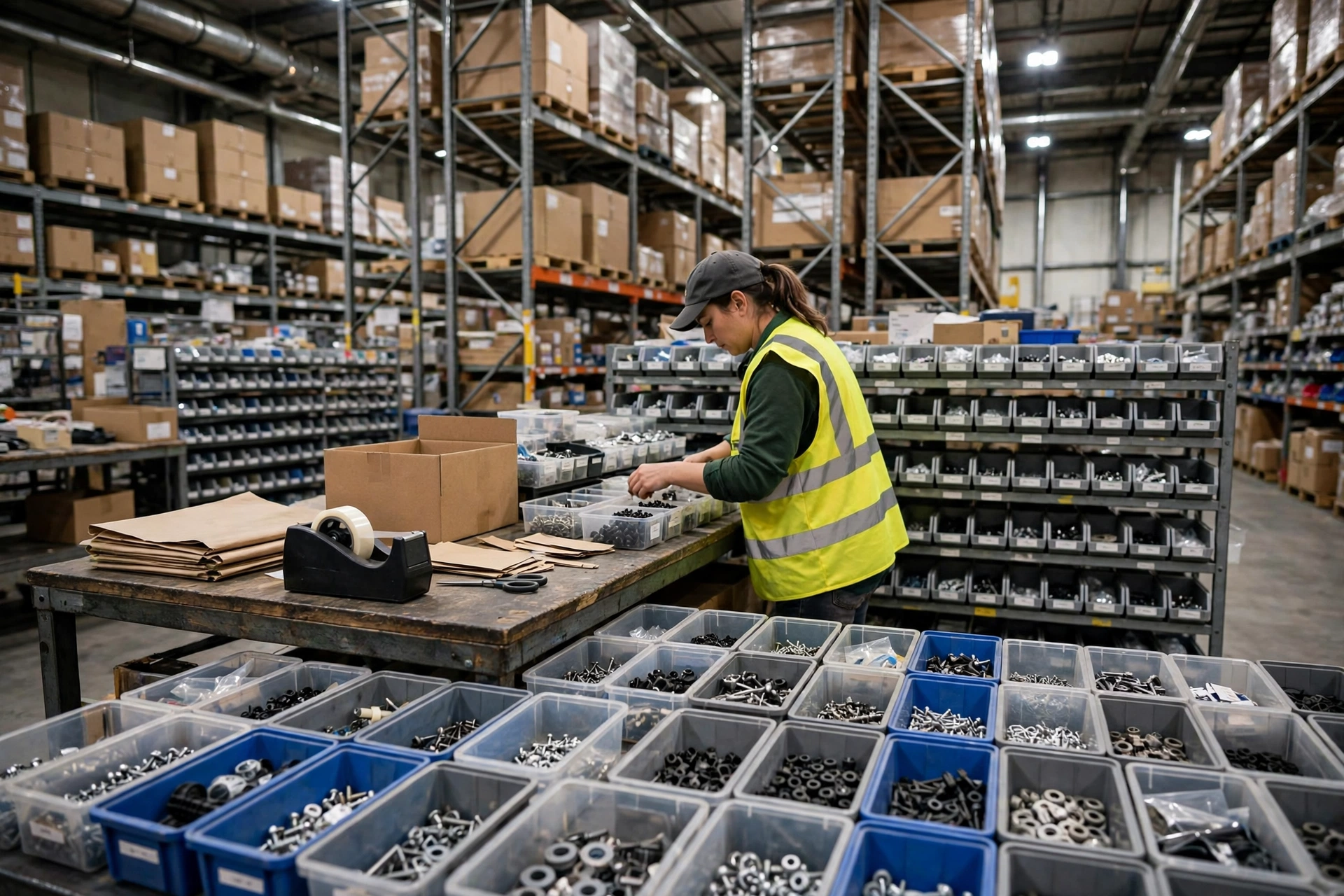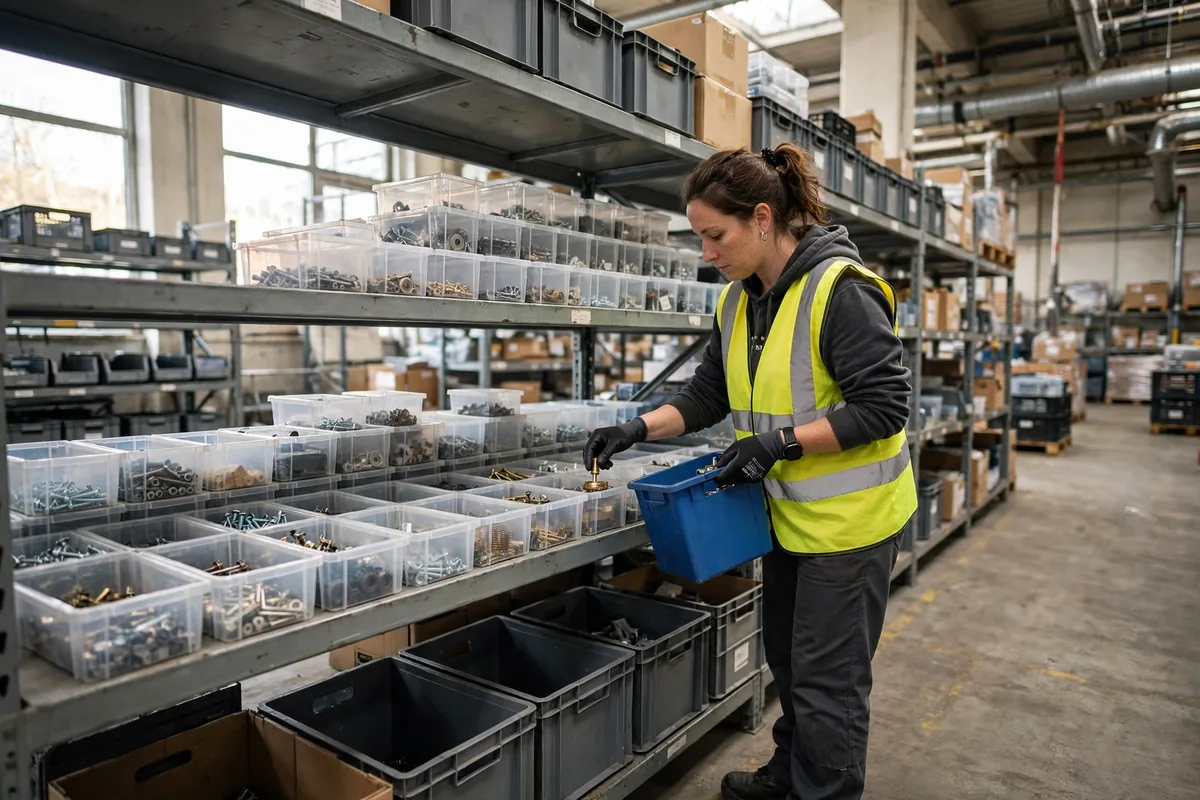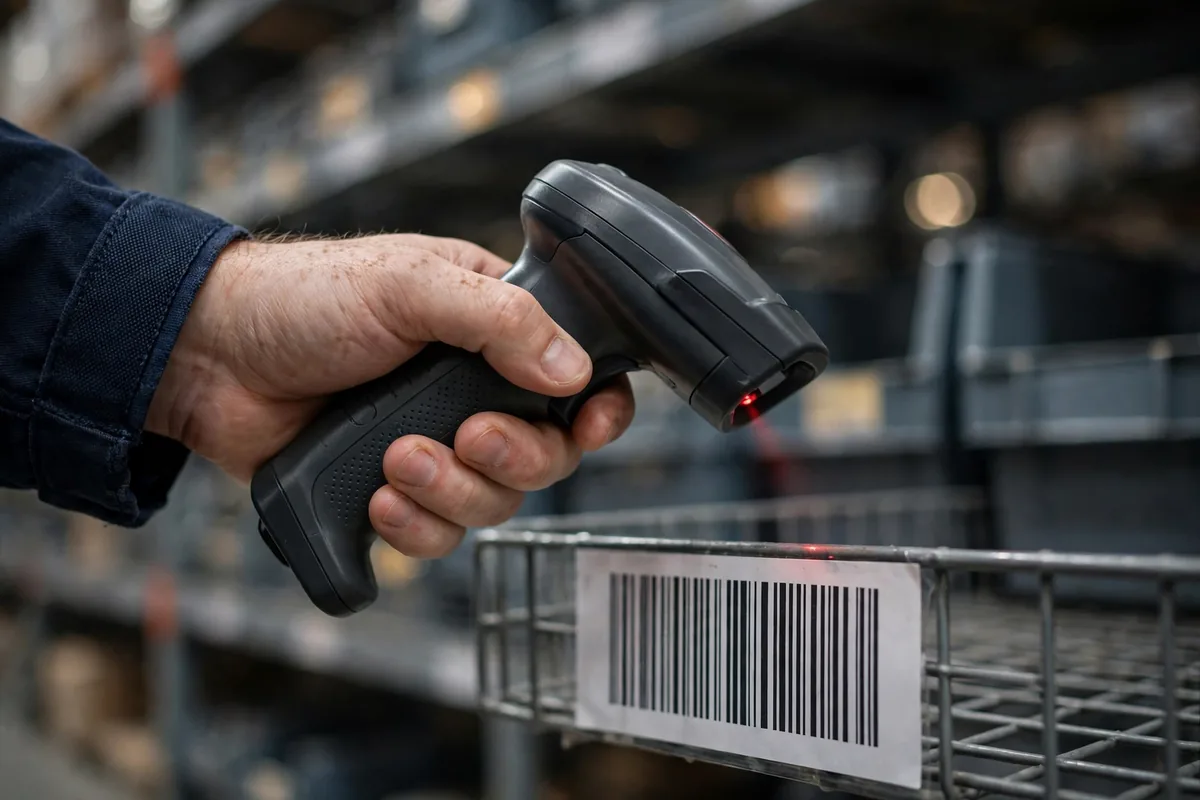
We have a client whose location codes had no check digit — a home-goods 3PL account that spent three straight weeks last summer shipping the wrong items. It wasn't careless staff. It was the code itself: B-07-14 and B-07-41, two bins that look identical at a glance, and the system never said a word. When the end customers complained, we traced it back: the mistake wasn't the people, it was a code with no error-checking character built in. That missing character is the warehouse location check digit, and this is the story of what it costs when a warehouse skips it.
When we negotiate a contract, clients always ask about price and turnaround time. Nobody asks what the location labels look like. After years in 3PL sales, I'll say this plainly: the cheapest error-proofing in a warehouse is the check digit at the end of a location code. It takes no space, no extra labor, costs next to nothing — and it stops whole orders shipping from the wrong bin.
One Letter Wrong, the Whole Order Ships Wrong
A location code looks simple: zone, aisle, level, and position stitched together, something like A-03-12-B. But a warehouse scans thousands of codes a day, and one letter misread, mistyped, or mis-scanned sends the picker to the wrong bin. Worse, the wrong bin usually has stock in it too — the same product in a different variant, or another client's goods. The picker grabs it and walks on, the checker scans the barcode, the barcode itself is fine, and the system waves it through. The barcode was right. The location was wrong.
That's exactly what happened to our home-goods client. Their location labels were set a decade ago, letters and digits mixed together, with the digit 0 and the letter O looking identical, and the digit 1 and the letter I just as bad. Peak season hit, pickers scanned on autopilot, and mispicked orders slipped into normal shipments. Customers only found out when the wrong model arrived. And one wrong shipment costs far more than reshipping it: return freight, re-picking, customer service, and chargebacks — all adding up to more than the profit on that order.
Here's the counterintuitive part: the warehouse that most needs a check digit is the one that thinks it has never made a mistake. "Never made a mistake" usually means mistakes happened and nobody noticed — the goods shipped, and someone else paid for it. A check digit doesn't prevent big accidents. It catches the small misread that happens every day and nobody logs.
What a Check Digit Actually Computes
A check digit is just arithmetic: the characters before it are run through a fixed rule, a remainder is taken, and that remainder becomes the final character. At scan time the system runs the same calculation again — if it doesn't match, the alarm sounds on the spot.
The most common setup for warehouse location labels is a Code 39 barcode with a Mod 43 check digit. The rule: every character maps to a number — digits 0 to 9 are 0 to 9, letters A to Z are 10 to 35, the hyphen is 36, the period is 37, the space is 38, the dollar sign is 39, the slash is 40, the plus sign is 41, and the percent sign is 42. Add up the character values, divide by 43, take the remainder — the character matching that remainder is the check digit.
Take a published example: the six characters of CODE39 have values 12, 24, 13, 14, 3, and 9, adding up to 75. Divide 75 by 43 and the remainder is 32, and the value 32 maps to the letter W — so the full code is CODE39W. Now a location as an illustrative example: bin A12B4, where A is 10, 1 is 1, 2 is 2, B is 11, and 4 is 4. The sum is 28, 28 divided by 43 leaves a remainder of 28, and the value 28 maps to the letter S — so the full code is A12B4S. If a picker scans the B as an 8, the computed check digit won't match, and the system stops them right there.
Another common algorithm is Luhn's, proposed in 1954 by IBM's Hans Peter Luhn under U.S. Patent No. 2,950,048, and still used on credit cards and phone IMEI numbers. The rule is double alternate digits and sum: the published example 7992739871 sums to 67 under the rule; 10 minus 7 gives 3, so the check digit is 3 and the full number is 79927398713. Luhn catches every single-digit error and most adjacent transpositions — but transpositions involving a zero can slip through. The GS1 algorithm on retail barcodes is different again, alternating weights of 1 and 3 behind EAN, UPC, and GTIN codes.
Which algorithm to pick depends on what your code looks like. Purely numeric codes — item numbers, order numbers — are fine with Luhn or the GS1 method; the rules are simple and every system already has the functions built in. Location codes are different: letters and digits mixed together, which is exactly what Code 39 with Mod 43 is built for, since letters already have their own values and nothing needs converting first. The worst choice is inventing your own algorithm — a homemade table no other label supplier understands. Use a published standard; when it breaks, at least there's a spec to point at.
The Math: What a Check Digit Is Worth
The numbers below are an illustrative example — I made them up to show the math:
| Situation | Lines picked per day | Mispick rate | Mispicked lines per day | Mispicked lines per month |
|---|---|---|---|---|
| No check digit | 3,000 | 0.4% | 12 | 264 |
| With check digit | 3,000 | 0.05% | 1.5 | 33 |
The math is simple: 3,000 lines times 0.4% is 12 mispicked lines a day, 264 a month over 22 working days. With a check digit, at 0.05%, it's 1.5 lines a day and 33 a month — 231 fewer. At an assumed $80 per line to fix (returns, re-picking, customer service, chargebacks — conservative), that's $18,480 saved a month, more than $220,000 a year. And the check digit costs one extra character on the label and a small validation routine. A one-time investment, then basically zero running cost. Any client can follow that math.
There's a second ledger most people never open: a mispicked order shipped to a customer costs more than freight and rework — it costs trust. A home-goods client that received the wrong item twice in a row handed next quarter's volume to another provider. That loss never appears on any cost sheet, but every salesperson knows what it means.
Write the Check Digit Into the Contract
A check digit isn't magic, so let's be clear about its limits. It catches misread codes, not mispicked goods — right bin, wrong item is beyond its reach, and so is a label printed blurry or stuck on the wrong rack. Code 39 even has a self-checking property of its own, so the check digit is a bonus layer, not a rescue. I tell clients this before signing, so nobody walks away thinking it solves everything and comes back angry when a different problem shows up.
Rollout has two traps, both of which I've watched clients pay real money for. First, if the labels carry a check digit, the scanner must have validation turned on — otherwise the check character gets passed into the system as part of the code and the location won't match. Flip it around, validation on but labels without a check digit, and good labels get rejected as bad ones while the whole picking line stops. Second, the check digit has to live in the label specification: who prints it, in what format, and who gets told when the format changes. The worst case is a client hiring a cheap label supplier, printing codes with no check digit, turning validation on, and watching every scan fail — then it's our team doing the rescue.
Don't relabel the whole warehouse overnight. Pilot one zone first: pick the zone with the most mispicks, swap in labels with check digits, turn on validation, and run it for two weeks to see how far the mispick count drops. Put the numbers on the table and the client does the math — after that, nobody blocks the rollout. Change labels, scanners, and the system all at once and you won't know which of the three broke. Pilot first, then scale. Slow is fast.
So next time you're negotiating a contract, ask these three questions: do the location labels carry a check digit, and who pays to print them? Is validation turned on in the scanners — and will you scan one for me during acceptance? Is the mispick rate written into the service-level agreement, and what happens when it's breached? Ask those three, and the check digit is finally real.
By Susan, 3PL Sales Director