AI visual inspection returns grading is the newest promise in reverse logistics. According to the National Retail Federation and Happy Returns' 2025 survey, about 19.3% of online sales come back, adding up to roughly $849.9 billion in returned merchandise a year, with about 9% of returns flagged as fraudulent. Returns grading sits at the most labor-hungry point in that chain: every item that comes back needs a human to look at it, judge whether it is like-new, lightly used, or damaged, and decide whether it goes back on the shelf, to a discount channel, or to disposal. Vision AI now wants to take over that pair of eyes. The question is not whether it can see. It is how accurately it sees, and how accurate it needs to be before the investment pays off.
AI Visual Inspection Returns: What the Camera Era Changes
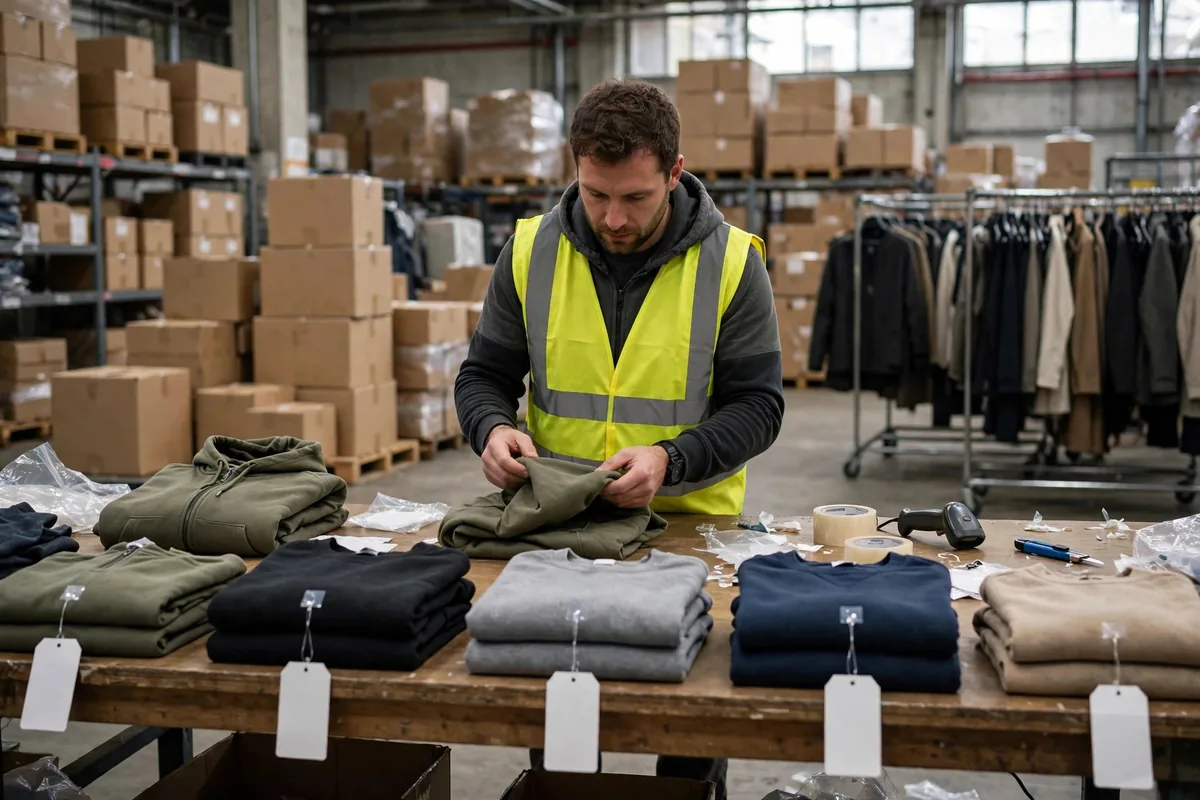
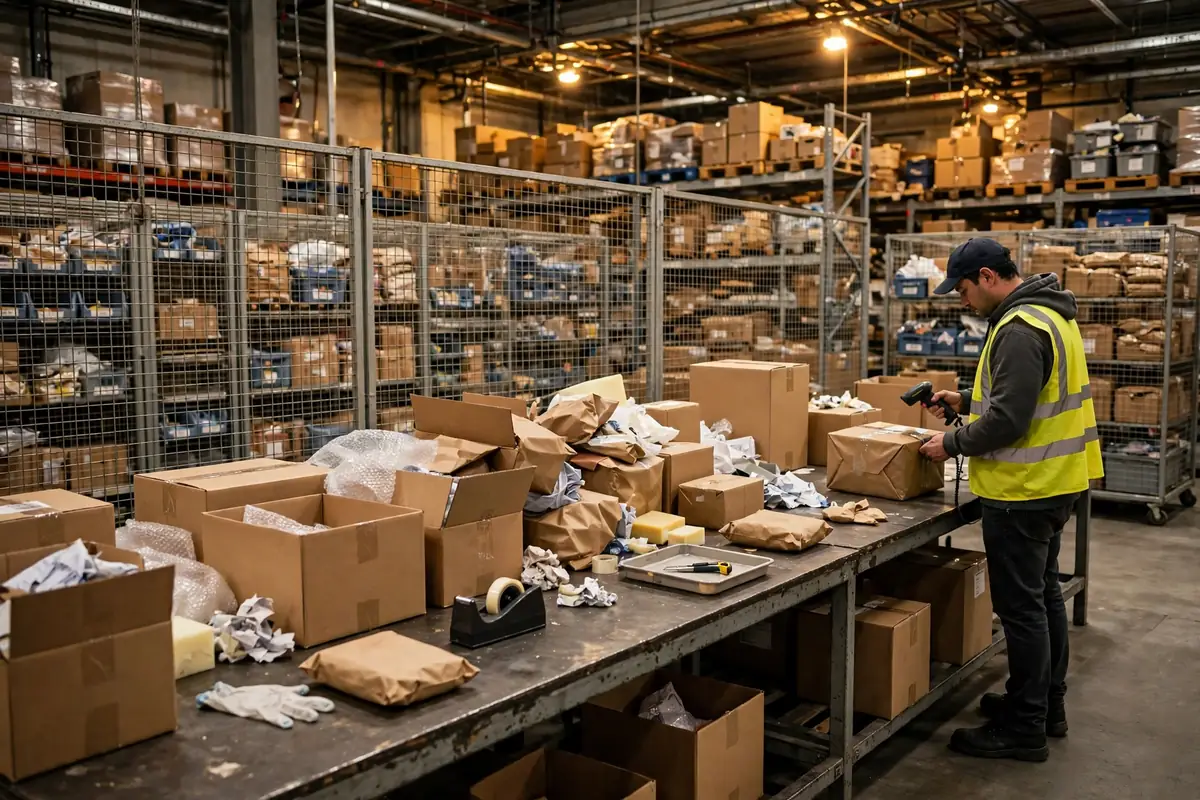
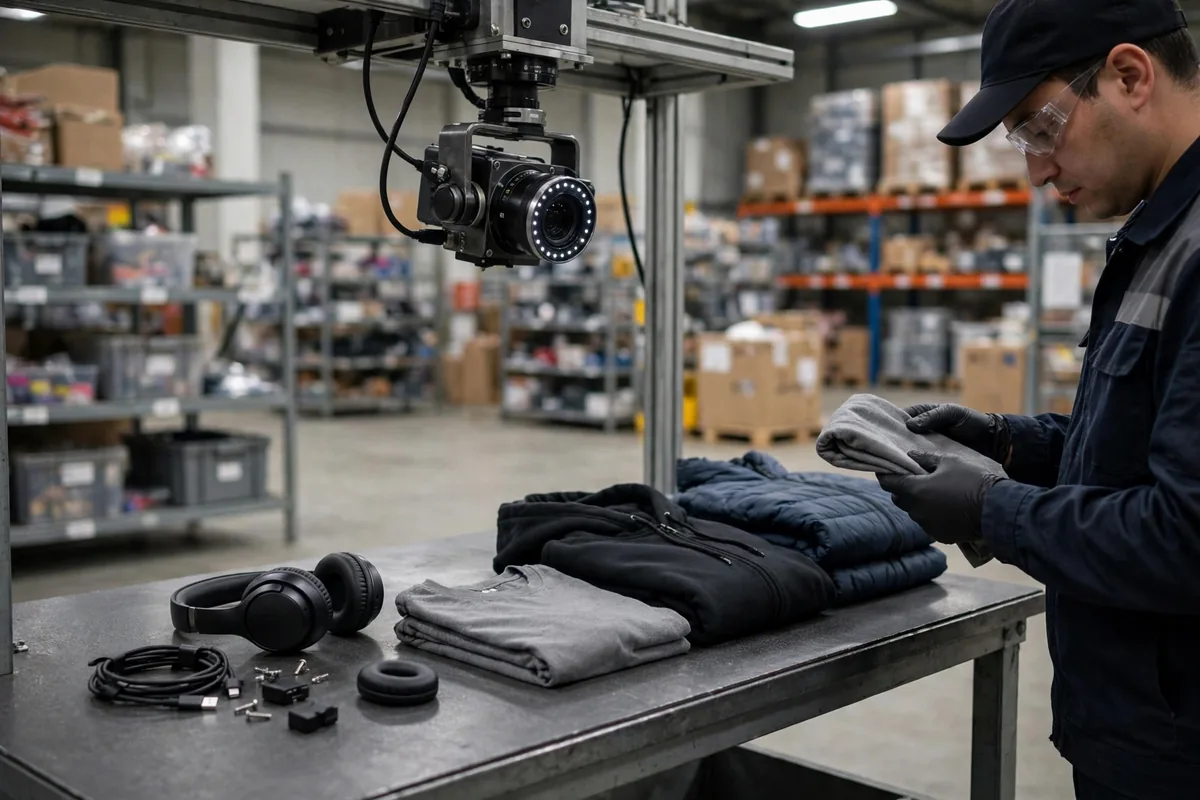
The change is arriving first where volume is highest. Apparel return rates lead every category, with industry trackers putting them at roughly 24% to 30%. In 2025, the returns dock of one apparel brand was processing more than a thousand returned garments a day. Each item took an inspector 45 to 90 seconds: check the tags, feel the fabric, look for wear at the cuffs and collar. When peak season hit, the queue stretched into the next day, refund times slipped, and customer complaints rose with them.
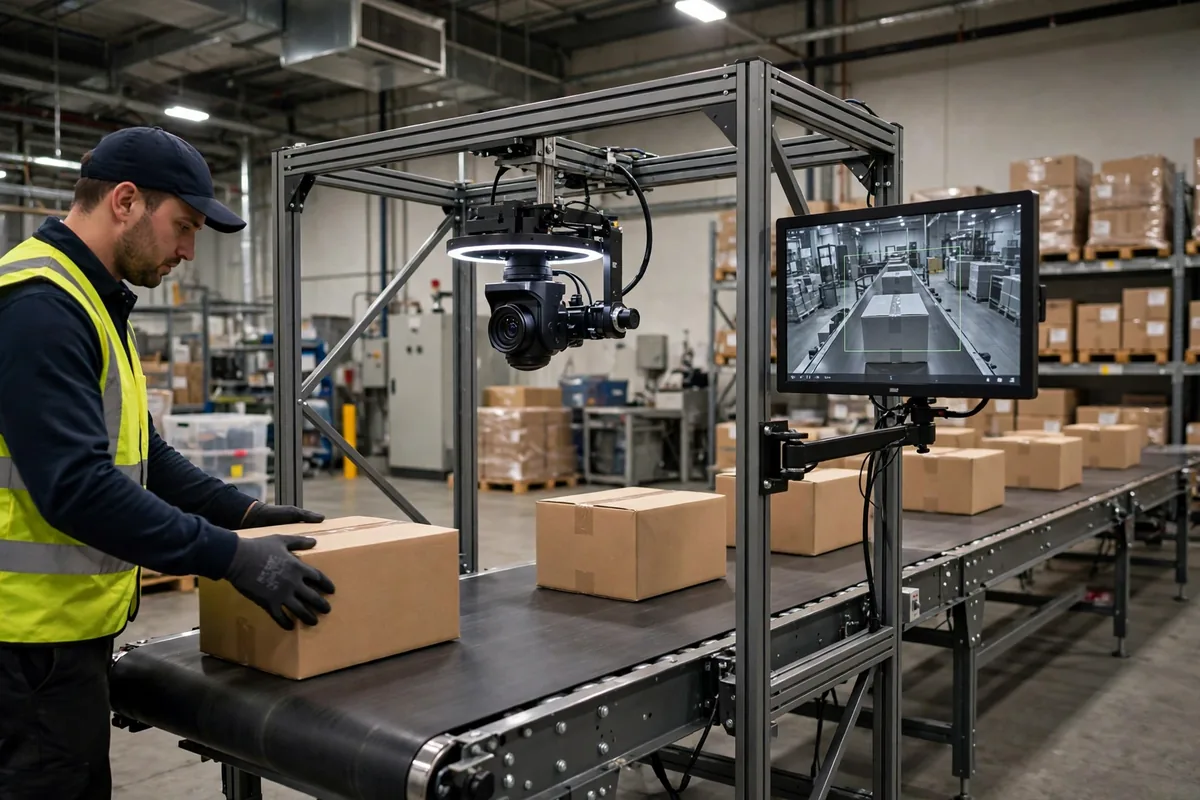
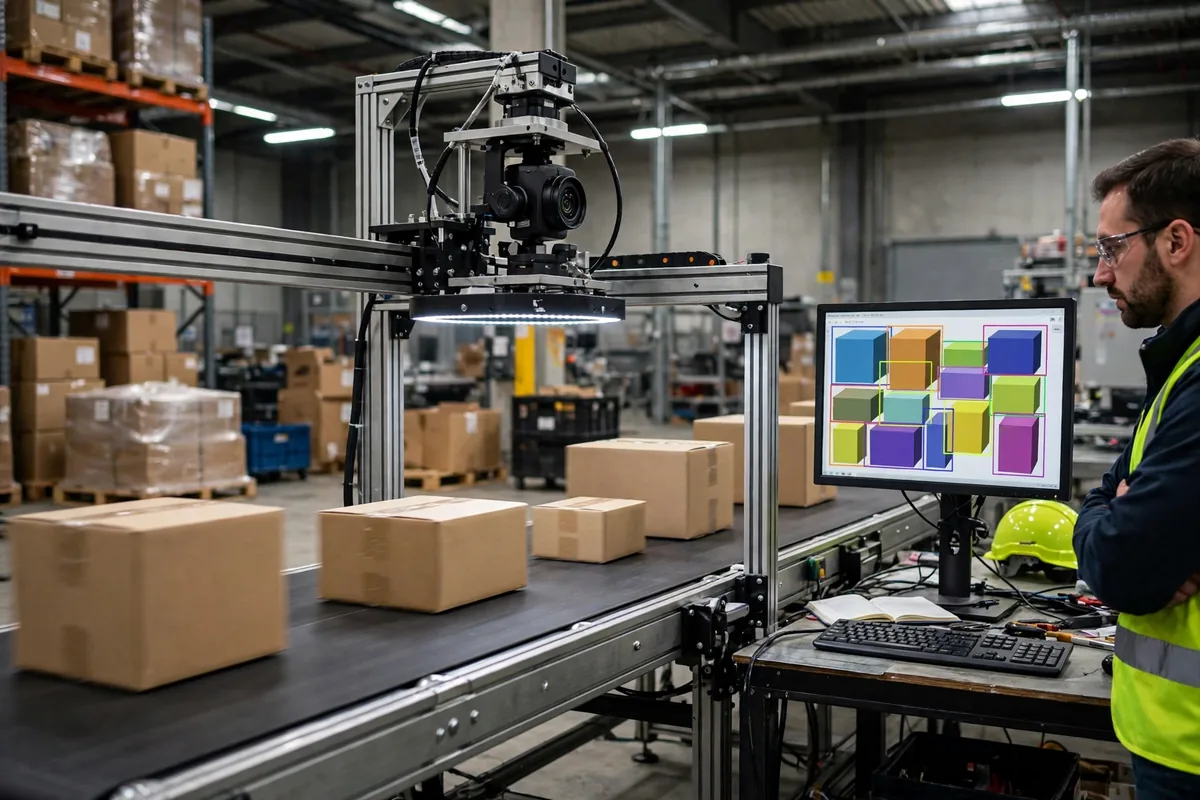
The vision AI approach is photograph first, judge second. A garment passes under a camera at the grading bench, the model sorts it by condition, like-new items go straight back to stock, damaged items go straight to disposal, and only the uncertain ones reach a human. The triage logic itself is not controversial. The argument is about where the boundary falls. One returns-verification vendor publishes benchmark figures claiming vision AI cuts manual review time by 60% to 80%, reduces fraudulent approvals by 15% to 25%, and improves restocking accuracy by 30% to 40%. Those numbers come from the vendor's own benchmark testing, and they should be quoted with that label attached, not treated as industry consensus.
AI Visual Inspection Returns and the Accuracy Question
Start with the human ceiling. Research from Sandia National Laboratories shows human inspectors miss 20% to 30% of defects under real production conditions. A trained inspector at peak concentration catches roughly 80% to 87%, and that figure slides further after a few hours on the line. Two inspectors cross-checking each other can push detection to about 96%. The human weakness is not eyesight. It is attention and consistency: the same inspector's standard drifts from morning to afternoon, and different inspectors disagree far more.
Now look at the machine ceiling. In controlled production settings, modern machine vision systems typically detect 97% to 99.5% of defects. That figure comes from line inspection, where lighting is fixed, angles are fixed, and defect types are limited. Returns grading is considerably harder than line inspection, for three reasons.
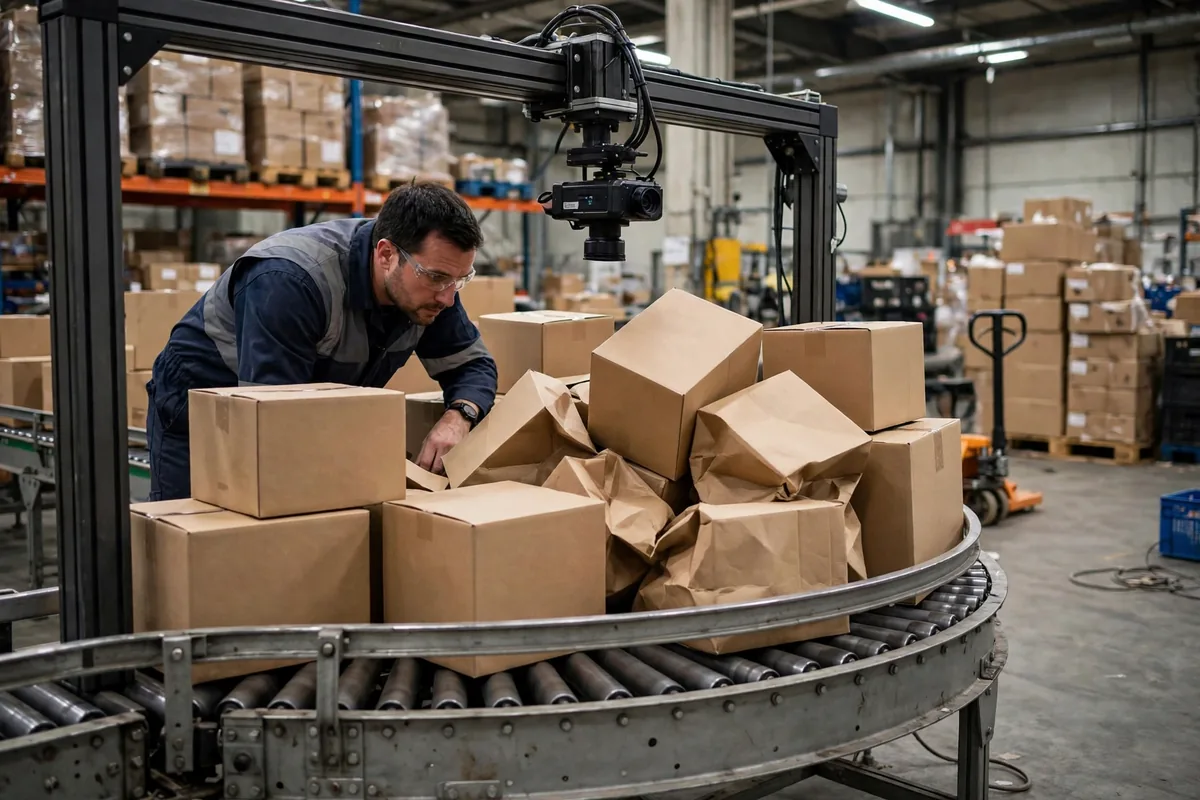
The first difficulty is edge cases. The line between lightly used and like-new can come down to a crease that is barely visible, or a crushed box corner. The same scratch looks obvious under warm light and disappears under cool light, so a standard learned under one light can fail under another. Scratches are hard to photograph on dark garments, dents are hard to see on light packaging, and whichever product type is scarcest in the training data is the one most likely to be misjudged.
The second difficulty is what the camera cannot see. A phone can look brand-new and still have a swollen battery. A small appliance can arrive in perfect packaging and still fail to power on. Vision AI judges appearance only; functional faults are outside the frame. A consumer-electronics returns dock that installs cameras without adding a power-on test leaves its most expensive mistakes to after-sales: an item graded like-new goes back on sale, the customer receives a device that will not switch on, and the second return costs more than the first.
The third difficulty is that the standard itself drifts. There is no universal grading scale for condition; the boundary between like-new, lightly used, and damaged is set by each merchant. A model learns from your inspectors' past judgments, and your inspectors' past judgments were never consistent to begin with. Train on biased history and the model learns the bias more thoroughly and applies it more consistently than any human ever did. It will be wrong more systematically than the people it replaced.
The ROI Math: Misjudgment Versus Labor
The ROI math for AI visual inspection returns has two sides. On the labor side, industry estimates put the cost of processing a single return at $20 to $30, with grading taking the largest share. Take a worked example: a returns dock handling 6,000 items a month, with manual grading at 90 seconds per item, spends 150 hours a month on grading, close to one full-time position. If vision AI clears 70% of the clear-cut items automatically and humans review only the remaining 1,800, grading hours fall to 45, saving about 105 hours.
On the misjudgment side, the cost is the value gap between grades. The standard industry grading convention recovers 85% to 100% of original price for like-new items, 30% to 50% through discount channels for visibly worn items, and 5% to 15% in salvage value for damaged ones. Take a $100 item: grading a like-new item down to the worn tier loses $35 to $70 outright. Grading a worn item up to like-new and putting it back on sale risks a second return and a bad review, which usually costs more. Misjudgment is not symmetric. Downgrading good stock loses money; upgrading bad stock loses trust.
| Approach | Monthly grading hours | Misjudgment risk | Best fit |
|---|---|---|---|
| Fully manual | About 150 hours | Standards drift, worse when busy | Low return volume, mixed products |
| Vision AI plus human review of edge cases | About 45 hours | Edge-case errors, needs ongoing training data | High return volume, concentrated categories |
| Fully automated vision AI | Near zero | Errors become systematic, nobody catches them | Not recommended for any category yet |
The counterintuitive point is that vision AI's greatest value is not replacing inspectors. It is letting inspectors look only at the hardest 20% to 30% of items. A system that is 99% accurate on biased training data will be wrong more systematically than the people it replaced. And the real bottleneck in returns grading is often not the judgment itself but what happens after it: whether discounted stock has a channel to sell through, and whether damaged stock has a compliant disposal route. Perfect grading still loses money if the goods cannot move.
What Happens When Judgment Gets Cheap
Step back and look at the longer timeline, and the more interesting question is not the grading bench but the returns policy behind it. The 2025 data already shows online return rates still climbing, with apparel approaching three in ten orders. One reason merchants have hesitated to loosen return policies is that grading is expensive: every returned item needs a human to look at it. If vision AI pushes the cost of judging one item toward zero, return policy could shift from a cost line to a customer-acquisition tool: easier returns in exchange for higher conversion, with grading turning from a cost center into a pricing instrument.
That judgment needs two to three more years of data to verify. The open questions are whether vision AI accuracy in real returns settings can hold above 95%, whether the cost of edge-case errors shrinks with scale, and whether merchants are willing to turn condition standards from experience into auditable data. The technology can already see a crease clearly. The harder question is whether merchants are ready to put a price on that crease that everyone accepts.
By Dr. Chen, Supply Chain Researcher