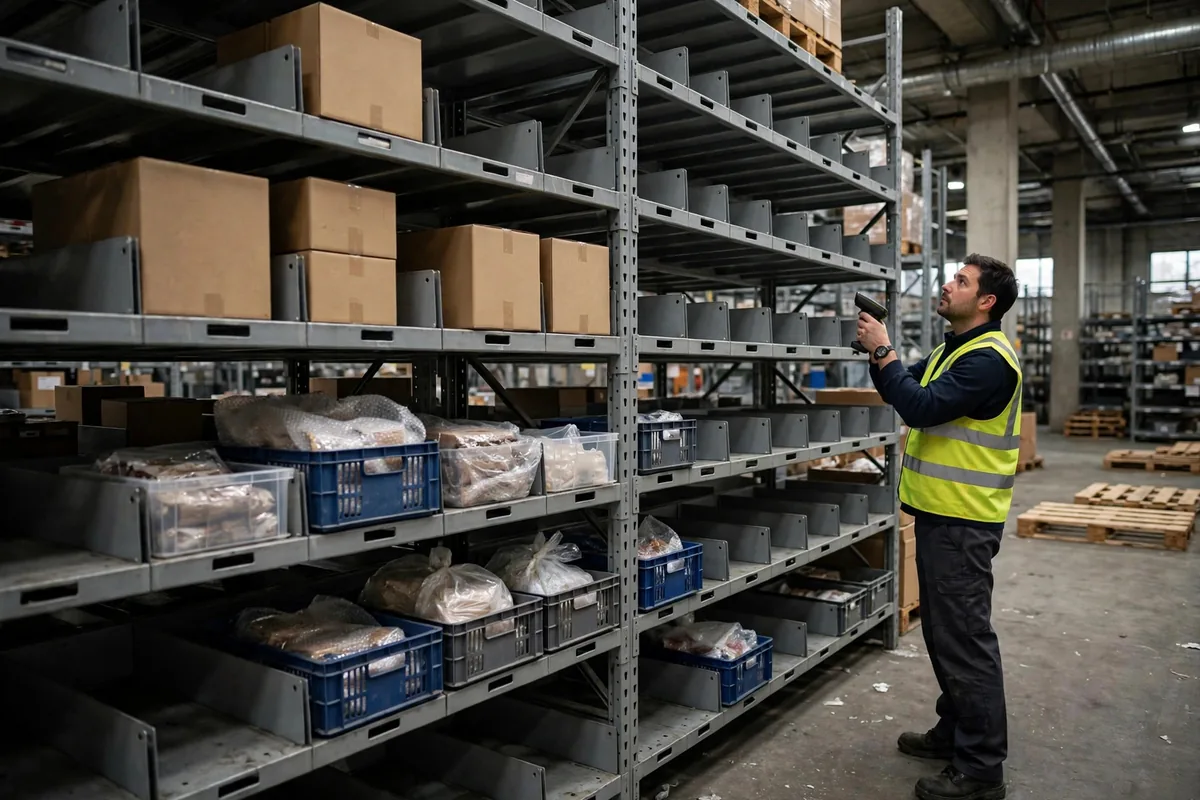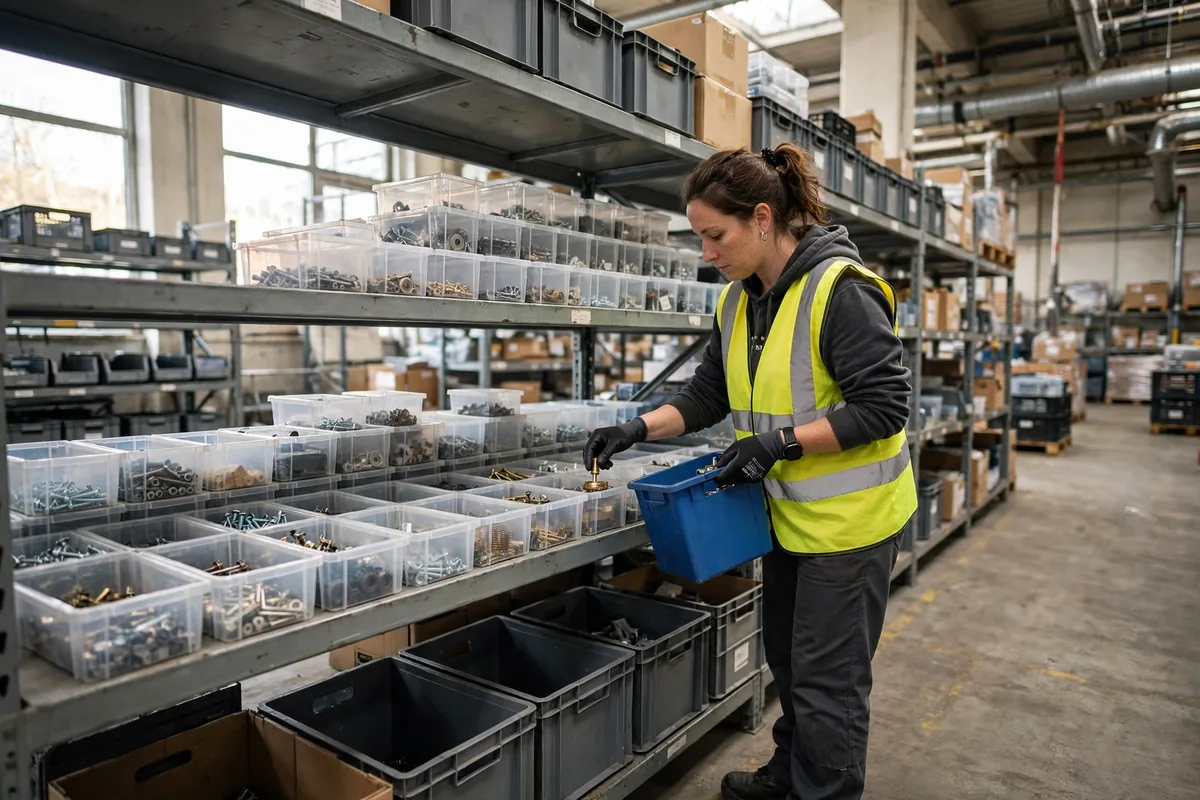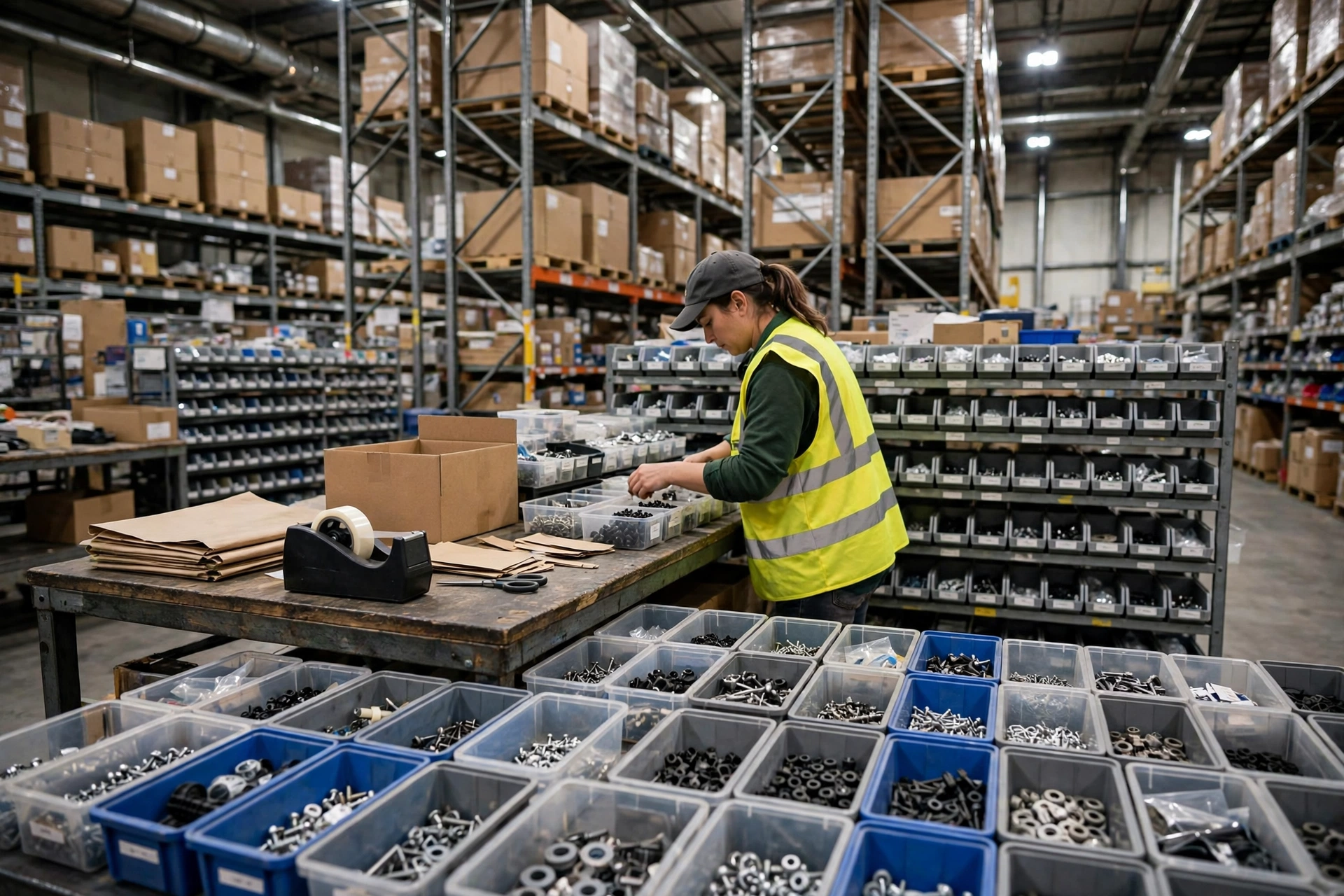
Six thirty in the morning, I stood at the edge of the pick area watching shift change. Old Zhang came back from the farthest rack with a pick list in his hand, dust on his shoes, sweat on his forehead. I did not need to measure how far he walks in a day. Our warehouse used to be laid out exactly like that: expensive goods by the door, cheap goods at the back. To be honest, that layout looks sensible on paper and costs you real money on the floor. Here is the thing most people get wrong on step one. Ranking by sales sounds like good business, but a warehouse does not pay for the value of the goods. It pays for the walking. An expensive item that sells once a week does not deserve the golden spot by the packing bench. A roll of tape picked 60 times a day does. High value does not mean high movement, and high movement is what the warehouse actually lives on.
Warehouse ABC Classification by Pick Frequency Gets It Right
We rebuilt our slotting three years ago, in the middle of a peak season. Orders were still piling up at three in the afternoon, pickers said their legs gave out first, and the supervisor said we were short of hands. I pulled three months of pick lists and the problem jumped out. Half of the golden zone by the door was high-value, low-frequency goods, while the consumables and small items people picked all day were buried deep in the racks and on the top shelves. That day I learned the lesson: sales is the language of finance, pick frequency is the language of the warehouse. A common split in published guidance makes a good starting point. Class A is roughly 10 to 20 percent of SKUs and about 70 to 80 percent of picks. Class B is roughly 20 to 30 percent of SKUs and 15 to 25 percent of picks. Class C is roughly 50 to 70 percent of SKUs and only 5 to 10 percent of picks. That is the 80/20 rule showing up on the warehouse floor. The exact numbers shift from one warehouse to another, but the shape does not: a small number of SKUs carries most of the picking. Here is another number worth keeping in your head. Pickers spend roughly 60 to 70 percent of a shift walking, with the actual picking taking only a small share. Good ABC zoning can cut travel by 15 to 30 percent, and some warehouses see pick time fall by 20 to 35 percent. In our warehouse, the first month after the change, the pickers looked different at the end of the shift, and on-time orders went up with them. No new technology. We just moved the things people pick all day to where hands can reach them.
The 90-Day ABC Method: Use Pick Counts, Not Gut Feel
The method is simple, but every step has to run on data, not on what the old hands remember. Memory lies. Data does not. First, pull the last 90 days of pick history, at least 3 months, and 6 to 12 months is better. One month will catch a peak or a trough and skew the whole ranking. If your assortment is seasonal, split the data by season. Second, count picks, not units sold. Picking 10 units on one order and picking 1 unit on another order both mean one walk to that location. Ranking by units lifts big, infrequent orders to the top and hides the real walking. This is the step most people get wrong, and if this step is wrong, everything after it is wrong. Third, rank SKUs from most picked to least picked and work out the cumulative share. The SKUs that add up to about 80 percent of picks go into Class A. The next group, up to about 95 percent cumulative, goes into Class B. Everything left is Class C. Here is a worked example, labeled as a hypothetical scenario: a warehouse has 1,000 SKUs and 10,000 picks in 90 days. The top 150 SKUs account for 7,800 picks, or 78 percent, so they are Class A. The next 250 SKUs account for 1,700 picks, or 17 percent, so they are Class B. The remaining 600 SKUs account for only 500 picks, or 5 percent, so they are Class C. Check the math: 7,800 plus 1,700 plus 500 equals 10,000, and 78 plus 17 plus 5 equals 100. The books balance. Fourth, put the classes on the floor. Class A goes closest to the packing bench, in the golden zone at waist to shoulder height, where a picker can reach without bending or climbing. Published guidance usually puts that golden zone at 60 to 160 centimeters off the floor, the band where picking costs the least effort. Class B goes in the next tier of spots along the main aisles. Class C goes up high and far away, on top shelves and the far ends of the racks, where a ladder or a forklift is fine because nobody goes there more than a few times a month. One detail matters here. Heavy goods over 15 kilograms need more than a pick-frequency rank. Put them at 40 to 80 centimeters off the floor, where they can be lifted from hip height. That is the safest and least tiring lift. Light small items can go higher. Putting heavy goods up high is asking for a bad back.
This Is How We Do It in Our Warehouse Now
The first time we changed the layout, we made the classic mistake. We moved by sales alone, put a batch of expensive appliances by the door, and the pickers were still walking long distances because the high-frequency consumables had not moved at all. The second time we learned the lesson. Move Class A first, then Class B, and Class C last. We moved stock in the second half of the night shift, kept normal shipping during the day, and checked one zone at a time. Pick locations on the pick lists were updated as we went, and each zone got counted right after the move. Nobody complained about that week of night shifts, because the next morning everyone could feel the walk getting shorter. Here is a counterintuitive point: more Class A is not better. Some warehouses push Class A to 30 or even 40 percent of SKUs, and the golden zone fills up instantly, which is the same as not classifying at all. Class A should stay small. Ten to 20 percent of SKUs carrying 70 to 80 percent of picks is the whole point of ABC classification. The golden zone is only so big. Give it to goods nobody picks often and the goods people do pick have nowhere to stand. Reviewing cannot stop either. Fast-moving e-commerce warehouses should review every quarter. Stable warehouses can review every 6 to 12 months. New products launch, old products stop, seasons turn, and the classes have to move with them. In our warehouse we have a fixed habit now: on the first Monday of each quarter, pull last quarter's pick data, rerank everything, and move the SKUs that changed most within the same week. Half a day of moving saves three months of walking. To be honest, ABC classification is not a one-time project. It is daily warehouse work. The sales table is for the boss. The pick-frequency table is for the pickers' legs. If you cannot tell those two tables apart, the wrong goods are sitting in your golden zone, and every extra step your pickers walk is you paying for a bad layout. Before your next review, do not rush to buy new equipment or add headcount. Pull 90 days of pick data, rank by pick count, and look at who is actually standing in the golden zone by your door. By Chen Feng, Warehouse Operations Manager