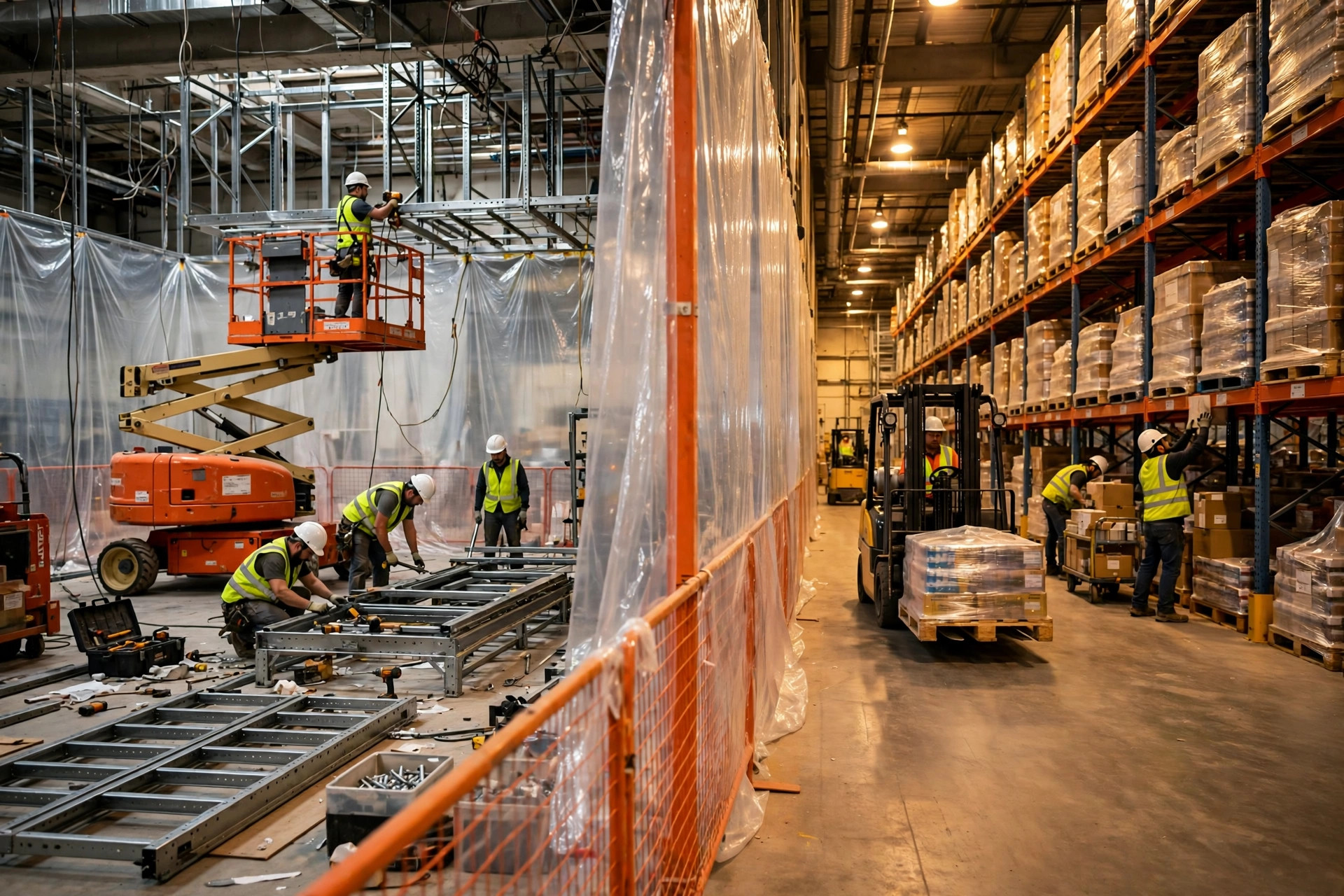
It was 6:40 on a Monday morning. I had just walked into the warehouse when the trucks for day one of our warehouse retrofit pulled up outside Gate 3. The foreman, Lao Zhang, came over with a roll of drawings and asked, "Chen, can we close off Zone A today?"
No, we could not. We had 900 orders to ship that day, and if the Zone A pick line went down, all 900 would roll into overtime. Let me be straight with you: in a warehouse retrofit, the hard part is never buying the equipment. It is this — orders cannot stop, people cannot leave, and the rebuild still has to happen.
I have run a 200-person warehouse through two big rebuilds. The first time, we tried to do everything at once. We shut down for three days, customers called nonstop, peak-season orders went out late, and we paid for it. The second time, we did it in phases — kept shipping while we rebuilt — and it went far smoother. This is the playbook from that second rebuild — how we do it now.
Start a warehouse retrofit by cutting the building into zones
The first step of a retrofit is not the drawing. It is taking the floor plan and cutting the warehouse into blocks. We cut our 30,000-square-meter building into four zones: Zone A for the pick line, Zone B for high-bay racking, Zone C for packing and checking, and Zone D for staging and returns. The rule for cutting was simple: at any moment, at least three zones had to keep shipping.
I pinned the schedule on the office wall where everyone could see it. Zone B went first, because raising the racking there barely touched picking. Zone A, the pick line, went last, because it is the heart of outbound. Before each zone was touched, we moved its stock to a temporary buffer. We cleared half of Zone D, painted lines on the floor, stuck on temporary location labels, and held about two days of stock there.
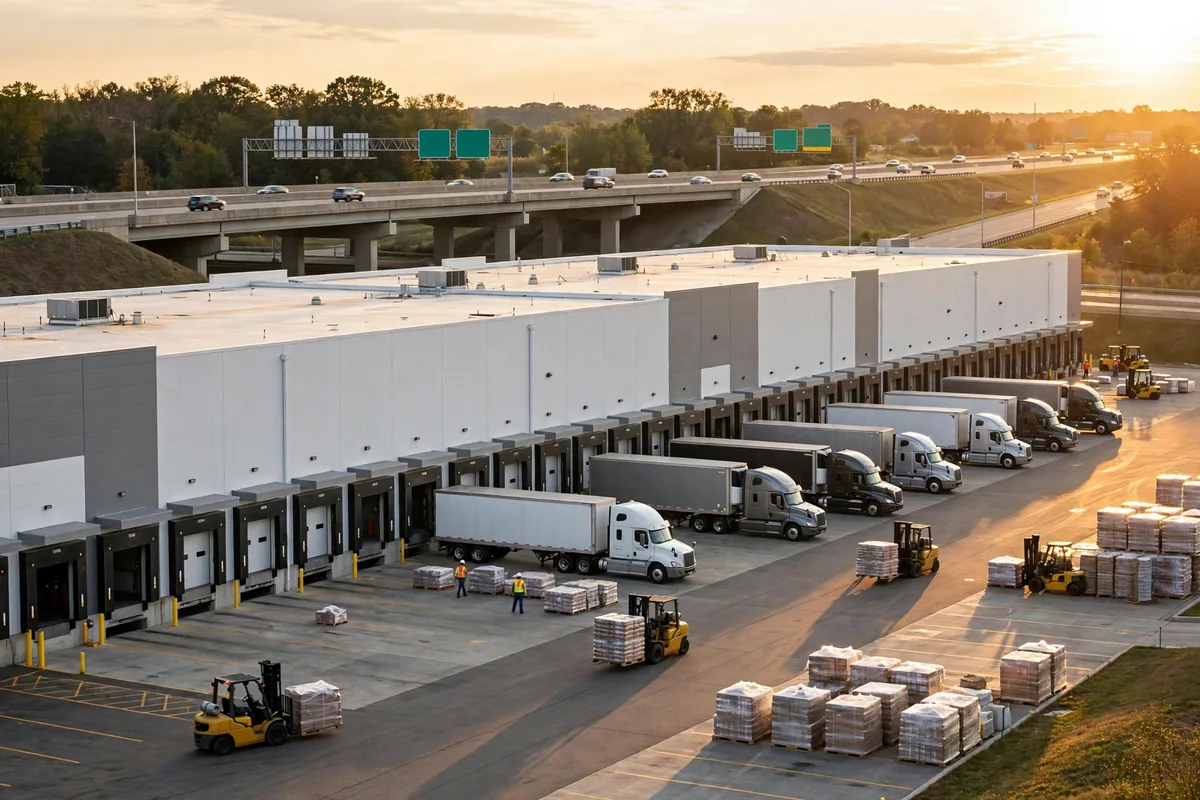
One detail a lot of people miss: when you cut zones, you do not touch the fire lanes or the main forklift arteries. Not one inch. The crew always wants to stack materials on the main aisle because it is convenient. On day one I told Lao Zhang: materials stay inside the zone under construction; one violation costs half a day of work. Sounds harsh, but once the artery is blocked, the whole building slows down.
Three shop-floor tricks that keep orders moving
The first trick is the night window. From 8 in the morning to 6 in the evening, the building only ships — no construction. After 6, the crew comes in for the heavy work: pulling old racking, setting new beams, running cable. We set up a night duty roster, two experienced staff each night. They watched the crew so nothing got built on the wrong location, and cleared the site before 6 in the morning. The night-shift allowance cost extra that month, but far less than shutting down.
Take the Zone B racking job as a concrete example. We had to raise four-level racking to six levels, swapping every beam and deck. We scheduled eight night windows. Every evening at 6:30 the crew came in and the daytime forklifts moved to Zone D. On the first night the new beam holes were off by less than a centimeter from the old uprights and would not slot in. Old Li, on duty, stopped the work instead of letting the crew force it. The supplier sent new connectors the next morning. We lost one night and saved a full rework. Night work is where "good enough" does the most damage.
The second trick is to fix the travel paths before you touch the equipment. Most rebuilds start by tearing out equipment. We changed the forklift route first, making the run from Zone B to the pack benches a one-way loop so pickers stopped doubling back. That one change alone lifted daily output by roughly a tenth during the rebuild, compared with before.
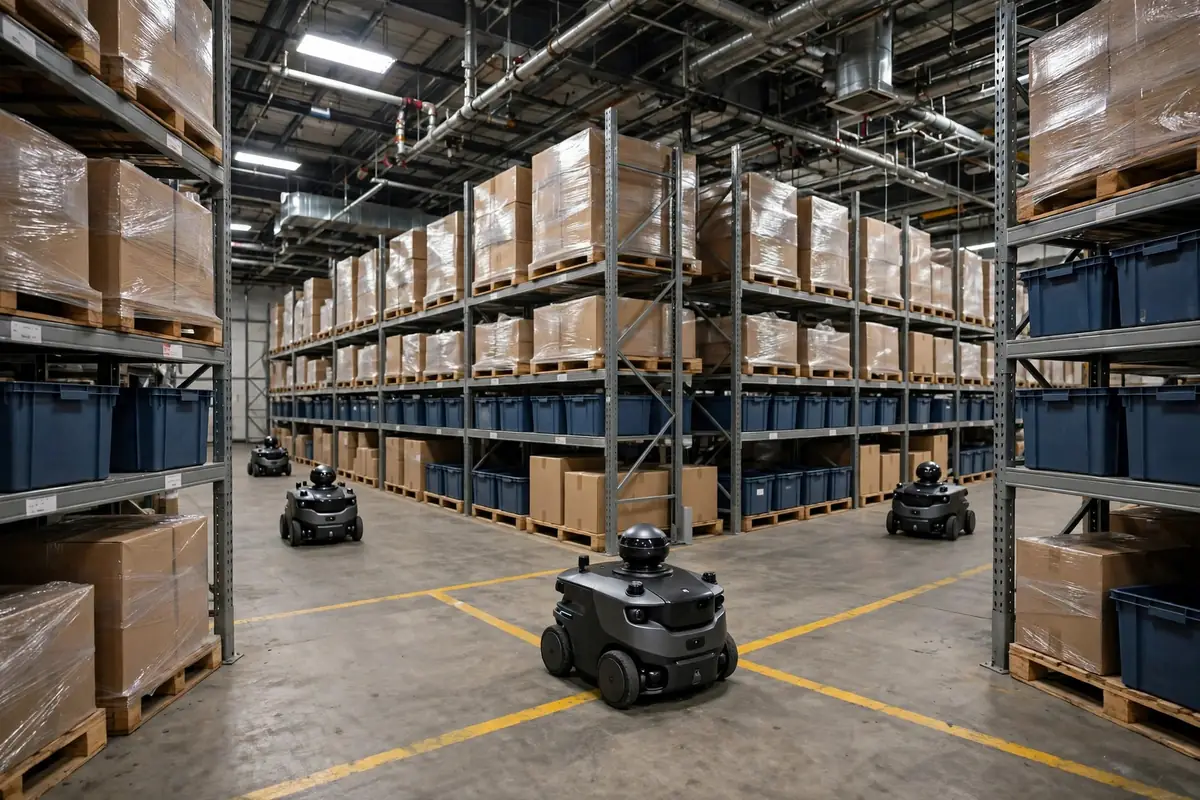
The third trick is to leave every zone an escape route. Every zone under construction needs a backup work line right next to it. While the Zone A pick line was down for two weeks, we set up six temporary pick stations beside Zone C from old racking. They held more than 800 orders a day through the peak. When the rebuild finished, we took them down in half a day.
How to cost a warehouse retrofit so the boss says yes
The boss always asks two questions: how much, and how long do we stop? Never quote just the equipment price — put the cost of stopping on the table too. A day of lost orders, overtime pay, and customer penalties usually adds up to more than the equipment itself.
The table below is an illustrative scenario built on our warehouse's cost structure. The numbers are illustrative, not a quote — but the math is real:
| Approach | Build time | Shutdown days | Direct build cost | Shutdown and catch-up losses | Total cost |
|---|---|---|---|---|---|
| All at once | About 6 weeks | 12 days | About $140,000 | About $85,000 | About $225,000 |
| Four phases | About 10 weeks | 0 days | About $155,000 | About $11,000 | About $166,000 |
Phased work looks four weeks slower, but the total comes out about a quarter cheaper. The savings are not in the equipment — they are in the orders you never stop shipping. I showed this table to the boss and got approval in one meeting. Bosses are not afraid of spending money. They are afraid of spending money and missing shipments at the same time.
Phased work also lets the crew and your people learn each other: phase one is clumsy, phase two runs smoother, and by phases three and four I barely had to watch.
Inspect one zone at a time, not everything at the end
Our rule: within 48 hours of finishing a zone, we inspect it — do the location labels scan, is the forklift turning radius enough, can a picker walk the new route without doubling back? In one zone a beam was 5 centimeters off and a forklift clipped the top level. We fixed it on the spot in half a day; waiting until the end would have made it a major rework.
Half of inspection is about people, not equipment. After each zone, the pick team lead took two new hires through the new route with real orders — putaway, pick, pack, timed end to end. One time the route looked fine on paper, but walking it showed the pack bench was a dozen meters too far from the check station, and pickers were walking extra distance on every order. We moved the bench, walked it again the next day, and signed off only when it felt right. That trial run takes less than an hour and saves months of wasted steps.
Phased work lets you pilot before you commit: do not roll automation across the whole building on day one. Pilot it in one zone, get it running smoothly, then copy it. If you want the full picture on how to choose brownfield automation and set priorities, read this brownfield warehouse automation retrofit guide. We used its framework to rank our equipment choices before locking them into the phased build schedule. Once the pilot zone is stable, run it against the acceptance checks in that same brownfield warehouse automation retrofit guide before copying it to the next zone.
Here is the counterintuitive part: most people think a faster rebuild is a cheaper rebuild. My experience is the opposite — in a brownfield warehouse retrofit, slow is fast. Phased work looks sluggish, but orders never stop, mistakes stay small, and problems surface early, and the final bill comes out lower. And the thing most likely to go wrong is not the construction crew — it is your own veteran staff walking the wrong temporary route. That is why the 10-minute pre-shift huddle never gets skipped during a rebuild. Not one day.
So if your warehouse is thinking about a retrofit, remember three things: cut it into zones before you start, do the heavy work at night and protect shipping by day, and inspect one zone at a time. Do not do what we did the first time — shut down for three days to save time, and pay enough in lost orders to rebuild half the warehouse twice.
By Chen Feng, Warehouse Operations Manager