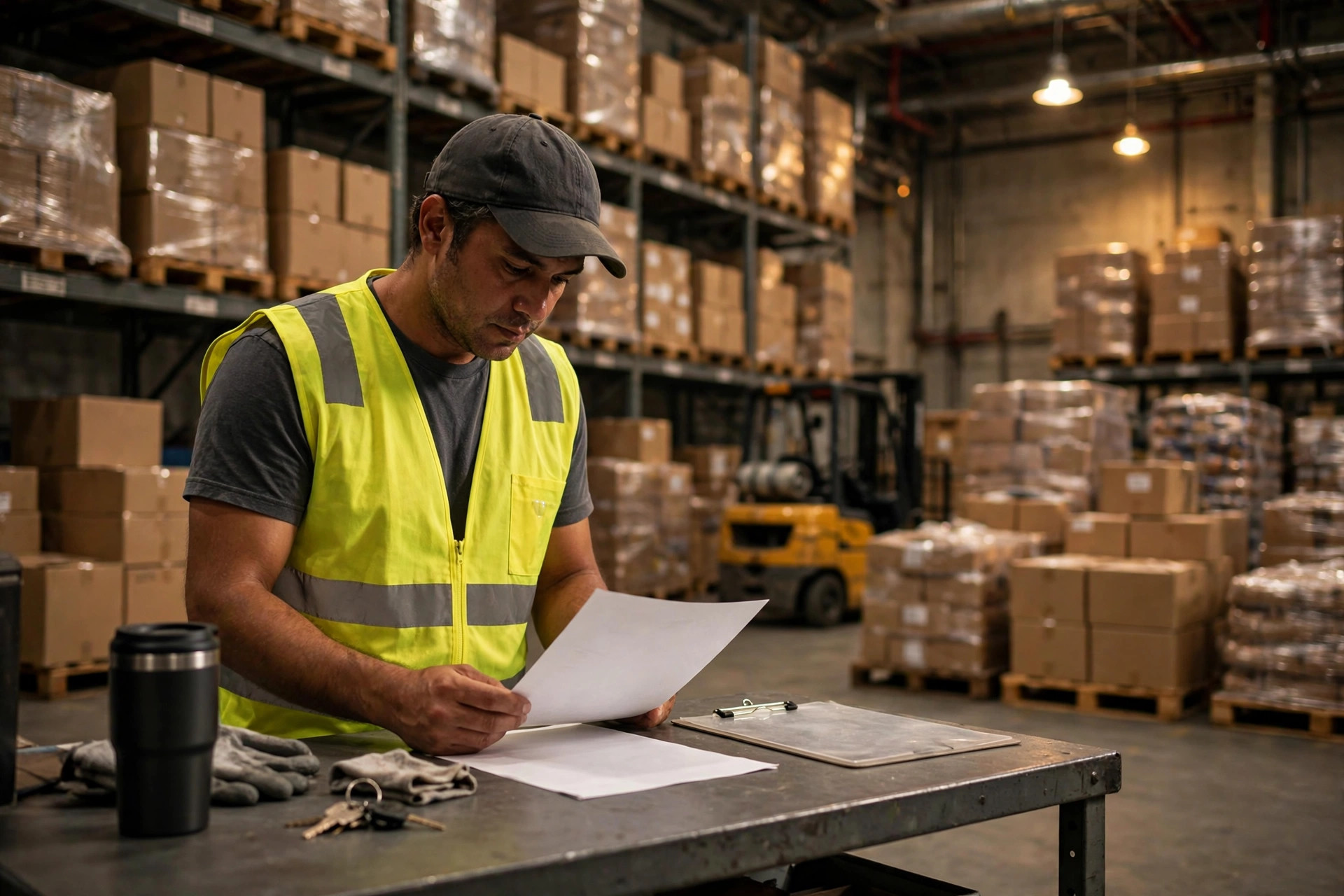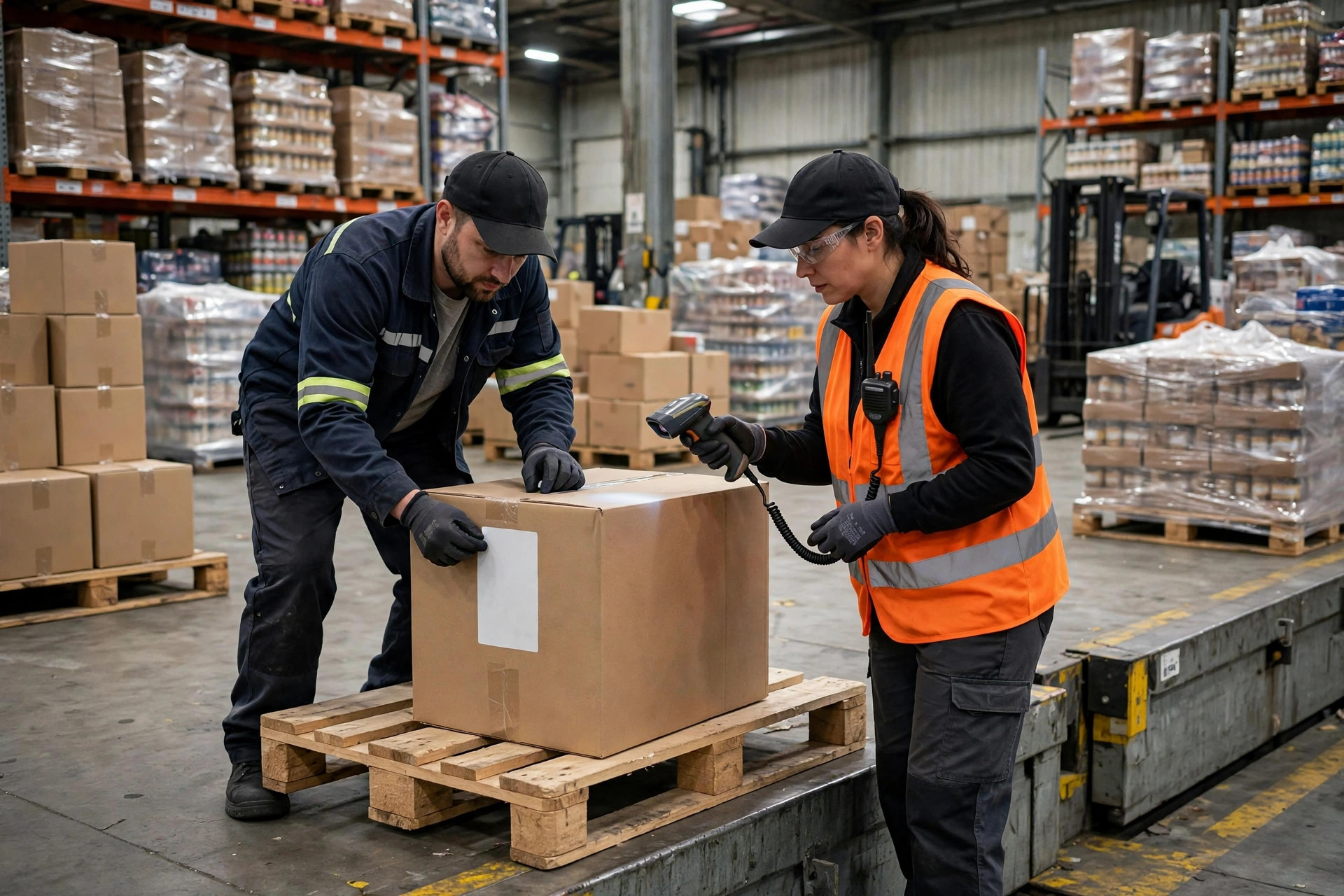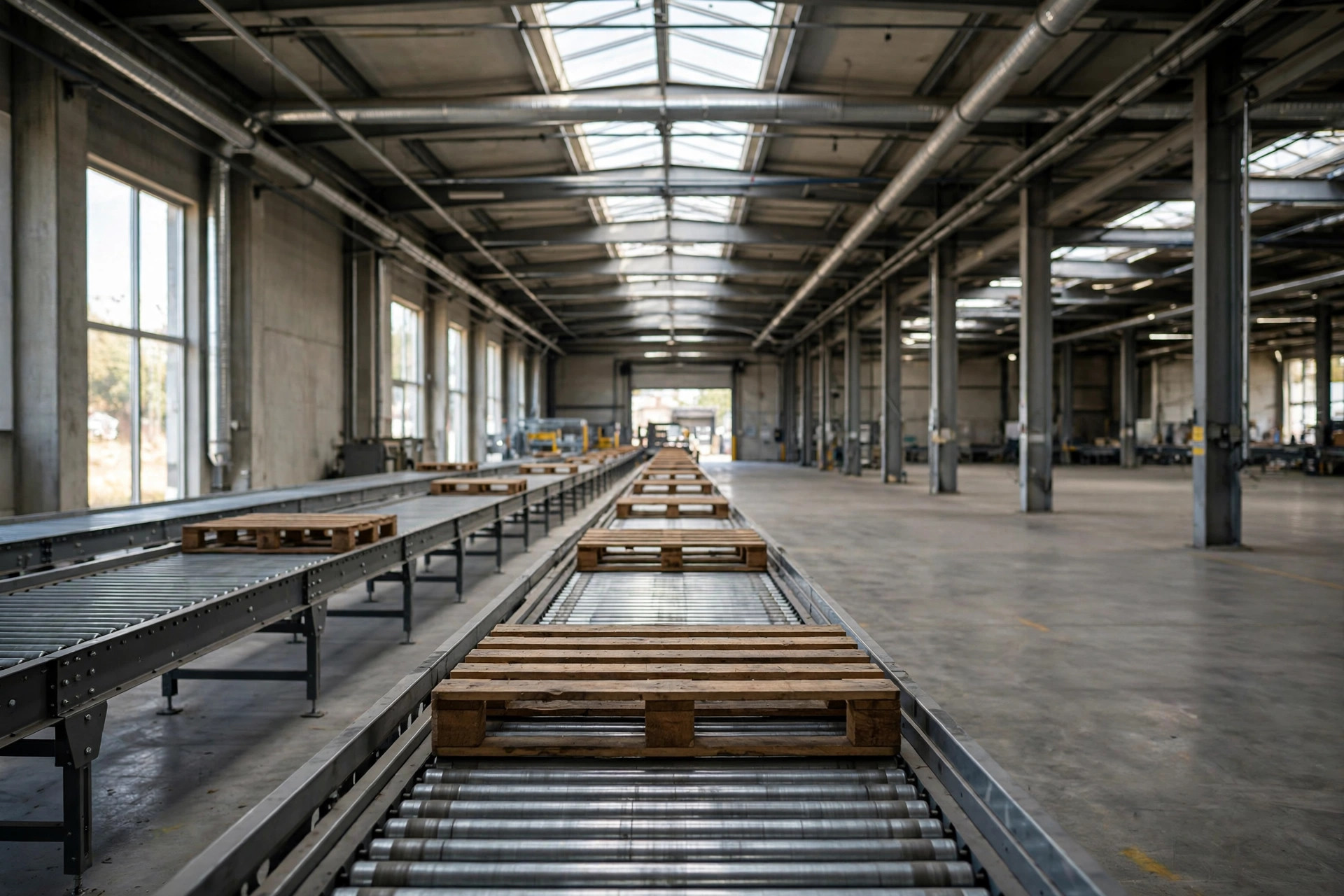
Let me open with the math: a 28,000-square-foot warehouse, three peak-season months, and $14,000 worth of "idle assets" piled up by the dock — plus another $3,000 in floor rent. Every dollar of it avoidable. The culprit: wooden pallets. That's what an unbalanced pallet pool costs you.
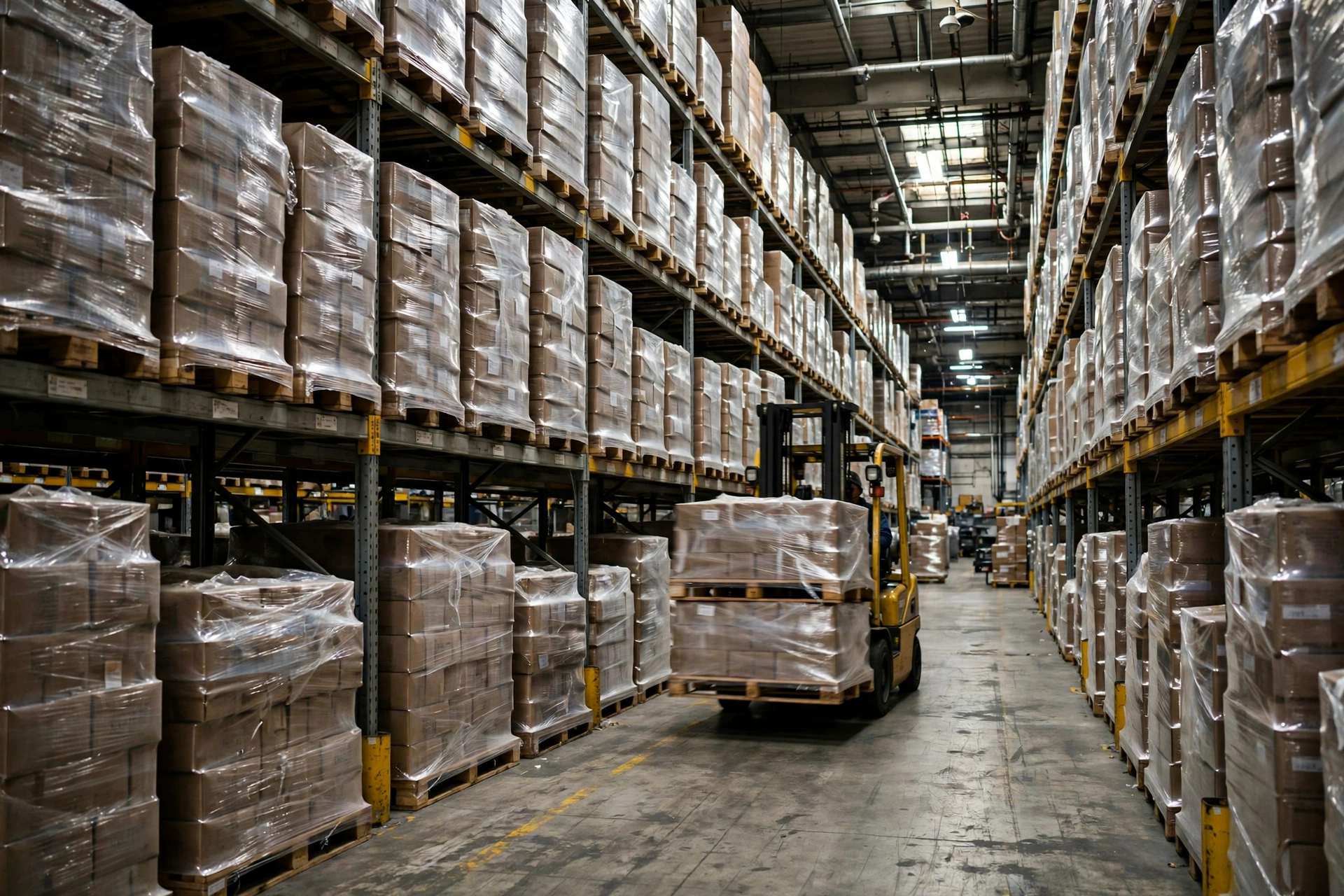
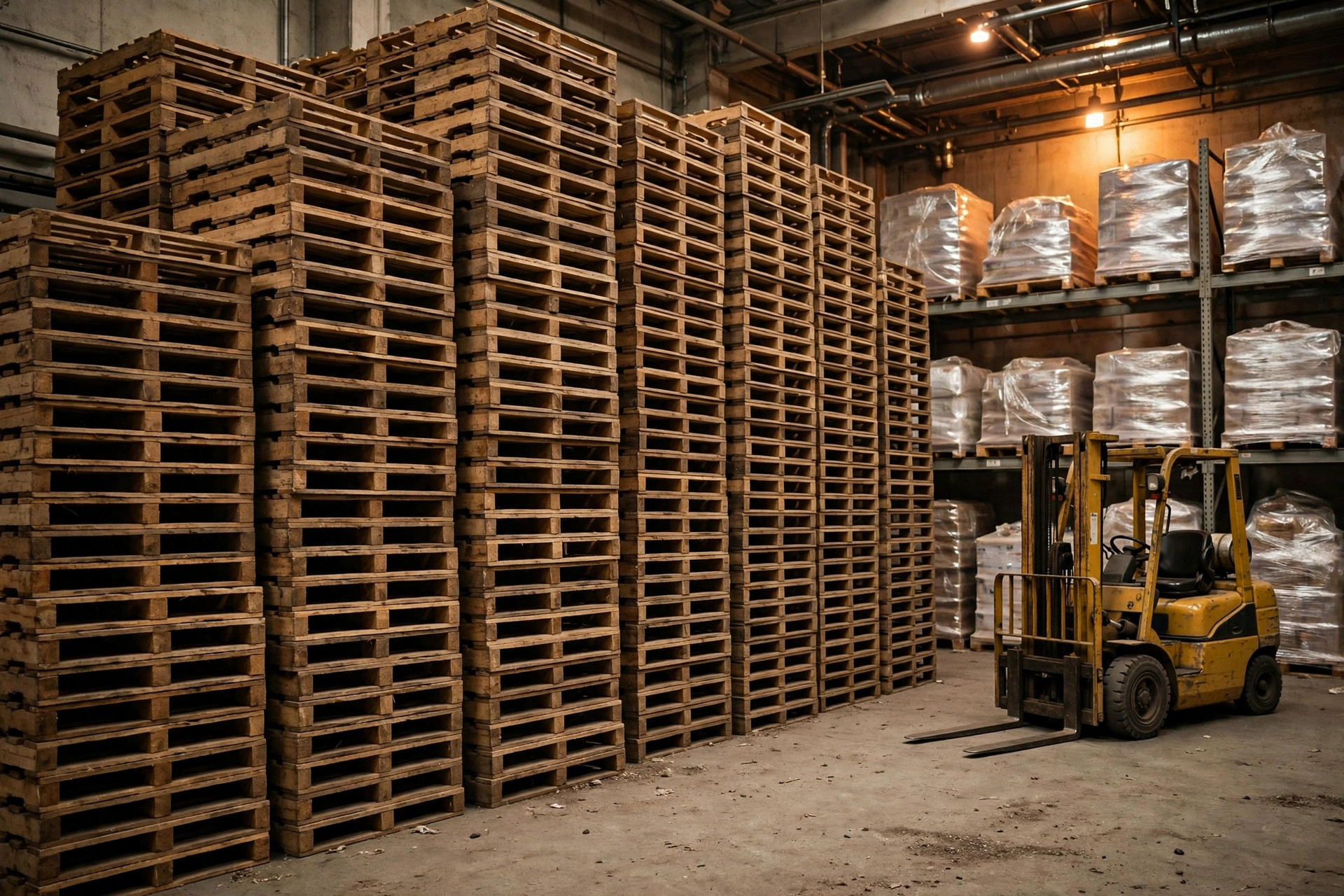
Fall 2024, I walked a warehouse in Riverside. The owner complained he was running out of space for peak season. I went to look: over a hundred stacks of empty pallets next to receiving, forklifts detouring around them. Turns out inbound arrived on pallets, but outbound mostly shipped as loose cases — pallets in, almost nothing out. Three months, and the pallet pool was completely out of balance.
Here's the breakdown. The warehouse received 44 truckloads a month at 24 pallets per load, but only 12 loads went out on pallets. Net pallet gain per month = (44 − 12) × 24 = 768. Over three months: 2,304 pallets.
Stacked 20 high — about 9 feet — each stack eats roughly 13 square feet. 2,304 pallets is 115 stacks, nearly 1,500 square feet — over 5% of the entire building. At $0.70 per square foot per month, a common Inland Empire rate for small warehouses in 2025, that's 1,500 × 0.70 × 3 ≈ $3,150 just to store wood.
And that's not all. Those 2,304 pallets, even valued at a used price of $6 each, tie up $13,824 in capital sitting outside in the sun. At an 8% annual cost of capital, that's another $276 for the quarter. Combined: over $3,400 gone in one peak season. Two peaks a year, nearly $7,000. Money burned for nothing.
(The figures below use illustrative ranges common in the U.S. market in 2025–2026 — plug in your local quotes; the method doesn't change.)
Where an Unbalanced Pallet Pool Bleeds Money: Four Cost Buckets
The losses hide in four places, none of which show up as their own line on a P&L — which is why owners rarely feel the pain until it's big.
Floor space. Calculated above. Pallets compete with product for the scarcest thing a small warehouse has: square footage. When the pallets win, you end up renting more space — a bill most operators never connect back to pallets.
Trapped capital. A pallet is an asset, not a consumable. An inbound-heavy warehouse is effectively "saving" money by the dock every month — in wood that will never appreciate. 2,304 pallets at $13,824 would buy a decent used forklift.
Wasted labor. When stacks pile up, forklift drivers burn half a day a week restacking, clearing paths, and hunting for usable pallets. At $20-plus an hour — a typical 2025 California forklift wage — that's hundreds of dollars a month spent on pure non-value work.
Lost residual value. Pallets stored outdoors, sun and rain for three months: cracked boards, mold. Pallets a recycler would have paid $3–4 each for end up as firewood. The most invisible loss, and the most regrettable.
The reverse imbalance hurts just as much. Early 2025, a small e-commerce fulfillment warehouse in Moreno Valley asked me to review their costs: all outbound shipped on pallets, but suppliers delivered loose cases. A monthly shortfall of 500 pallets. The owner bought new 48×40 GMA pallets at $13 each — a common U.S. price — spending $6,500 a month, $78,000 a year, on wood. Too many inbound pallets is a disease; too few is the same disease. The root cause is identical: nobody manages the pallet pool.
Four Pallet Pool Options, Compared on Real Cost
So what are the cures? Here's the honest side-by-side, street fixes and professional options together:
| Option | Unit cost (typical U.S. range) | Upside | Biggest trap |
|---|---|---|---|
| Buy new, build your own pool | $12–15 each to buy; amortized over 10 turns, ~$1.30/turn | Quality control; cheapest long-term | Heavy upfront capital; every lost pallet stings |
| Buy used pallets | $5–8 each | Lowest startup cost for a small warehouse | Inconsistent quality and sizes; jams automated lines |
| 1-for-1 pallet exchange | ~$0 out of pocket | Nearly free if you ship and receive full pallets | Needs a balanced counterparty; the books must be kept clean |
| Third-party pallet pooling (CHEP/PECO style) | $4–6 per pallet per turn | No repair or loss headaches; big customers mandate it | Deposits and minimum volumes; expensive for small users |
Here's the contrarian take: most people treat pallets as consumables — buy more when they break. Wrong. Pallets are assets. The biggest waste in a small warehouse is never "paying too much per pallet" — it's "nobody tracking them." The most expensive part of a pallet pool isn't the pallets; it's the absence of anyone doing the math. If the Riverside owner had spent ten minutes a month counting pallets in versus out, that $3,400 would never have been spent.
One more trade-off worth naming: used pallets are cheap, but if you run an automated storage system or a line with tight size tolerances, one jammed oversized used pallet can cost you more in downtime than a truckload of new ones. Match the money-saving option to how you actually operate — that's the easiest pit to fall into when picking.
The Pallet Pool Breakeven: How Many Turns Justify Owning
Rent, buy, or exchange? Here's a formula you can apply directly.
Let F = monthly fixed cost of running your own pool (floor space + bookkeeping labor) = $900. Let p = third-party rental rate = $5 per pallet per turn. Let c = amortized cost per turn of an owned pallet = $1.50.
Breakeven monthly turns Q* = F ÷ (p − c) = 900 ÷ 3.5 ≈ 257 turns/month.
The verdict is blunt: above ~260 pallet turns a month, owning beats renting. Below that, rent or exchange — don't burn cash building your own pool.
How did the Moreno Valley operation fix it? Three moves: first, switch from new to used pallets, cutting unit cost from $13 to $6; second, negotiate a 1-for-1 exchange with a balanced warehouse next door, covering 300 pallets a month; third, rent the remaining 200 shortfall per turn. Monthly cost dropped from $6,500 to $2,200 — over $50,000 saved a year. Nothing fancy. Every step was calculated.
Go Count Three Numbers — the Answer Comes Out by Itself
This isn't complicated. Go count three numbers: first, your net monthly pallet gain or loss; second, how many square feet pallet stacks occupy by your dock; third, what you spent last year buying and renting pallets.
Lay the three numbers out, multiply by your local rent and pallet prices, and whether to rent, buy, or exchange answers itself. A pallet pool that's measured doesn't lose money; one that isn't can bleed any amount without you ever knowing.
By Lao Zhou, Logistics Cost Analyst