Let me be honest with you. Nobody walks the dock in the morning thinking about warehouse dock bumper replacement. Nobody thinks about bumpers at all. At 6:30 a.m., half light, the last night-shift trailer backs in, you hear that dull thud, the driver glances back, nothing falls off, and everyone moves on. I used to think the same way — it is just two blocks of black rubber, they can last a while longer. Then one worn-out bumper cost us a dock door and a leveler in the same morning, and I finally did the math properly.
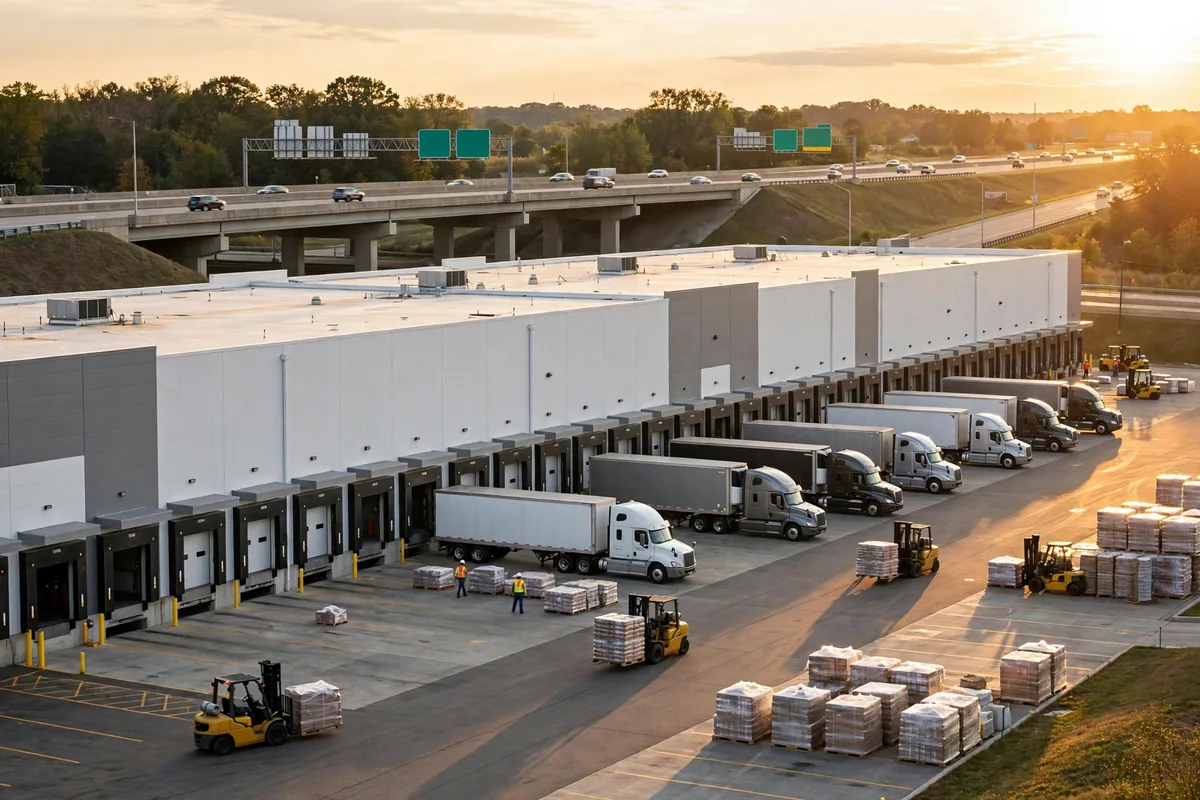
Our building is a mixed apparel and general goods warehouse with 12 dock positions and more than 40 truck movements on a normal day. Half the bumpers had been in service for six or seven years and were polished smooth. On a Monday morning in August 2024, at door 3, a driver came in slightly off angle. The left bumper on that door had already fallen off and the right one was worn to about half thickness, so there was almost no cushion left. The trailer hit the edge of the leveler and the bottom of the door. The leveler lip bent, the door panel dented, and door 3 was out of service for most of the day. Trucks queued for other doors and two outbound loads left late. That was just the visible damage.
How to tell a warehouse dock bumper replacement is due
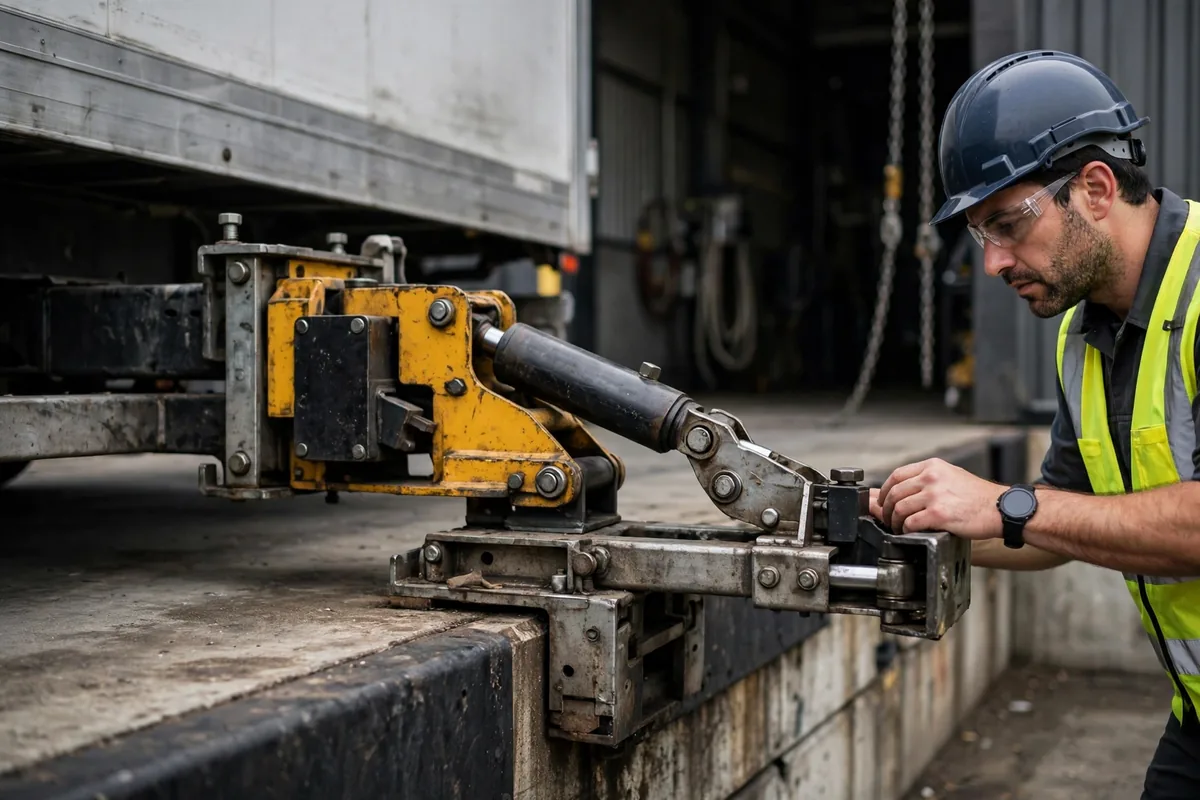
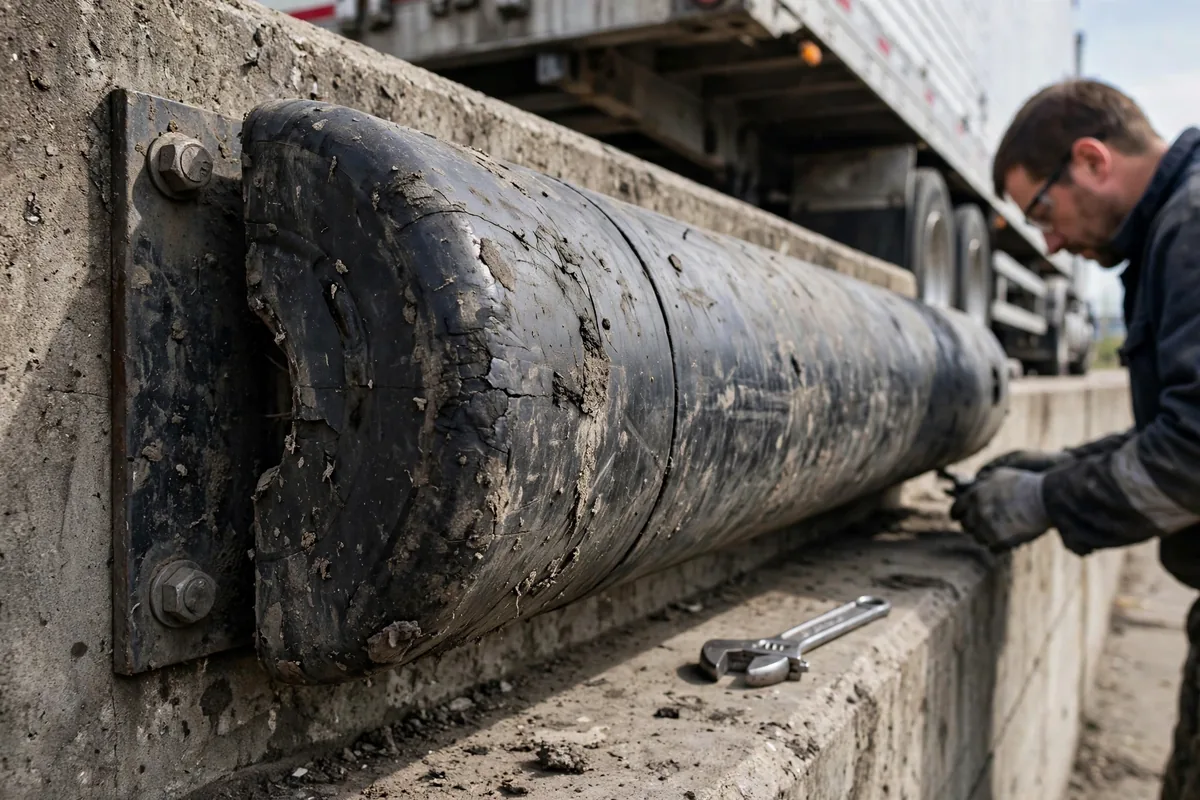
I now judge bumpers on four checks that a lead can do with a flashlight and a tape measure. First, remaining thickness. If close to half the original projection is gone, the bumper no longer has enough travel to absorb a normal backing impact. Second, cracking and chunking. Hairline surface cracks are normal; deep cross cracks and corners breaking away are not, because a trailer hit will tear the crack open. Third, exposed steel or bolts. Once you can see the mounting plate or bolt heads, the next contact is metal on metal. That is not "replace soon," that is "replace now." Fourth, looseness. If the bumper moves by hand or the anchor holes are torn out, the mounting has failed and thickness no longer matters.
Any one of these four puts the door on the next maintenance window list. Any two means handle it that week. I learned that the hard way in the winter of 2023 at door 7. A bumper had a clear crack and I decided to wait for the slow season. In peak season a trailer tore half the block off and a chunk jammed in the leveler gap. Clearing it took nearly an hour, in the busiest week of the year. Peak-season time costs more than rubber.
What warehouse dock bumper replacement really costs
Owners always ask what a pair costs. Honestly, the rubber itself is usually the smallest part. Prices vary a lot by size and material, so check current supplier quotes for your exact specification rather than trusting a single number online. What I can give you is the costing method we now use.
Split the job into four parts. One, materials: a new pair plus new anchors. Old bolts are often rusted solid and need cutting, so never budget for rubber alone. Two, labor: normally two people to remove the old units, clean the wall face, drill or weld, fit the new pair, and level them. A clean job on one door can take one to two hours; rust and damaged concrete can double it. Three, downtime: while that door is out, trucks reroute, queues form, and overtime creeps in. In peak season, half a day of disruption on one door can cost more than the materials. Four, bundled checks: while the door is stopped, inspect the leveler lip, door seal, and dock edge steel, and fix small issues in the same stop instead of paying for a second stop next month.
Now cost the other side. When a bumper stops working, every backing impact goes straight into the concrete, the leveler, and the door. Chipped concrete needs a stopped door and curing time. A bent leveler lip means parts and adjustment. A trailer's lights or rear frame scraped on exposed steel becomes an argument with a carrier about who pays. After our door 3 incident, finance did a rough total of repair plus disruption, and it would have covered replacing the bumpers on all 12 doors with money left over. Shop-floor people understand this instinctively: skip the small part and you pay for the big parts plus the labor, at the worst possible time.
Our fixed practice is to schedule warehouse dock bumper replacement in the slow season or on low-volume weekends, stage the bumpers and anchors in the building in advance, and stop one door at a time in rotation. Never take the whole dock down at once for a job like this.
Choosing between laminated, steel-face, and nylon-face
Three types cover most warehouses I have seen. Laminated rubber, built from layered tire material, is the common workhorse and good value for medium traffic doors with fairly consistent equipment and disciplined spotting. It wears faster under heavy use. Steel-face bumpers add a steel contact plate and hold up much better at high-frequency doors with heavy vehicles and mixed driver skill. They cost more, so we put them only on our two or three busiest doors. Nylon-face or engineered plastic-face bumpers reduce friction, so trailer float up and down during loading tears at them less. They suit docks where leveler movement and approach angles vary a lot. For exact service life, rely on manufacturer test data and references from similar sites, and check the latest supplier documentation.
The counter-intuitive call is not to standardize the whole dock on the most expensive option. Put steel-face where the hits are hardest and laminated rubber on ordinary doors, and you will still have budget left for spares and labor. There is also a trade-off on thickness: thicker is not automatically better. A bumper that projects too far moves the trailer's parked position outward, which lengthens the gap the leveler lip must bridge. Too much gap and the lip lands short or sits unstable. Before changing specifications, measure your leveler lip length and your common trailer floor heights. Do not order on bumper thickness alone.
Inspection rhythm, spares, and what we do now
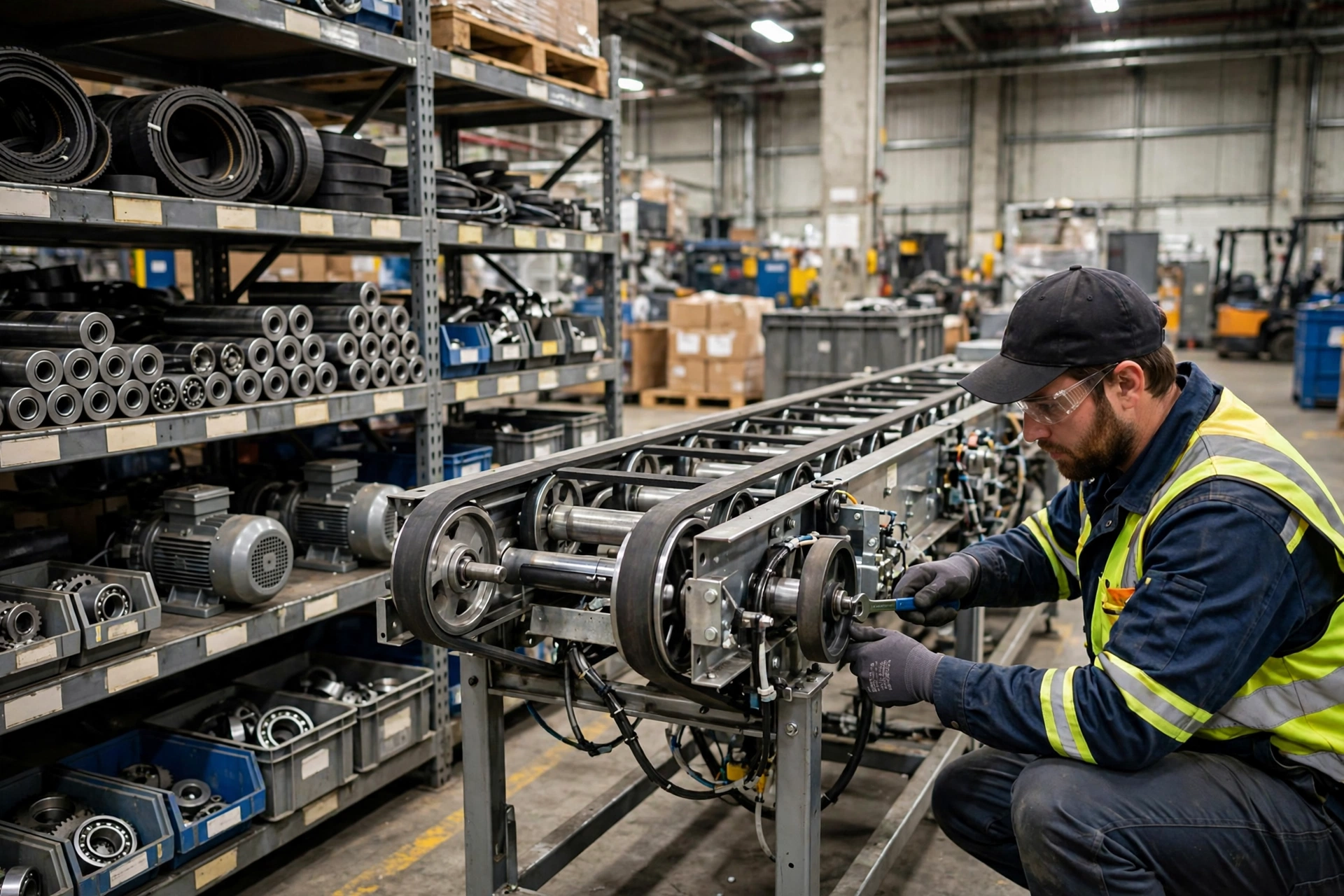
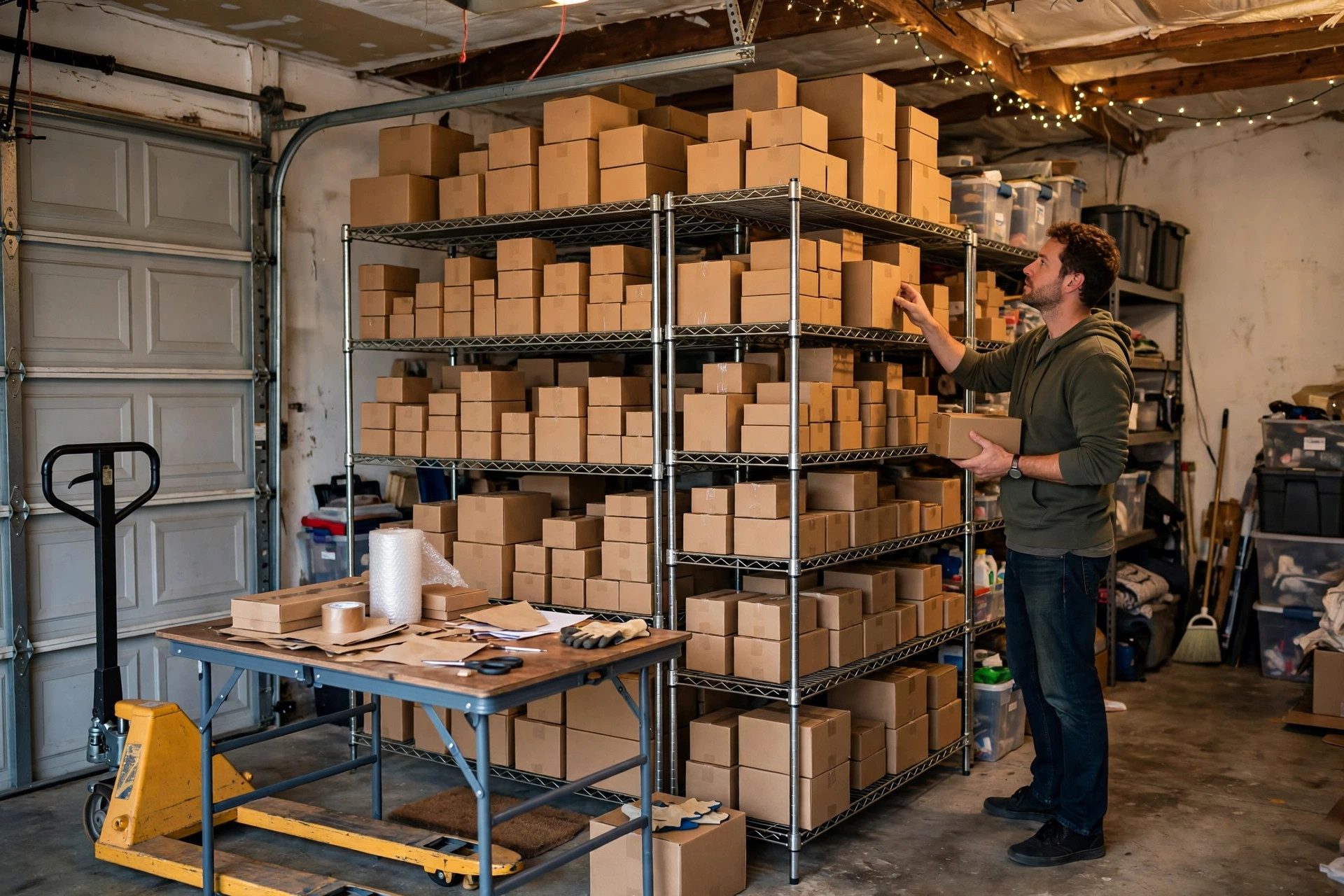
Our routine today is deliberately simple. Once a month the shift lead walks all 12 doors with a flashlight, tape, and phone, and photographs every bumper. Comparing this month's photos with last month's shows the wear rate at a glance. Once a quarter we review the photos and build the next quarter's replacement list, so replacements are planned, not reported after failure. We keep one to two spare pairs in the common size plus a set of anchors in a fixed spot in the maintenance room. If a bumper drops in peak season, we can fit a spare the same day instead of waiting on a purchase process.
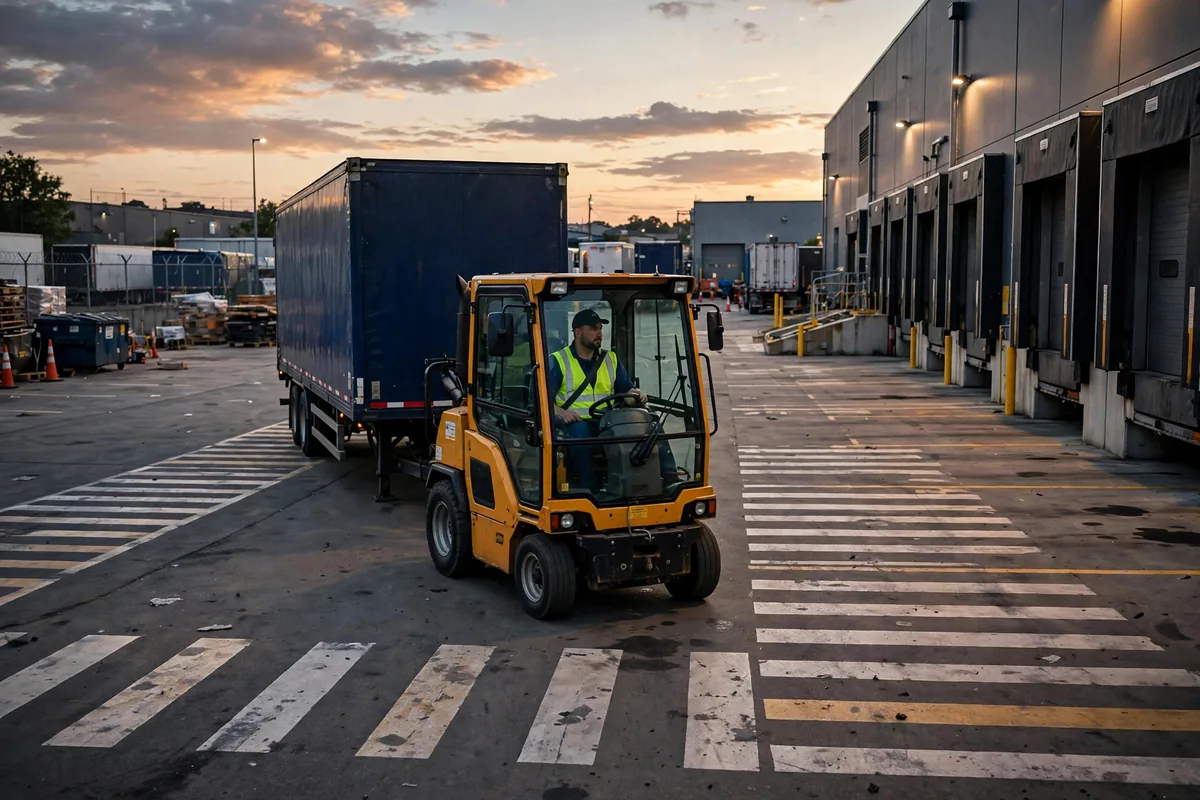
Driver management matters as much as the rubber. A first-time driver at our site gets a spotter for the back-in, every time. Since April 2025 we have also had guide lines and a stop reminder at our busiest door, and that door's bumper is wearing noticeably slower than the others. If one door produces repeated backing scrapes within a quarter, do not automatically buy a tougher bumper for it. Check the guidance and the lighting first. At night, a driver who cannot see in the mirrors is backing by feel, and no bumper survives that for long.
A final word to fellow warehouse managers: treat bumpers as consumables, not as fit-and-forget building hardware. Put them on the inspection sheet, keep spares on the shelf, and rotate replacements through the slow season. Do those three things and your doors, levelers, and concrete will take far less punishment. Wait until steel is showing and a trailer has already hit it, and it is no longer maintenance. It is an emergency repair, and emergencies do not let you choose the price or the timing.
By Chen Feng, Warehouse Manager