Let me start with the numbers.
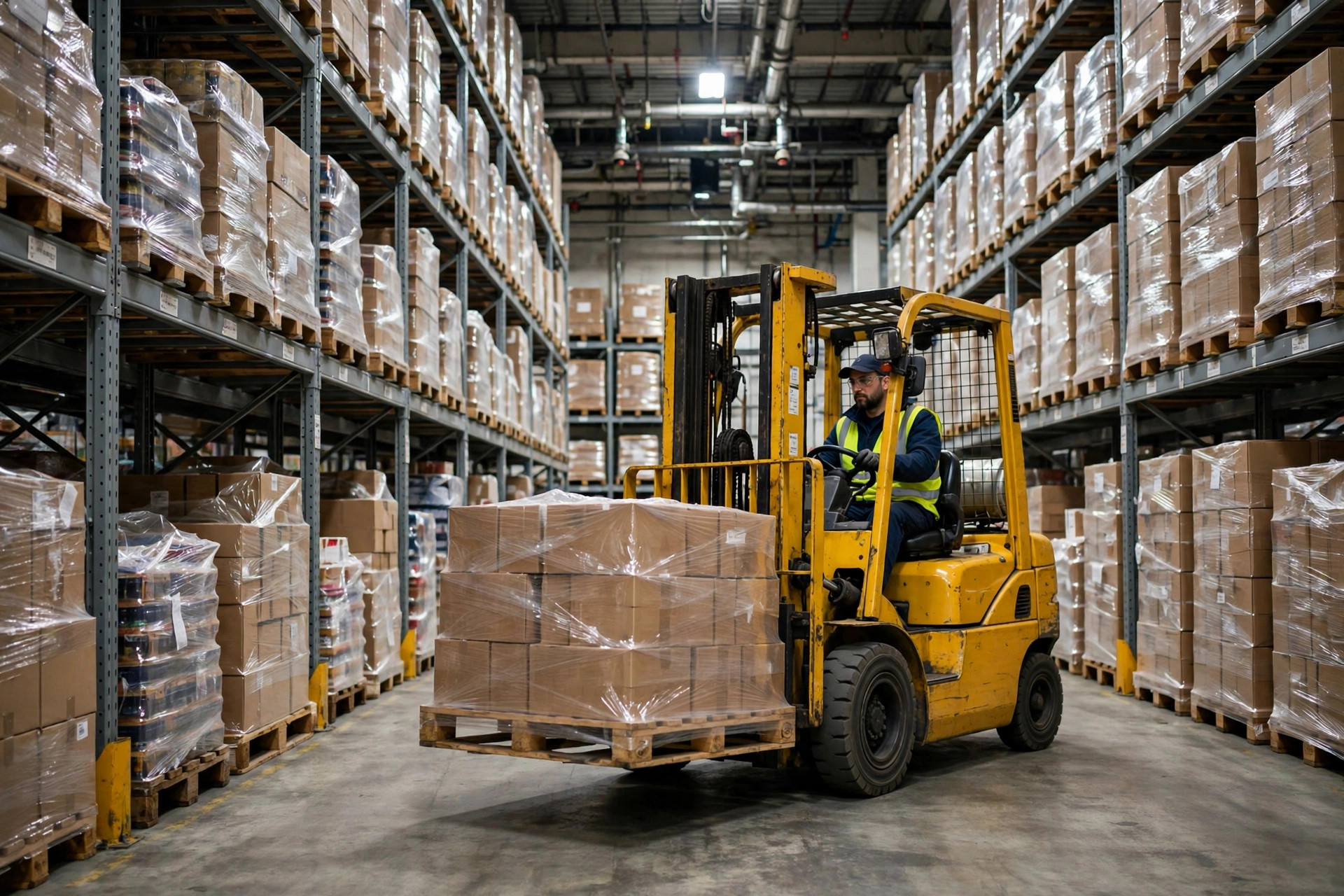
Last year, a friend running an e-commerce warehouse had a row of high-bay racking go down on night shift. Forty-plus pallets of goods crushed, the racking area shut for six days. Direct hit: damaged inventory, racking rebuild, cleanup and re-slotting — close to a million in local currency. The indirect damage was worse: two big clients pulled their peak-season volume, insurance jumped the following year, and six days of wages went out with nothing shipped. After he ran the numbers, he told me: if I'd spent a few thousand a year on inspections, none of this happens.
That's what this piece is about. Racking collapses are never sudden. The rack gives you at least four warnings before it goes. The problem is, most warehouses never hear a single one.
First, the cost structure: one collapse vs. one year of prevention
| Cost item | One collapse (estimate) | One year of prevention (estimate) |
|---|---|---|
| Damaged goods | Six figures and up, depending on scope | — |
| Racking rebuild | Tens of thousands per bay | Replacing a damaged upright: hundreds |
| Downtime | Every idle day is a day of unshipped orders | 1–2 labor hours per weekly inspection |
| Injuries | Beyond money | Column guards: a few hundred each |
| Insurance increase | Noticeable jump next renewal | — |
| Lost clients | Peak-season volume walks out the door | — |
See the pattern? One collapse costs six figures or more. One year of prevention costs three to four figures. You don't even need to compute ROI — the magnitudes are two zeros apart. Put bluntly: skipping inspections isn't saving money, it's gambling.
Warning sign 1: upright damage — hit by a forklift, never reported
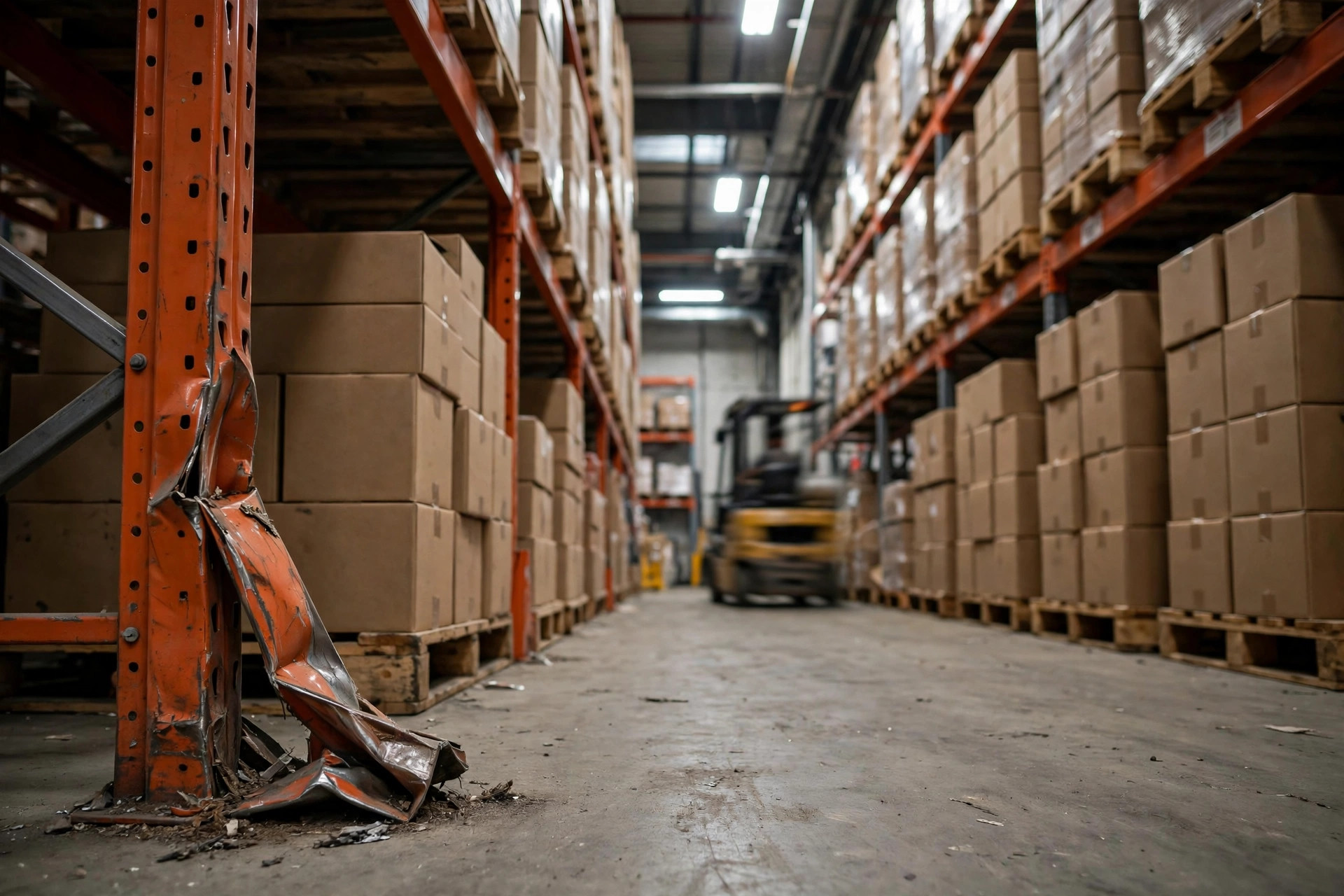
Around 90% of racking damage comes from forklift impacts. A dented upright or scraped paint looks minor, but the upright is the leg the whole bay stands on. Weaken one leg and the load path of the entire row changes.
Two years ago I was auditing costs at a warehouse where a forklift driver told me, "a bump is nothing, these racks are tough." I walked the aisles and counted 17 dented uprights — three dented deep enough to fit a finger in. I asked about their damage-reporting process. There wasn't one. "Report it and you get docked," they said.
That's the trade-off: you scare the floor into silence, you save face, and you gamble the whole row. The right policy is the exact opposite — every impact gets reported within 24 hours, no penalty for reporting, penalty only for hiding it. A safety officer assesses within 48 hours; replace what's compromised. One upright costs hundreds; one bay costs tens of thousands. A child can do this math.
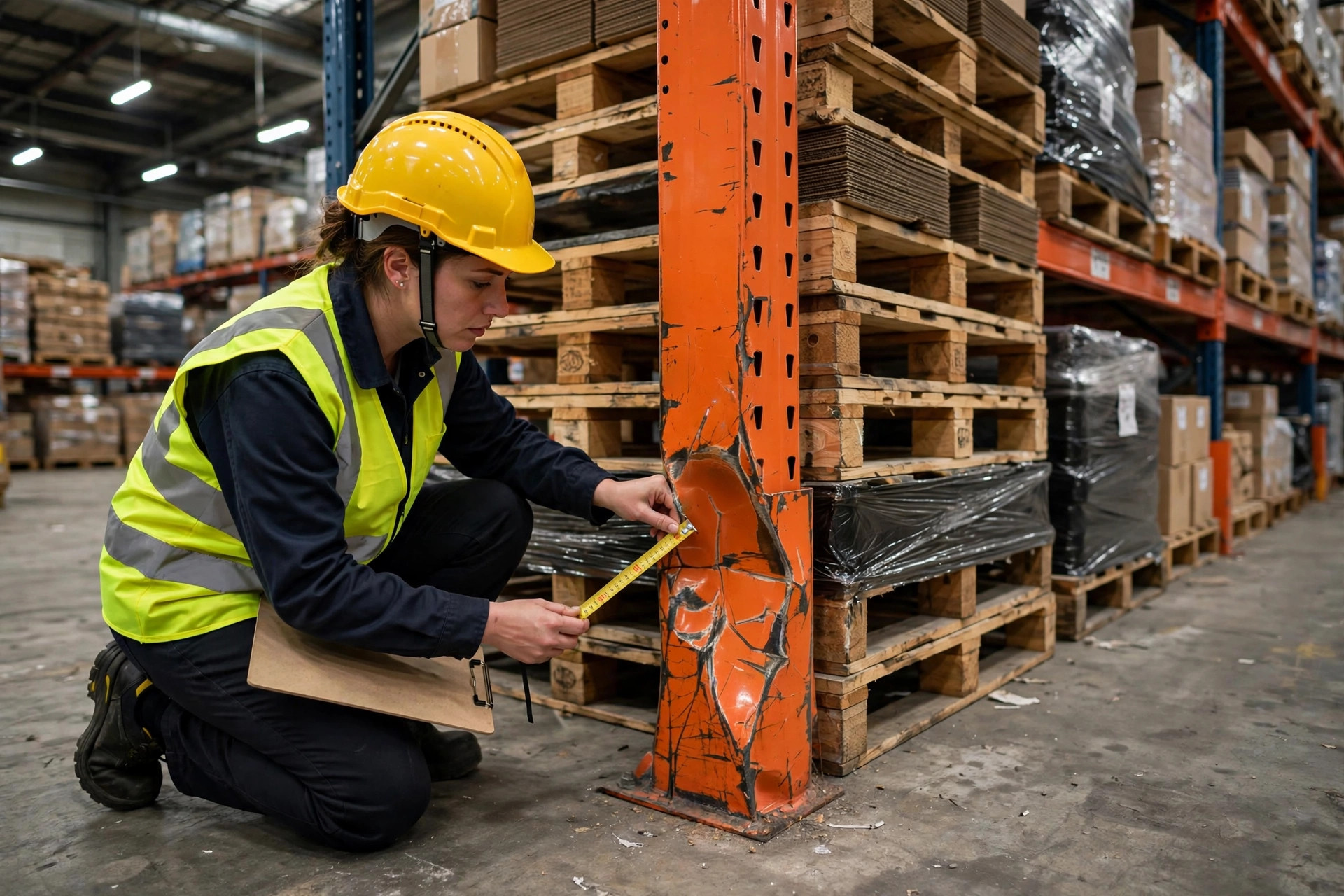
Europe's EN 15635 standard grades upright damage red-amber-green: green means monitor, amber means fix on a deadline, red means unload immediately. You don't need to memorize the standard. Just remember: if the deformation is visible to the naked eye, stop loading above it.
Warning sign 2: overloading — the beam is screaming, nobody listens
Every racking bay has a rated load per level, printed on the nameplate. But when peak season hits, rules go out the window. The worst I ever saw: a nameplate rated one ton per level, loaded with nearly two tons, stacked higher on top. The beams were visibly sagging. The crew said, "we've always loaded it like this, it's fine."
"Always been fine" is the most expensive sentence in warehousing. Overloading doesn't collapse the rack today — it accumulates metal fatigue, day after day, until one light forklift tap finishes the job.
Run the numbers: what does overloading actually save? A few pallet positions of rent. But running 50% over rated load more than halves the rack's service life, and one collapse costs a decade of rent. That's money spent stupidly.
Warning sign 3: missing or loose connectors — nobody looks up
Beams lock into uprights with safety pins and clips. A pallet sliding in can knock a pin clean out. With the pin gone, the beam is just resting there — one sideways force and it walks off the upright.
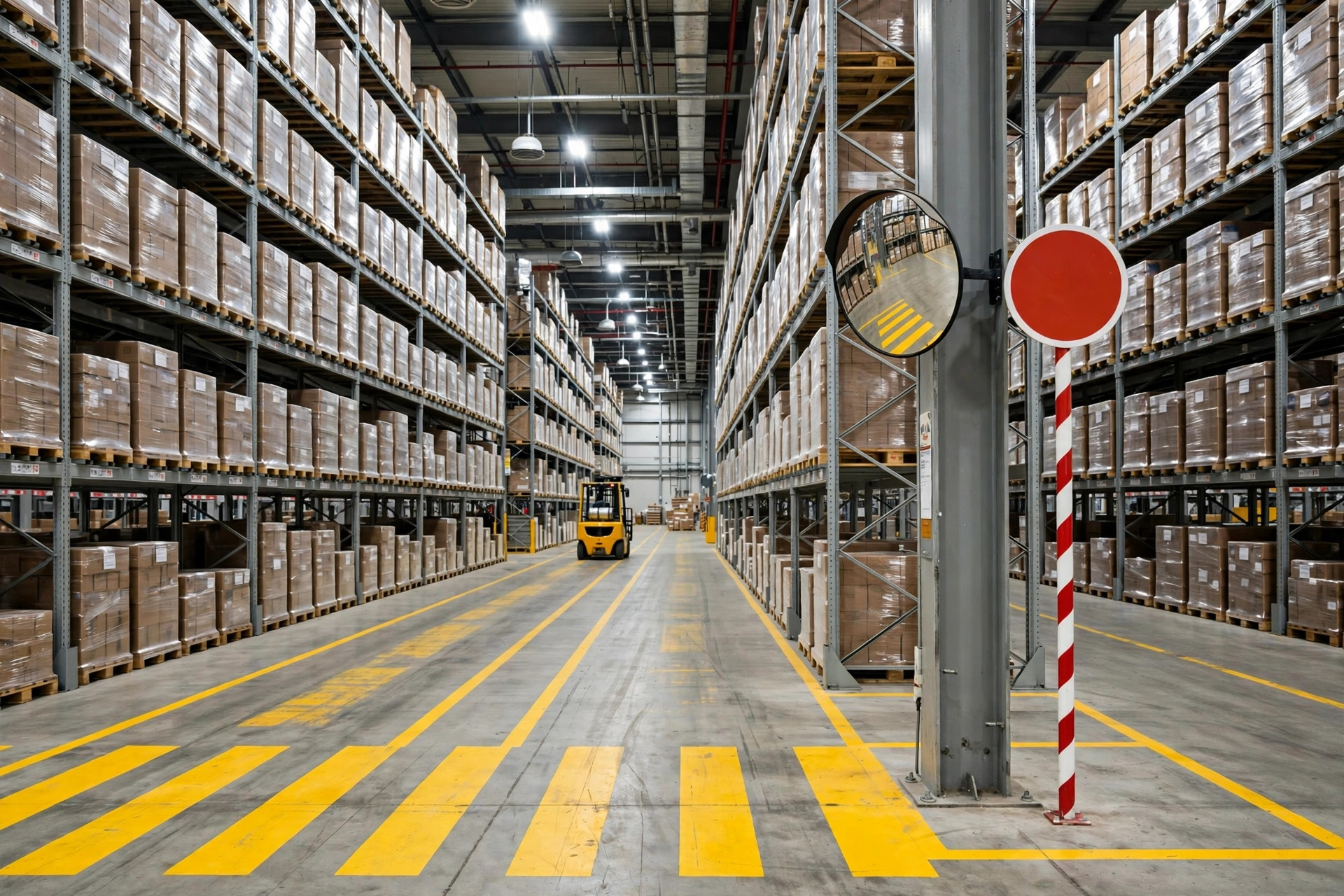
This is the sneakiest warning sign because you have to look up to see it. Walk the floor and you'll spot a dented upright; a missing pin on a beam six meters up takes a deliberate upward glance. Our inspection checklist starts with exactly that: "look up at the pins."
Then there are the anchor bolts. Uprights bolt to the floor; years of forklift vibration loosen them. A loose bolt just needs tightening — what's dangerous is a bolt nobody has ever checked. And here's the counterintuitive part: people assume old racking is the dangerous kind, but newly installed racking deserves closer watching in its first year. Rushed install crews, under-torqued anchors, wrong beam heights — I've seen it all. Inspect new racking monthly for the first three months. It's cheap insurance.
Warning sign 4: the floor and the footplates — collapse starts at the feet
Floors settle. Years of forklift traffic wear them down. A footplate ends up floating or tilted, the upright goes out of plumb, and an out-of-plumb upright loses load capacity fast. The check is trivial: hold a level against the upright. Crooked is crooked.
Watch for cracks in the slab running under a footplate. That one needs a structural opinion — don't judge it yourself.
One more real case. Last year, an auto-parts warehouse had a floor crack running for the better part of a year. Nobody acted on it until a night-shift driver said the row "looked a bit tilted." Engineering measured it: the upright was out of tolerance, the footplate floating two centimeters off the slab. They unloaded both bays that night, repaired the floor and re-anchored the next day. A close call — but the manager said it plainly: one more month, peak-season loads pressing down, and he doesn't want to think about it. Floor problems are invisible until they're foundational.
The inspection checklist: weekly, 20 minutes
| Check | How | If abnormal |
|---|---|---|
| Dented/scraped uprights | Walk the aisles visually, focus on first uprights facing traffic | Tag it, report it, assess within 48 hours |
| Sagging beams | Sight along the beam from the side — is it level? | Reduce load immediately if overloaded; replace deformed beams |
| Safety pins/clips | Look up, check both ends of every beam | Replace missing pins same day |
| Anchor bolts | Crouch down, check footplates, shake the upright | Tighten loose bolts at once, replace missing ones |
| Load nameplates | Legible and present? | Remake if missing or faded |
| Aisle protection | Column guards and protectors intact? | Replace damaged ones within the week |
Weekly, two people, twenty minutes covers a 2,000-square-meter warehouse. Annual labor cost: a few thousand. Against the collapse bill in the table above, this is probably the highest-ROI spend in all of warehousing.
Closing: a conclusion you can calculate
Racking safety needs no sentiment — the arithmetic is enough. Three numbers to remember:
One: a single collapse costs six figures or more; a year of inspections costs four figures. Two zeros apart. Skipping inspections is gambling, not saving.
Two: one upright costs hundreds; one bay costs tens of thousands. Replace on sight. Don't wait.
Three: a column guard costs a few hundred and sits in front of the uprights facing traffic. It won't stop every impact, but it turns 90% of small hits into non-events. Best few hundred you'll spend on the whole checklist.
Racking can't talk, but it deforms. Deformation is its only last word. Hear it, and you spend small money. Miss it, and you spend big. That simple.
By Lao Zhou, Logistics Cost Analyst