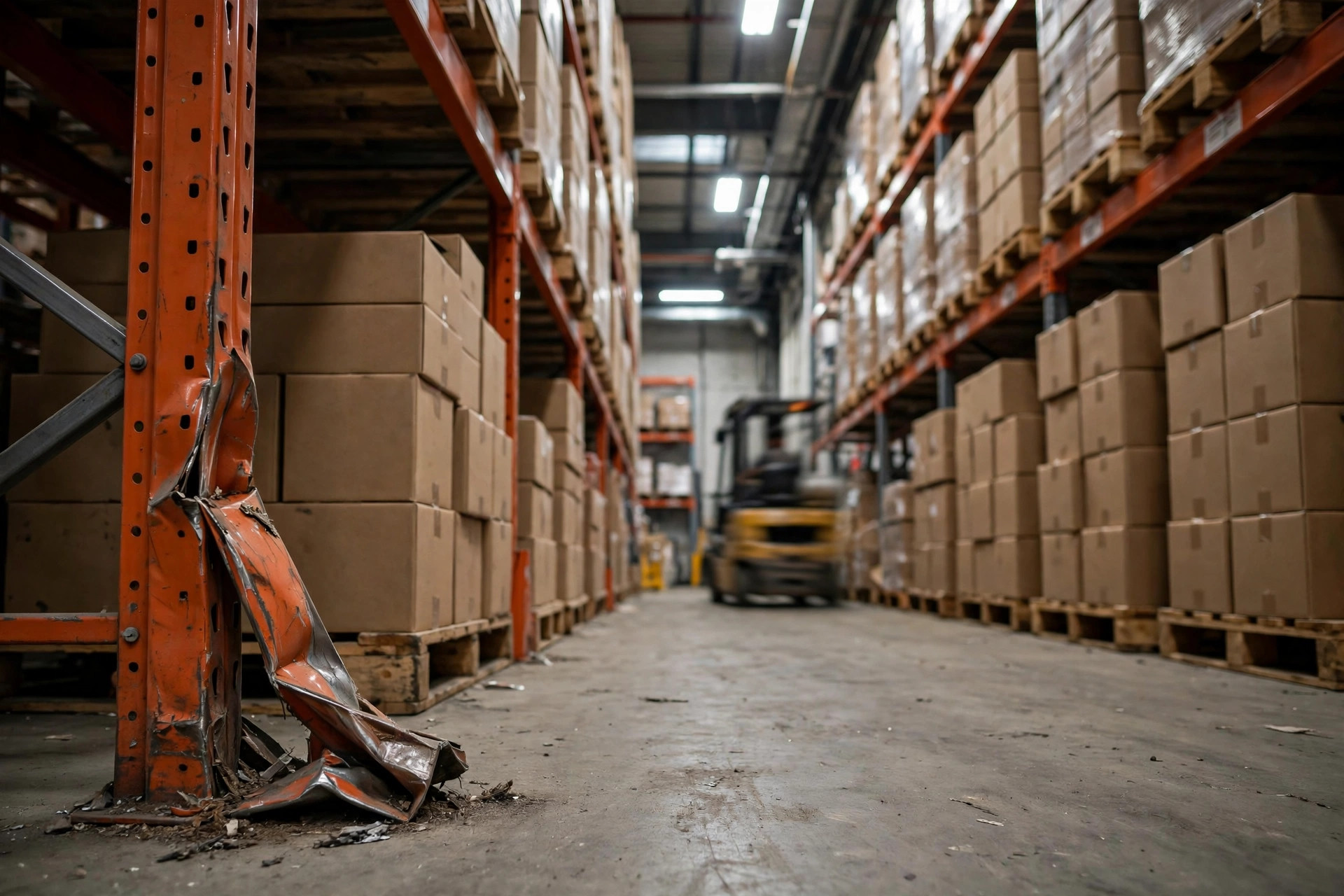
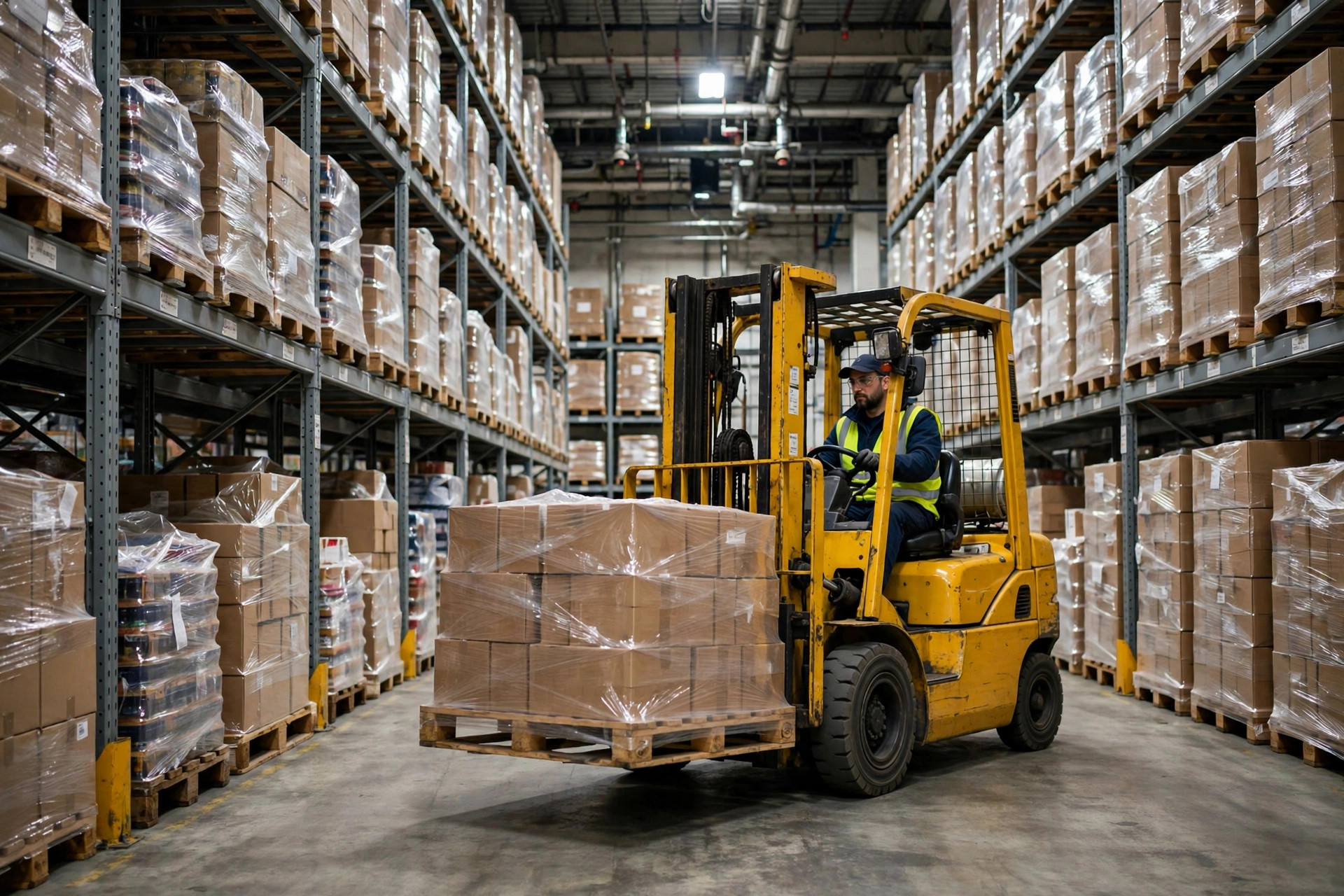
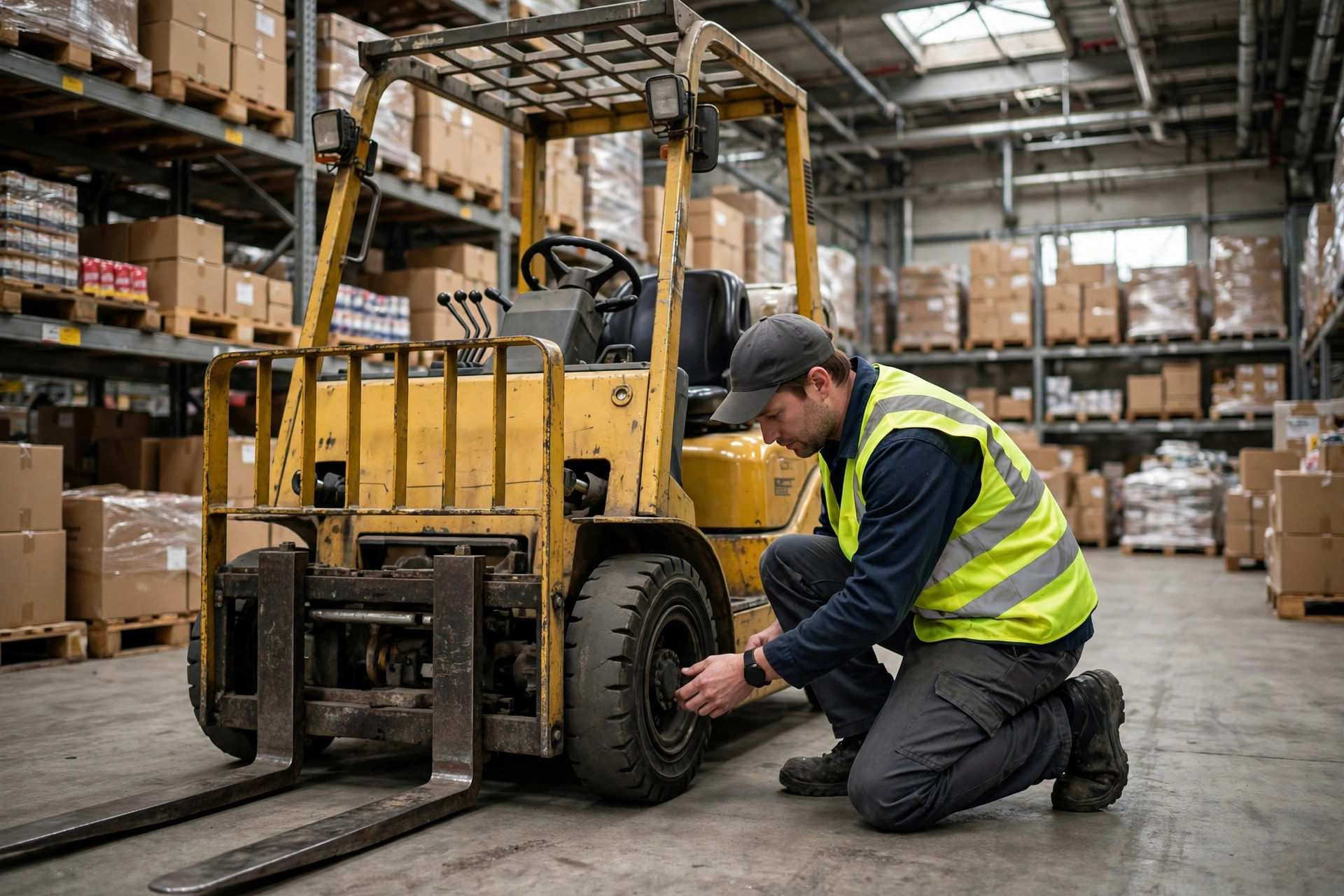
At an American loading dock, there is a hazard with its own name: trailer creep, also called dock walk. A trailer spotted at the dock gets nudged away from the building, inch by inch, by forklifts driving in and out. Note carefully: nobody drives it away — the trailer moves on its own, with no one at the wheel. By the time a forklift driver notices the gap opening between the dock and the trailer floor, the accident is usually one throttle press away. Understanding the mechanism is the first step of loading dock prevention, and preventing trailer creep starts there.
Trailer Creep by the Numbers: What OSHA Says, What the Industry Does
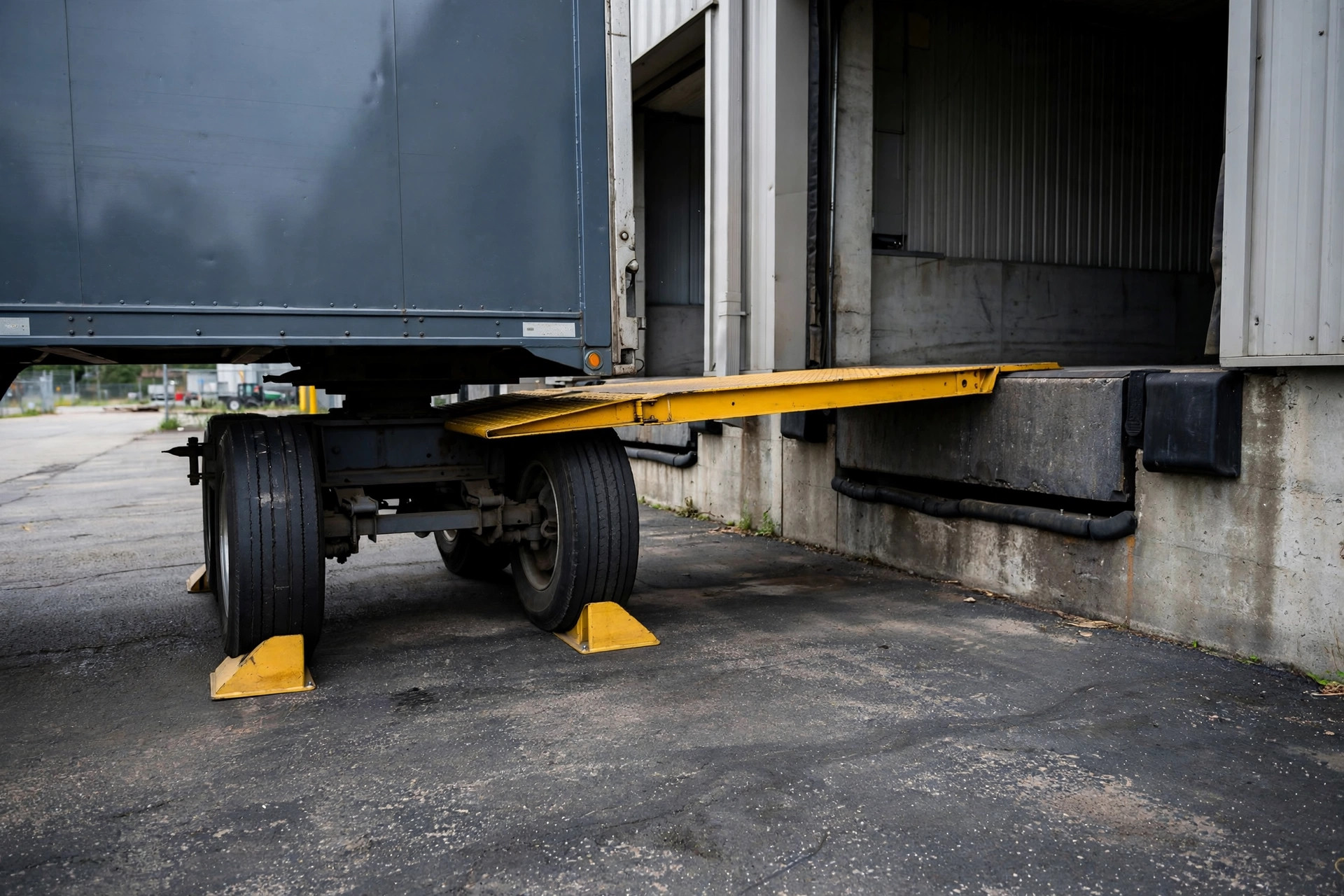
Start with the rules. Under OSHA 29 CFR 1910.178(k)(1), before a forklift boards a highway truck, the vehicle's brakes must be set and wheel chocks placed under the rear wheels. That is the mandatory minimum. The other side of the coin is worth noting: OSHA has no standalone loading dock standard — the requirements are scattered across the powered industrial truck and walking-working surface rules — while OSHA's National Emphasis Program on warehousing and distribution centers is concentrating inspections on powered industrial vehicles, material handling, and walking surfaces. The dock touches all three.
Now look at what the industry is actually buying. According to industry coverage in Material Handling & Logistics, roughly 50% of new dock levelers are sold with a vehicle restraint, and the restraint market has been growing about 14% a year for five years — far faster than levelers themselves. The signal is hard to miss: the regulation asks only for chocks, but the industry is voting with real money, moving from minimum compliance to engineered restraint.
Why? Because chocks cannot stop trailer creep. That is not an opinion. It is physics.
The Mechanism: How a Trailer Gets Pushed Away
Trailer creep needs four conditions, and a busy dock serves them up daily. First, every forklift entry and exit delivers a forward impulse to the trailer — a 5,000-lb forklift plus load carries enough momentum per pass to shift the trailer by millimeters. Second, the trailer's air suspension amplifies the displacement: industry measurements show one inch of body movement translating into six inches or more of misalignment at the trailer's tail. Third, the dock leveler itself is a ramp, and the impact of forklifts climbing it pushes the trailer outward. Fourth, the wheel chock — OSHA's minimum — loses most of its grip on wet, icy, or gravel surfaces, and "who was supposed to place the chocks" is a question drivers and dock workers routinely assume the other party answered.
Three of the four conditions are physics; the fourth is organizational. You cannot change physics. You can change the organization. That is the entire logic of prevention.
Last January, at a food distribution center outside Chicago, minus 12 degrees at dawn. The last trailer of the night shift, chocks sitting on iced-over asphalt. Three forklift passes, and the trailer had silently walked four inches out. On the fourth pass, the forklift's front wheels hit the leveler lip while one end of the plate was already hanging in air — the driver braked hard, the truck stopped, and the pallet's load went everywhere. No injuries. The price was 40 minutes of stopped lines and a full trailer of rework. In the debrief, the chocks were exactly where they'd been placed. It was the trailer that moved.
A deadlier variant: at a 3PL dock, a driver spots the trailer, kills the engine, and walks to the break room for coffee — keys still in the ignition. Dispatch calls the next truck twenty minutes early; the driver returns, sees "why isn't my trailer loaded yet," and pulls away — with a forklift still inside. That's not creep, it's premature departure, but the root cause is identical: nothing physically locks the vehicle to the dock; everything runs on assumption. This time the forklift driver heard the engine and jumped clear. Luck doesn't repeat.
OSHA Requirements: Where the Minimum Line Is
Let's get the OSHA requirements on the table in one place. 29 CFR 1910.178(k)(1): brakes set, wheel chocks under the rear wheels before a forklift boards a highway truck. (k)(3): on an uncoupled trailer, fixed jacks where needed to prevent upending. (m)(7): vehicle securement during loading operations. Note the wording: what OSHA demands is preventing vehicle movement — chocks are the minimum means it names, not the only means, and certainly not a sufficient one.
The Cost of Trailer Creep Prevention: Four Tiers
Prevention spending falls into four tiers, and the math deserves a close look:
| Tier | Measure | Cost per dock door | Prevents |
|---|---|---|---|
| 1 | Proper chocks + checklist | Tens of dollars | Citations, not accidents |
| 2 | Vehicle restraint (RIG hook) | Thousands of dollars | Creep and early pull-away |
| 3 | Light-based communication system | Thousands to tens of thousands | "I thought it was done" misjudgment |
| 4 | Process: driver surrenders keys / lockout-tagout | Near zero | Human error |
Price the ROI against accident cost. A single dock fall-through — equipment repair, workers' comp, OSHA penalties, stopped lines — easily reaches six figures (check actual cases and OSHA published penalty records for your benchmark). A Tier 2 restraint at $5,000 over a 10-year life costs $500 a year. If it stops one accident in a decade, the ROI is measured in dozens of times. Safety math works like this: not "what did we spend," but "what would not spending have cost."
The counterintuitive finding: the cheapest tier is the least reliable link in the chain — it requires a human to do the right thing every single time, and humans forget, tire, and point fingers. Compliance is not safety. OSHA's minimum is the line for "not getting fined," not the line for "not getting hurt."
Trend: From Human Vigilance to Engineered Control
Connect the lines: 14% annual market growth for restraints, 50% fitment on new levelers, OSHA inspection pressure moving toward the dock, and rising intermodal trailer share complicating RIG engagement. The evidence supports one forecast: within five years, vehicle restraints go from option to standard equipment — the way backup cameras went from luxury to mandate. Warehouses that install now buy a $5,000 device; warehouses that install later may pay a $100,000 tuition. Timelines don't wait.
An open question to close: which tier is your dock running on today? If the answer is Tier 1 — which arrives first, the next OSHA inspection or the next accident?
By Dr. Chen, Supply Chain Researcher