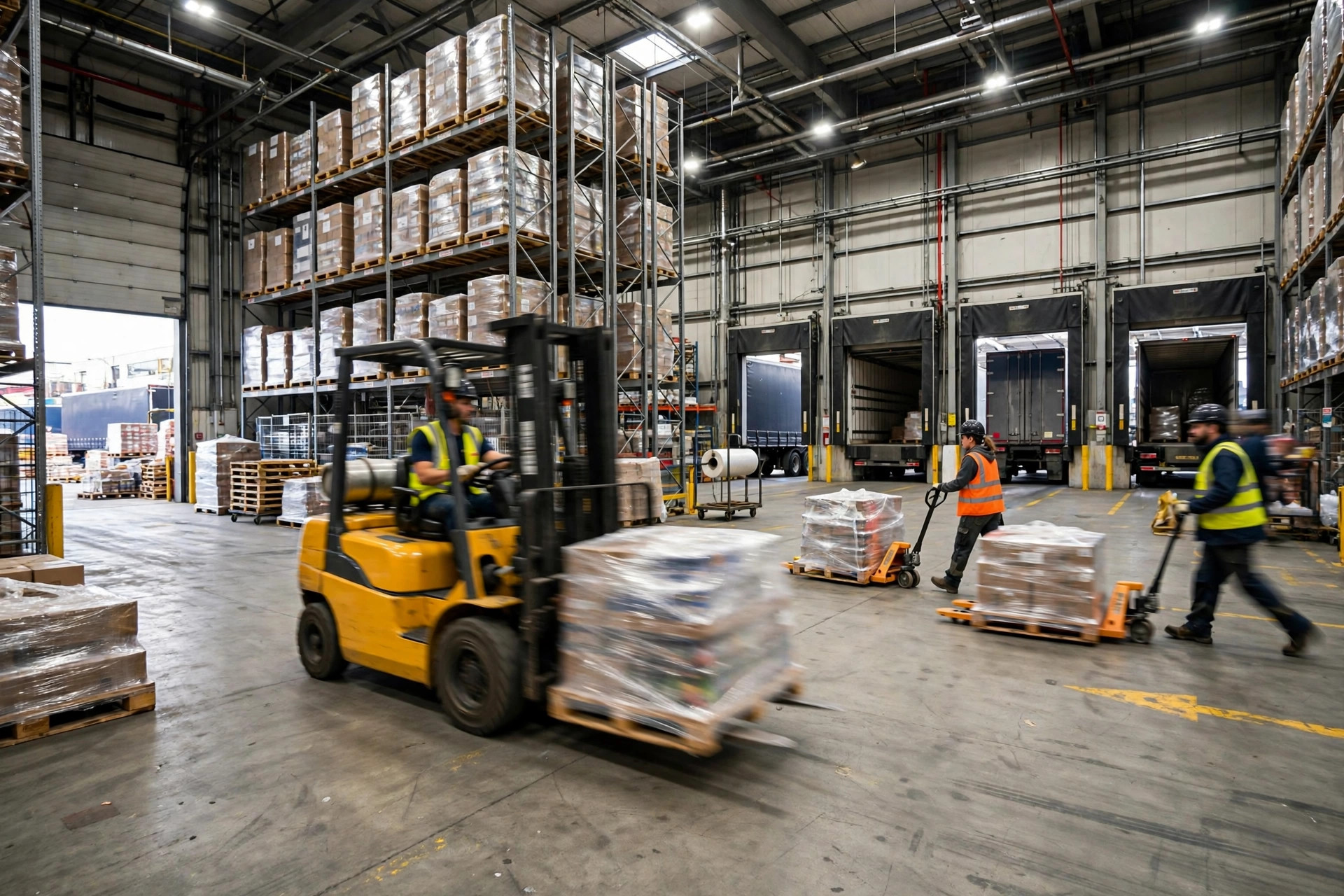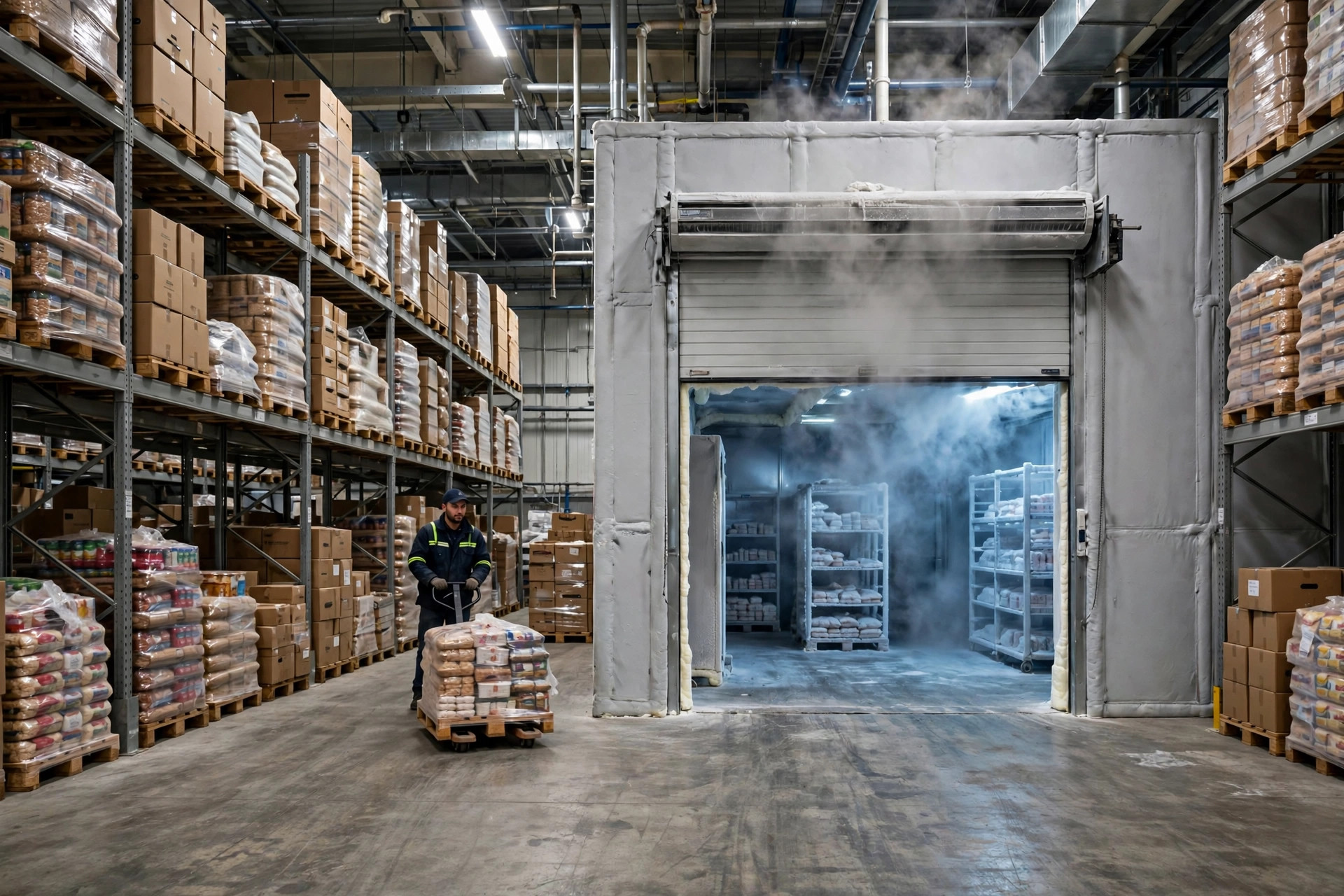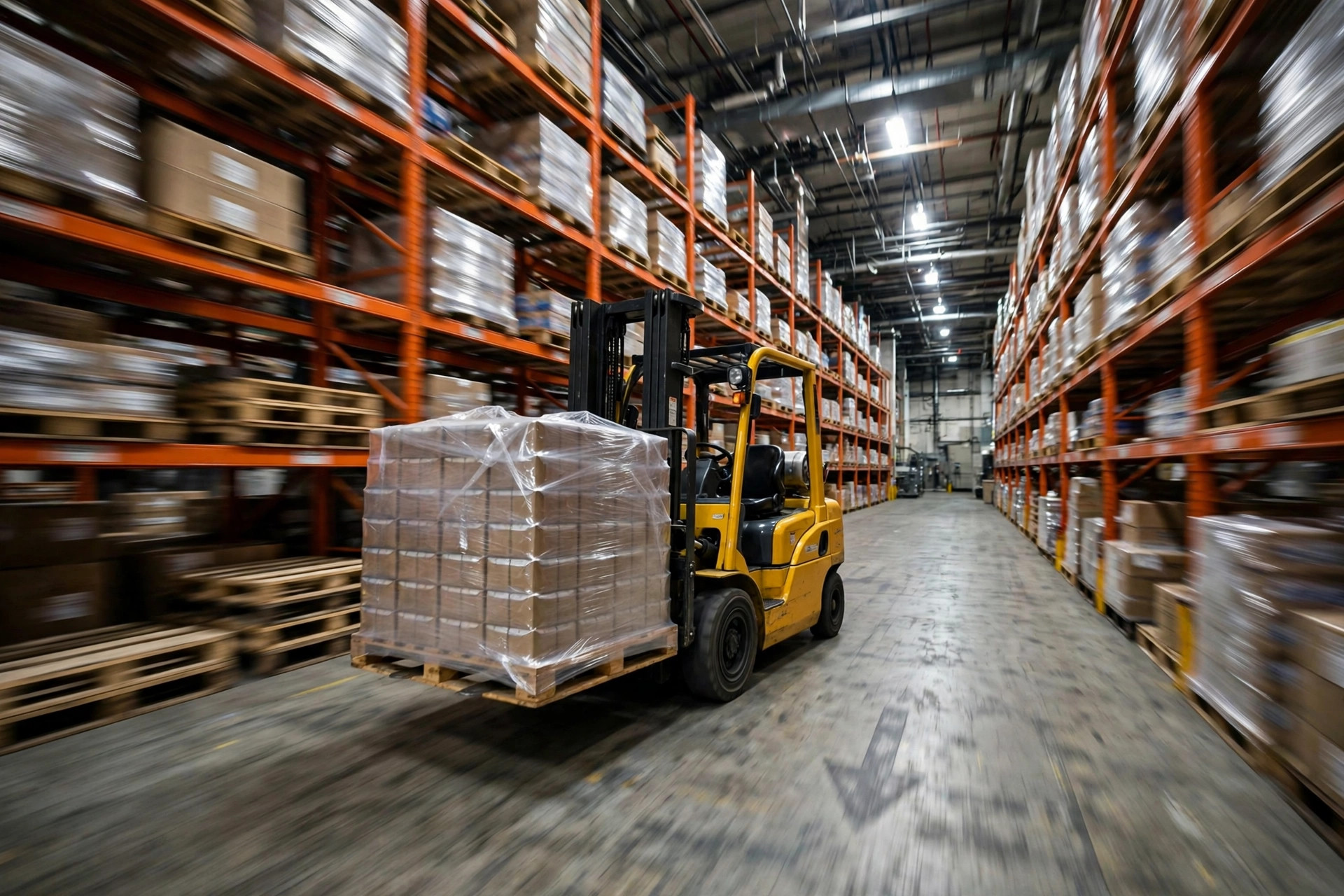
Let me tell you something. After fifteen years driving trucks, I've noticed forklifts inside warehouses and trucks on the highway suffer from the same disease: running empty. Last month I delivered 26 pallets of household goods to a 3PL warehouse in Ontario. I arrived at 7 a.m. and didn't get a dock door until 9:30. Why so slow? Three receiving doors, and every pallet had to ride a forklift all the way to the far west end of the building — six or seven minutes round trip. Smoking a cigarette outside with the receiving guy, I asked where the fast-moving SKUs lived. "West end," he said. "Boss says there's more room out west." The receiving dock is on the east side. I laughed: that's like taking a load bound for Los Angeles and detouring through Barstow first. Who pays for the diesel?
Putaway Comes Down to Three Sentences
First, one touch from dock to slot. Receiving to staging to slot, one straight line, no doubling back. The killer is unloading everything at the door, piling it up, and handling it a second time when the pile gets in the way. We truckers call it re-handling a trailer; in the warehouse it's double-handling. Every double touch costs you one labor pass plus one forklift pass — you pay twice for the same pallet.
Second, fast movers live closest to receiving. Forget the textbook term "ABC slotting." Plain talk: whichever SKU ships the most pallets lives nearest the dock. Best sellers get the prime real estate by the door; slow movers go to the back forty. You don't need software for this — pull three months of outbound orders, count pallets per SKU, sort the list. Done.
Third, never come back empty. The forklift goes out loaded for putaway; on the way back it should carry something — empty pallets, product pulled for outbound, packing waste. Any long-haul driver knows: an empty backhaul burns money for nothing. Same logic inside four walls. One loaded leg out, one useful leg back — that's a trip that earns its keep.
One spot most people never think about: where the staging area sits. Staging is the waist of the whole route — put it in the wrong place and both legs get longer. I've seen a warehouse tuck staging into the far back corner because "the front needs to stay clear for outbound." Every inbound pallet traveled 150 meters just to reach staging, then traveled back out for putaway — double the wasted miles. The right way: staging hugs the receiving dock, not too far from the fast-mover zone either, sitting in the middle like a transfer station. Get the location right and every pallet automatically saves dozens of meters; multiply by hundreds of pallets a day and the number gets scary.
Standing outside that Ontario warehouse, the supervisor and I ran the numbers on a napkin. One pallet from receiving to its slot: 200 meters one way. Move the fast movers to slots 80 meters from the dock and you save 120 meters per leg, 240 meters round trip. In peak season they put away 300 pallets a day — that's 72 kilometers of forklift travel eliminated daily. Forklifts inside a building run maybe 8 kilometers an hour (don't argue they can go faster — indoor speed limits, safety first), so 72 kilometers is nine hours. That's a full forklift driver on payroll doing nothing but joyriding. Twenty-two working days a month, 198 hours; at going California forklift-driver wages in the low twenties per hour, that's over four thousand dollars a month — more than fifty thousand a year — ground into dust under the tires. The distances and pallet counts are our field estimates, the wage is the going California market rate; measure it yourself with a tape, but the big number won't be far off.
Here's the part most people never calculate: the return leg. A forklift runs out loaded and comes back empty — half the trip is pure cost. My suggestion was a "return-trip task list": every run back from the storage area must bring something — empties, pulled returns, leftover packing material. Three hundred putaway pallets a day means three hundred empty pallets riding back to staging for free, eliminating the dedicated empty-pallet runs entirely. Work on the way out, work on the way back: one trip's cost, two trips' output. That's how you make the miles count.
Too Close Together Creates Its Own Traffic Jam
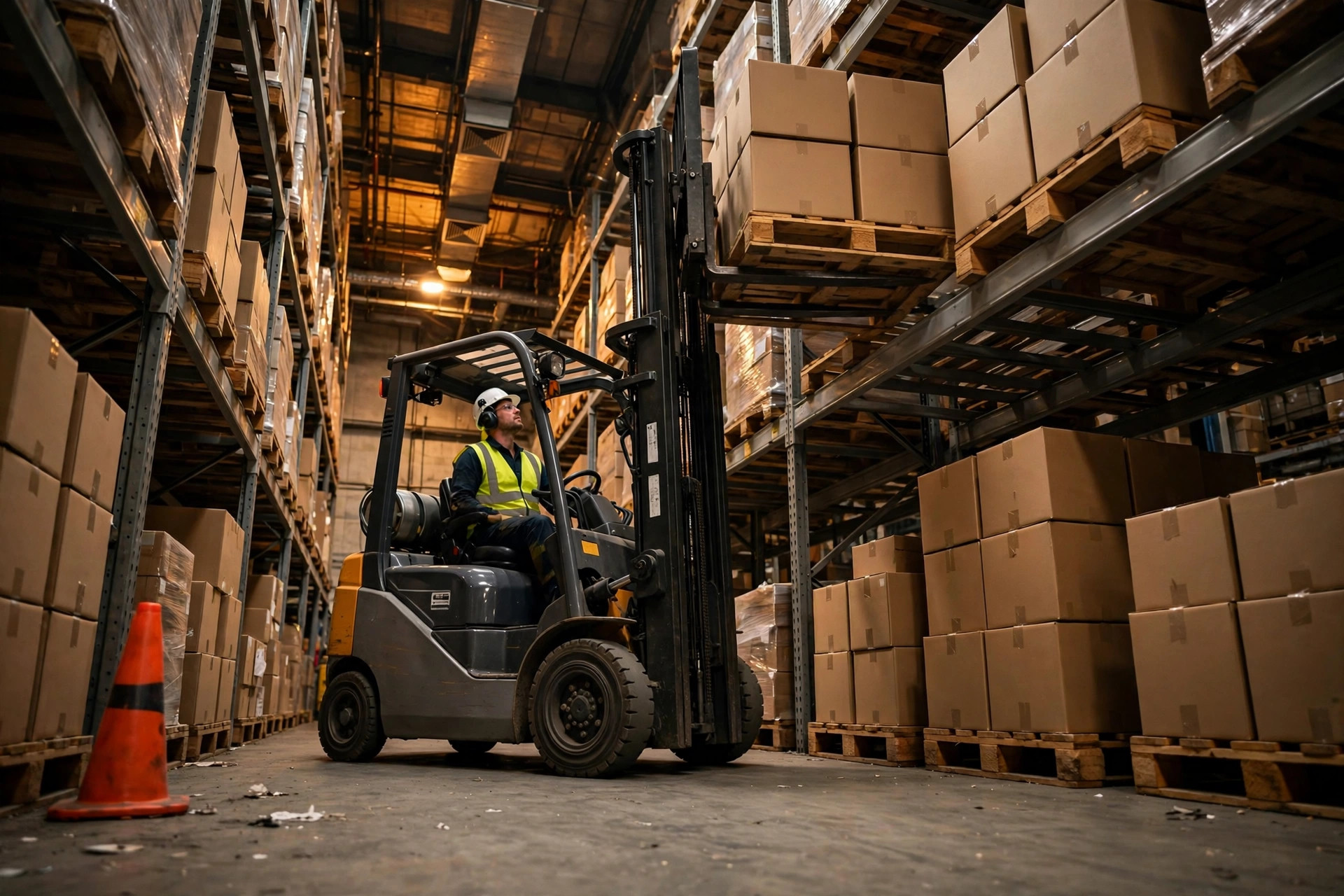
Now, "fast movers near the dock" is only half right. A small pet-supply warehouse in Rancho Cucamonga — thirty-some thousand square feet — heard this advice and crammed its top 20 SKUs into the two aisles nearest receiving. Come peak season, three forklifts spent all day in a traffic jam in those two aisles, waiting on each other, slower than before the move. They fixed it by spreading the fast movers across four aisles — near and near-ish slots mixed — and the congestion vanished.
What does that tell you? Close is good; crammed together is bad. Like highway exits: the more exits you cluster, the faster the frontage road gridlocks. Fast movers should live near the dock but spread across several aisles, so forklifts don't all fight over the same intersection. That's the trade-off: shorter travel distance versus higher congestion risk. Find the balance point.
Route design also has a time dimension most people miss: stagger the receiving peak and the putaway peak. Plenty of warehouses get all their inbound between 8 and 10 a.m. — unloading, putaway forklifts, and outbound forklifts all fighting over the same main lane. A warehouse I know moved putaway to after 10:30: inbound gets staged and stacked in the morning while the crew focuses on unloading and shipping, then putaway runs in a dedicated window. Not one meter of travel path changed, and throughput went up. Same road, different timing — no traffic jam, just like rush hour.
A Three-Step Playbook for Owners and Warehouses
No software to buy, no consultants to hire. A sheet of paper will do.
Step one, draw the travel map. Sketch the receiving dock, staging area, aisles, and slots, and label every route with its distance. Plenty of owners have run a warehouse for five years and never drawn this map — all the wasted miles hide inside "that's just how we've always done it."
Step two, pull the velocity ranking. Last three months: which SKU shipped how many pallets, sorted. A pivot table in a spreadsheet, ten minutes of work.
Step three, match slots and load the return trip. Fast movers get near-dock slots spread across multiple aisles; give every forklift driver a return-trip task list — empties, pulled product, waste, anything. Coming back empty counts as a violation.
One last freebie: where the charging station sits. Electric forklifts are the mainstream now, and batteries rarely last a full shift. I've seen a warehouse put its charging area at the far end of the building — a forklift low on juice had to drive three or four minutes each way to charge, ten minutes gone per session, twice a day, twenty minutes down the drain. The right way: charging hugs the middle of the main travel lane, a quick turn off the driver's normal route, never a dedicated trip. Every long-haul driver knows: you fuel up at the exit that's already on your route; rookies are the ones who detour for diesel. Same inside four walls.
In fifteen years I've delivered to a hundred warehouses, give or take. You can feel a good layout standing at the receiving dock: forklifts run straight lines, no circling, no bunching, drivers don't look stressed. A bad one has forklifts wandering the floor like lost tourists. People who sweat the small math don't take the big losses — every meter the forklift doesn't run is profit.
By Shifu Zhao, Trucking Veteran (15 yrs)