Here's my verdict up front: the question of cross docking vs traditional warehousing — when to use which — has almost nothing to do with your freight and almost everything to do with your information. Cross-dock works only if your information flow can tell you, 48 hours ahead: what's arriving, when it lands, when it leaves, and who's picking it up. I've watched too many companies treat cross-docking as a shortcut to kill warehouse rent, then hand every dollar of savings to demurrage and detention — plus penalties on top.
Fall of 2018. A personal-care importer in LA came to me wanting to cross-dock everything coming through Long Beach, shipping direct to 40-plus distributors nationwide. The math on the whiteboard looked great: freight comes off the container, gets sorted onto outbound trucks, zero warehousing cost, product never sits in the building for a day. In plain terms, they wanted to delete a six-figure warehouse lease.
I asked three questions: Are your suppliers' ASNs accurate? Can you lock the arrival windows? Can you get 40-plus distributors' pickups into an appointment system? He couldn't answer any of them. "Should be fine," he said.
The first month blew up. A vessel slipped three days, and when the freight finally landed, half the distributors hadn't booked pickup slots. The paperwork didn't match, forklift drivers didn't know which pallet went on which truck, and product sat on the dock for three full days. Port demurrage ticks by the day, carrier detention by the hour — by month's end they'd spent well more than a plain warehouse lease would have cost. The client's words, not mine: "Lao Mi, this isn't cross-docking, it's cross-chaos."
Two sides to this story. Cross-docking wasn't the mistake. The mistake was running cross-dock on a traditional warehouse's information diet. Traditional warehousing is forgiving: freight arrives early, it sits on a rack and waits; the truck is late, the freight sits in the building and waits. Cross-docking deletes both of those waits. What it deletes is buffer, and what's left is absolute dependence on timing.
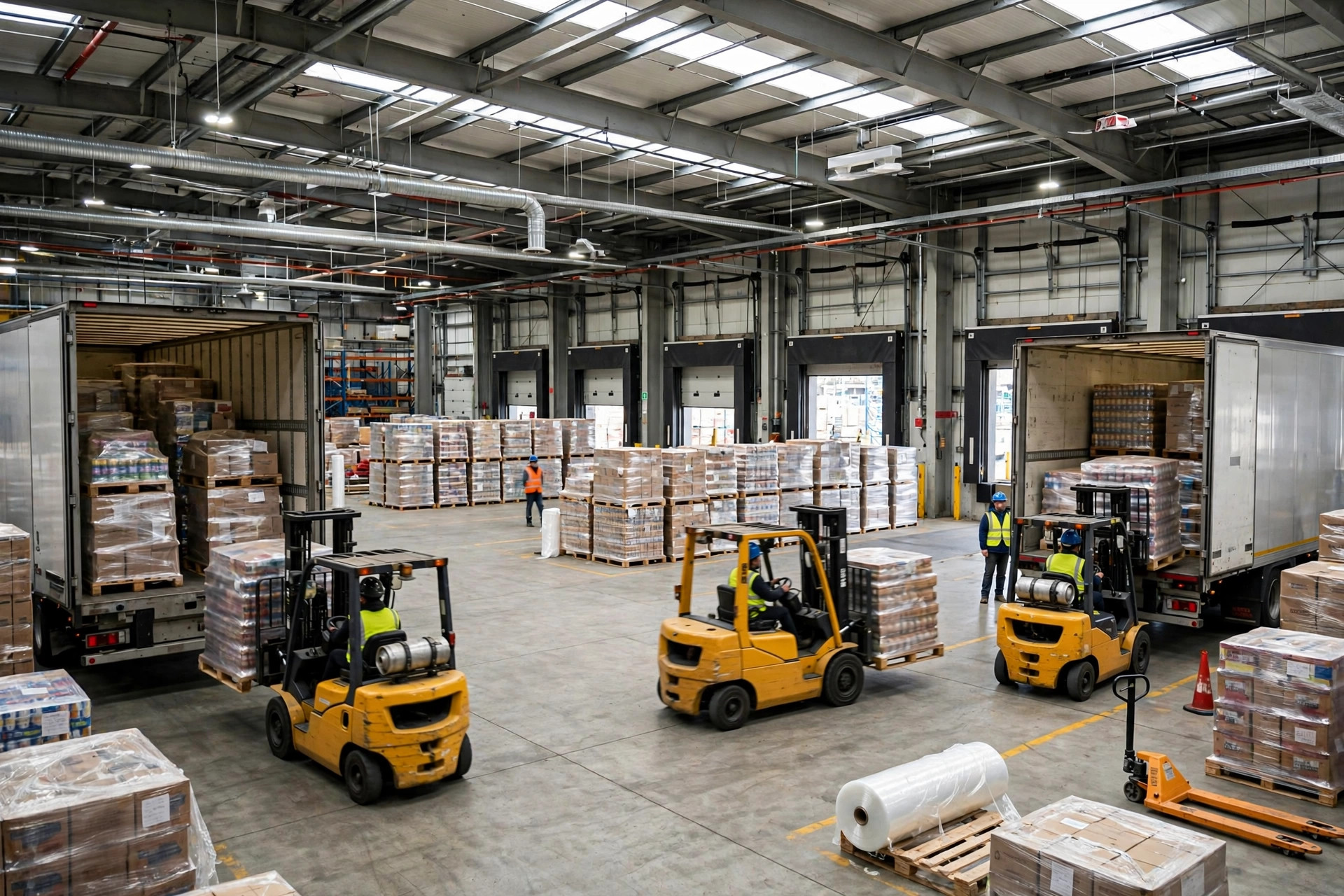
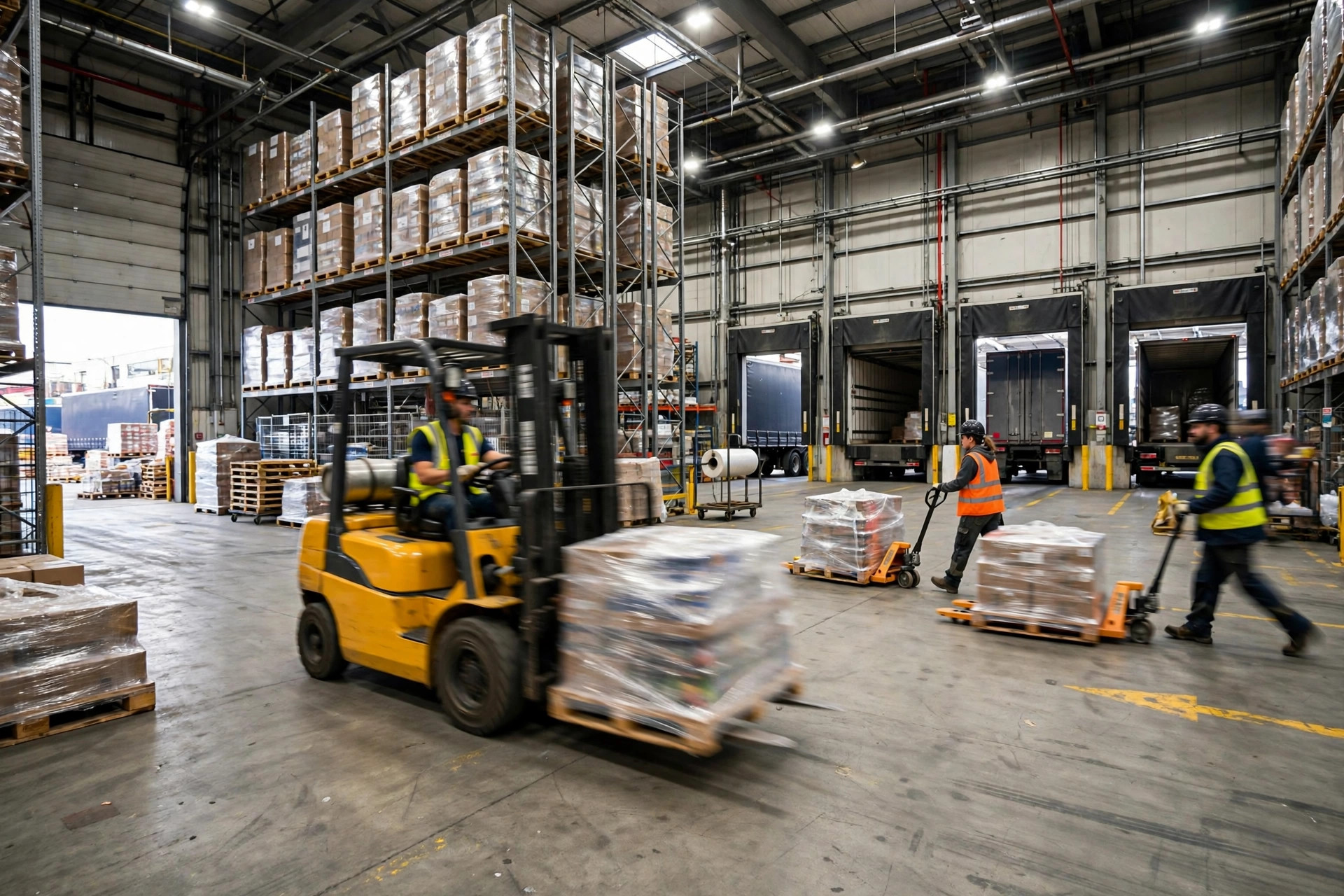
Flip side: in 2021 I set up a cross-dock lane in Ontario for a seasonal gifts retailer, and it ran like a metronome. The freight profile was almost boring: two promo seasons a year, under 80 SKUs, full pallets in and full pallets out, 40 minutes from the port, arrivals pinned to the hour. Suppliers sent ASNs a week out, barcodes went on at the factory — the only job at the dock was scan, sort, load. Average dwell under six hours, 120 pallets a day at peak, near-zero storage cost, and a mis-ship rate actually lower than a traditional warehouse. When freight never touches a rack, it can't get put away in the wrong slot.
See the pattern? Whether cross-dock works never comes down to how fast your forklifts drive. It comes down to whether your information arrived first.
My verdict: four kinds of freight that should never touch cross-dock
First, high-SKU freight that needs broken-case picking. A cross-dock floor has no pick faces — the moment you start breaking cases, it turns into a mess, slower than a real pick module in a traditional building.
Second, anything needing value-added work. Labeling, repacking, QC, kitting — there's no place on a dock apron to do it properly. Forcing it means turning your drive aisle into a workshop.
Third, freight with drifting arrival times. If vessel schedules and customs clearance are a coin flip, your dock windows collapse — freight waiting on the floor, trucks waiting at the gate, money burning on both ends.
Fourth, volatile demand. Last-minute adds and cuts are routine in some businesses, and every one of them torpedoes a cross-dock plan you already staffed and scheduled. A traditional warehouse at least has inventory to absorb the shock.
One decision matrix: product traits × supply chain traits
| Dimension | Leans cross-dock | Leans traditional warehousing |
|---|---|---|
| Outbound unit | Full pallet / full case | Broken case / eaches picking |
| SKU count | Few, in the hundreds | Many, in the thousands |
| Demand predictability | Fixed replenishment, clear promo calendar | Volatile, lots of rush orders |
| Processing needs | No labeling or QC | Labeling, repack, QC required |
| Arrival reliability | Accurate ASNs, controllable windows | Drifting ETAs, opaque information |
| Inventory strategy | Fast turn, near-zero stock goal | Safety stock, slow movers |
| Systems | WMS, TMS, appointments connected | Coordinated by phone and chat |
How to use it: if five or more of the seven lean left, cross-dock is worth a serious look. If three or more lean right, stick with traditional warehousing. Stuck in the middle? Pilot one product line — never cut over everything at once.
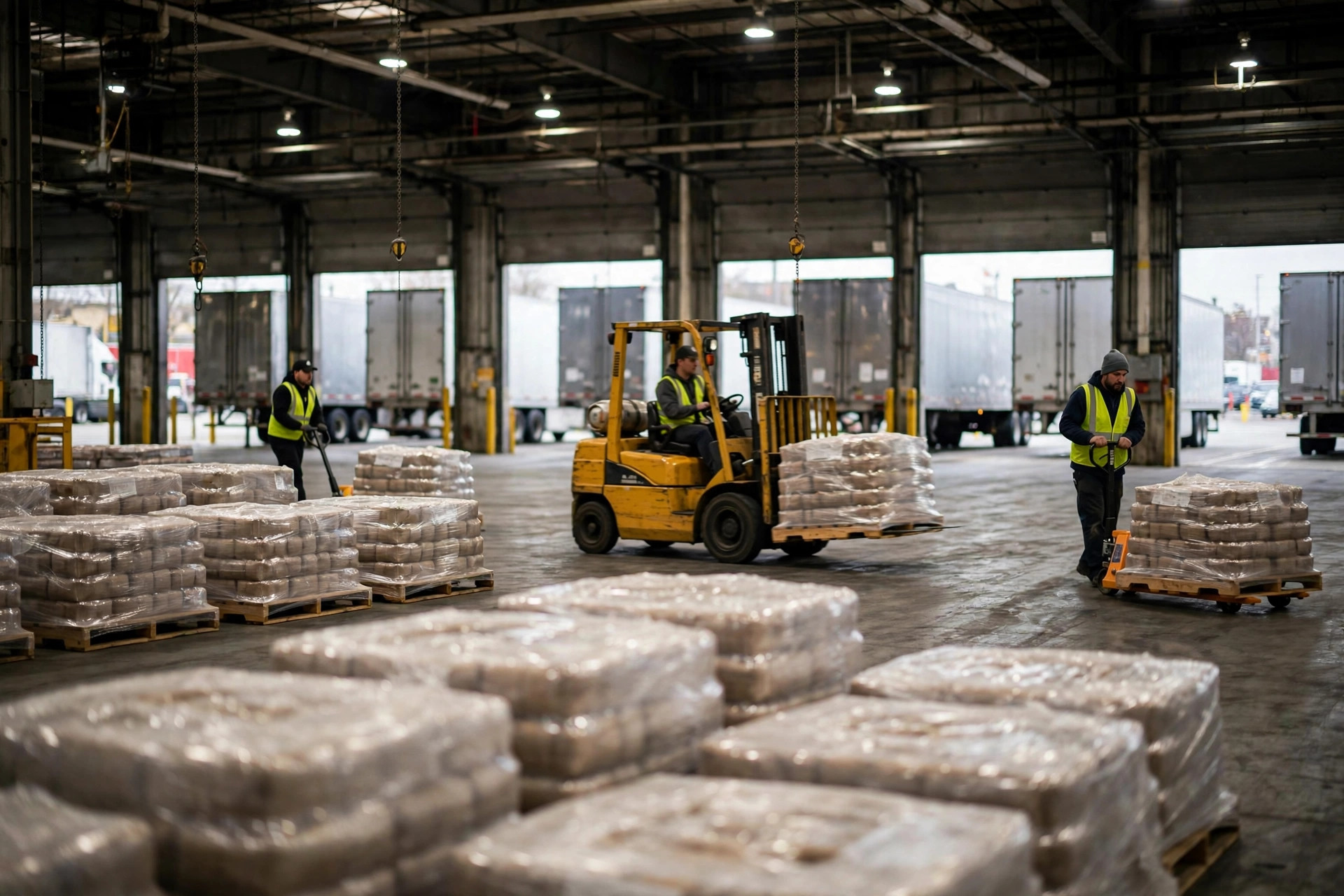
Do the math: what cross-dock saves, and what it spends
Costs first, benefits second — that's my habit.
Cross-dock kills three line items: warehouse rent, putaway and replenishment labor, and the carrying cost of inventory sitting on shelves. On a lane that runs well, per-pallet operating cost lands roughly 30 to 50 percent below a traditional warehouse. That's not a guess — it's the range I've seen hold up across projects I've worked on.
But cross-dock spends a different budget: dedicated coordination headcount, appointment and visibility systems, and penalty exposure when a time window slips. The priciest item is error tolerance. In a traditional warehouse, one broken link means freight waits on a rack — the damage is contained. In cross-dock, one broken link freezes the whole chain and your dock becomes a parking lot. I've seen lanes with weak information flow where exception-handling costs ate every dollar of savings and then some.
So the real formula is: warehouse rent saved, minus new coordination cost and risk cost, equals what you actually keep. If you can't price the second half, don't touch it.
The counter-intuitive part: you're not betting the warehouse, you're betting the information flow
Most people frame this as a warehousing-mode choice. It's really an information-capability choice. Traditional warehousing trades space for time: when uncertainty shows up, you absorb it with inventory and rack positions. Cross-dock does the reverse — it trades time for space, pushing inventory toward zero, and the price is that every link must be on time.
Put plainly: cross-docking saves warehouse rent and gambles on information flow. If the information can't keep up, cross-dock is just cross-chaos. Inaccurate ASNs, no appointment system, suppliers and carriers each telling a different story — running cross-dock on that foundation is driving fast with your eyes closed.
So stop asking "is my freight right for cross-dock" and ask three questions instead: Are my ASNs accurate? Can I hold my time windows? Can the inbound driver and the outbound driver see the same freight on the same screen? Three yeses — let's talk cross-dock. One no — keep paying rent. Warehouse rent has a published price list. Chaos doesn't.
By Lao Mi, Supply Chain Veteran (20 yrs)