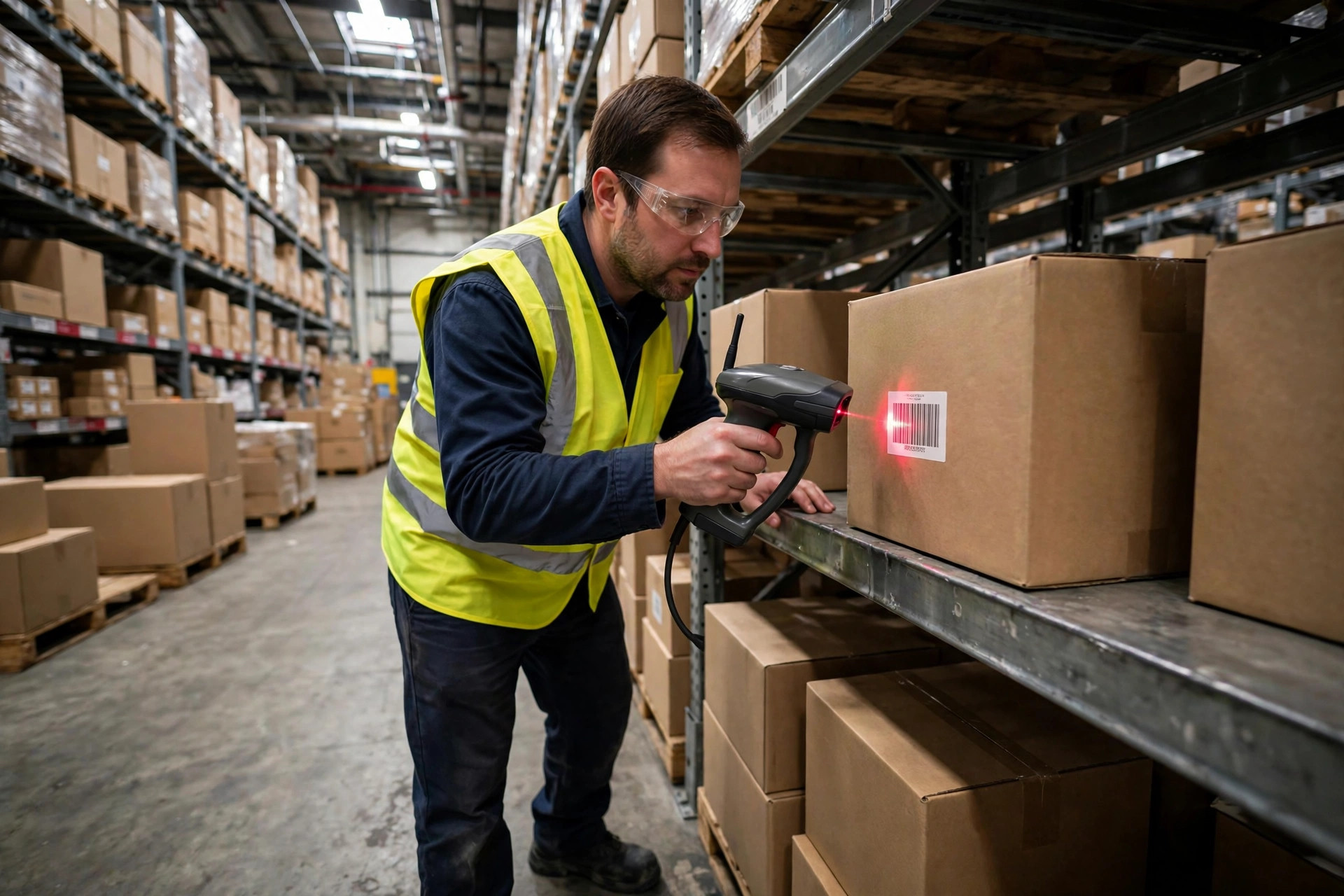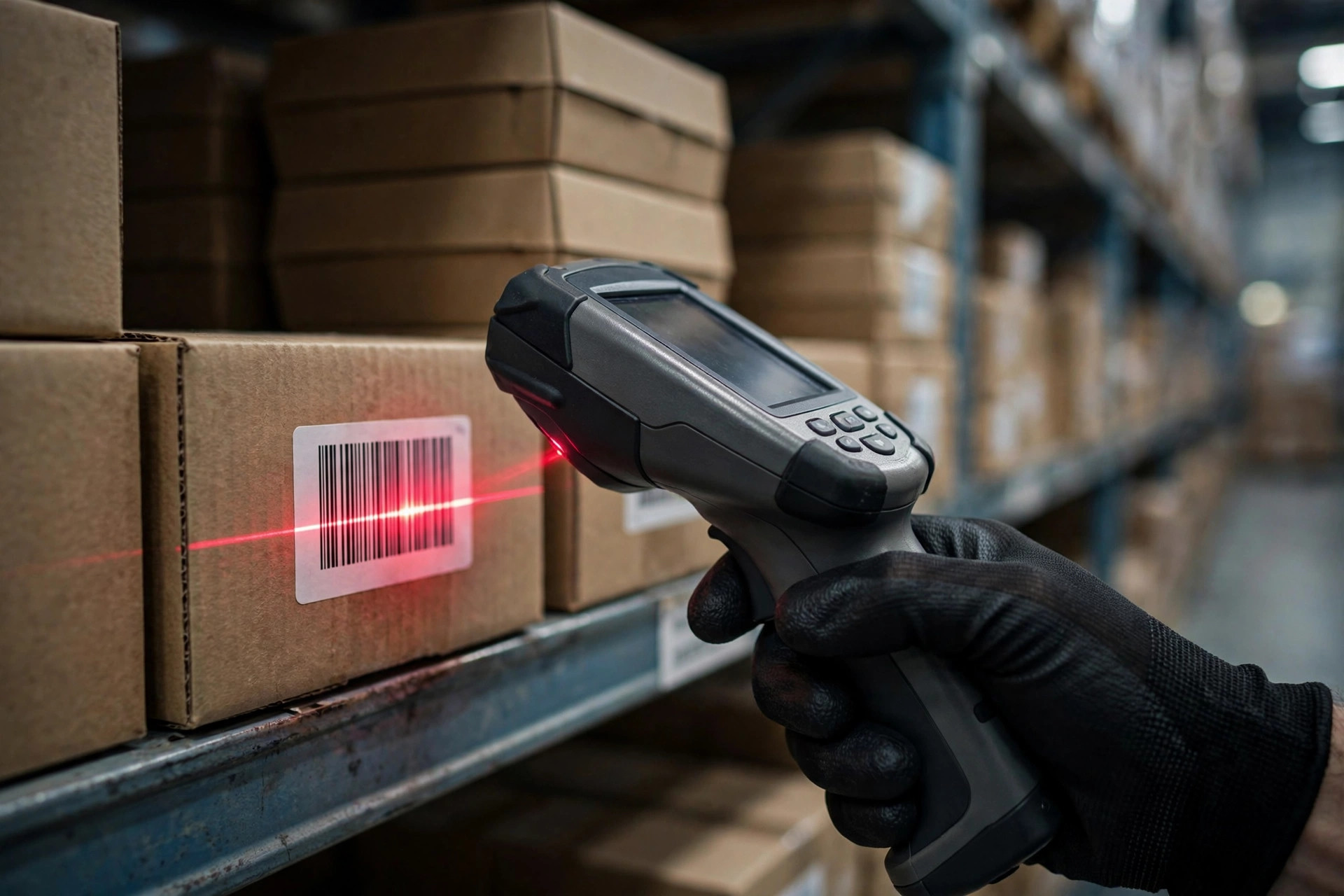
Think of a picking PDA as a picker's sidearm. On a quiet day, any device feels fine. Then peak season hits — three thousand scans a day — and every freeze, every dead battery, every cracked screen from a drop is downtime billed by the minute. Forget the launch-event spec sheet. Here are five field-tested criteria that decide whether a picking PDA survives your warehouse floor.
First, the principle. Crack one open and you'll find three things: eyes (the scan engine), a heart (battery and power management), and a skeleton (ruggedness and ergonomics). Everything below maps to one of those three. Get the principle right, and selection becomes a matter of drawing the right dividing lines. Get those right, and all that's left are the maintenance traps.
Criterion 1: The Scan Engine — the Eyes of Your Picking PDA
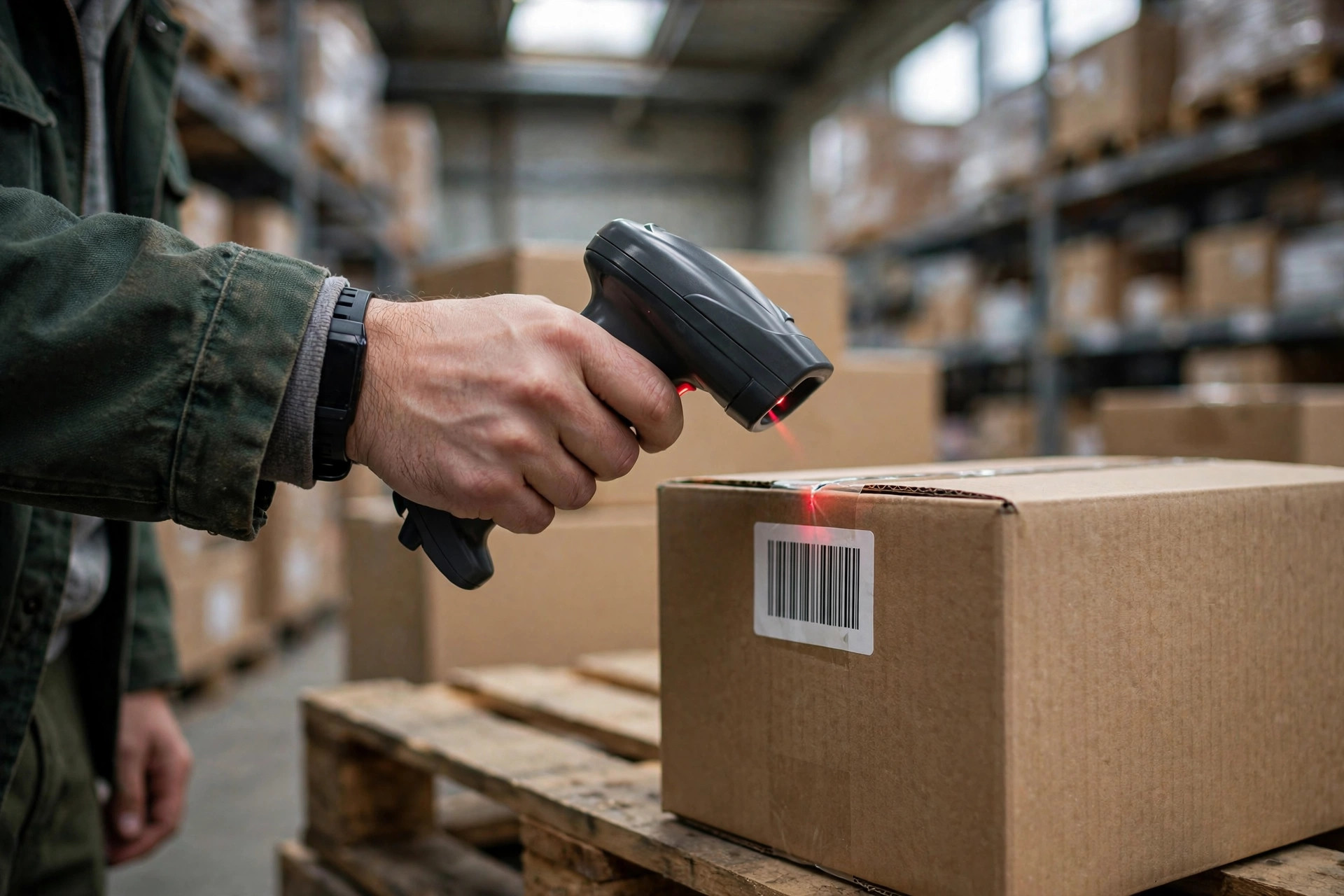
A scan engine is like eyesight: hand a nearsighted person a telescope and they'll struggle with anything up close. Four mainstream options, compared straight:
| Engine type | How it works | Reads | Range | Damaged labels | Cost | Verdict |
|---|---|---|---|---|---|---|
| Laser (1D) | Oscillating laser line | 1D barcodes | Near–mid | Weak | Low | Fine if all labels are clean 1D |
| Linear imager (1D) | Photo + decode | 1D barcodes | Near | Medium | Low–mid | Tougher successor to laser |
| 2D area imager | Array photo + decode | 1D / 2D / phone screens | Near–mid | Strong | Mid | Today's mainstream; any 2D codes → start here |
| Long-range 2D | Telephoto imager | 1D / 2D | Far (meters and up) | Medium | High | Built for high-bay counts, not picking |
The dividing line is exactly one: match the engine to your barcodes, not to the price tag. Clean 1D labels everywhere? A linear imager is plenty — anything more is money burned. But the moment you have QR codes, DPM laser-etched marks, or supplier labels with a high damage rate, go straight to a 2D area imager. Its damaged-label read rate is in a different league, and during peak week that gap saves shifts.
Rant time: "longer scan range is always better" is one of the biggest pseudo-specs in picking. Over 90% of picking scans happen at 30–80 cm — your arm's length. Paying two to three times more for an engine that reads at 15 meters, then getting slower close-range focus as a bonus, is paying extra to be annoyed. Long-range engines are built for high-bay inventory counts, not for pickers. The most expensive scan engine is not necessarily the right one for your barcodes.
Criterion 2: Battery Life — Match the Shift Pattern, Not the Milliamp-Hours
Battery life is a simple equation: capacity divided by actual draw. The mAh on the brochure is only the numerator. The denominator — real-world draw — has three big contributors: the screen (full brightness is the hungriest), Wi-Fi (always on, plus constant roaming), and the scan engine firing thousands of times a day.
The dividing line: one shift or round-the-clock? Single 8-hour shift with a lunch break to top up — a unit rated 8–10 hours will do. Two or three shifts running nonstop — you need hot-swappable batteries with cradle rotation, or two packs per operator. No third option exists.
Second rant: "a 5,000 mAh battery means all-day power" is a textbook pseudo-spec. Full brightness, always-on Wi-Fi, three thousand scans — that pack still dies before clock-out. Ignore milliamp-hours; demand measured runtime under your workload, or reference numbers from the vendor's customers in similar operations. If they can't produce one, don't believe the claim.
An auto-parts DC learned this in 2023: PDAs advertised at 12-hour battery life were dead fleet-wide by 3 PM under full brightness and always-on Wi-Fi. Operators queued for chargers while the line sat idle 40 minutes. The fix was hot-swap batteries, two packs per operator on rotation. Remember: a replaceable battery matters more than battery capacity — lithium packs typically degrade below 80% health after about 18 months, and on a sealed-battery device the battery sets the lifespan of the whole unit.
Criterion 3: Ruggedness and Drop Tests — the Survival Gear of a Picking PDA
IP ratings, decoded: IP65 is dust-tight plus low-pressure water jets; IP67 is dust-tight plus short-term immersion. Note the "7" means 30 minutes underwater — it says nothing about surviving a drop. Water resistance and drop resistance are different sports.
The counterintuitive call: IP67 is not automatically better than IP65 for a warehouse. There are no swimming pools on the warehouse floor. The real killers are dust, forklift-kicked grit, and drops off a pick cart from over a meter. IP67 sealing usually means thicker, heavier, worse heat dissipation, and a higher price. Paying about 30% more for immersion protection against a scenario that never happens in your building is bad math — unless you pressure-wash a cold-chain floor daily, in which case carry on.
Same for drop tests: read the test method, not the meter number. "1.5 m onto concrete per MIL-STD-810G, six sides, multiple cycles" versus "1.8 m onto wood flooring, once" are completely different claims. Demand the test report and check three things: height, surface, cycle count. Missing any one of the three, and the number is marketing.
In 2024, a 3PL e-commerce fulfillment center moved 200 units to rugged PDAs with 2D imagers before peak. Scan failures fell from about 3% to under 0.5%. Their old consumer devices in silicone cases broke at 17 units a month; after the switch, 2 units in three months. The spare pool shrank from 30 devices to 8 — and every spare in a cabinet is depreciation plus tied-up capital.
Criterion 4: Ergonomics and Takt Time — Save Seconds, Earn Hours
Picking is a repetitive motion done thousands of times daily. Eighty extra grams becomes 200-plus kilos of cumulative lifting by shift end; a 0.3-second slower response quietly deletes 15 minutes a day. Like running shoes: unnoticeable on a stroll, decisive at mile 20 of a marathon.
Dividing lines: single-hand grip under about 300 g; keys with positive tactile feedback, blind-pressable with gloves; trigger-to-decode should feel instant — perceptible lag means reject. And don't just fondle the demo: have a picker run 200 consecutive scans. Aching thumb web or a numb pinky, and the hand has voted.
The math: 1.2 seconds saved per pick × 2,000 picks a day = 40 minutes freed. Over 22 working days that's about 15 hours a month — nearly two extra shifts of productivity from thin air. Ergonomics isn't a soft "comfort" word. It's takt time, and takt time is money.
Criterion 5: Connectivity and Manageability — Don't Buy an Island
A PDA isn't a standalone gadget; it's the hands and eyes of your WMS. Wi-Fi roaming decides whether an operator crossing access zones drops the session mid-transaction. Mandatory acceptance test: walk the floor scanning continuously across at least three APs. One forced re-login is a fail.
Then two long-term questions, asked before purchase and written into the contract. First: how many years will you sell this model, and guarantee batteries, cradles, and scan-head parts? Niche brands kill parts after three years, and a working device you can't repair is prematurely dead. Second: past about 50 units you need mobile device management (MDM) — configuring Wi-Fi and pushing apps one device at a time will break your IT team. Price that management cost into the selection.
The Maintenance Traps: Purchase Day Is Only Halftime
- Fogged scan windows. Dust plus static coats the window; read rates decay slowly. Most assume the device is aging — then a lint-free wipe restores full health. Weekly wipe, in the SOP.
- Oxidized charging contacts. A year on contact cradles brings charge failures. A pencil eraser buys time; gold-plated contacts or wireless charging fix it properly.
- Swollen batteries. Summer heat near 40°C swells lithium packs until they pop the cover. Swollen means immediate retirement — a safety line, no debate.
- Major OS upgrades. An Android version bump can break legacy apps. Pilot every upgrade on 2 units for a week before fleet rollout.
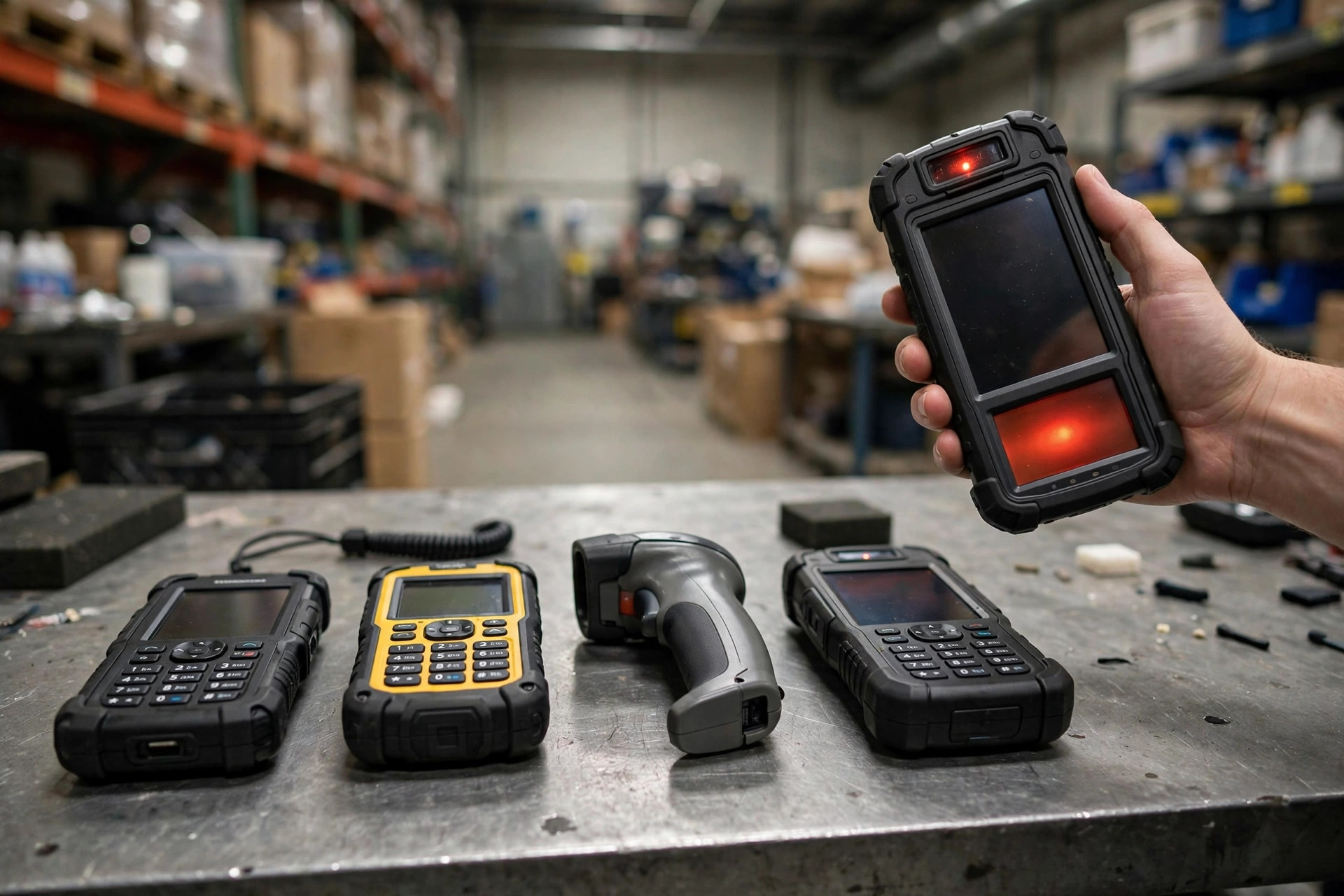
Whether the money was worth it comes down to one number: how many minutes of downtime it cost you over three years. Multiply by your pickers' hourly rate, compare against the price gap between the two devices, and the answer speaks for itself. The unit that's a thousand bucks cheaper but costs ten extra downtime hours a year is the expensive one.
By Da Liu, Automation Engineer