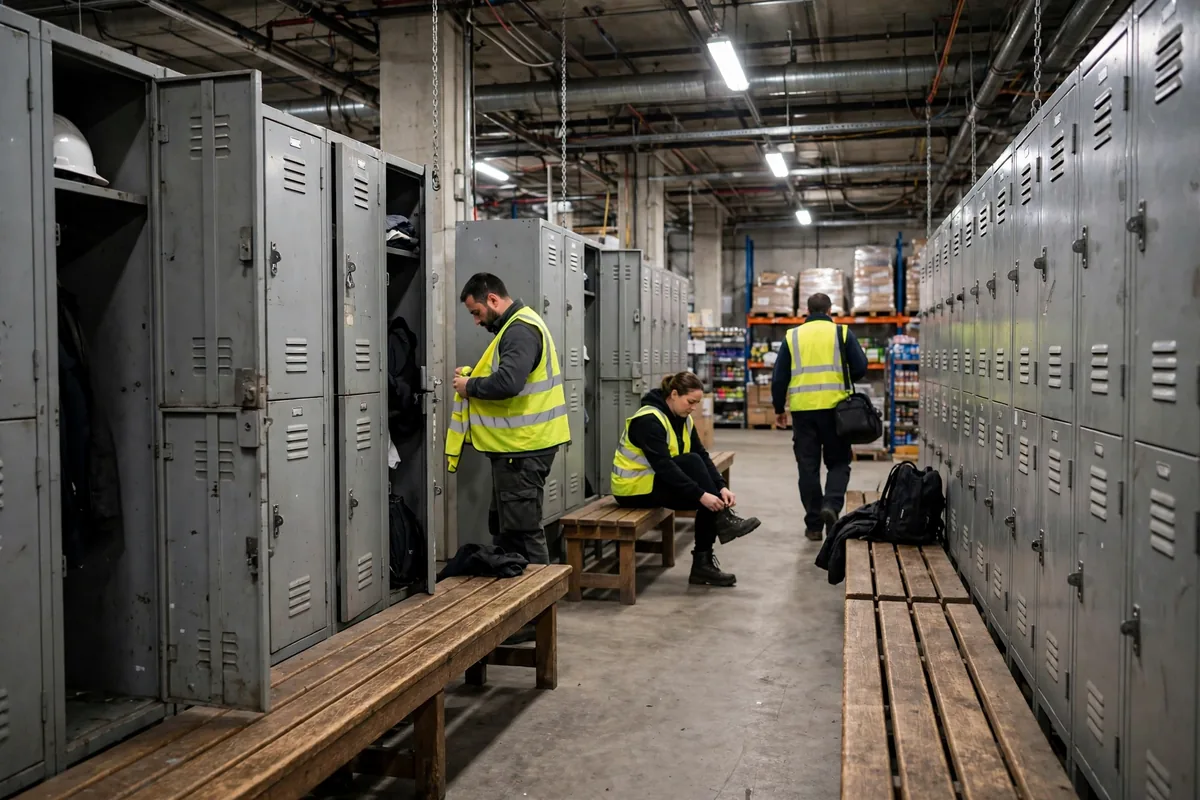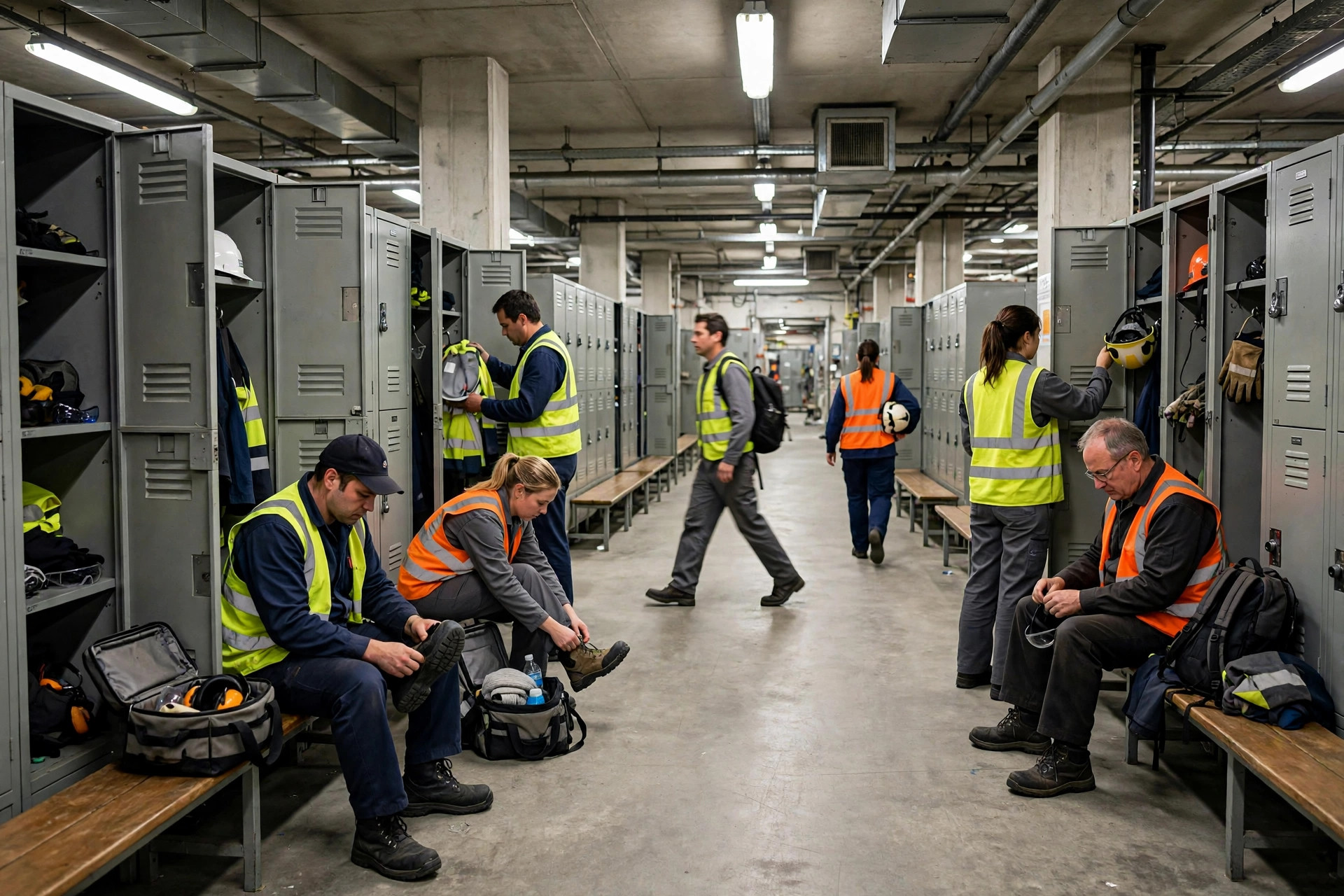
It was 5:40 in the morning. I stood by the locker room door and watched the day shift push in while the night shift tried to push out. It was another morning when our warehouse locker room layout failed at the exact moment it mattered most, and nobody moved.
Let me be straight with you. The shuttle was due at the dock at 6:00. The pick lines were supposed to start at 6:15. At 6:05, more than twenty people still had not changed, still had not clocked in. The line lead was shouting on the radio. I was shouting at the door. Shouting did not help. The door was only so wide, the lockers were only so tight, and people simply could not turn around. That morning taught me the one rule that matters here: warehouse locker room layout has to be sized for the peak, never for the average.
Size the Locker Room for the Peak Crowd, Not the Average Headcount
Our first mistake was sizing the room for 200 people because that was the whole headcount. Sounds reasonable. It was wrong. The day shift had about 120 people and the night shift about 80, and for half an hour at handover, both groups were in that room at the same time. Sized for an average, the lockers looked fine. Sized for the peak, they were short by a mile.
We changed the math. First, count how many people are actually in the room during the busiest handover window. In our building that number was around 170. Then give every one of those people a locker of their own. No sharing, no rotation. Yes, it costs more upfront. Now count the other side of the ledger. If a jammed shift change delays even 60 people by ten minutes, the lines start late, and in peak season with two shifts a day, that lost output dwarfs the price of a few extra rows of lockers.
One more detail: do not buy one locker size for everyone. Winter jackets, rain gear, and safety boots do not fit in a small locker. When the door will not close, clothes end up on the bench. When the bench is covered, the aisle is gone. We switched to two sizes: a larger bay for heavy outerwear and boots, a standard bay for everyday clothes. Names and shift letters went on the doors, so nobody had to walk two laps to find their own locker.
Warehouse Locker Room Layout: Dirty and Clean Zones Beat More Lockers
The second lesson was about dirty and clean areas. Our old room was one open space. People walked in wearing street clothes and work boots, and people heading out to the floor in clean uniforms used the same aisle and the same door. Dust, rain, and mud came straight in. The cleaning crew mopped, and ten minutes later the floor was dirty again.
We split the room in two. The entry side became the dirty zone: change shoes, take off the outer jacket, leave the dirty work gear. Walk further in and you reach the clean zone: put on the clean uniform, gloves, and get ready for the floor. A door sits between them, and the floor colors are different, dark gray on one side, light gray on the other. Nobody needs a sign to know which way to go. Cleaning time dropped by roughly half, because the dirt stopped traveling inward.
We also re-measured the aisles. The old gap between two locker rows only let one person pass sideways. Two people meeting head-on meant one of them had to press against the lockers. We widened the aisles so two people can pass, and we moved the benches against the wall, opposite the lockers, so people sitting down to change shoes do not block the walkway. None of this was expensive. What was expensive was years of nobody stopping to measure.
Locker Room Flow: Untangle the Door, the Clock, and the Exit
The worst jam was always at the door. In the old setup, entering, clocking in, and heading to the floor all happened in the same doorway. Night shift workers leaving collided with day shift workers arriving, and a queue formed at the single time clock. Three flows, one choke point.
Our fix was a one-way loop. You enter, pass the lockers, change, and keep walking toward the floor. The time clocks sit at the locker room exit, right where you step into the work area, so you clock in and walk straight to your station with no doubling back. Night shift workers leaving use a separate exit on the other side. No head-on collision. We also went from one time clock to two, because the clock should never be the last bottleneck.
I stood at that door and counted for three days after the change. The handover jam went from about fifteen minutes to under five. The line lead stopped calling about the locker room on the radio. If you want the bigger picture of how break rooms and locker rooms fit together, our earlier piece on the overall break room and locker room layout covers the general arrangement — this article stays focused on one job, getting the shift-change peak moving.
Why Temp Workers Jam the Old Layout Again
Last peak season we hired forty temporary workers, and the room jammed again. The reason was simple: temps had no assigned lockers, so their clothes piled on benches and the floor, and the aisles vanished. Lesson learned. Before peak season, we now set aside a row of day-use lockers, unassigned, first come first served, emptied at the end of each shift. Size that row for the peak-season surplus, not for a normal day.
Timing matters too, beyond the room itself. Shuttle arrival, line start, and the locker room peak have to line up. We moved the shuttle ten minutes earlier so the crowd spreads out a little, and the pressure at the door dropped right away. A good room layout still jams if every clock in the building points at the same minute.
Lighting and ventilation count as well, more than people expect — the unglamorous side of warehouse locker room layout, but it sets the pace of the whole room. Our old room was dim and stuffy, and a crowded, stuffy room makes everyone move slower. Brighter lights and stronger exhaust air made the room feel less cramped, and people changed faster. Anti-slip mats at the dirty-zone entry and at the clock exit helped on rainy days, when wet soles otherwise slowed the whole line to a careful shuffle.
Locker numbering should match the shift roster, not the order the lockers were bought. We once numbered lockers by purchase order while the roster ran by team, and every new hire had to ask three people to find a locker. Now the rows run by team, day shift Team A in one row, night shift Team B in another, and a team lead can walk a new hire through it once.
Here is my reminder to fellow managers: do not wait for peak season to fix this room. In a quiet week, count the peak crowd, walk the current route yourself, and time how long the door stays jammed. Put those numbers on paper, and the fix argues for itself. Win back those fifteen minutes and you win back an on-time line start, a crew that is not already frustrated, and a shift that starts with its temper intact.
By Chen Feng, Warehouse Operations Manager