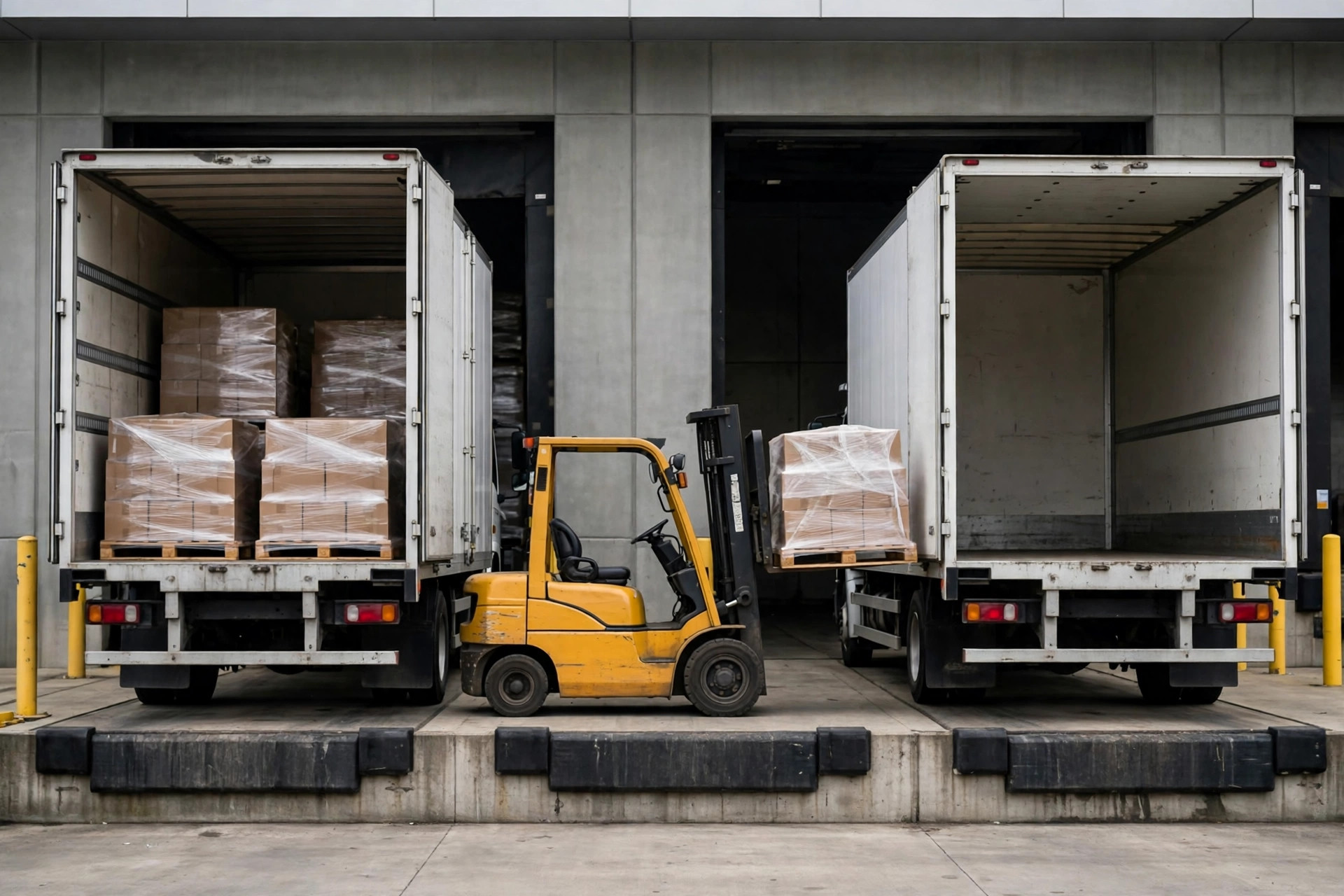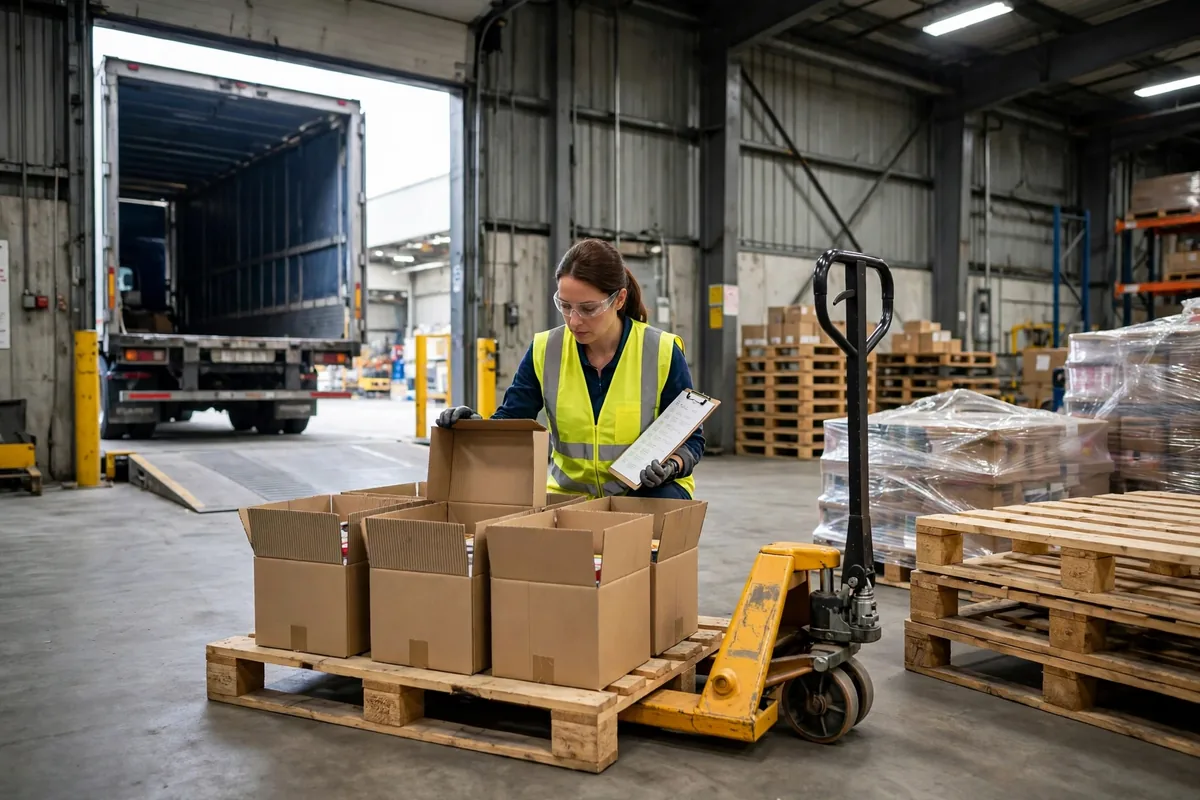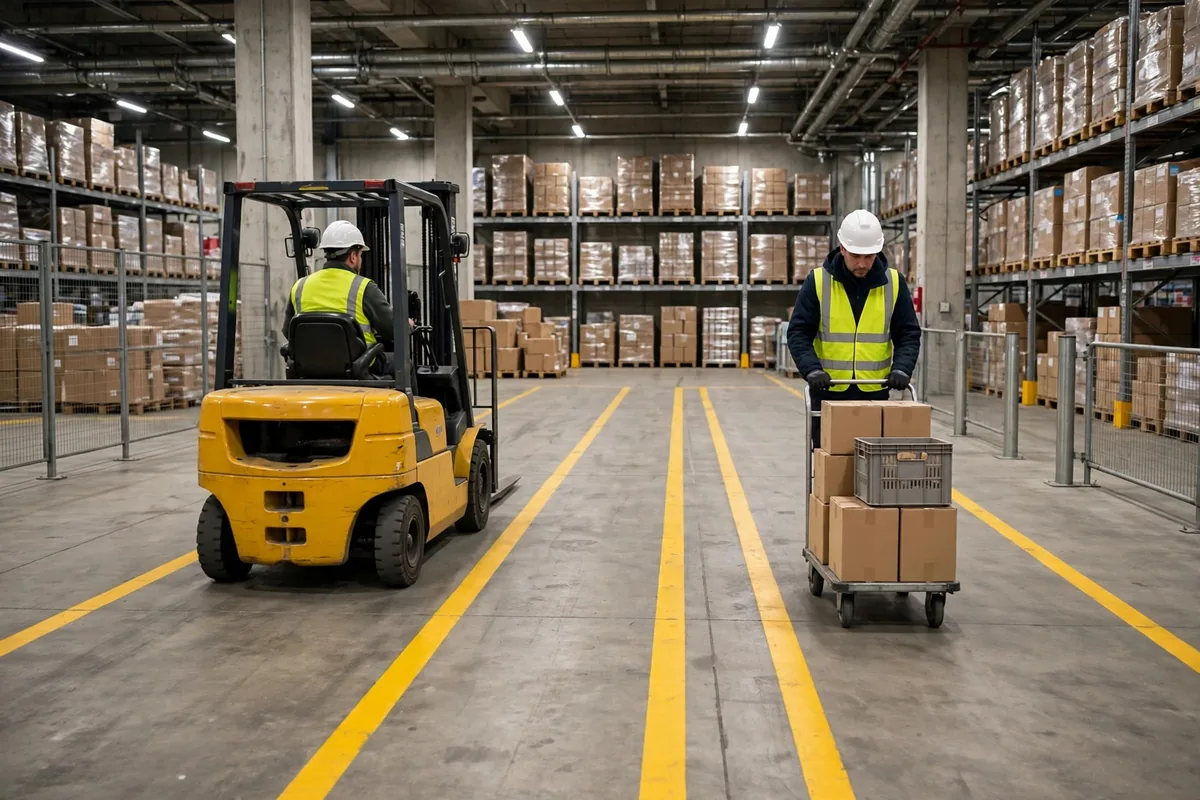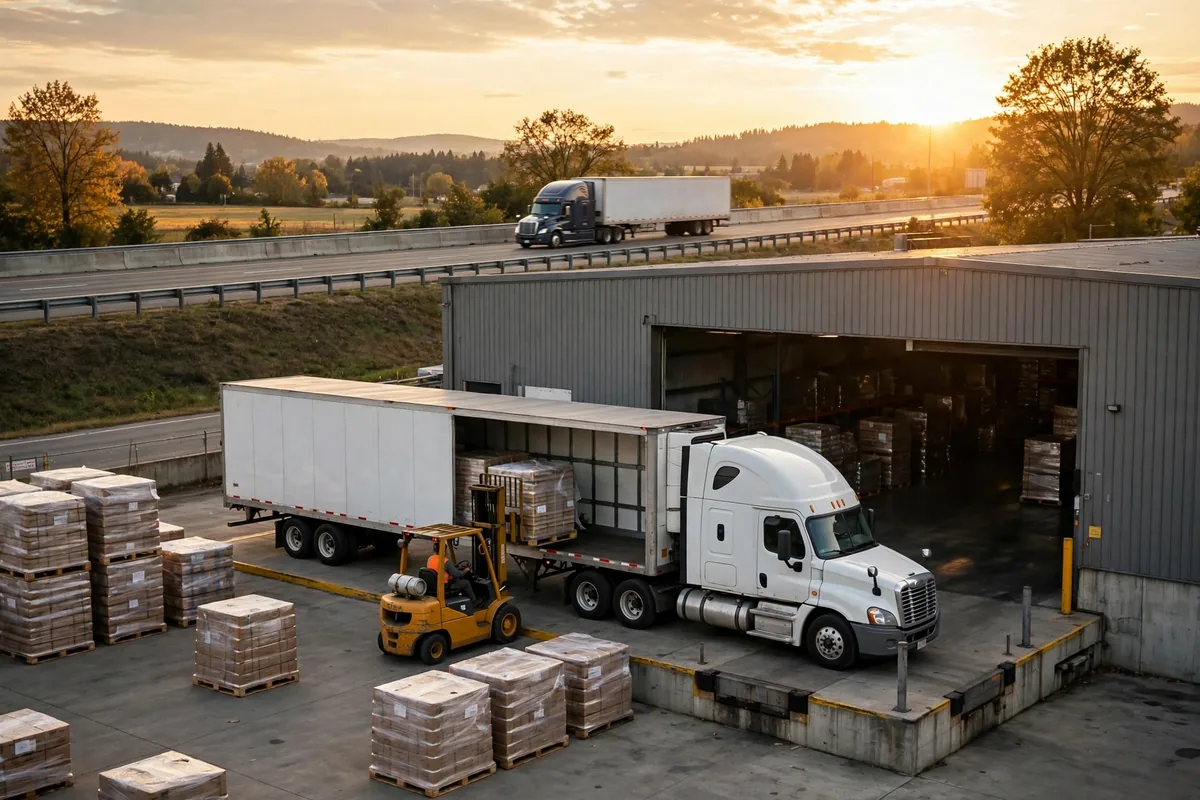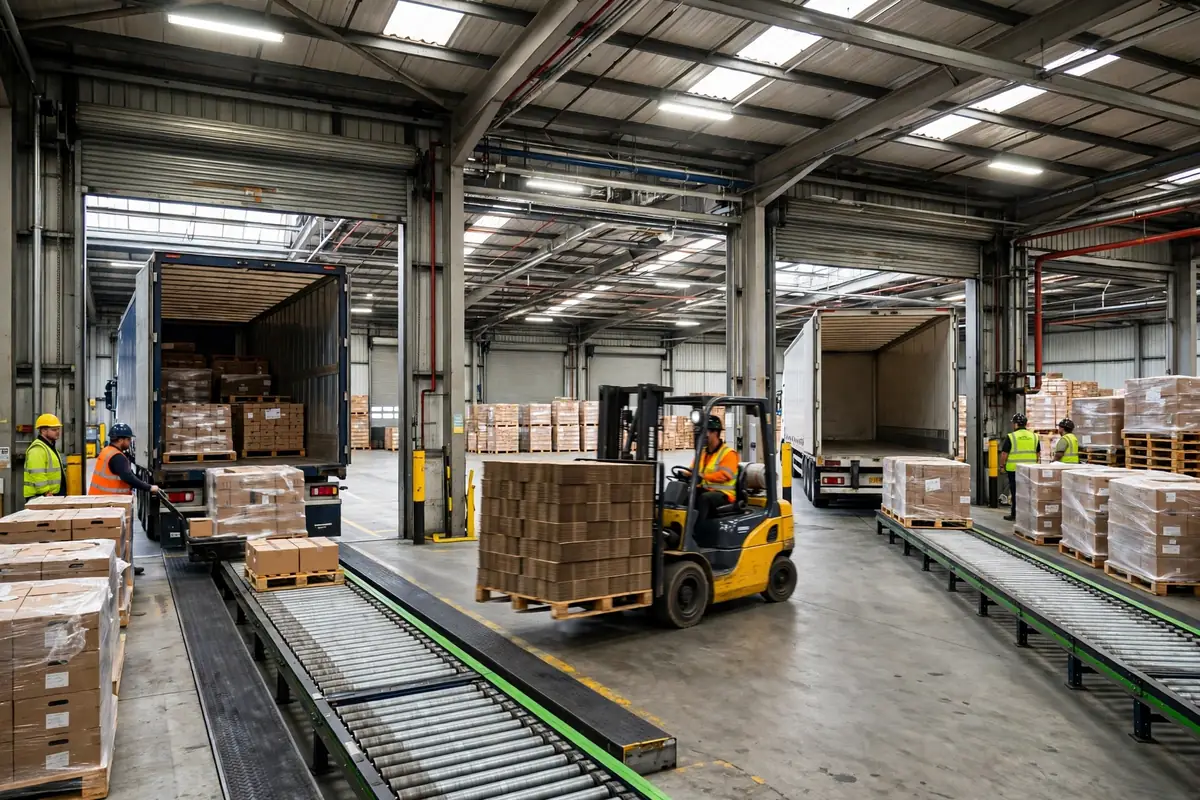
Here's my verdict up front on warehouse cross docking: if the buyer is already waiting, cross-dock it. If you don't know who it's for yet, put it away. Warehouse cross docking is not a magic cost cutter. Every touch you skip has to be paid for with timing, and if the timing isn't there, don't force it.
I've watched too many warehouses treat cross-docking like a fashion statement. In 2019 I walked a 3PL in Ontario, California — 80,000 square feet, a dozen retail clients. The owner was proud: "We cross-dock everything here, nothing spends the night." I spent a morning at the receiving dock. Three trucks arrived at once, two clients' freight mixed in one staging lane, pickers wandering the floor with paper lists looking for cartons, forklifts backing up in the aisles. Nothing spent the night, sure — but every carton got handled four or five extra times, and their damage rate ran higher than their competitors'. They saved the putaway labor and paid it back in searching, mis-sorts, and rework. The truth is simple: cross-docking doesn't eliminate warehousing. It eliminates the nights a product spends sitting in a slot — putaway, replenishment, and a second pick.
What warehouse cross docking actually removes
A conventional flow touches a carton about five times: receive, inspect, put away, wait for an order, pick, pack, ship. A cross-dock cuts it to roughly three: receive, sort, load out. The commonly cited rule of thumb in the trade is that freight in a cross-dock typically dwells under 24 hours, and parcels sometimes move through in under an hour. The old textbook numbers back up why people get excited: putaway runs about 15% of a warehouse's operating expense, and order picking about 55%. Cut putaway and the second pick, and the math looks great on paper.
But only count half the math and you'll fool yourself. In peak season 2023, a home-goods e-commerce seller I know had a best-selling lamp out of stock for two weeks, with more than 400 orders waiting. The moment the supplier's freight hit their fulfillment warehouse, the team sorted it straight against open orders and shipped over 300 orders the same day, clearing the rest the next morning. Complaints dropped by half that week. That's cross-docking at its best: demand is already standing there, and every night the product sits in storage is a wasted night.
Flip it around, and freight with no demand waiting is a headache in a staging lane. It sits there waiting for orders, for trucks, for the rest of a kit. The staging area fills up, and eventually somebody has to move it into racking anyway — putaway two days late, plus one extra move.
The three things that break warehouse cross docking
The first is late trucks. A cross-dock lives or dies on inbound and outbound lining up. In 2021 I worked with an importer who received two containers every Wednesday and shipped to six stores every Thursday morning. One week the vessel slipped two days. The containers landed Friday afternoon, the stores' trucks were already scheduled, and four trucks ended up queued at the dock Friday night while the staging lanes overflowed and the crew worked past midnight. One late arrival wrecked the whole week. Before you cross-dock anything, ask yourself what your suppliers' on-time arrival rate really is. If you don't know, don't cross-dock.
The second is information arriving after the freight. Cross-docking demands that you know where freight is going before it arrives: advance shipping notices, pre-allocated orders, store quantities. Miss one piece and the floor stops while someone makes a decision. I watched a warehouse where the cross-dock assignments in the system didn't match what was physically on the dock, and the receiving crew sorted by gut feel. Three cartons went to the wrong stores. It took a week of back-and-forth to unwind. Cross-docking asks more of your systems than putaway does, not less.
The third is freight that just doesn't fit. Bulky, odd-shaped, needs labeling, needs inspection, needs kitting — none of that works in a fast staging lane. And high-value small items are another trap I've seen more than once: too many hands in an open staging area, one piece goes missing, and you burn half a day hunting for it. Cross-docking suits freight that is standard, complete, and ready to leave the moment it arrives. It does not suit freight that still needs work done to it.
The three-question test, with a hypothetical example
Here's a hypothetical example to make the money visible. Take a mid-size warehouse moving 800 cartons a day. Say each touch — a forklift move, a scan, a carry — costs about $0.40 in labor and equipment. Cross-docking saves roughly two touches per carton, so that's 800 × 2 × $0.40 = $640 a day, or about $14,000 over a 22-day month. Real money. But that's the ceiling, and it assumes none of the three problems above shows up. One mis-shipment, one rework, one overtime night, and half the savings evaporate. That's the trade-off nobody puts on the brochure: the upside is high and the floor is low.
So my test for warehouse cross docking was never "can we cross-dock this?" It's three questions. One, is the buyer already decided? If not, put it away. Two, can inbound and outbound line up within half a day? If not, put it away. Three, can the freight leave the dock without any processing? If it needs work, put it away. Three yeses, then talk about cross-docking. One no, and putaway isn't a failure — putaway is insurance you buy against uncertainty.
Here's the counterintuitive part: the better a warehouse is at cross-docking, the less it looks like a warehouse and the more it looks like a train station. Freight doesn't linger, people don't stop, and the schedule is everything. If you can't live with that rhythm, cross-docking will feel like torture. Plenty of owners envy someone else's fast cross-dock without seeing the work behind it — the on-time suppliers, the pre-allocated orders, the systems lined up in advance. Without that work, cross-docking just moves the mess from the racks to the staging lanes.
Before tomorrow's receiving shift, run your open orders through those three questions. Cross-dock what passes. Put away the rest. And don't pay tuition to a buzzword.
By Lao Mi, Supply Chain Veteran (20 yrs)