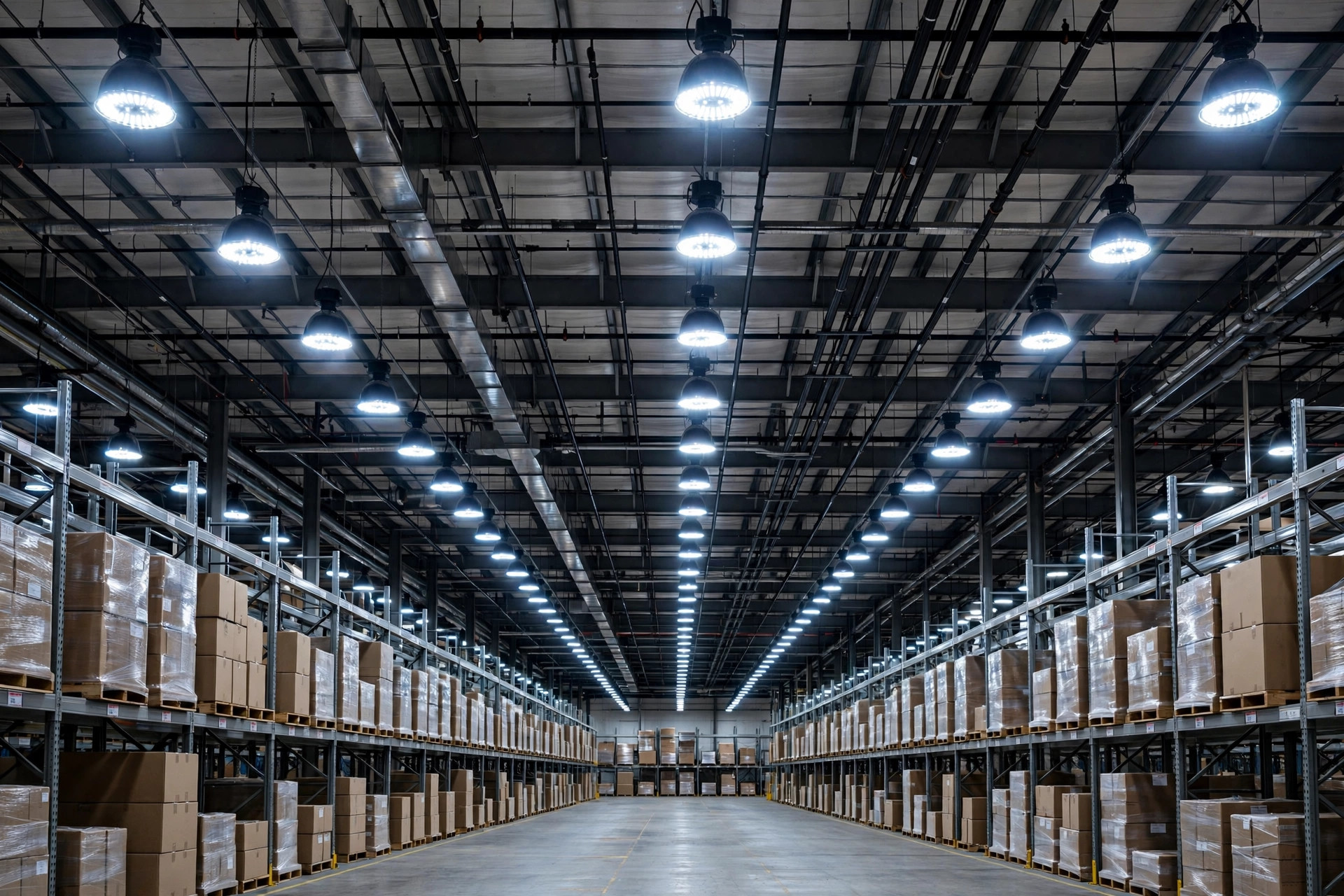
Our little warehouse could not afford that bill — and that bill is what pushed me into a warehouse LED lighting retrofit.
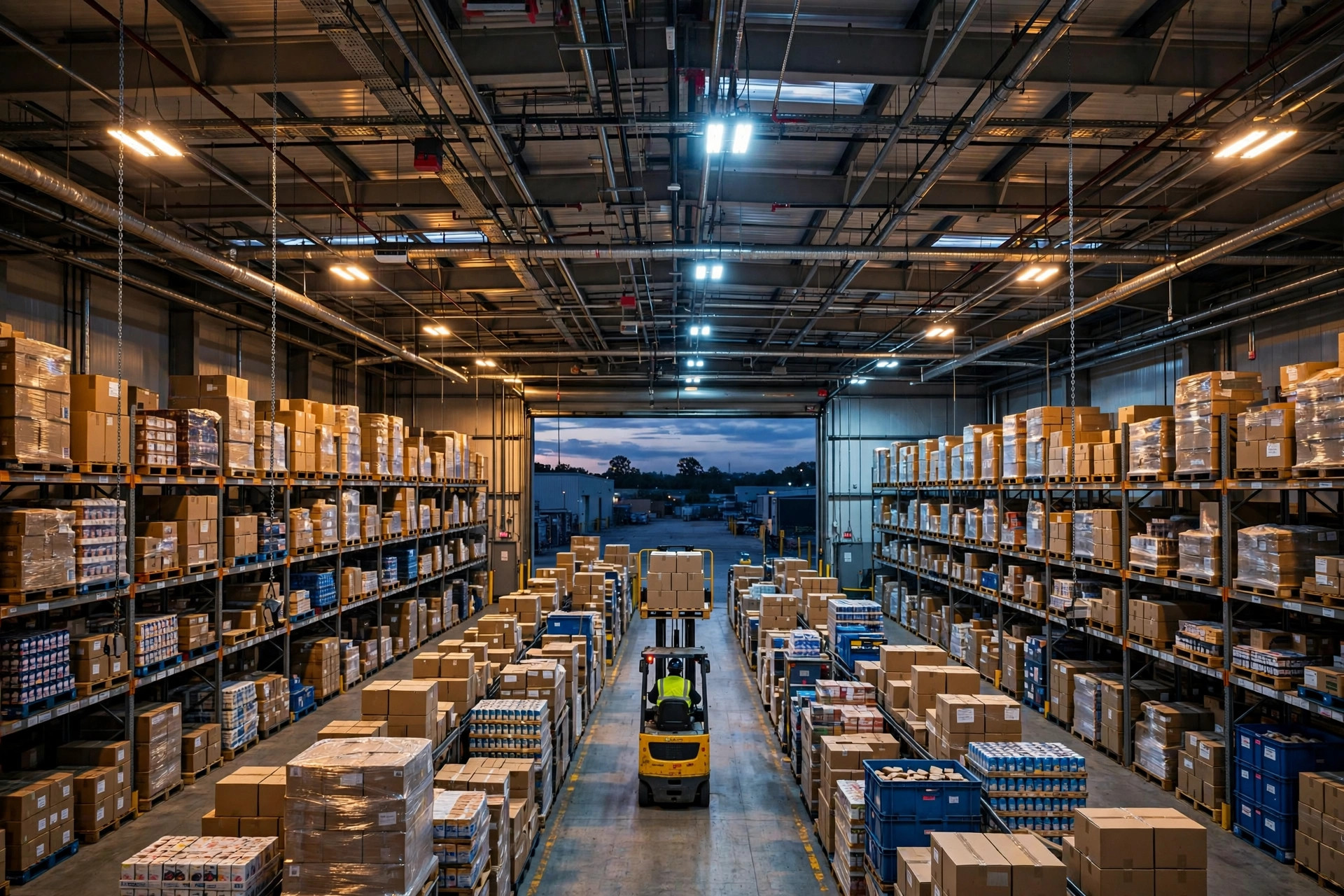
Here is the setup. I rent a 3,000-square-meter warehouse and run e-commerce fulfillment out of it. Last December the bill arrived, and I did a double take at the electricity line. It was not going to put me out of business. It was the realization that our dozens of old lights burned from eight in the morning until ten at night, and for long stretches nobody was even working under them. I was paying full price to light empty racks. That money hurt worse than getting squeezed by a supplier.
The sting was this: I had always assumed upgrading lights was a big-warehouse thing. Then I did the math and realized it was exactly backwards. A big warehouse spreads its electricity across tens of thousands of square meters and hundreds of clients, so the share is small. Our little warehouse has a handful of clients, so every jump in the power bill eats straight into our margin. Upgrading the lights was something I started taking seriously the day that bill landed.
Warehouse LED Lighting Retrofit: Zone First, Replace Second
My first mistake was wanting to replace lights right away. I went to a lighting shop, listened to the sales pitch, and nearly ordered a full-warehouse replacement on the spot. Lucky for me, my wallet was thin that month, so before ordering I stopped and asked one question: do all the lights in this warehouse really need to be on at the same time?
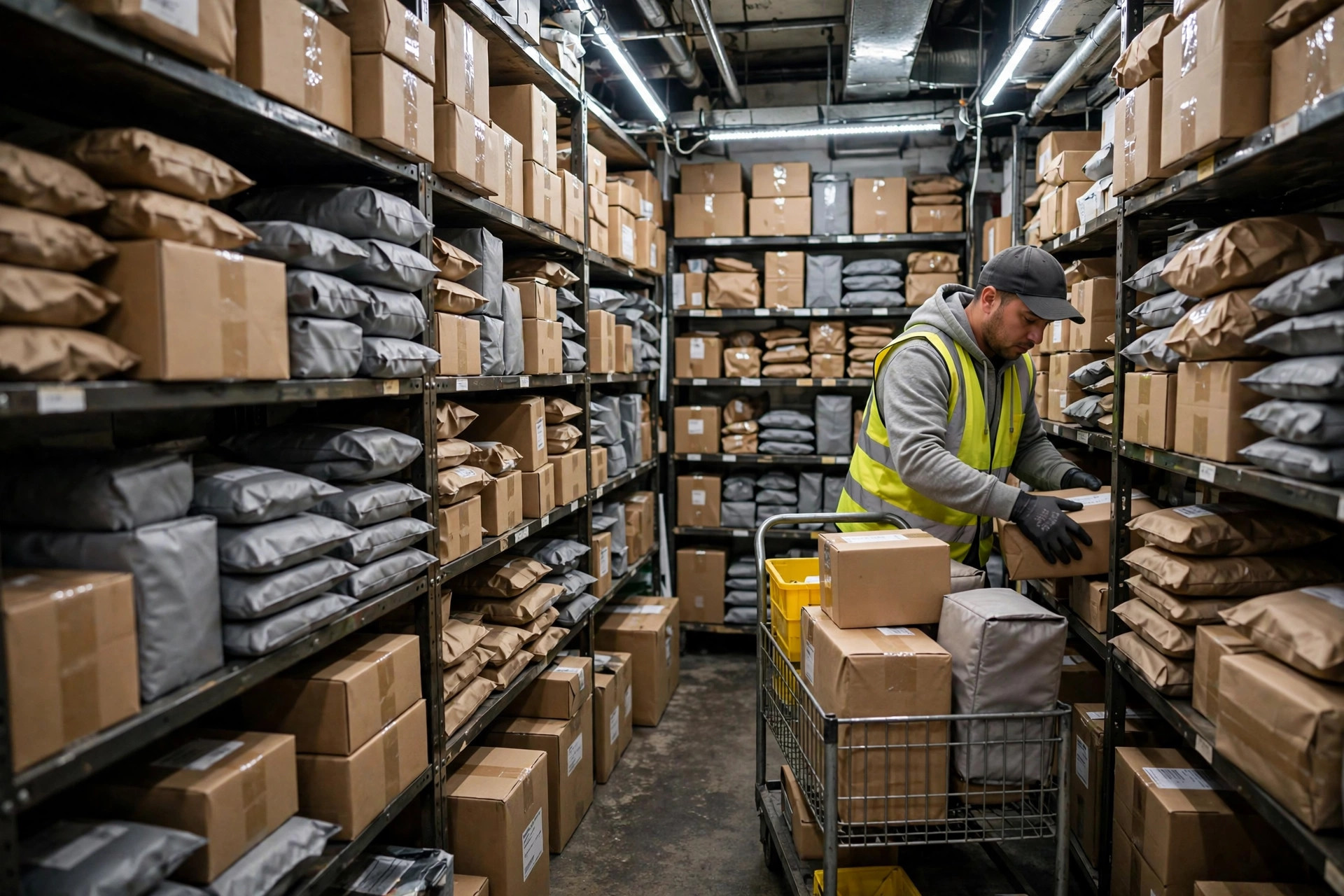
Our daily activity concentrates in picking, packing, and the receiving dock. The storage racks get visited maybe two hours a day, total. So I did something that cost nothing: I zoned the warehouse.
I split it into three kinds of zones. Always-on zones: picking and packing, which need light whenever anyone is working. Sensor zones: rack aisles and storage, where lights come on when someone walks in and go off when they leave. Daylight zones: the row by the windows and the dock, which runs on natural light during the day and only gets supplemental lighting on cloudy days. After zoning, I tried a week with three cheap plug-in timers and a few motion-sensor bulbs, just converting storage to "lights on only when someone is there." The meter visibly slowed down.
Only after zoning do you know what to replace and how many: always-on zones get the good ones, sensor zones the adequate ones, daylight zones maybe fewer fixtures. Replace first and zone later, and you have spent a fortune on lamps that keep lighting empty racks.
Warehouse LED Lighting Retrofit: Light Levels and Color Temperature in Plain Words
Lighting salespeople love specifications. Here is the translation into human language.
Light level is "is it bright enough." Picking needs to be bright — workers read labels and codes, and one mispick costs more than a month of lighting. Aisles can be dimmer — people are just walking and pushing carts, they only need to see the path. Packing needs to be bright, because packers read shipping labels and check products, and dim light means mislabeled parcels. Those three spots matter. Everywhere else, good enough is good enough.
Color temperature is "does the light lean yellow or white." My first replacements were cheap warm-yellow, and the whole warehouse turned jaundiced. Labels were hard to read, colors looked wrong at inspection. I switched to neutral white and labels snapped into focus. My rule of thumb now: warehouse work areas get whitish light, not warm yellow. Warm yellow belongs in restaurants and hotels, not over a worker reading a label. As for color rendering — in plain words, "do things look their true color under this light" — the inspection and quality-check areas deserve better color rendering, or you cannot tell dark navy from black and inspection becomes guesswork.
One more thing small warehouses ignore: fixture height and angle. Hang a light too high and brightness lands on top of the racks while the floor stays dim. Get the angle wrong and a rack shadows half the aisle. Before buying, climb up and check height and spacing. Our ceiling is six meters; we tightened spacing a bit and the floor lit more evenly.
Sensors: The Half of the Savings That Beats Replacing Bulbs
Honestly, replacing bulbs alone only saves so much. What actually bent our electricity bill down was sensor control.
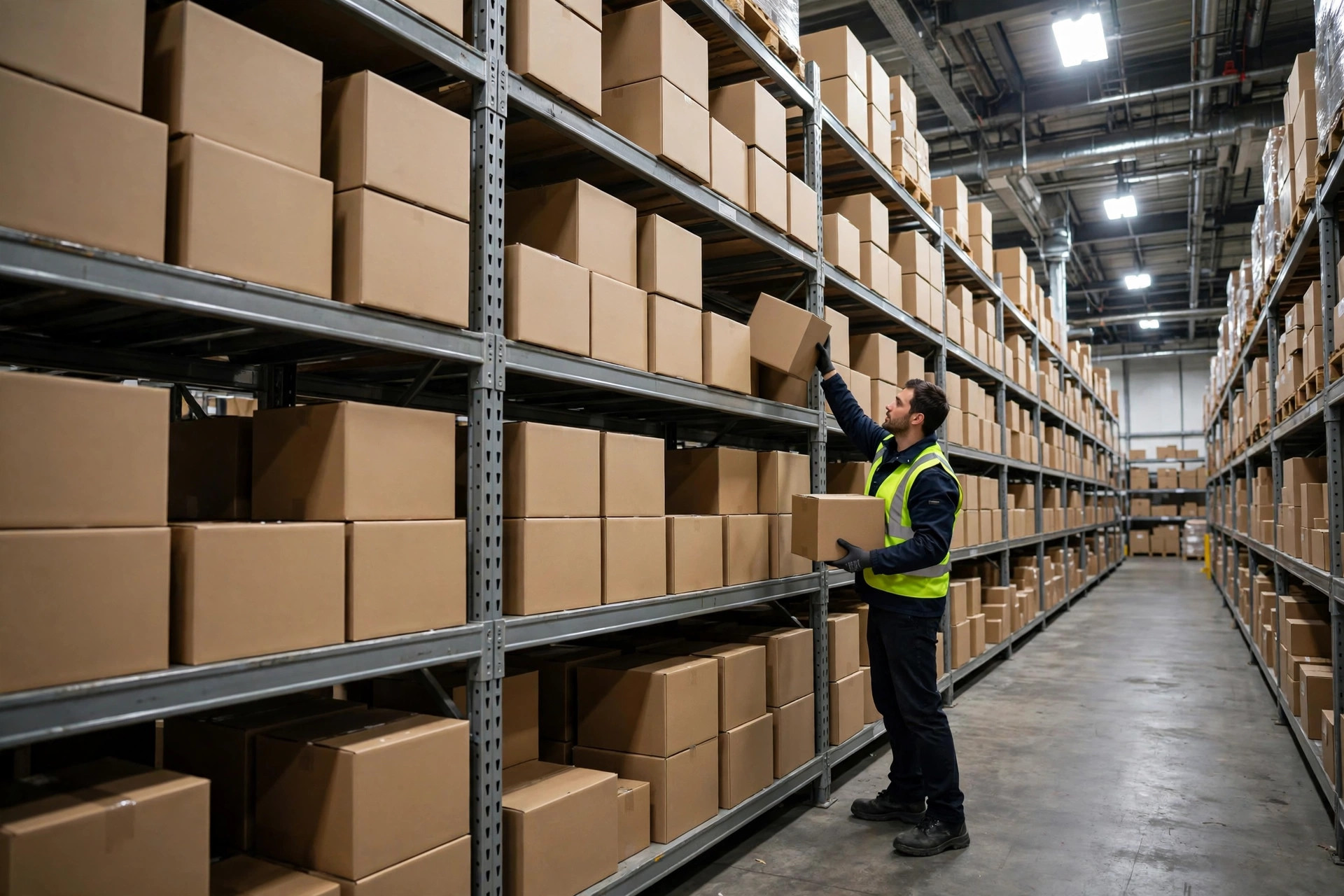
Here is our current setup. Rack aisles have motion sensors: walk in, lights on; walk out, lights off two minutes later. Picking and packing have zone switches, so a zone with nobody working gets switched off manually — not one master switch for the whole warehouse, but one switch per zone. The dock row has daylight sensors: bright enough outside, lights off automatically; dark outside, lights on automatically.
The hardware cost little; the expensive part was changing habits. At first a sensor light would go off and someone would shout it was broken. I spent two days per zone explaining: it rests when you leave, wakes when you return. Once they got it, people found it fun — and started reporting slow sensors.
The Payback Math: How Long Until the Retrofit Pays for Itself
Any investment in a small warehouse has to pass the payback test. Here is my own math. The numbers below are "for example" figures, not any authority's electricity rates — plug in your own bill and rerun them:
| Item | Example figure | Notes |
|---|---|---|
| Old fixtures | Say 40 fixtures | What we had before the retrofit |
| One-time cost of LEDs + sensors | Say a bit over $2,800 | Fixtures, sensor switches, electrician install |
| Monthly power bill before | Say a bit over $550 | Average of three bills before the retrofit |
| Monthly power bill after | Say a bit over $330 | Average of three bills after zoning + sensors |
| Monthly savings | Say a bit over $220 | The difference between the two |
| Payback period | Say around 13 months | One-time cost ÷ monthly savings |
The most important row is the monthly savings. Do not trust the salesman's estimate — work it out from your own bills. Average three bills before, record three after, subtract. That is your real number. Sales estimates assume ideal conditions, which do not exist in a small warehouse.
There are two hidden line items too. First, LEDs last longer. Old lamps needed replacing two or three times a year — every swap meant downtime, a ladder, a bill. Second, our mispick rate dropped with better light. I cannot prove how much was lighting versus new hires getting up to speed, but reading a label in good light beats picking in the dark.
Two Retrofits: One Faceplant, One Win
The faceplant was my first retrofit. I took the salesman's recommendation and replaced every light in the warehouse in one go, choosing the cheapest batch. Three problems at once: wrong color temperature, too yellow, workers complained; uneven brightness, some aisles glaring, some rack bottoms dark; worst of all, storage on always-on lights, so the bill barely budged. That retrofit cost real money and achieved roughly nothing. My wife called it "paying for a lesson."
The win was the second one, zoned and phased. First picking and packing, the always-on areas — workers said labels got easier to read. A month later, rack aisles with motion sensors. Last, dock and daylight zones with daylight sensors. Three months total, and after each batch I logged the bill and worker feedback. The bill ended down around forty percent, and nobody complained about lights anymore.
Lesson in one sentence: do not copy the big warehouse's "do it all at once." They have budget, staff, shutdown windows. We have none of that. We go zone by zone, fix the most painful spot first, keep going only once it works. Every step gets its own math and asks the workers.
Here is the counterintuitive bit: warehouse lighting should not be as bright as possible, and it should not be as expensive as possible. Picking bright, aisles a little dimmer, empty areas dark — that is what warehouse lighting is supposed to look like. Chasing a warehouse "bright as daylight" everywhere is showing off with your electricity bill.
If your power bill gives you the same headache, do not start at the lighting shop. Sketch your warehouse on paper and mark three zones: stays on, sensors, daylight. With that sketch, you will know exactly what to buy. Small warehouses have their own way of surviving, and with lights, the down-to-earth approach usually works best.
By Xiao Ma, Small Warehouse Owner