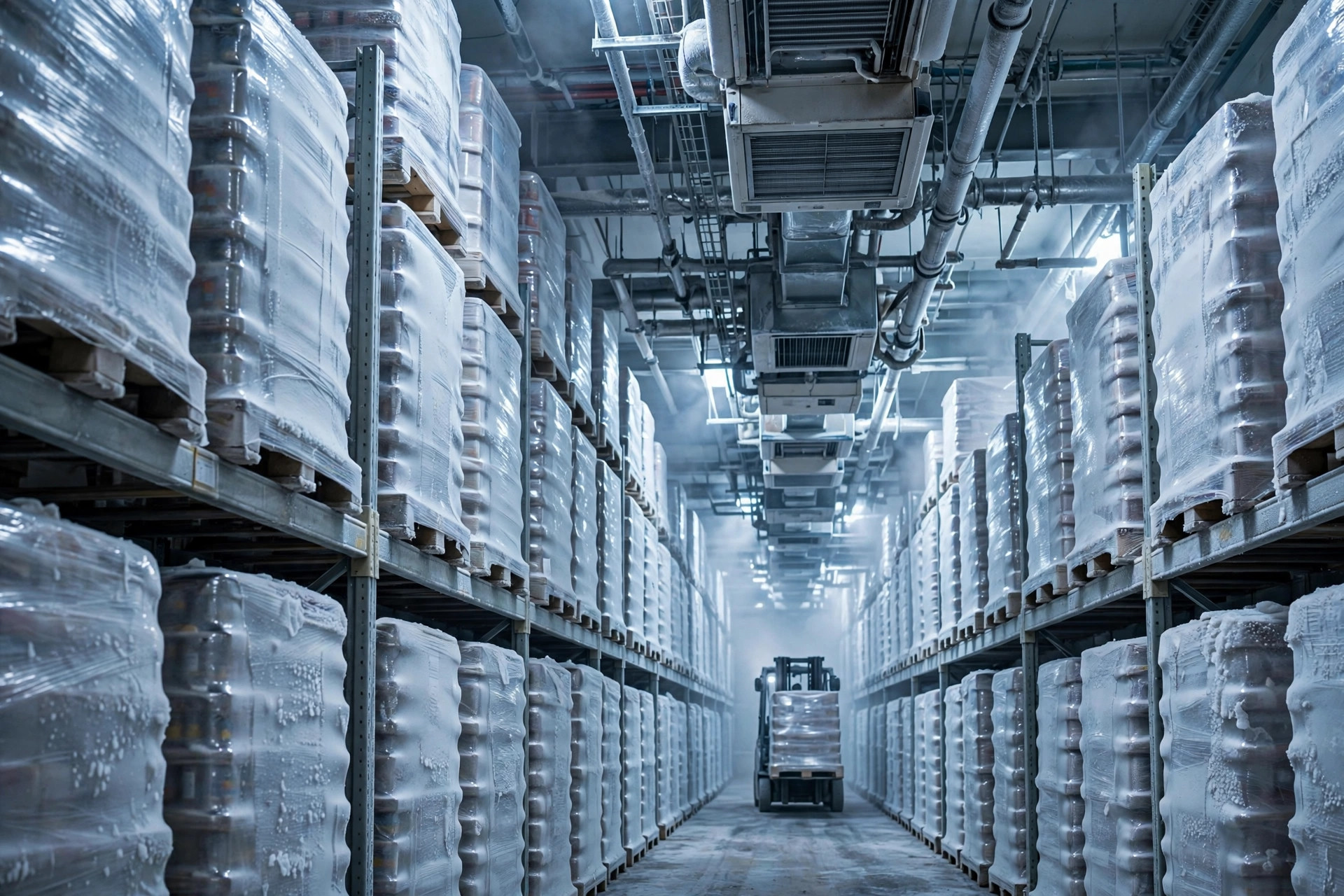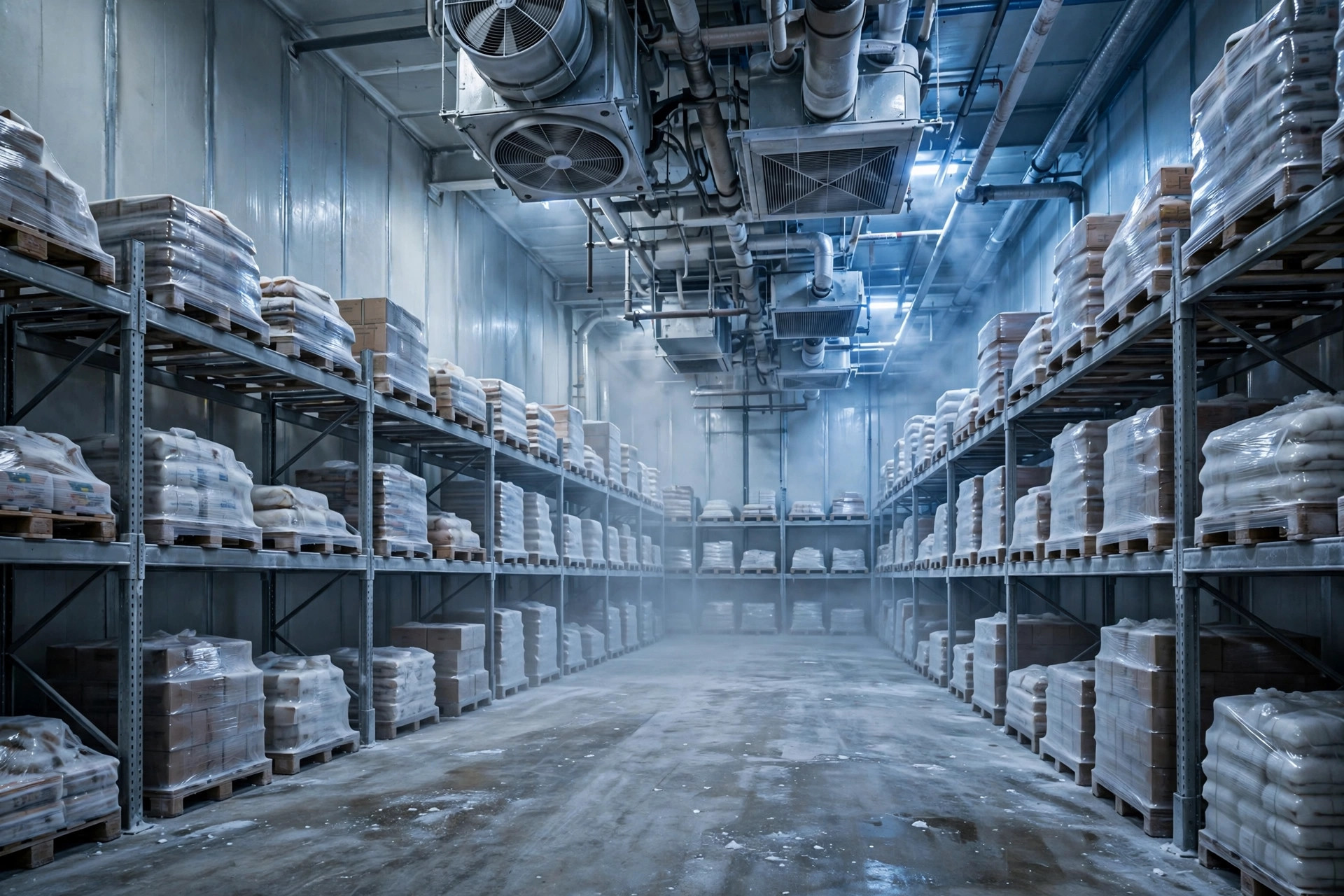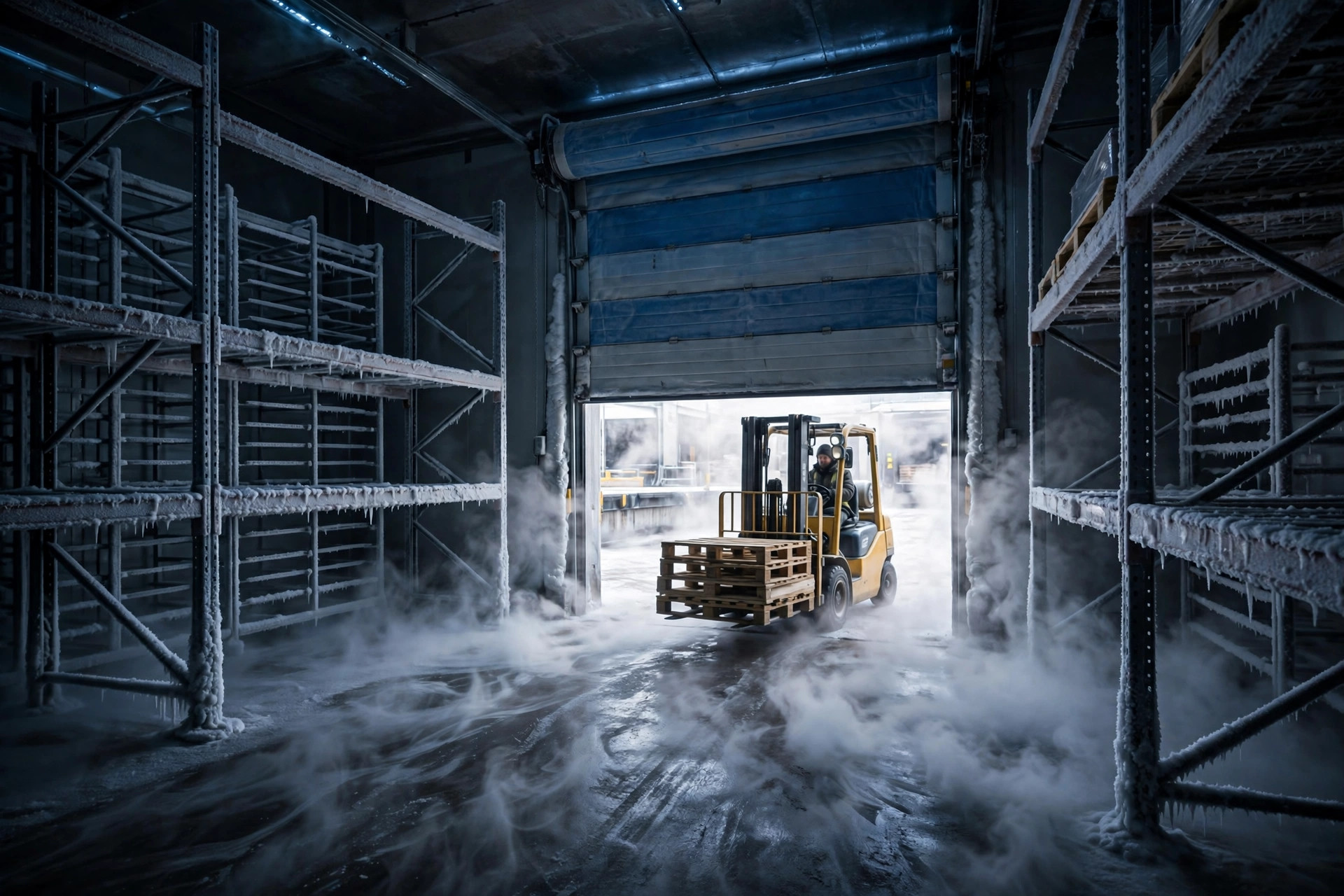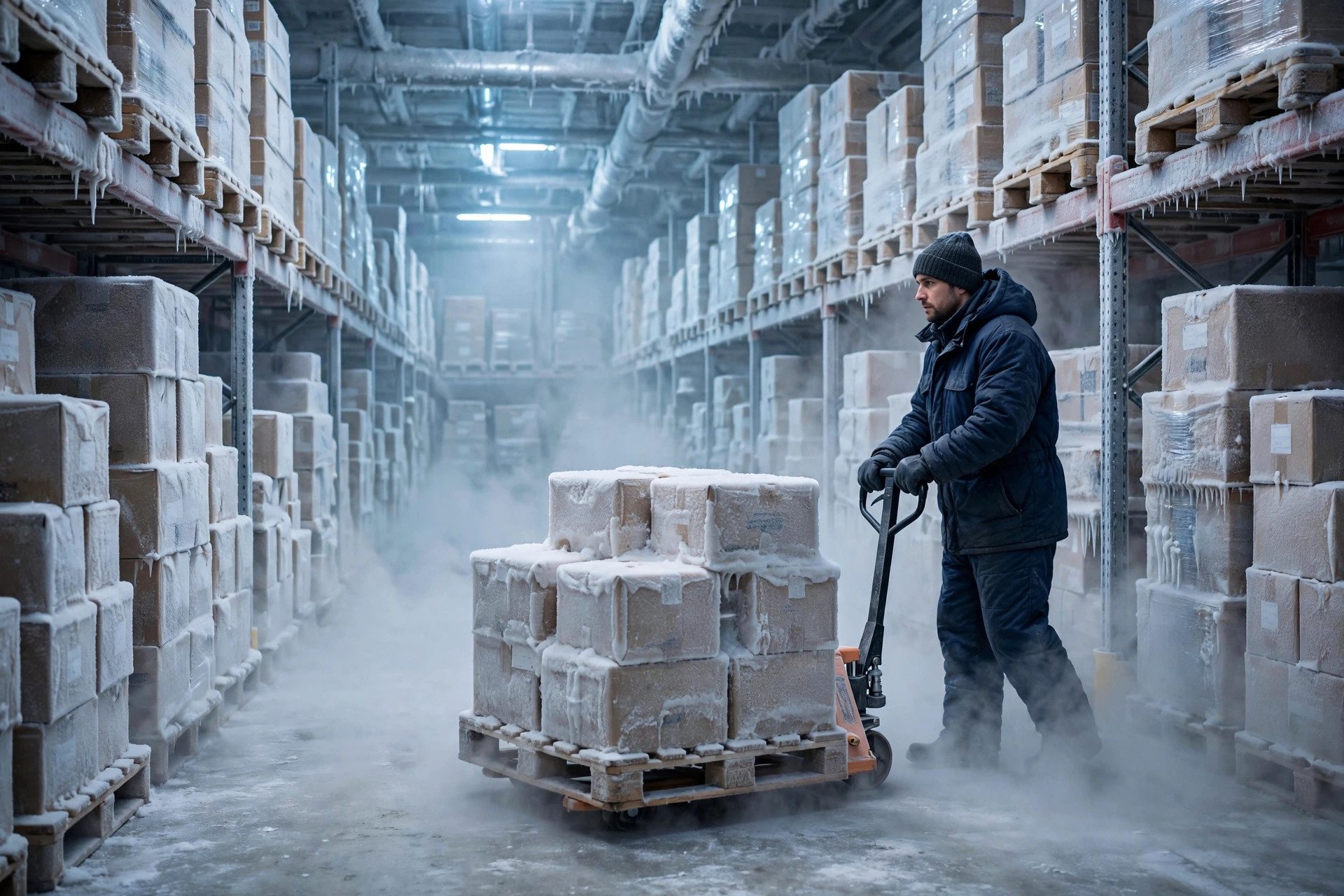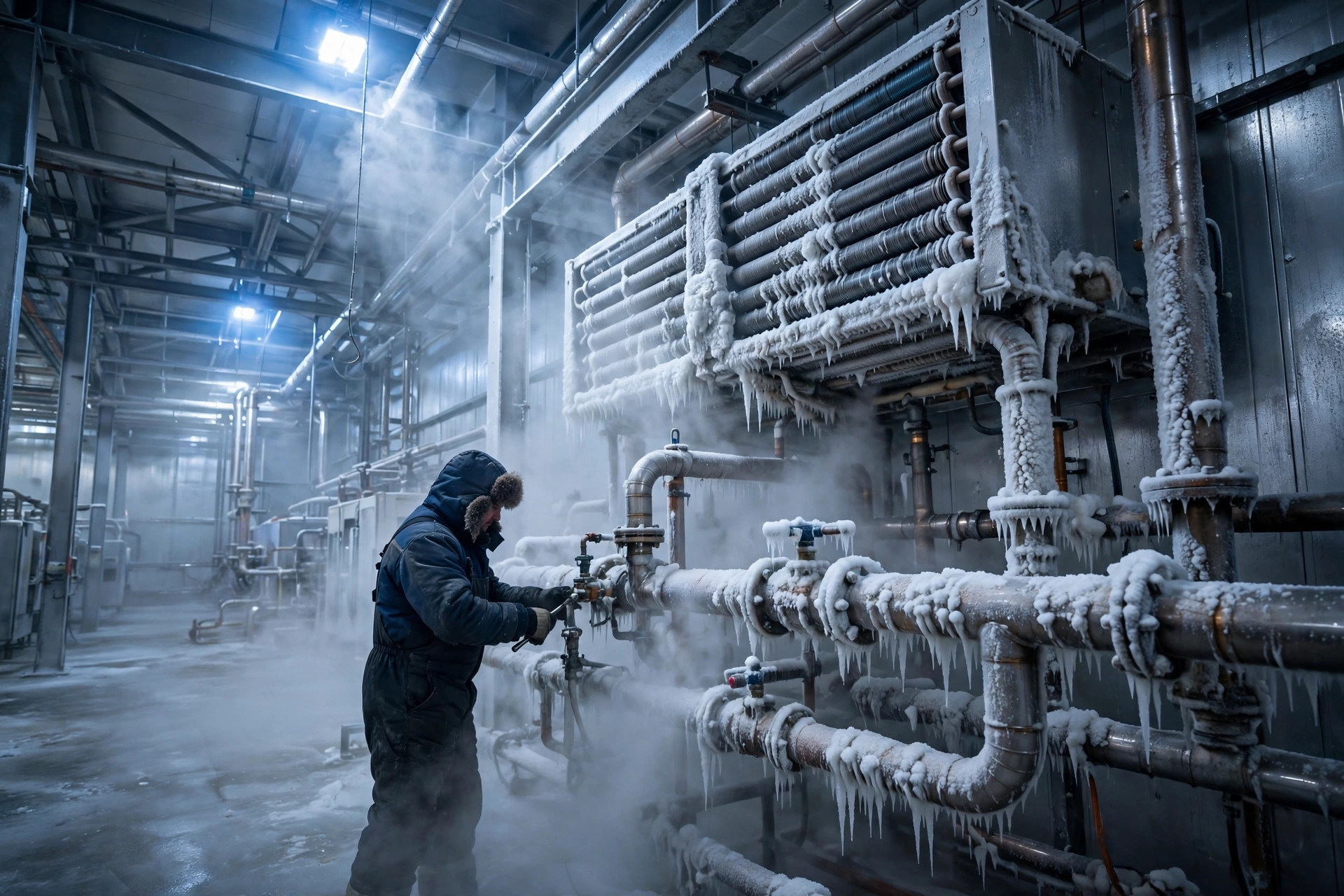
A 5,000-square-meter freezer warehouse running at -18°C can burn close to several million yuan a year in electricity. That is not a guess: in 2019, the owner of a seafood cold storage facility in eastern China slapped a power bill on my desk — over 300,000 a month, nearly four million a year. Here is refrigeration the way I learned it in the field — principle first, then the dividing lines in equipment selection, then the maintenance traps that quietly drain your wallet.
Where Your Cold Storage Electricity Actually Goes
One sentence of principle: refrigeration does not "make cold" — it moves heat from inside the warehouse to the outside. Think of the compressor as a mover hauling heat uphill, from a cold place to a warm one. The metric that tells you whether the mover earns his wage is COP — cooling output divided by power input. A COP of 3 means one kilowatt-hour of electricity moves three kilowatt-hours' worth of heat.
Heat comes from three sources: leakage through the envelope (walls, roof, floor), heat carried in by door openings and incoming goods, and heat generated inside (forklifts, lighting, fan motors). the thinner the walls and the more often you pop the lid, the faster the ice melts — and the compressor is the guy who keeps refilling the ice.
Every legitimate way to cut cold storage electricity costs comes down to two moves: leak less heat, or make the heat-mover work more efficiently.
The Selection Dividing Line: Bigger Compressors Are a Pseudo-Requirement
"when in doubt, oversize the refrigeration capacity" is one of the biggest pseudo-requirements in this industry. Plenty of owners size up "just to be safe," and the unit ends up running at 40–50% load all year, cycling constantly, with real-world COP collapsing from a nameplate 3-point-something to barely above 2. Three dividing lines.
First, match compressor type to temperature and scale. Below -18°C, large facilities suit ammonia or CO₂ cascade systems — efficient but demanding on maintenance. Mid-size facilities are the sweet spot for HFC screw compressors: rugged and easy to service. For 0–4°C chill storage, piston or scroll units are plenty; a screw there is a sledgehammer on a thumbtack.
Second, fixed-speed vs. inverter depends on load swings. Frequent traffic and big day-night swings — inverters earn their keep, slowing down at part load while COP holds up. A flat, stable load, like a long-term fully leased reserve facility, is often better served by fixed-speed screws in a sensible multi-unit arrangement. The inverter premium is not free money.
Third, think in combinations. Never "one giant compressor handles everything" — go "one large plus one small": the small unit carries the base load, the big one kicks in for summer peaks and mass inbound receiving.
A real case. In 2021, an 8,000-square-meter meat cold storage in northern China ran four fixed-speed screw compressors, averaging under 45% load in spring and autumn and cycling dozens of times a day. We replaced two with inverter screws and kept two fixed-speed units for base load. The first full cooling season after the retrofit, the monthly bill dropped from roughly 280,000 to about 210,000 — over 800,000 saved a year against a 1.4 million retrofit cost, so payback came in about a year and a half. Precondition: the original system was oversized with a wildly swinging load. Near full load year-round, this trick does nothing — do not apply it blindly.
Off-Peak Pre-Cooling: Shifting the Electricity Bill to Cheap Hours
The most practical operating strategy: run hard on cheap off-peak power, coast through expensive peak hours. Peak and off-peak tariffs often differ by 3–4x (check your local utility). Cold storage has a built-in advantage: the building plus the goods form a giant thermal battery.
The method: during off-peak hours pull the warehouse 1–2°C colder than setpoint — letting the goods and structure "soak up cold." During peak hours, the compressors throttle back and you ride on stored cold.
Run the numbers for a mid-size facility using 8,000 kWh a day, previously split evenly between peak and off-peak, shifted to 70% off-peak. Before: 4,000 × 1.2 + 4,000 × 0.35 = 6,200 per day. After: 2,400 × 1.2 + 5,600 × 0.35 = 4,840. That is 1,360 saved daily — approaching 500,000 a year. The catch: how much you can shift depends on envelope insulation and the thermal mass of your goods. A leaky warehouse bleeds its stored cold by noon, and the trick loses its punch. See? It always comes back to insulation.
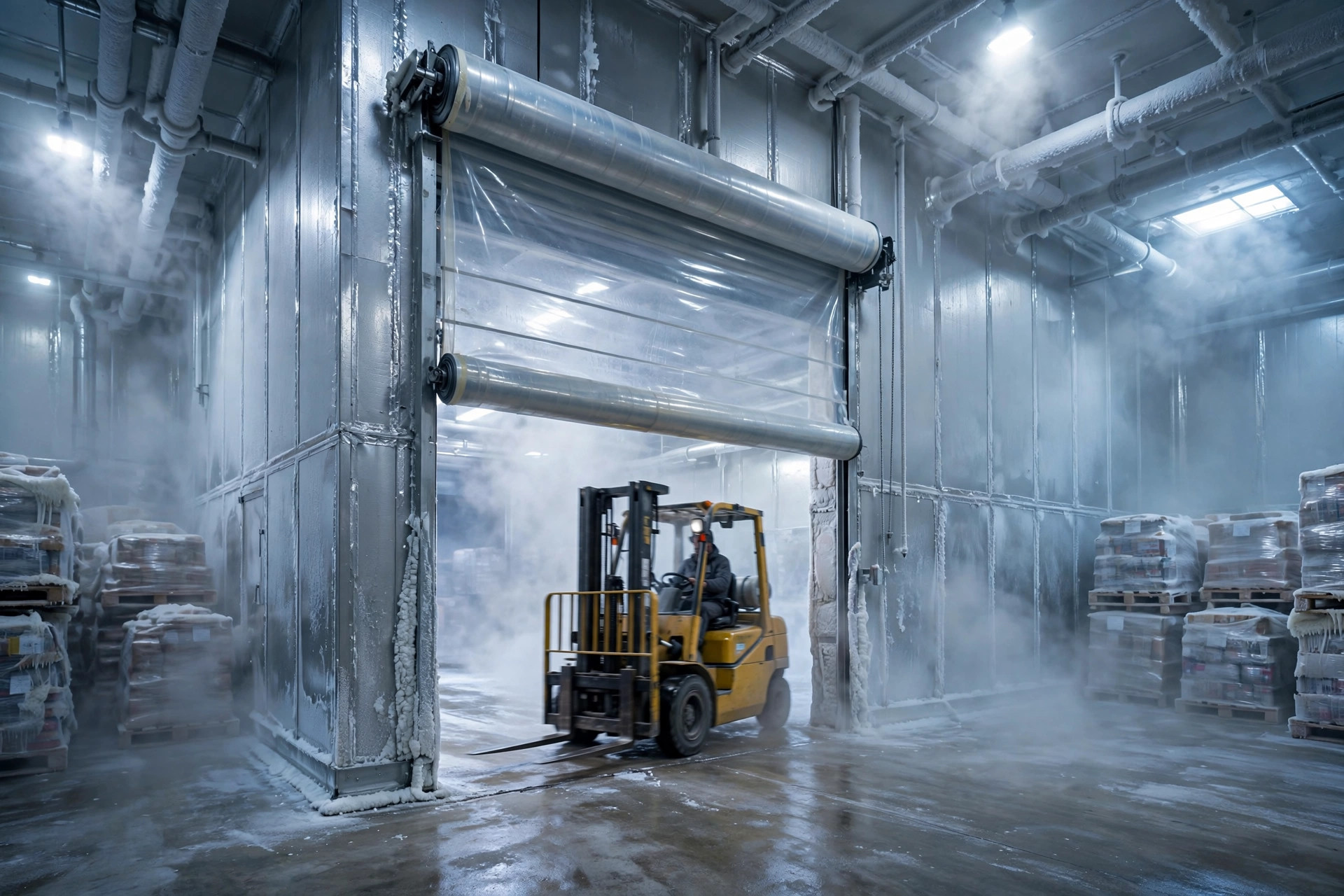
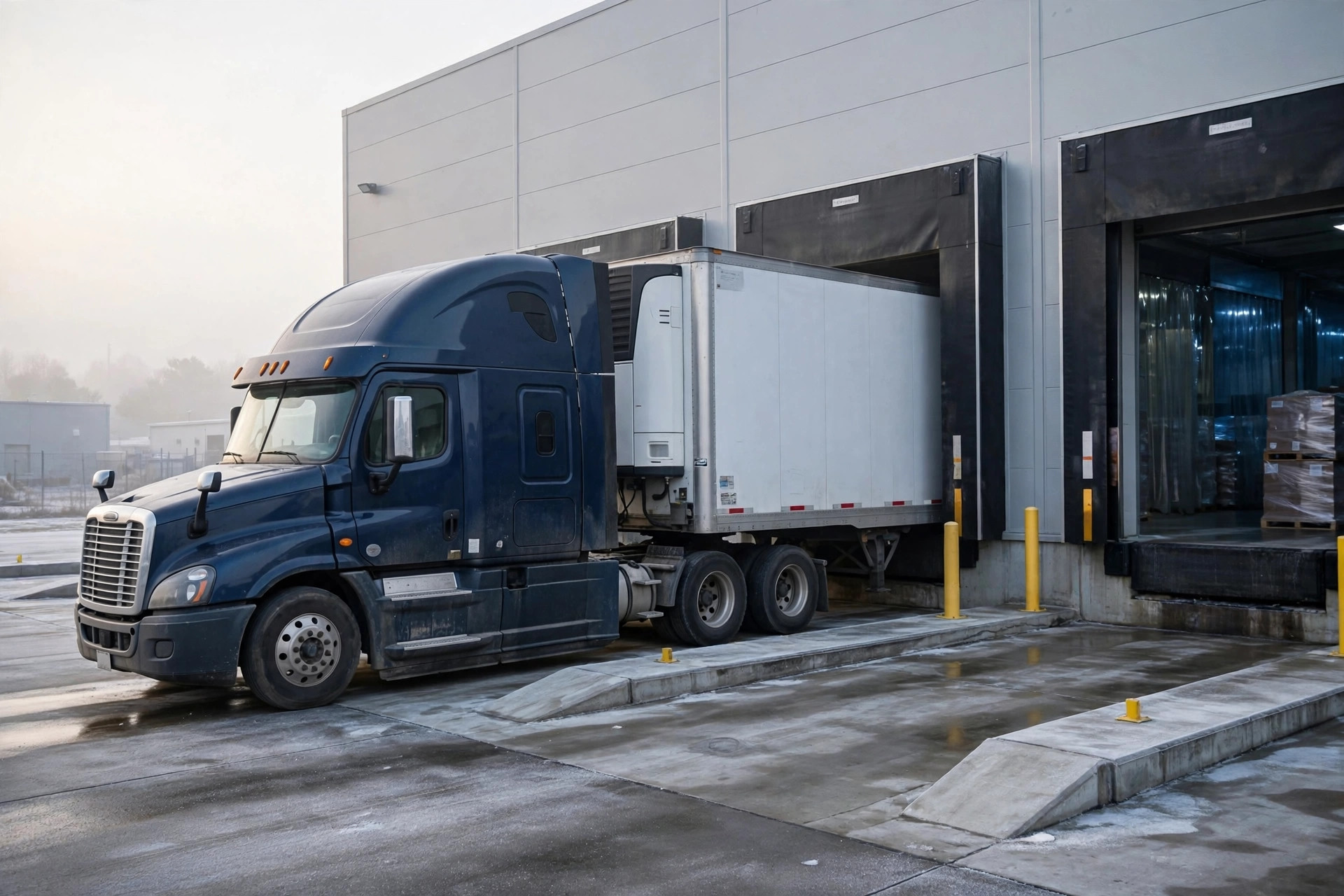
I measured the cost of an open door once. In summer 2022, a logistics cold storage ran loading with the dock door wide open for over an hour; the temperature climbed from -18°C to above -13°C, and compressors ran full tilt for nearly three hours to recover. One opening burned roughly half a day's normal electricity. Three low-tech countermeasures: a double-door airlock at the dock; air curtains plus PVC strip curtains, filters cleaned on schedule; and batch loading instead of dribbling it out — one two-hour opening leaks far less than four half-hour ones, Frequency hurts more than duration.
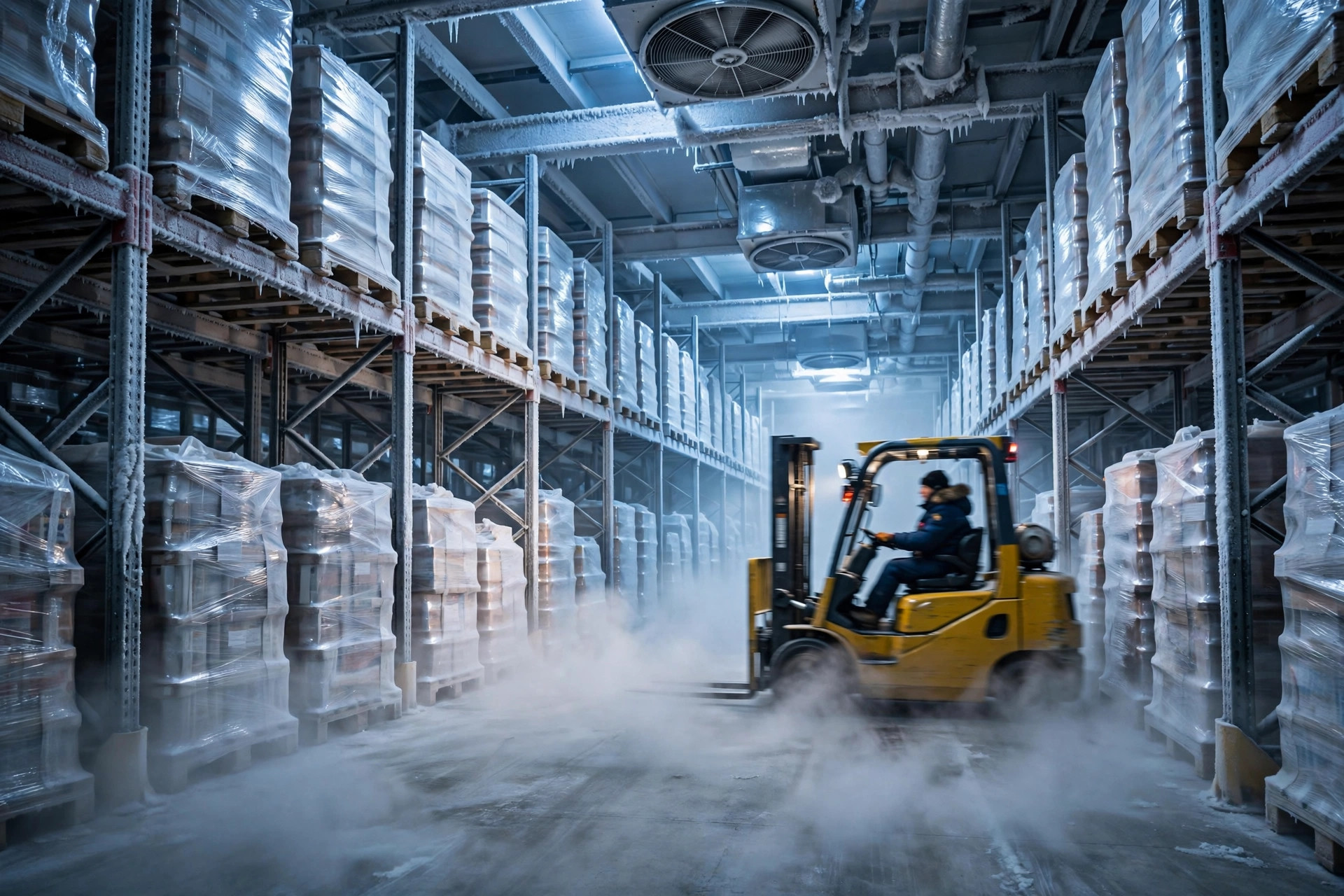
Maintenance Traps That Inflate Your Refrigeration Bill
Ranked by wasted power.
Trap one: evaporators left to frost up. Frost is insulation Defrost on schedule and do not wait until frost exceeds 5 mm — by then COP has already fallen off a cliff.
Trap two: dirty condensers. Dust-clogged fins or scaled-up evaporative condensers push condensing pressure up, and compressor power follows. Wash them quarterly, and always once before summer.
Trap three: aging door seals and panel joints. After five to eight years, gaskets deform and sealant cracks. Walk the building with an infrared thermometer — any exterior wall section reading noticeably colder than its neighbors is a leak point. No power-saving measure compensates for a leaky door.
Now the counterintuitive truth: the same budget spent on thicker insulation pays back faster than the same budget spent on a premium compressor. Going from 100 mm to 150 mm polyurethane panels adds perhaps several hundred thousand upfront on a mid-size facility but cuts envelope heat gain by roughly a third — and you can often downsize the compressor a notch, saving its cost too. Meanwhile a premium compressor beats a standard one by only 10–15% in COP while costing far more. Run both numbers and insulation's payback is frequently twice as fast. Past about 200 mm the gains get thin, so for a -18°C facility the dividing line sits around 150–200 mm.
One trade-off that needs saying plainly: some operators raise setpoint from -18°C to -16°C to save power. In theory the compressor works less — but frozen goods deteriorate far faster at -16°C than at -18°C, and one spoiled batch wipes out years of electricity savings. Setpoint follows the product category. That is a red line, not a savings lever.
Whether the money was worth it comes down to one number.
The single number: refrigeration electricity cost per ton of stored goods per month. Annual power bill divided by 12, divided by average inventory tonnage. For a frozen warehouse, a few dozen per ton per month means the system is fundamentally healthy. Pushing toward a hundred or more? Check insulation and door discipline first, then compressor matching — odds are one of the traps above is eating you.
No black magic here. Three sentences: leak less heat (insulation plus doors), make the compressor work efficiently (right-sized selection, inverters where the load swings, off-peak operation), and do not let it run sick (defrost, cleaning, sealing). Get those three right and the power bill will show you respect.
By Da Liu, Automation Engineer