Excerpt: Warehouse hazmat zone isolation is not about how wide you paint the yellow lines. It is about compatibility grouping, the right kind of separation, and daily discipline, and this article works through two warehouse cleanups, a comparison of four separation methods, and a decision framework you can run before opening a new zone.
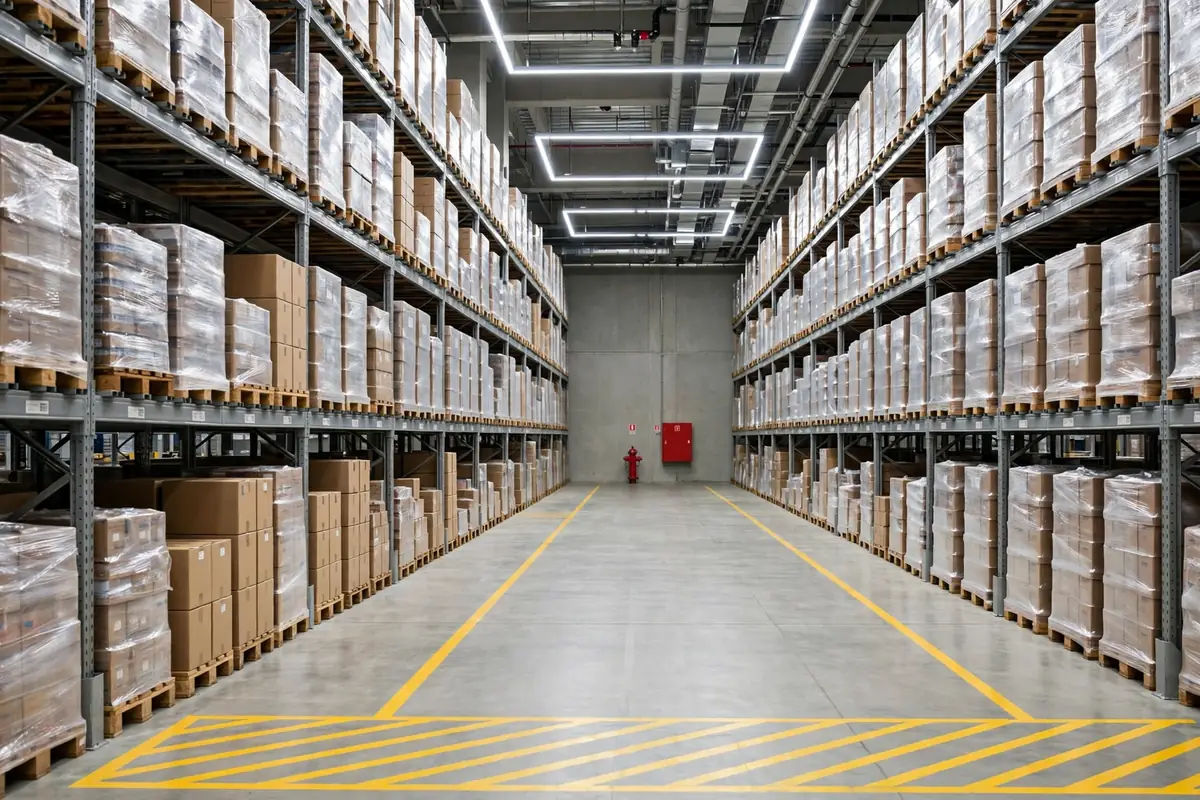
In the warehouses I have studied over the past few years, the most common state of a hazmat area is not "no isolation" but "the appearance of isolation." The yellow lines are painted, the signs are up, and the hazardous goods do sit in one corner. But ask one follow-up question — can these particular materials sit next to each other? — and the answer usually turns vague. Warehouse hazmat zone isolation has to answer a prior question before it answers anything about distance: which materials must never share a zone, and what physical means keeps them apart.
Warehouse Hazmat Zone Isolation Starts With Grouping, Not Distance
The logic of codes such as NFPA 400, the Hazardous Materials Code, points in the same direction. The first step is classification and compatibility: flammable liquids, oxidizers, corrosives, and toxic substances each carry their own storage requirements, and the most dangerous combination is two incompatible classes sharing one zone. An oxidizer can intensify a fire, a corrosive leak can eat into a neighboring container, and mixed storage can turn a small leak into a chain reaction. A chemical's Safety Data Sheet usually names its incompatible materials, which makes the SDS the most direct source for grouping decisions. Allowable quantities and separation distances, by contrast, depend on the fire department's approved plan for that building, so they vary by jurisdiction and facility, and any article quoting a single universal number for them should be treated with suspicion.
A third-party warehouse in California learned this the expensive way. The site consolidated several customers' chemicals inside one fenced area, on the reasoning that keeping everything hazardous in one place made control easier. During an inspection, a fire consultant flagged that one oxidizer stored there was listed as incompatible with the flammable liquids on the adjacent rack, according to its SDS. The fix was not wider lines. The oxidizer moved to a separate room with fire separation, and the picking routes for the two zones were redrawn so forklifts no longer crossed between them. The work took about two weeks, during which the affected orders went through manual review. The warehouse manager later said the partition was not the expensive part; the expensive part was the months spent believing the site was already compliant.
Four Ways to Separate, Four Very Different Bills
"Separated" can mean very different things, and the cost and protection level of each option differ sharply. The table below reflects patterns I have seen across facilities. Protection levels and costs are qualitative judgments; which option fits a given site depends on its approved fire plan.
| Separation method | Fits best | Cost | Weakness |
|---|---|---|---|
| Floor markings plus spacing | Small volumes, a single low-risk class | Lowest, almost no retrofit cost | Relies entirely on discipline, and peak season erodes it first |
| Fencing with controlled access | Multi-client sites that need access control | Moderate, fencing and access control as a one-time investment | Keeps the wrong people out, does nothing against fire spread |
| Fire-separated room | Two incompatible classes that must share a building | High, construction plus fire approval | Fixed footprint, so expansion means a new approval round |
| Separate building or outdoor storage | Large volumes or high-risk materials | Highest, long construction and approval timelines | Longer travel routes, and daily oversight tends to slip |
The cheapest option is also the most fragile, and that mismatch is where many warehouses get into trouble: a low-grade method holding a class of material that needs a higher grade.
The Peak Season That Ate the Isolation Zone
A second case, an e-commerce fulfillment warehouse, started from a textbook layout: painted lines, spacing, signage, all in place. The failure arrived with peak season. For several weeks running, inbound volume overwhelmed the receiving area, and the night shift rolled a few pallets of ordinary goods into the empty corners of the hazmat zone, intending to move them out the next morning. One night became three days, and three days became routine. By the quarterly count, half the zone's floor space held ordinary goods, not hazardous materials. Worse, pickers began entering through an informal gap on the far side to get around the temporary stacks, so access logs no longer matched actual movement.
No incident occurred. The cleanup still cost real money: every temporary pallet moved out, lines repainted, physical fencing installed, and the night shift retrained. The warehouse then adopted a rule that costs almost nothing: any non-hazardous item found inside the zone must be explained in the shift handover record, with a reason and a removal time, and anything unexplained is reported as an abnormal event. That rule has done more for the zone's integrity than any wider line ever did. In isolation work, enforcement discipline is usually scarcer than physical distance.
The Counterintuitive Part of Warehouse Hazmat Zone Isolation: Wider Is Not Safer
Researchers and floor managers often start from opposite intuitions here. The intuition says a wider isolation zone is a safer zone. What the field shows is that an oversized zone invites two risks of its own. Empty space gets borrowed during peak season, so the zone shrinks in practice even as it looks generous on paper. And a larger zone means a longer inspection route, which usually means less frequent inspection, so small leaks and damaged containers are found later. What actually determines risk is whether the compatibility grouping is right, whether the separation method matches the hazard class, and whether someone verifies every day that the zone is still clear.
My suggestion therefore runs against the intuition: size the zone compactly around the actual classes and approved quantities, and spend the saved attention on three small routines. Check the SDS incompatibility section before any new product enters the zone, because a grouping error makes every line width irrelevant. Run a monthly "clear zone" check that asks only one question: is there anything in here that does not belong? And review the product mix every quarter, because as the customer base changes, the hazardous classes and volumes change with it, while the isolation plan tends to stay frozen at last year's version.
Warehouse hazmat zone isolation rules will keep tightening; that much is a safe trend to predict, as e-commerce keeps pushing more chemical classes in smaller lots into general warehouses. But no code text can substitute for the daily judgment a warehouse has to make for itself: in your building, which materials must never sit together? Until that question has a confident answer, the yellow lines are only paint.
By Dr. Chen, Supply Chain Researcher