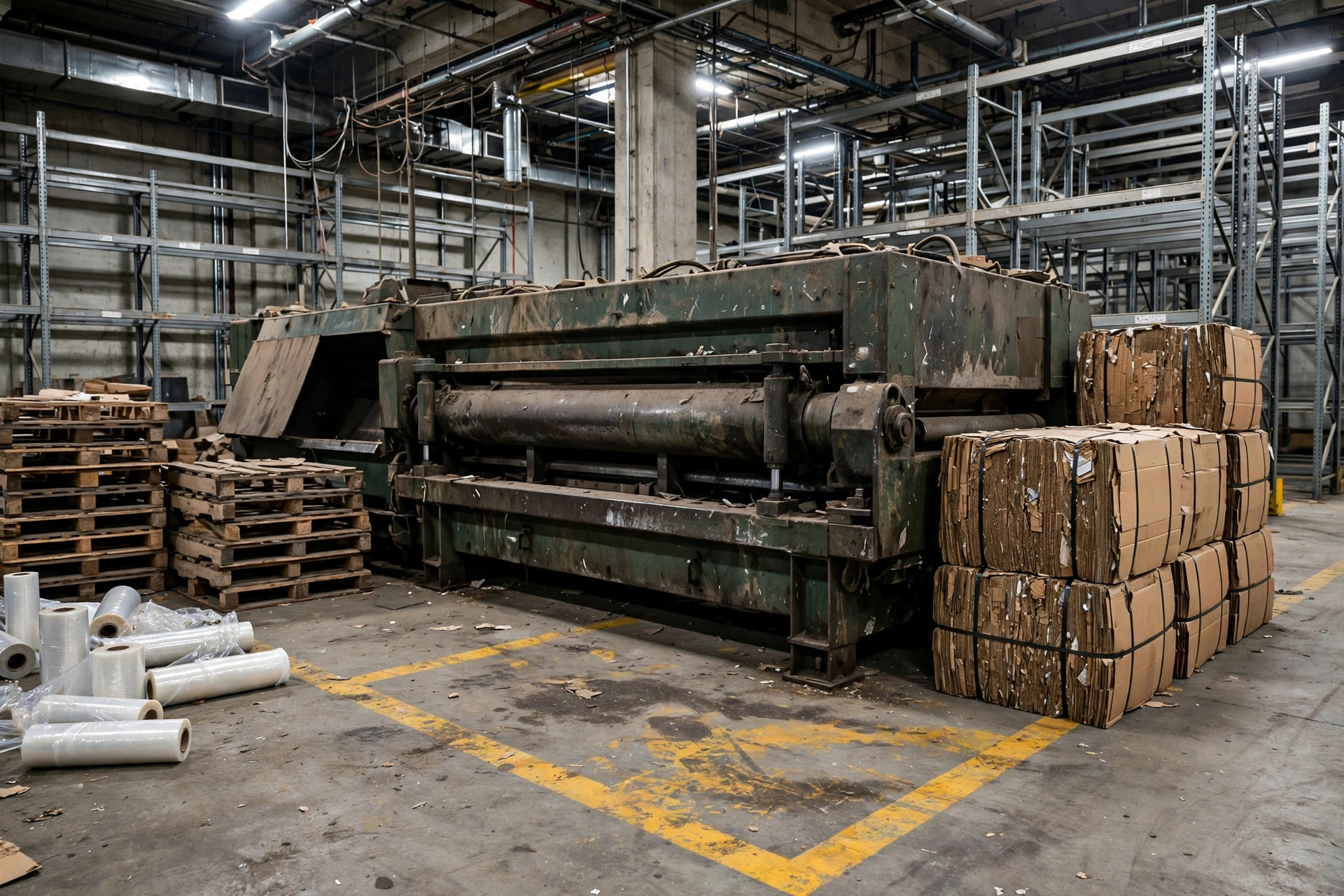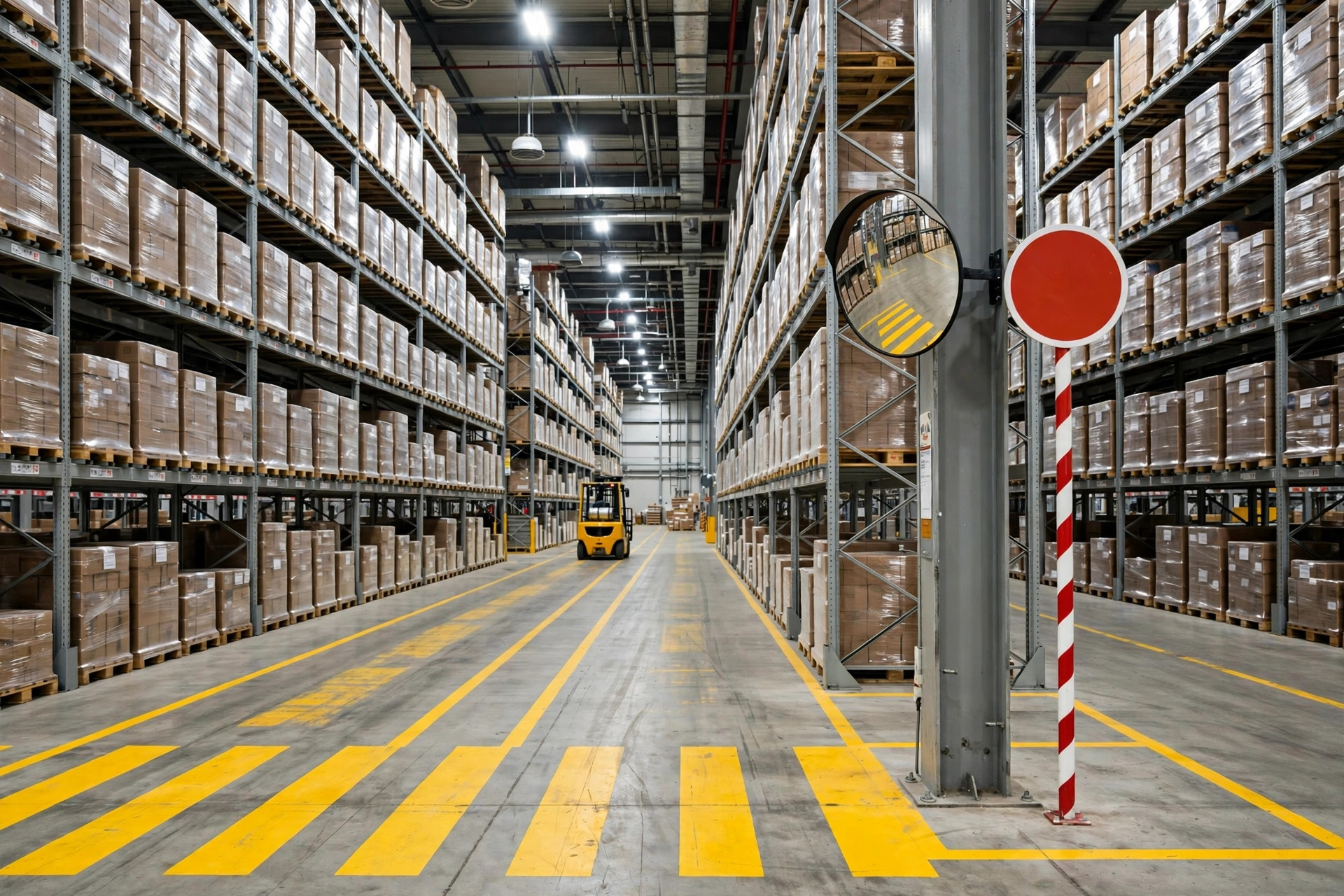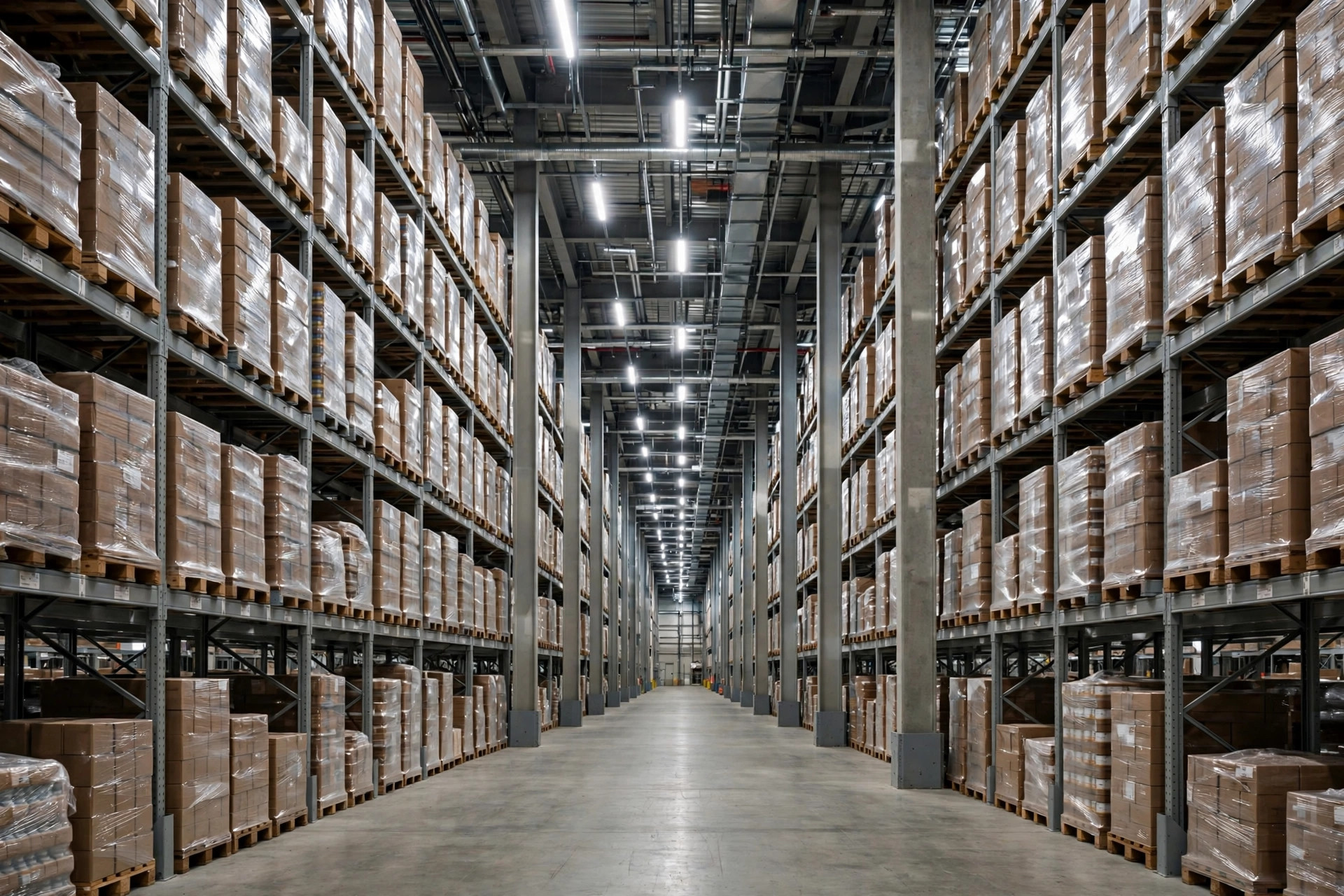
I learned about warehouse flooring the expensive way. In October 2023, I took over a 32,000-square-foot warehouse in Dongguan. The rent looked great. Then I walked in and looked at the floor: bare, aging concrete, gray dust everywhere. A forklift would roll through and leave a little dust storm behind it. A customer came to inspect, ran a finger along a carton, and asked: you really store goods on a floor like this? I smiled and said it was fine. In my head, I was already doing the math.
Our Problem: Dusty Floor, Dusty Goods
Small warehouses like mine run on thin margins. The landlord handed over bare concrete, and the lease did not include resurfacing. I got quotes from three flooring crews, and each one was scarier than the last. Full epoxy would have cost me two months of rent. Hardener was cheaper but meant clearing out and shutting down. Doing nothing looked free, but it was not: sweeping labor, chargebacks over dusty cartons, forklift tires wearing down fast. The money was leaking out quietly.
The worst moment came in November 2023. A customer came to inspect, wiped a white glove across a carton, and found gray dust. He docked us 2,000 yuan for cleaning on the spot, on an order that was barely profitable. That evening I sat outside the warehouse and got the real lesson: the floor is not about looks. A dusty floor taxes you every day, just quietly.
Three Warehouse Flooring Materials, Side by Side
I asked flooring crews, the warehouse owner next door, and materials sellers. Here is the comparison table I ended up with. Prices are ranges I was quoted at the time; they vary by city and thickness, so get local quotes before you buy.
| Material | Cost per sq ft | Wear resistance | Dust control | Slip resistance | Maintenance |
|---|---|---|---|---|---|
| Epoxy floor | $1.50–$4.00 | Good | Excellent | Fair, slippery when wet | Scratches easily, patches show color mismatch |
| Concrete hardener (dry-shake) | $1.00–$2.50 | Excellent | Good | Good | Low fuss, small cracks are livable |
| Bare / polished concrete | $0.30–$1.50 | Fair to good | Bare is poor, polished is good | Good | Bare concrete sheds dust constantly; polished is easy |
Downtime matters too. Epoxy needs primer, middle coat, and topcoat, plus curing: a week at best, up to two weeks for a full floor, with no inbound during the work. Concrete hardener goes in with the slab, so it is cheapest in a new building; retrofitting means grinding the old surface first. Polished concrete is fastest, often two or three days. For a small operation that cannot stop shipping, downtime can matter more than price per square foot.
Epoxy Flooring: Beautiful, Clean, Expensive, and Fussy
Epoxy first. In June 2024, a friend in Jiaxing coated his whole warehouse in epoxy. It looked amazing, and his customers loved it on inspections. Dust control was genuinely excellent: one mop and the floor was clean, and complaints about dusty cartons basically disappeared.
But fussy is the right word. A pebble stuck in a forklift tire drags a scratch across the coating. A dropped pallet chips the paint, and the patch never quite matches, like a bandage on a suit. The epoxy itself was not outrageous, but yearly patching and upkeep added up to roughly what a hardener treatment for the aisles would have cost.
Another catch: epoxy gets slippery when wet. On a rainy day, truck tires carry water inside, and a worker pushing a hand pallet jack too fast can slide. Epoxy fits one kind of operation: high-value goods, frequent inspections, strict cleanliness, like cosmetics or food-adjacent storage. If that is you, it can pay for itself in orders won. If your goods are ordinary household items or hardware, like mine, that pretty coating is hard to justify.
Concrete Hardener: The Small Warehouse Workhorse
Hardener is what I chose for my own warehouse. In January 2024, I had the main aisles and staging area treated with dry-shake concrete hardener, about 13,000 square feet. The crew took four days, and we only shut down half the warehouse; the other half kept shipping.
How did it turn out? Not flashy, but solid. After more than a year of daily forklift traffic, the aisles show only light wear marks, no crumbling, no big peeling patches. Sweeping went from three times daily to once. Best of all, it takes a beating: a dropped pallet leaves a mark, not a wound, and a small crack is livable, unlike epoxy, where every flaw stares at you.
Hardener has limits. Colors are few: gray with a bit of texture, and no customer will walk in and think your warehouse looks fancy. It is a working floor, not a showroom. Retrofitting an old floor means grinding, which adds labor and time. I only treated the main aisles, and the racking area stayed old concrete, so dust from there still drifted into the aisles. That is the price of a compromise.
Bare Concrete: Do Not Write It Off
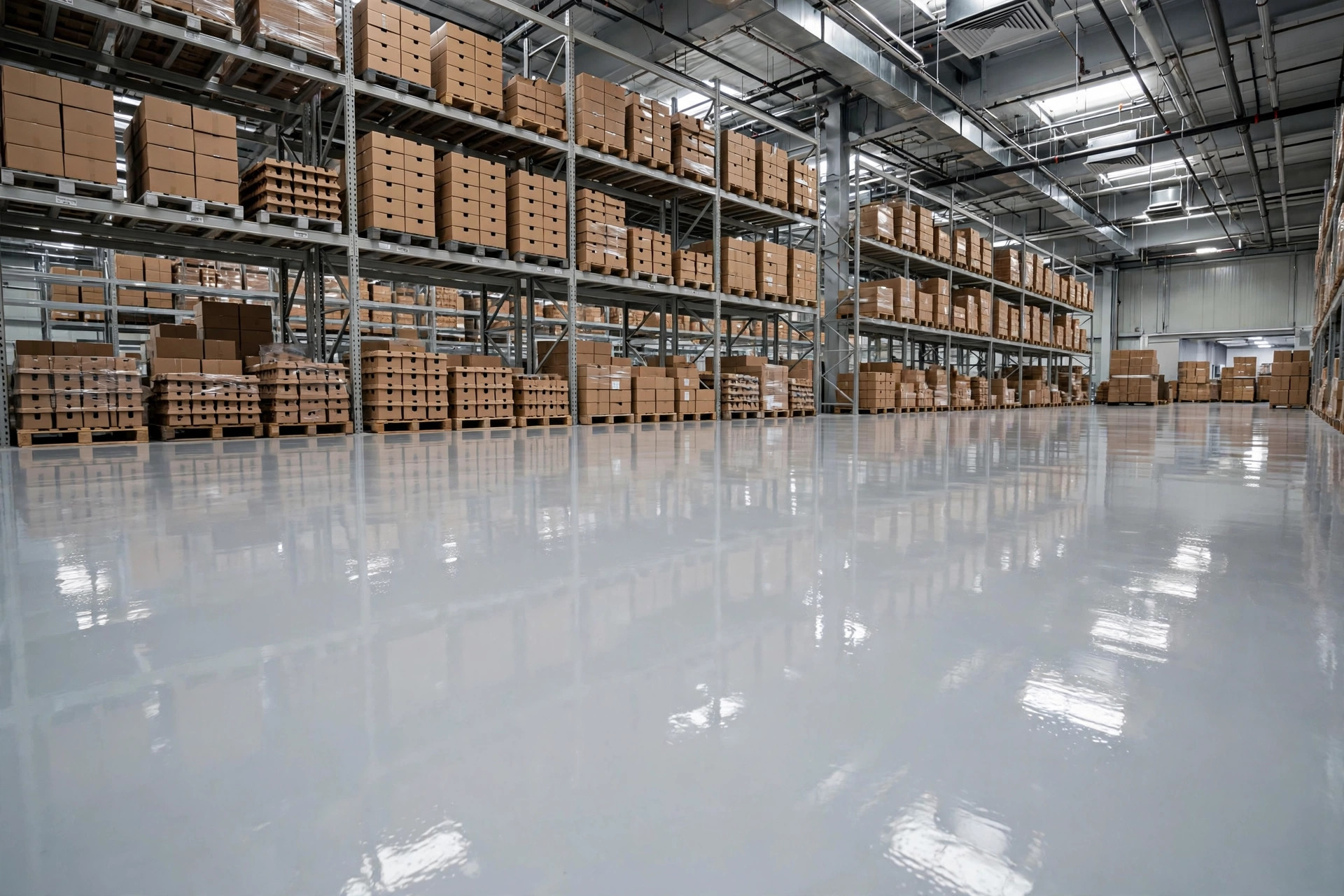
Bare concrete, the raw floor the landlord hands you, is what most people think of as "no floor at all." I used to think that too. Polished concrete, where you grind the slab, densify it, and polish it, gives you a hard surface with much less dust, at the lowest cost of the three, and the work is fast.
My neighbor Lao Chen is the example. In September 2024, he skipped epoxy and hardener for his 21,000-square-foot warehouse and went with sealed, polished concrete. The job took under a week. I teased him for being cheap, then went to look: flat, clean, no dust kicked up by forklifts. His words stuck with me: "The floor just needs to stay out of the way. The money I saved pays for an extra packer."
Raw, untreated concrete is different. It sheds dust and eats forklift tires, a cost most people never calculate. My old forklift ran on dusty concrete for six months and wore down a good chunk of its tire tread. A new set of tires costs about as much as polishing several hundred square feet. The floor and the tires grind each other down.
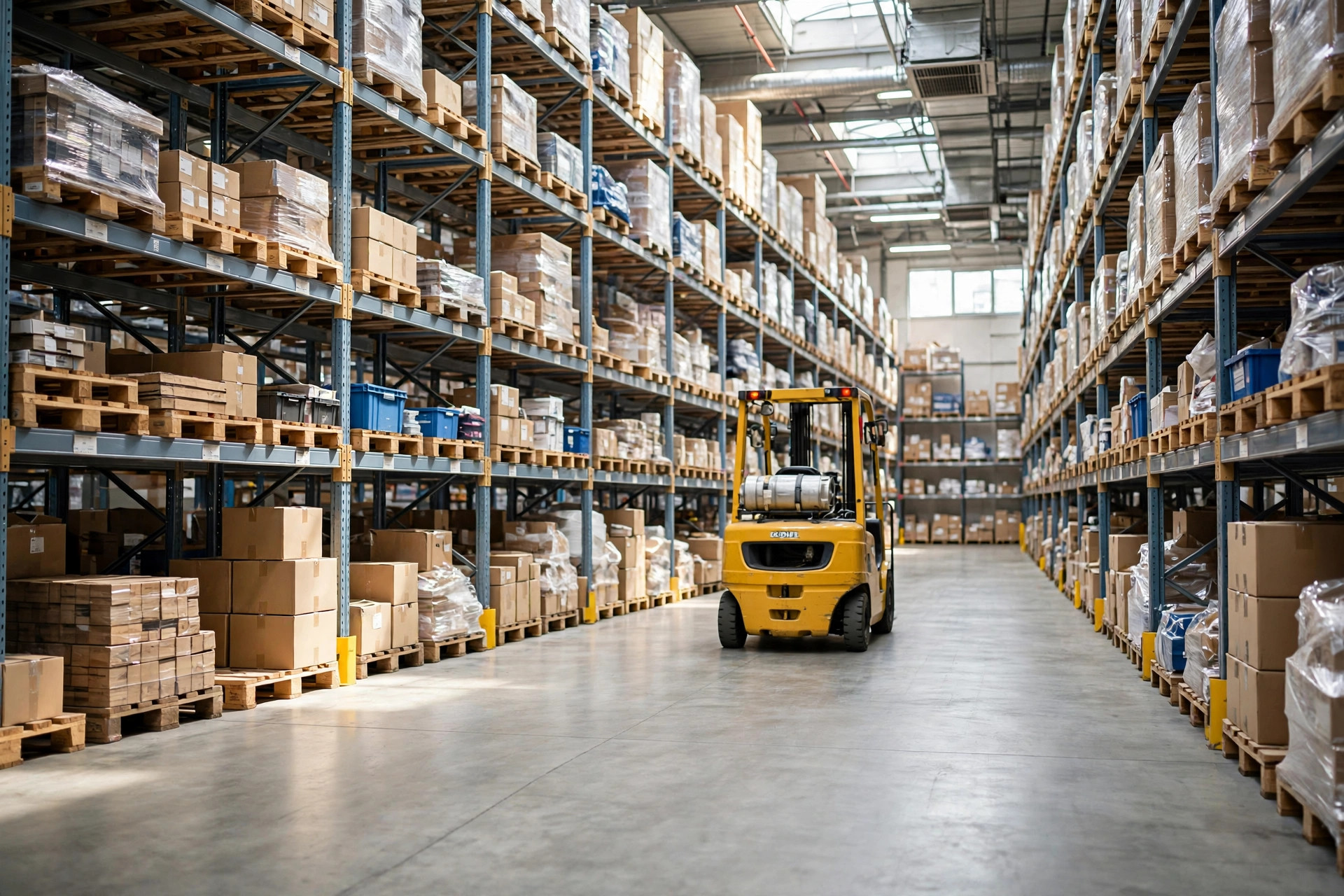
My take on concrete: either spend a little on polishing and sealing, or accept daily sweeping. The worst choice is doing neither and complaining about the dust, paying for extra cleaning labor and customer chargebacks at the same time.
How to Choose by Budget: My Cheap-and-Cheerful Method
Here is the counterintuitive part: the most expensive floor is not the best floor. The best floor matches your business. Big companies pour full epoxy because they have a brand to show off, audits to pass, and tour groups to impress. Our goods, customers, and order volume are on a different scale. Copying a big company's flooring plan means spending small-warehouse money to buy a big-warehouse look.
My method splits it into three tiers:
Tightest budget, ordinary goods, fast turnover: polished, sealed concrete first. It stops the dust problem, and the savings go where they count, like an extra hand pallet jack or better lighting. Upgrade the aisles later when the business stabilizes.
Mid-range budget, forklifts running all day, average-value goods: hardener on the main aisles and staging area, polished concrete in the racking area. That is what I did. Zone it, and spend where the wheels go most.
Comfortable budget, high-value goods, frequent inspections: full epoxy, but treat the dock and aisles for slip resistance, and budget for annual patching from day one. Epoxy is not a one-time purchase; maintenance belongs in the original decision.
One more piece of cheap wisdom: have the crew do a small test patch first. Drive a forklift over it for two days and splash water on it. I have seen people finish a whole floor only to find the color and slip resistance both wrong, and redoing it cost as much as doing it twice.
Advice for Warehouses Like Mine
Here is the honest version. Picking a floor is not about whose floor is shiniest. It is about whose math is clearest. Epoxy is beautiful, hardener is tough, concrete is cheap. Look at your own business first: goods value, inspection visits, forklift trips a day, days you can shut down, and then choose.
My warehouse today has hardener in the aisles, polished concrete in the racking area, and one small patch of epoxy by the entrance, where the customer's white glove found dust. It sounds unglamorous, but the math works best. No more chargebacks, sweeping once a day is enough, and the forklift tires last longer.
Big companies have their full-epoxy playbook. We cannot afford it, and we do not need to force it. A small warehouse has its own way of surviving.
By Xiao Ma, Small Warehouse Owner