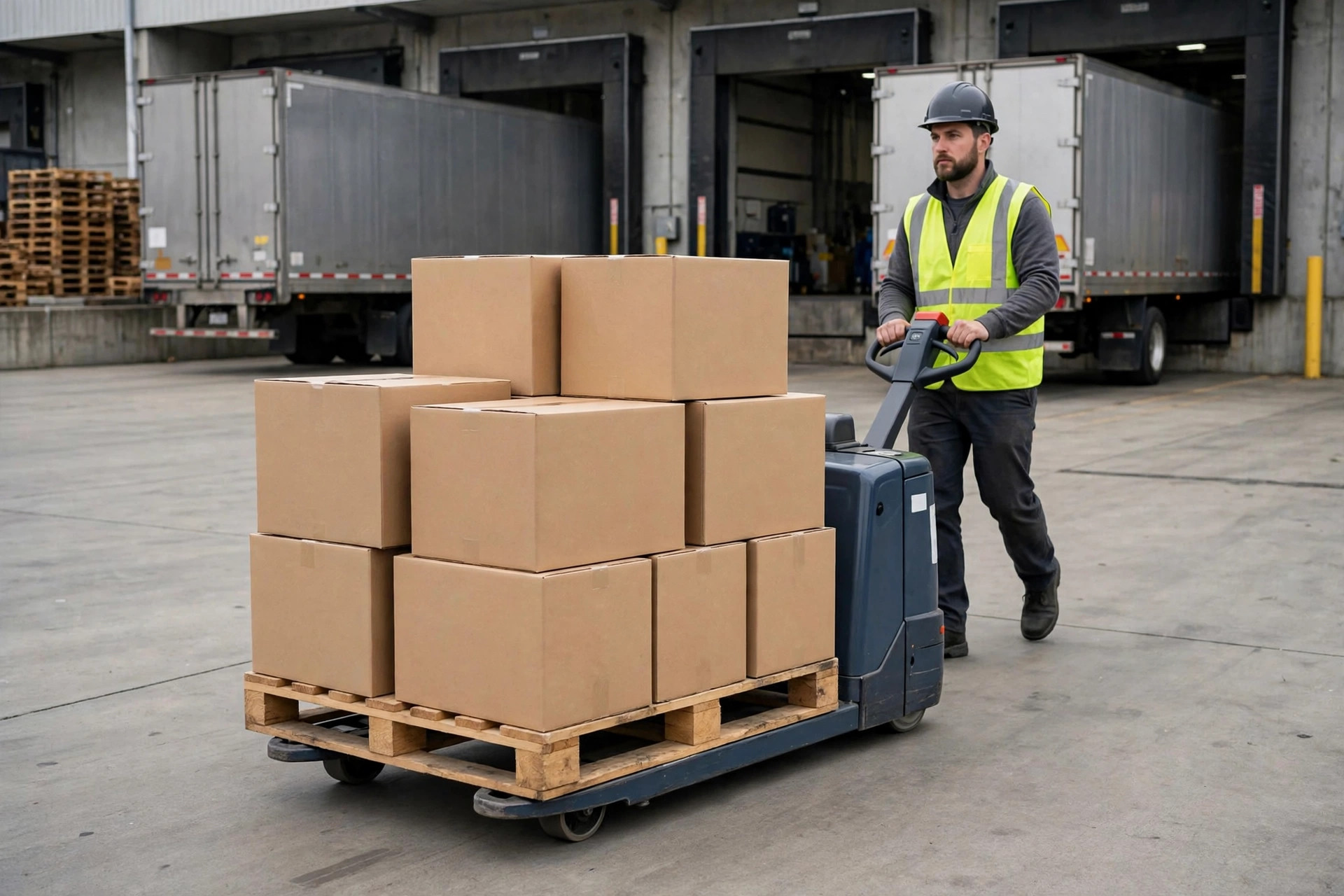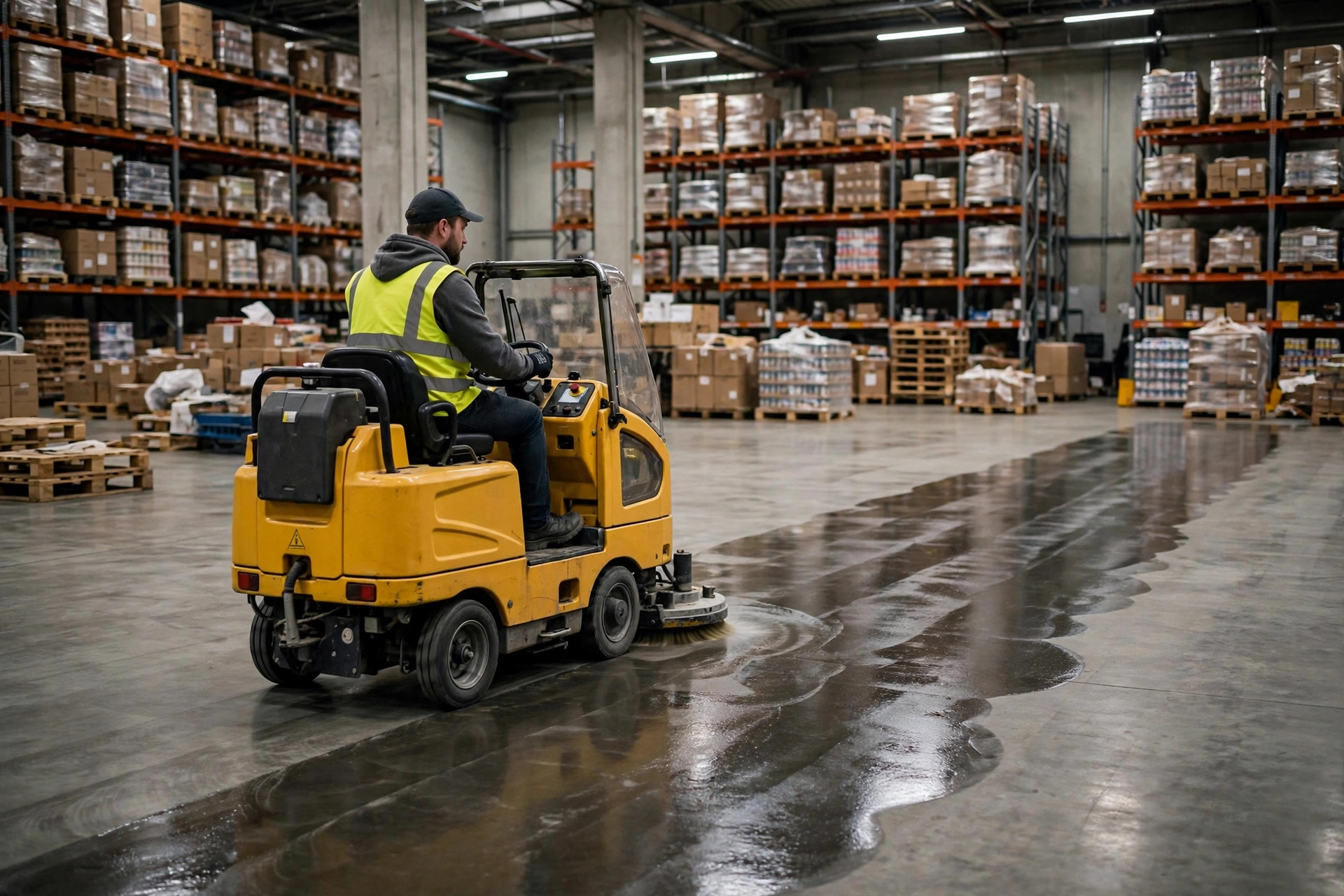
We have a client who opened a new e-commerce warehouse outside Phoenix in 2024, close to 60,000 square feet. First month in, the operations manager called me to complain: the floor never looked clean. They were mopping every night. The floor still looked tired by noon. His words were, “We bought a scrubber, so why does it still look like this?”
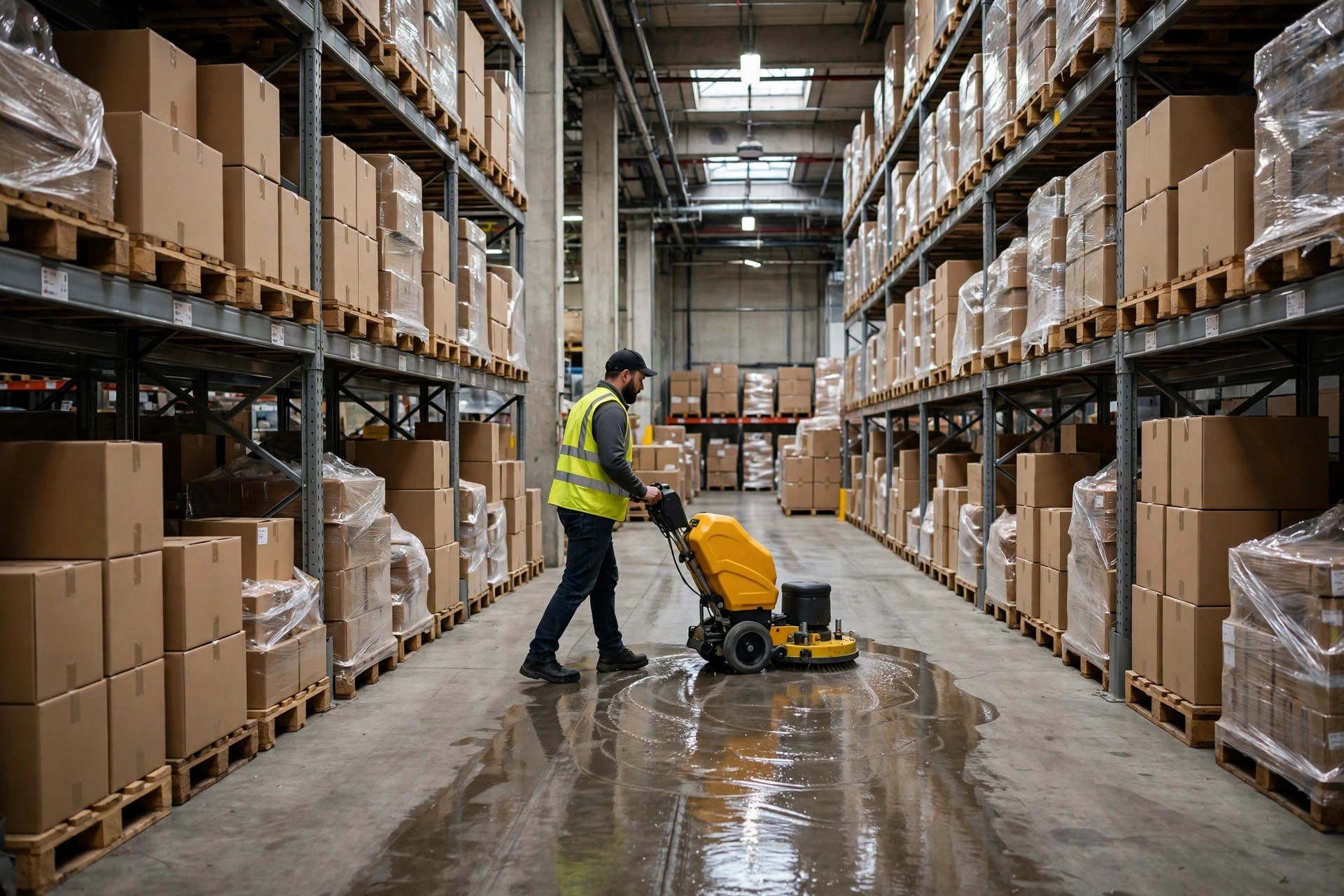
Because buying a scrubber is not the same as solving floor cleaning. The machine was a walk-behind unit, perfectly fine for a small space. The warehouse was not a small space. The mismatch cost them labor hours every single night, and it cost them something harder to measure: the place looked neglected, and visitors noticed before they noticed anything else.
That is the pattern I see again and again. Warehouses pick a floor scrubber the way people pick a vacuum cleaner, by price and by whatever the salesperson recommends. Then they live with the consequences for years, because a scrubber is not something you replace casually.
The Client Story: A Dirty Floor Costs More Than Pride
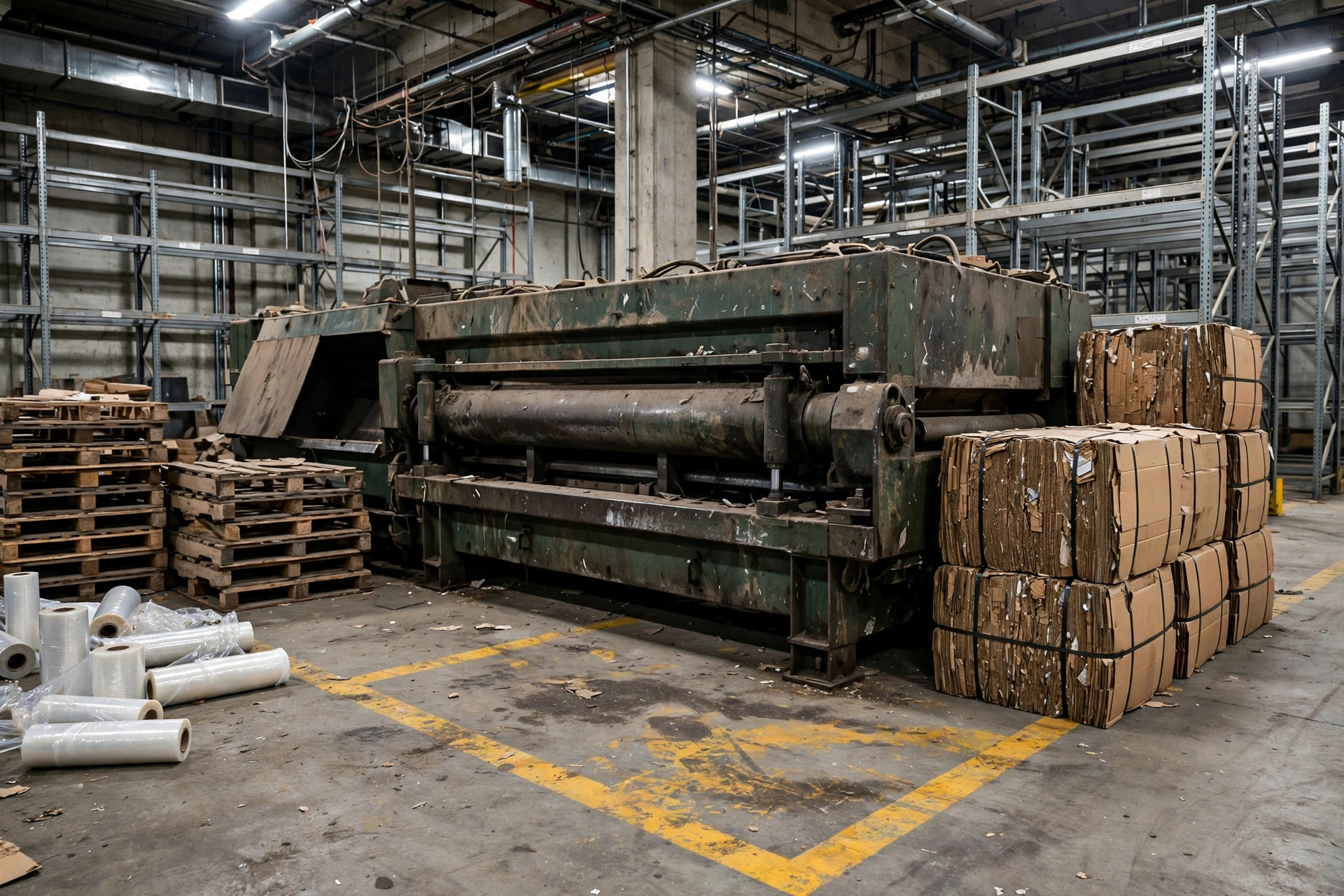
Let me stay with the Phoenix warehouse for a minute. The building handled e-commerce fulfillment, which means cardboard dust, packing debris, and forklift tire marks, all day, every day. Their walk-behind scrubber could clean roughly a narrow aisle at a time. One worker spent most of the night shift pushing it. The main aisles got done. The bulk storage area got done when someone had spare time, which was almost never.
The turning point was not a cleanliness audit. It was a near-miss. A picker slipped on a dusty patch near the packing station. Nobody was hurt, but the incident report landed on the general manager’s desk, and suddenly floor cleaning was a safety budget item, not a janitorial one. They brought in a ride-on scrubber on a trial. Same floor, same night shift, and the whole building got cleaned in about half the time, with the worker still fresh enough to do other closing tasks.
I have seen the opposite mistake too. In 2023, a small 3PL in the Midwest bought a ride-on scrubber for a warehouse under 20,000 square feet with narrow aisles and tight racking. The machine was too wide for half the aisles, and the operator spent more time maneuvering than scrubbing. They ended up using a walk-behind unit for most of the building anyway, and the ride-on sat in the corner like an expensive reminder. Bigger is not better. Right-sized is better.
Ride-On vs Walk-Behind: Floor Area Is the First Dividing Line
Here is the rough rule I give clients. Under about 20,000 square feet with narrow aisles, a walk-behind scrubber usually wins. It turns tight, it stores small, and one worker can handle it without a learning curve. Between roughly 20,000 and 50,000 square feet, the answer depends on aisle width, obstacles, and how often you clean. Above roughly 50,000 square feet of open floor, a ride-on usually pays for itself in labor savings alone.
A third category deserves a mention: sweepers. If your main problem is dry debris, cardboard dust, and packaging scraps, a sweeper may matter more than a scrubber. Many warehouses need both, or a combination machine. A scrubber on a floor covered in dry dust just makes mud. Clean the dry stuff first, then scrub.
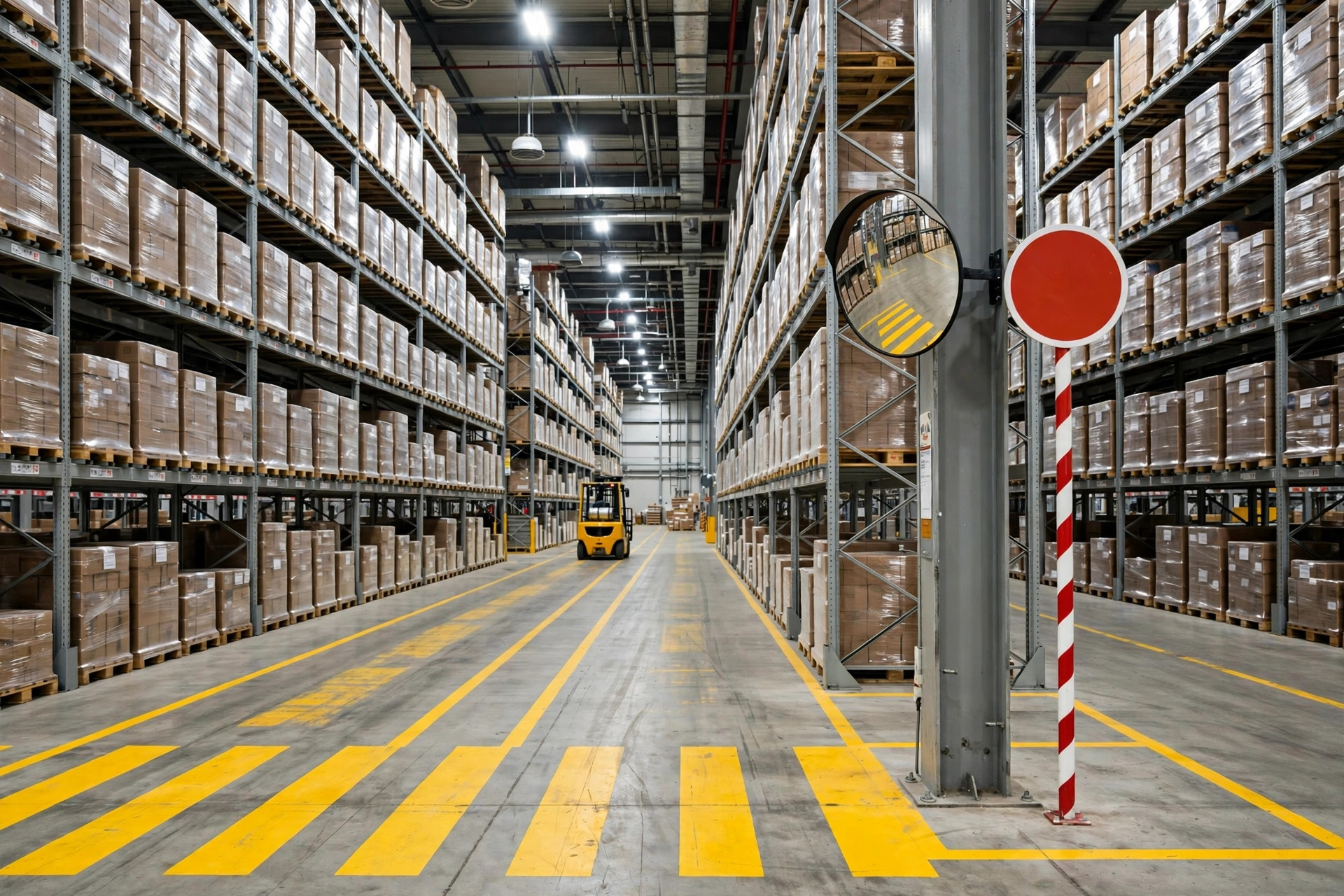
Aisle width decides as much as total area. A ride-on needs room to turn. If your aisles are tight, measure the narrowest aisle and the tightest turn before you look at any brochure. I have watched a demo go beautifully in an open dock area and fail completely in the actual racking aisles.
The Real Cleaning Cost: Labor Is the Big Number
When clients compare machines, they compare purchase prices. That is the smallest part of the bill. Labor is the big number.
| Cost item | Walk-behind | Ride-on |
|---|---|---|
| Purchase price | Lower | Higher, often several times the walk-behind |
| Cleaning speed | Slower, operator walks | Faster, operator rides, wider path |
| Labor per cleaning | Higher, more hours for the same area | Lower, fewer hours for the same area |
| Operator fatigue | Higher, physical pushing | Lower, seated operation |
| Best fit | Small areas, narrow aisles | Large open floors |
Take a warehouse that cleans its floor five nights a week. If a ride-on saves even one labor hour per night, that adds up to hundreds of hours a year. Multiply by your fully loaded labor cost and the machine starts paying for itself on a timeline you can calculate. If the building is small enough that the saving is fifteen minutes a night, the math will not close, and the walk-behind is the right call. This is arithmetic, not preference.
Floor Scrubber Selection: Dust, Slips, and Consumables People Forget
Dust control is the one clients underestimate most. Cardboard dust gets into everything: into product packaging, into scanner lenses, into people’s lungs. A floor that looks dusty usually is dusty, and a dusty floor makes the whole operation look sloppy to visiting clients. I have seen a 3PL lose a prospect walkthrough over a dirty floor, and the prospect never said a word about the floor. They just did not come back.
Slip risk is the second one. A freshly scrubbed floor that is still wet is a hazard. So is a floor with a thin layer of dust on a smooth concrete surface. Ask about drying time, and ask how the machine handles the water it lays down. A scrubber that leaves the floor wet for an hour creates a new problem while solving the old one.
Consumables are the third. Brushes and pads wear out. Squeegees wear out. Batteries age. None of this is dramatic, but it adds up, and it is the part of the quote that gets the least attention. Before you buy, ask for the consumable replacement schedule and the price of each item, and put a full year of consumables into your comparison. A machine with cheap brushes and expensive batteries can look like a bargain and cost more over three years than the machine next to it.
Before You Sign the Floor Scrubber Contract, Ask These Three Questions
This is the part I give every client, and it applies whether you are buying or signing a service contract.
One: what is the real cleaning time for my floor, measured in my building, not in the brochure? Ask for a demo on your own floor, in your own aisles, with your own debris. If the vendor will not demo on your floor, that tells you something.
Two: what is included, and what is not? Consumables, batteries, warranty coverage, service response time, loaner machines during repair. Get it in writing. The cheapest quote usually leaves the most things out.
Three: what does the first year really cost, all in? Machine, consumables, batteries, service, labor. If the vendor cannot give you a first-year total, you do not have a quote. You have a starting number.
The Phoenix warehouse switched to a ride-on, kept the walk-behind for tight corners, and stopped arguing about the floor. The Midwest warehouse sold the ride-on at a loss and went back to a walk-behind that fit its aisles. Both ended up in the right place. Both paid a tuition fee to get there. You do not have to.
Next time you talk to a vendor, ask those three questions, and watch how fast the conversation gets honest.
By Susan, 3PL Sales Director