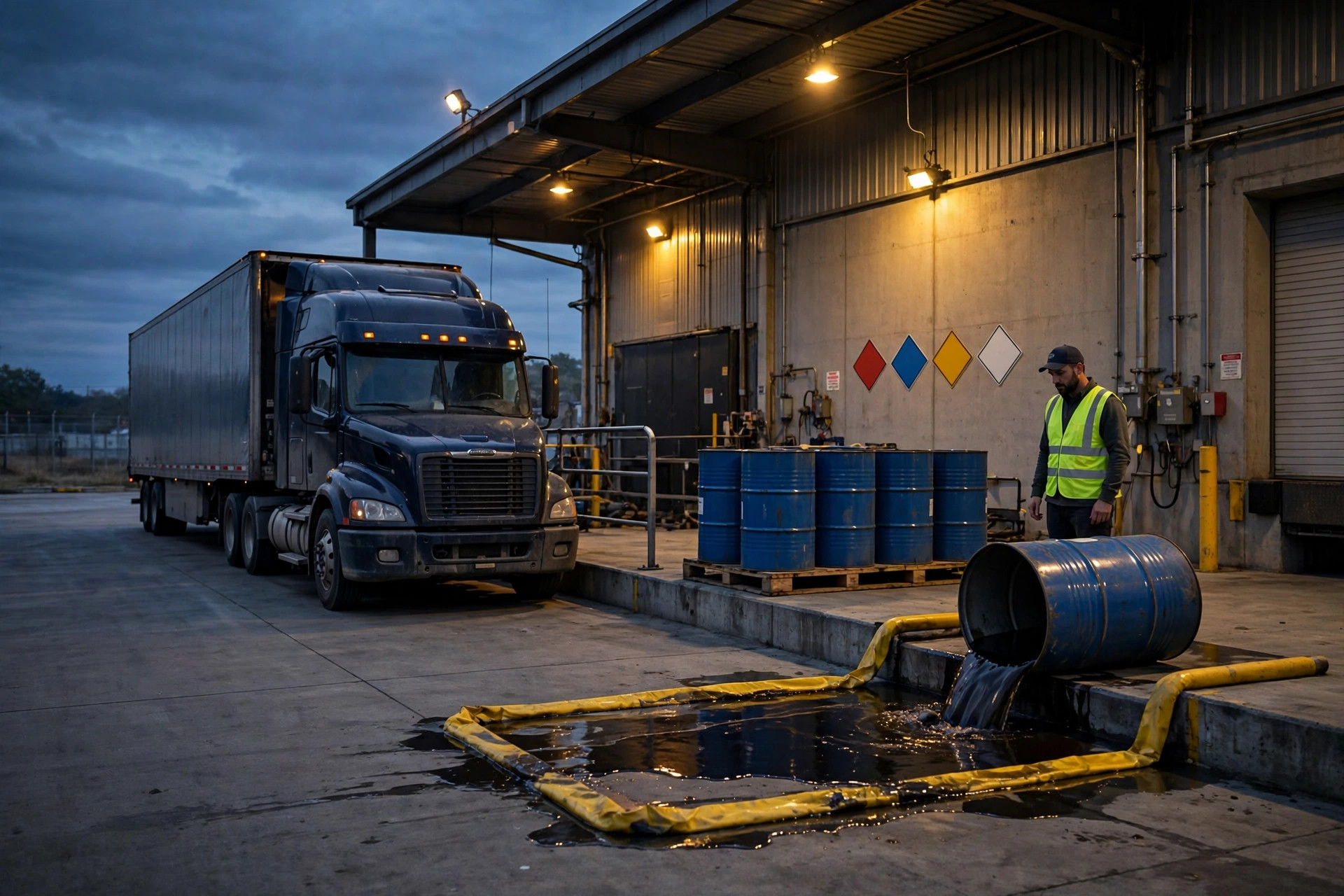
Warehouse flooding prevention is one of those things nobody budgets for until the water is already inside. We learned it the expensive way.
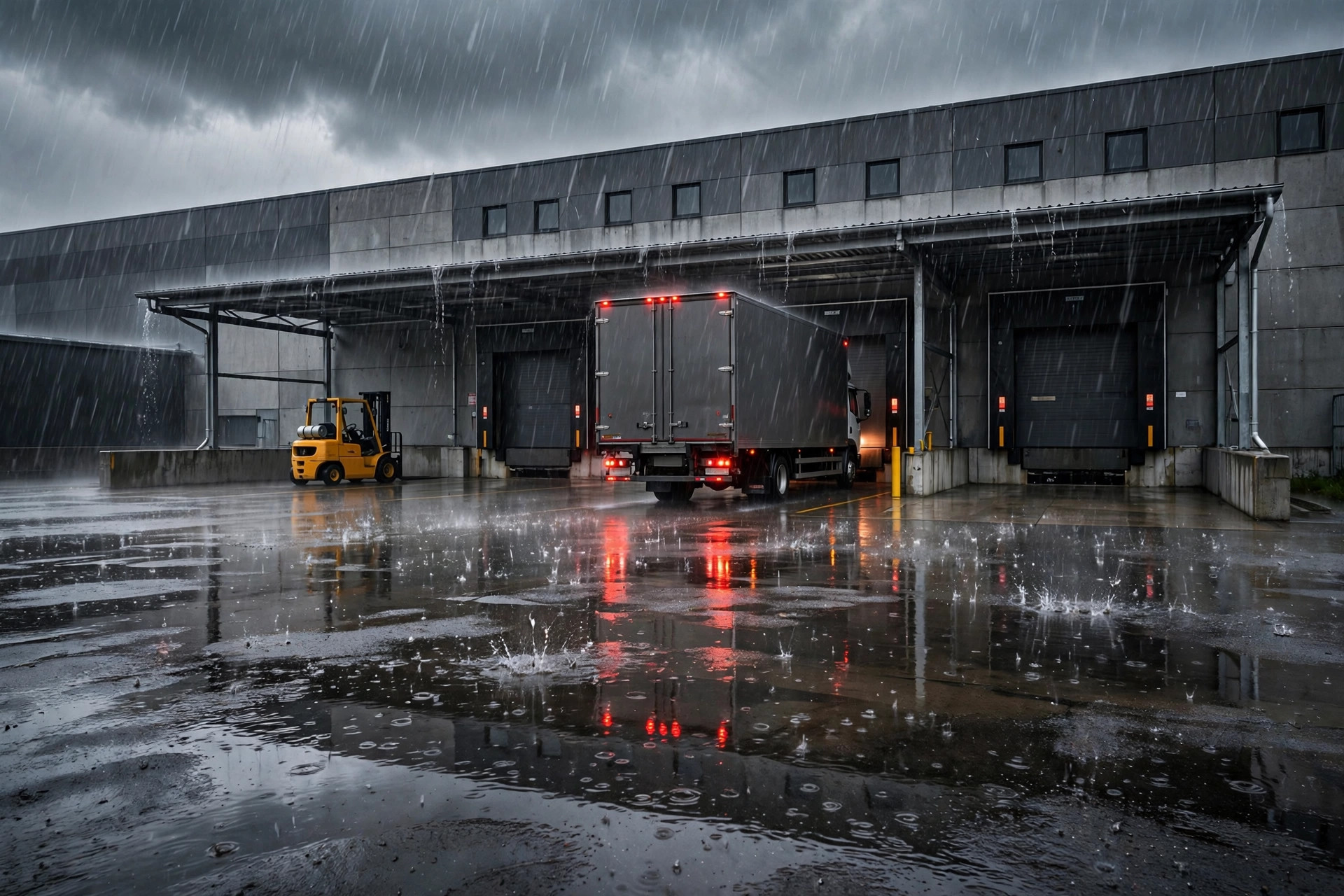
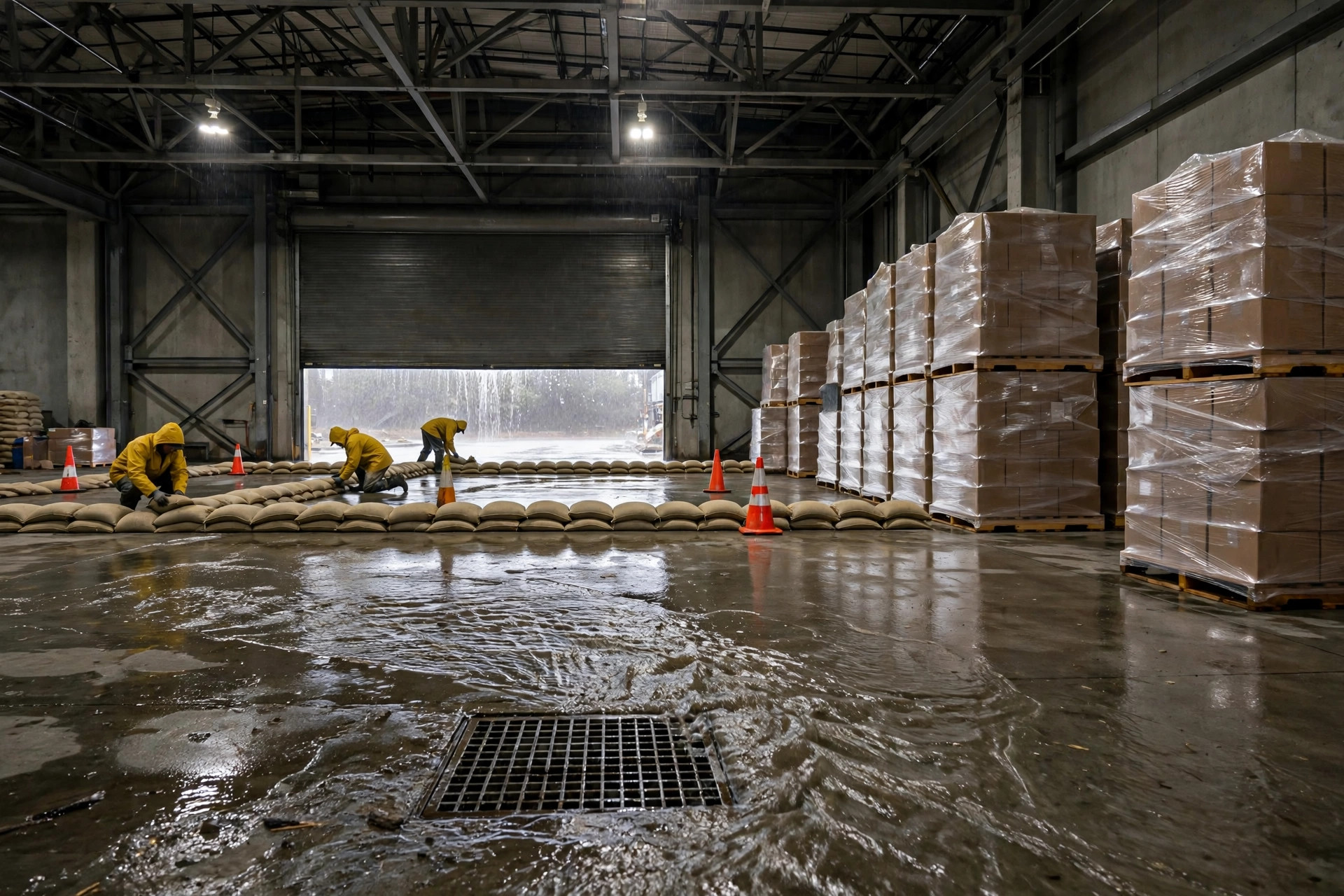
It was 2:30 in the morning, night shift. Rain was coming down like someone had tipped a bucket over the sky. I was doing my rounds and walked up to Door B — our main inbound/outbound door. I looked down and my stomach dropped. Water was already over the threshold, running down the ramp and into the building. The outer row of pallets in staging had cartons with soaked, darkened bottoms. We yelled for help, threw sandbags at the door, fired up the pump.
By sunrise the water was gone. The damage count: dozens of cartons ruined, customer freight inside, and yes — we paid for every bit of it. That night I kept thinking one thing: can you actually stop this water?
How the Problem Actually Started
When we did the post-mortem, here's what we found. First, our site isn't low ground. When the building went up, nobody treated flooding as a real risk. Felt safe. Second, the ramp at the door had settled over the years. It used to slope outward. Now it slopes inward — every drop of rain runs into the warehouse. Third, and this was the killer: the municipal drain line was old and half-clogged. In a downpour, water didn't come in through the door. It came up through the drain. Ground elevation had almost nothing to do with it. Blocked pipe, flooded floor. Simple as that.
A year earlier, the warehouse next door flooded. We laughed at them. "Low ground, what did they expect?" Then it happened to us and nobody was laughing. Let me be straight with you guys: most warehouse flooding isn't an act of God. It's neglect. Nobody maintains the drains, and the storm collects the debt.
Warehouse Flooding Prevention: Everything We Tried, and the Tuition Each One Cost
After that first flood, we tried everything.
Sandbags first. Bought a couple hundred, stacked them by the door. Here's the reality: sandbags eat floor space, they grow mold, and when you actually need them, it takes two people to carry one bag and half an hour to seal a single door. A storm doesn't wait half an hour. And sandbags do exactly nothing about water backing up through a drain. Verdict: sandbags are peace of mind, not a solution.
Then flood barriers — custom stainless steel boards that slot into the door frame. Three minutes to install. Much better than sandbags. But we have six doors, and outfitting all of them isn't cheap. And if the water genuinely rises half a meter, barriers won't save you either. It seeps through the gaps and the base of the wall.
Then pumps. Two submersible pumps, one primary, one backup. Pumps genuinely work — they move water out far faster than any crew. But pumps have two conditions: power and a clear discharge. The moment the power trips in a storm, your pump is a paperweight. We ended up running a dedicated circuit for the pumps and keeping a generator on standby.
And then we found the cheapest, most effective fix of all: cleaning the drains. The trench drains and grates by the door were choked with pallets, trash, and leaves. Water couldn't get out, so the apron turned into a pond. Now we clear the drains monthly, and always right before rainy season. Nearly zero cost. Best result.
I should also mention the fight with the driver. One storm, water was ankle-deep at the gate. The driver refused to back in — said he was afraid of stalling. Our receiving crew nearly got into it with him. After that I set a rule: if standing water is deeper than half a tire, the driver can refuse entry, no argument. We send a forklift to the gate to shuttle the freight, or we reschedule. Yelling doesn't solve anything. Rules do. And honestly, the driver is a working stiff too — if his truck dies in our lot, he's the one answering for it.
The Math: What Prevention Costs vs. What One Flood Costs
| Where the money goes | Rough cost | What it buys you |
|---|---|---|
| Flood barrier per door | A few thousand | Seals the doorway, three-minute install |
| Submersible pump | A thousand or two | Moves water out fast, needs dedicated power |
| Drain cleaning | Labor only, nearly free | Gives water somewhere to go — best ROI |
| Re-grading the door ramp | Tens of thousands | Fixes the inward slope for good |
| Sandbags (couple hundred) | A few thousand plus floor space | Peace of mind, slow in real use |
| One flood | Damaged cartons + claims + downtime — tens to hundreds of thousands | And that's before you count lost customer trust |
Do the math and it's obvious: prevention spending and flood losses aren't even in the same league. The most expensive option is doing nothing.
Our Warehouse Flooding Prevention Checklist: What We Do Now, Every Year
Before every rainy season, our warehouse runs this checklist. Non-negotiable:
- Clear every drain and grate. Photo it. Whoever cleaned it signs off.
- Test both pumps — run them ten minutes each, confirm the discharge is clear.
- Install every flood barrier once, check the seals for wear.
- Nothing sits on the floor in low areas. Cartons go on pallets, minimum one pallet high.
- Night-shift rounds add two checkpoints: Door B and the main drain. In heavy rain, check hourly.
- Keep pump spares on hand: seals, power cords, generator fueled.
Here's the counter-intuitive part: the most expensive approach to warehouse flooding prevention is trying to block the water. The cheapest is giving it somewhere to go. You can't dam water out — you have to route it away. A properly sloped ramp and clear drains beat any mountain of sandbags. And one more thing that surprises people: high-ground warehouses flood too. The water doesn't come through the door, it comes up through the drain. When you're touring a site before signing a lease, don't just look at the elevation. Crouch down, look at the drain outlets, and ask: "Did this flood in the last big storm?" That one question beats any blueprint.
So here's my reminder to everyone running a warehouse: flood prevention looks like small stuff — cleaning drains, testing pumps, lifting cartons off the floor. None of it feels important. But three hours on a rainy night can decide whether your month ends in profit or in claims. Our rule now is one sentence: walk the checklist before the season, walk the checkpoints during the storm. Don't wait until the water is inside to figure out a plan. By then, you've already lost.
By Chen Feng, Warehouse Operations Manager