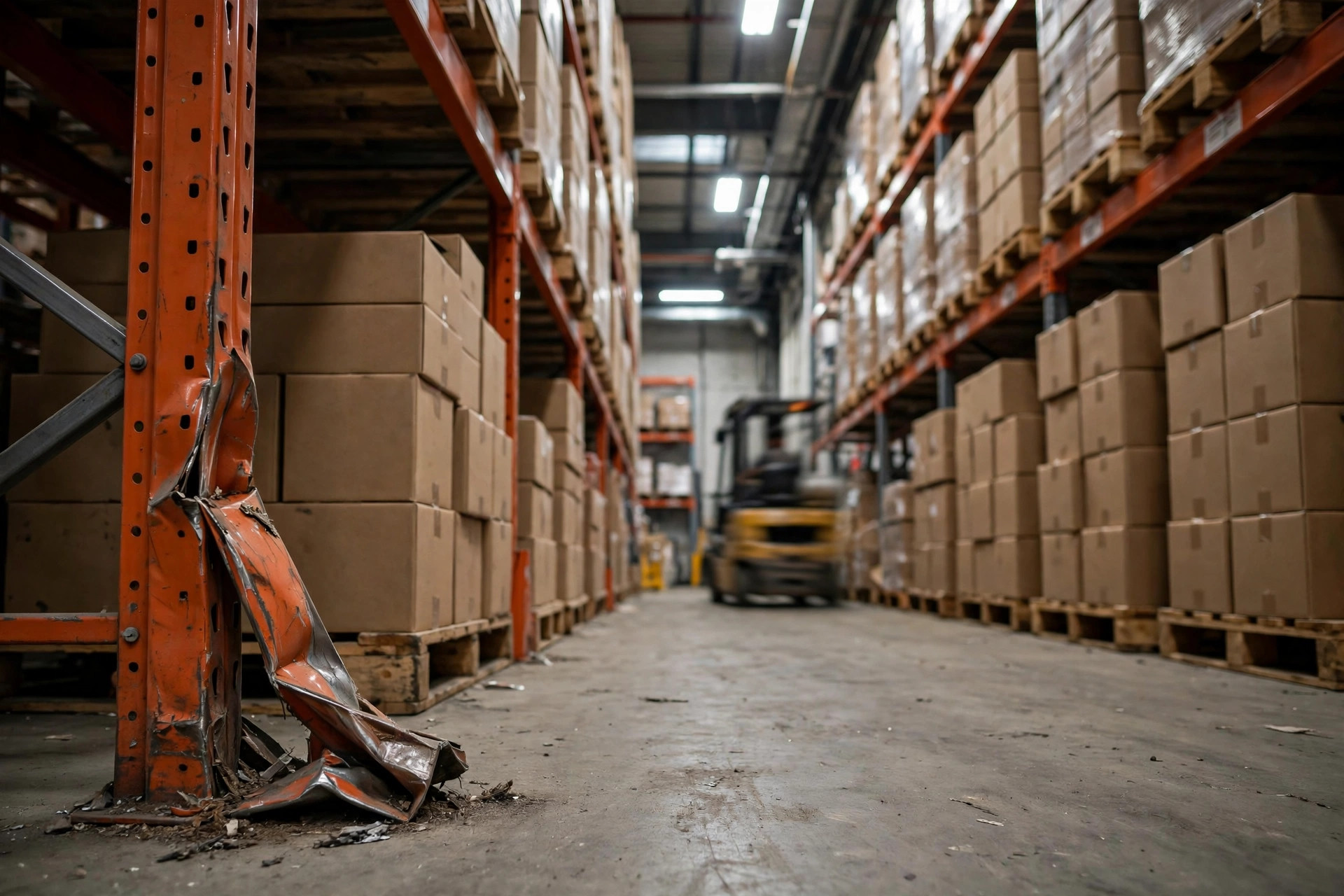
Let me tell you something. After fifteen years behind the wheel, the thing I respect most at a warehouse is a couple of chunks of black rubber bolted next to the dock door. The loading dock bumper. Nobody looks at it. Nobody budgets for it. And when it's gone, it's never the bumper that pays the price.
Story One: One Bang, and the Door Takes It
Fall of 2019, I'm picking up a load at a third-party warehouse outside Ontario, California. Old facility, maybe twenty dock doors. I'm backing into door 12, nice and slow, waiting for that soft thud when the trailer kisses the bumper. What I got instead was a BANG — metal on metal. My stomach dropped.
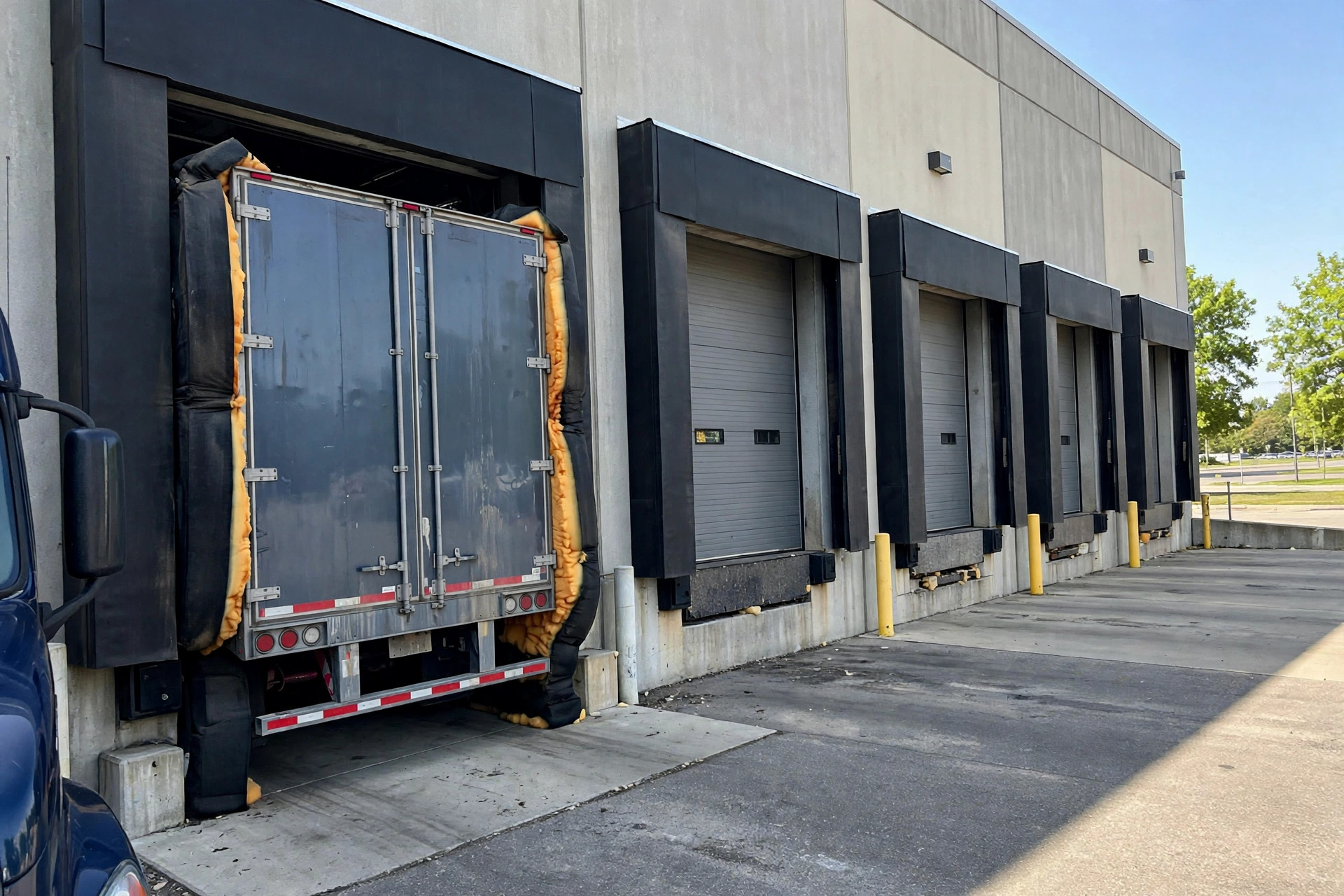
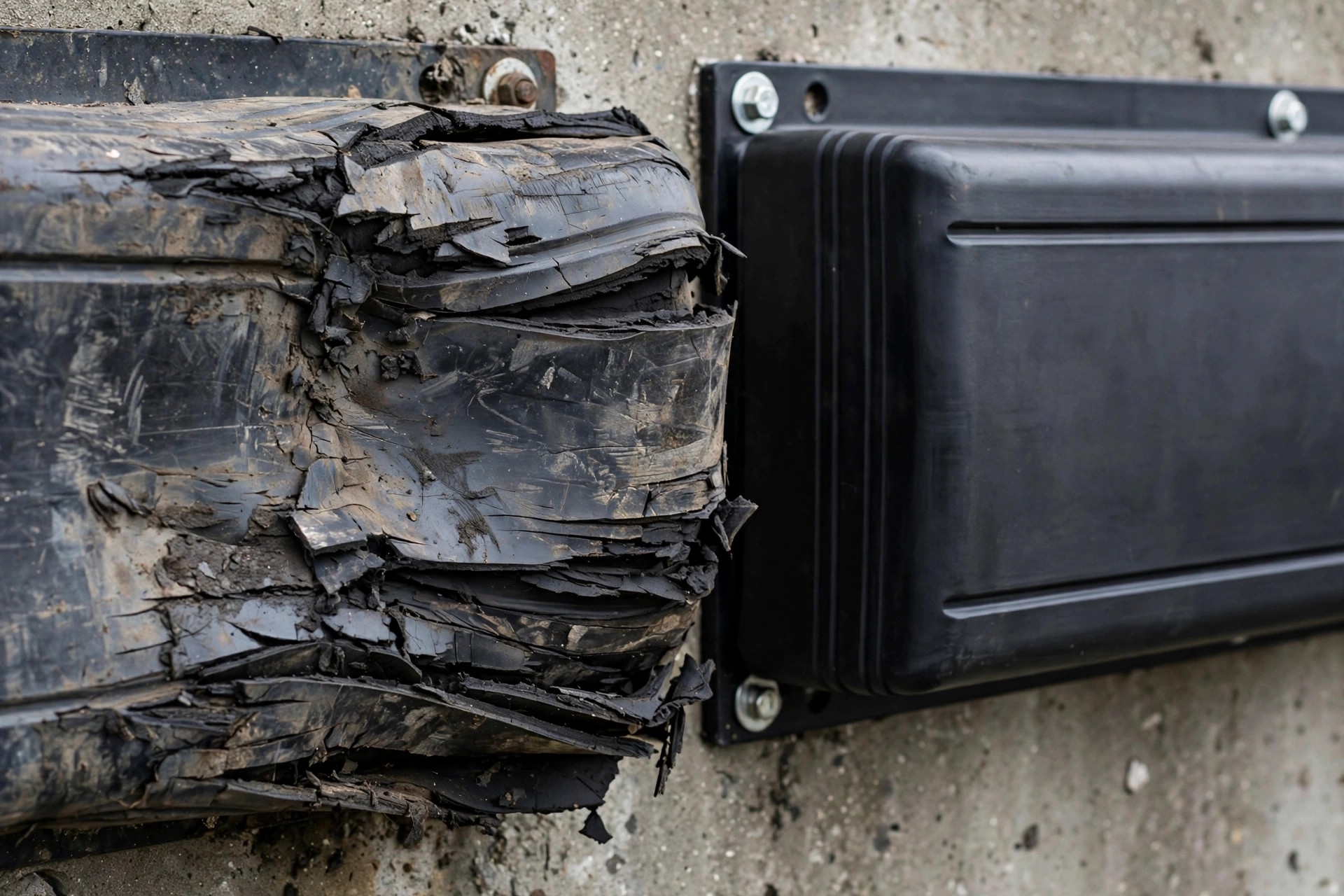
I got out and looked. There was no bumper. Just two bare anchor bolts sticking out of the dock face where the laminated rubber pads used to be — chewed away over months, nobody knows when exactly. My trailer's rear frame had gone straight into the door frame. The rolling door buckled and jammed halfway up. Wouldn't go up, wouldn't come down.
That load was refrigerated. With the door stuck open, cold air was pouring out into a Southern California afternoon, and the warehouse manager was pacing in circles. They called a door repair crew, and it took until past midnight to get that door working again. The repair ran into the thousands of dollars — and that doesn't count the hours the whole dock lane sat dead or the detention time on a reefer load.
Now, whose fault was that? Mine, for backing in too hard? That bumper had been dying for half a year, a little more rubber gone every day. It dies in slow motion, so nobody treats it like a breakdown — until it takes the door with it.
Story Two: Wrong Height, New Bumper Every Three Months
Starting in 2021, I was running a regular lane into a food distribution center in Dallas, Texas. Their dock sat low, and most of the inbound was container chassis riding high, with the rear underride guard sitting well above the dock face. The bumpers were mounted to meet the trailer floor line — so every time a chassis backed in, the guard rode right over the top of the bumper. The bumper never took the hit. The wall did.
They were burning through a bumper every few months, and everybody at that building was cursing the bumper quality and the supplier. One day I'm waiting on a load, shooting the breeze with the dock lead, an old hand named Wang. I told him straight: it ain't the bumper, it's the height. The bumper has to meet the first thing on the truck that reaches the wall — that rear guard. If the guard can't touch the bumper, you could bolt on the toughest block on earth and it'd still be decoration.
They remounted the bumpers higher, added spacer blocks underneath. Same brand, same price. Those bumpers lasted well over a year. See, the problem was never how much the bumper cost. It was whether it was put in the right place.
What This Tells You: A Bumper Is a Consumable, Not an Heirloom
Picking a bumper is simpler than the catalogs make it look. Three things matter: what trucks show up, how high the bumper sits, and how thick it is. Here's the honest version:
| Main truck type | Bumper to pick | Why |
|---|---|---|
| Box trucks, shuttle vans | Laminated rubber bumper | Cheapest. When it wears out, you swap it without crying. |
| Container chassis, heavy pounding | Steel-face bumper | Steel plate on the face, stands up to daily hits. |
| Mixed fleet, all heights | Molded or extra-thick laminated | Thick profile, forgiving when heights don't line up. |
Now here's the part that goes against instinct: a lot of folks think tougher is better — buy the hardest bumper once and never think about it again. I'm telling you, it's the opposite. A bumper's whole job is to die so the wall doesn't. That's not a defect, that's the design. Bolt on something rock-hard like a steel-face block in the wrong spot, and the impact energy doesn't get absorbed — it travels straight into the anchors and the concrete. A few years of that and you've got cracked walls and loose bolts. Fixing a wall costs ten times what a bumper costs. The bumper is supposed to be the soft part. A bumper too tough to wear out is like using a tank as a fender — the tank's fine, everything around it isn't.
When Loading Dock Bumper Replacement Can't Wait: Four Signs
You don't wait until the bumper is completely gone. If you see any of these four, it's time:
- Laminated pads are peeling or shifting, exposing the steel plates or bolts inside. The bumper is no longer whole.
- It's crushed flat and doesn't spring back after the truck pulls away. No rebound means no cushioning — it's just there for decoration.
- Anchor bolts are loose or sticking out. Hit it a few more times and the whole block comes off the wall. A falling bumper block is a bigger problem than a dented door.
- The obvious one: when you back in, the trailer's rear frame can already touch the door frame or the wall. At that point the bumper doesn't exist. Replace it.
The Math on Loading Dock Bumper Replacement
Let me run the numbers the way a driver sees them. One laminated bumper: a few dozen bucks, two guys, half an hour to install. One dock door buckled by a trailer: thousands of dollars to repair, half a day with that lane shut down, and if it's a reefer load, you're sweating product loss on top.
A child could do this math. So why does nobody replace them? Fifteen years on the road taught me the answer: a bumper dies in slow motion. A pad peels today, it gets a little thinner tomorrow, a bolt head shows next week. Every single day it still "works," so nobody treats it as a problem. And then one day the bill isn't a few dozen bucks anymore.
My advice is dead simple: put bumpers on the inspection checklist. Don't run on "somebody will get around to it."
Three Practical Suggestions for Warehouses and Shippers
First, walk the dock face once a quarter and look at the bumpers — on purpose. Don't wait for drivers to complain. Drivers come every day; when a bumper's shot, they'll grumble once and keep backing in anyway.
Second, when you set bumper height at a new facility, look at what trucks actually show up. The bumper has to meet the first thing on the truck that reaches the wall. For a mixed fleet, go thicker and a little higher — forgiveness beats precision.
Third, keep two new bumpers in the parts room. When one dies, you swap it the same day instead of waiting three weeks on a purchase order. Three weeks is plenty of time for one truck to take out a door.
There's an old saying: a stitch in time saves nine. A chunk of rubber costs next to nothing. Wait until it takes the door with it, and you'll wish you'd spent the money.
By Shifu Zhao, Trucking Veteran (15 yrs)