If you search "hazmat spill drill requirements warehouse," most results read like they were written by someone who has never mopped up a real spill at 2 a.m. This one isn't. Let me tell you what happened on a night shift in October 2023, and what we changed after.
2:17 a.m. My radio crackled: "Chen, we've got a leak in Zone C. Cleaning chemicals. Smells bad."
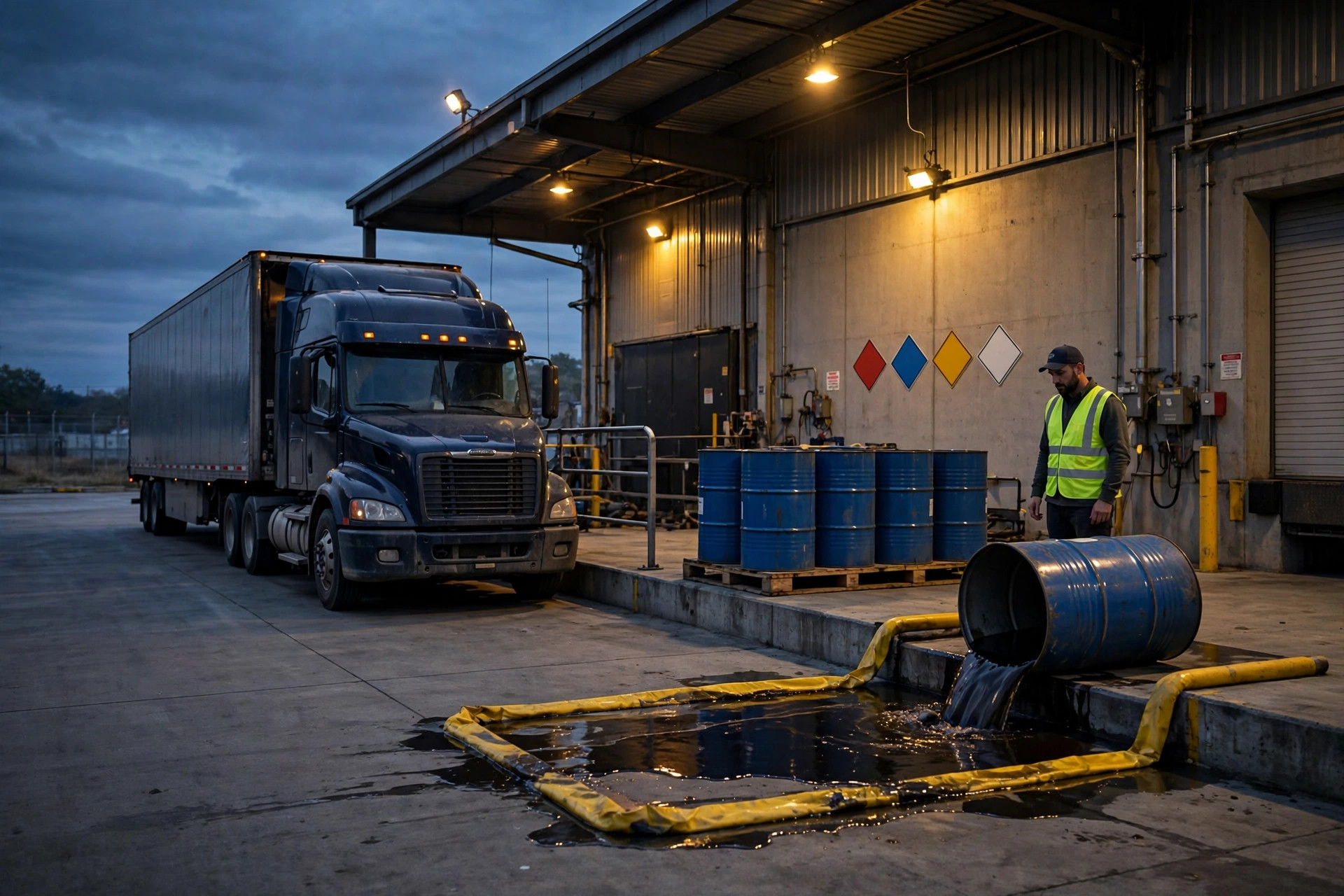
I got there to find a pallet of industrial cleaner knocked sideways by a forklift tine. Two drums on their sides, corrosive liquid spreading across the floor toward the racking. A new hire — three weeks on the job — stood ten feet away holding a mop, asking me: "Should I mop it up?"
Honestly, my blood ran cold. Corrosive liquid. A mop. One splash in the eyes and that's a life changed. Worse: six people on the floor, and not one of them knew where the spill kit was — sitting in a yellow cabinet by the Zone C entrance, less than thirty feet away.
We got lucky that night. Nothing reached the drains. Nobody got hurt. It still took us 22 minutes from discovery to containment. In the debrief I said: "Tonight we got lucky. Next time luck runs out, it's an OSHA citation plus an ambulance."
Here's the thing about hazmat, folks. On a normal day it's just drums and boxes. When it leaks, what saves you isn't courage — it's muscle memory. And muscle memory only comes from drills.
What the hazmat spill drill requirements actually say
Let me get the regulatory baseline out of the way, because drills are not a "when we have time" activity in the US.
OSHA's HAZWOPER standard (29 CFR 1910.120) is explicit: any facility where employees may respond to a hazardous substance release must have a written emergency response plan, and those employees must be trained and capable of responding. Note the word "capable" — not "has watched a slideshow." On the EPA side, facilities above certain oil-storage thresholds need an SPCC spill prevention plan (40 CFR Part 112 kicks in at 1,320 gallons of aboveground oil storage), and that plan requires periodic discharge-prevention briefings and drills.
In plain English: the regulations don't demand Hollywood productions. They demand that your people can actually perform when it counts. That's the short version of hazmat spill drill requirements for warehouses — demonstrated capability, not paperwork. When an inspector shows up, they won't ask how many drills you've logged — they'll point at a random floor employee and ask: "There's a spill. What's your first move?" If the answer is a blank stare, the prettiest plan in the world is worthless paper.
After that night shift, we rebuilt our drill program from scratch. Before the firefighters ever get involved, our team owns these 7 moves — and every new hire practices them in week one, until they can do them half asleep:
1. The alarm chain. Whoever finds it shouts — but who they call next, and what they say, is posted on the wall. The order: shift lead, then duty manager, then EHS lead; fire or injuries go straight to 911. Our old plan just said "notify your supervisor." On night shift, nobody could say who that was. Now the alarm card lists three names with phone numbers, updated every quarter.
2. Isolate. The first move is always getting people away, never rushing in. Cordon off the spill area, move everyone upwind. Kill the forklifts, cut the power if the material is flammable. It looks passive. It's the most important step in the whole response — you protect the people first, then you have a team left to do the rest.
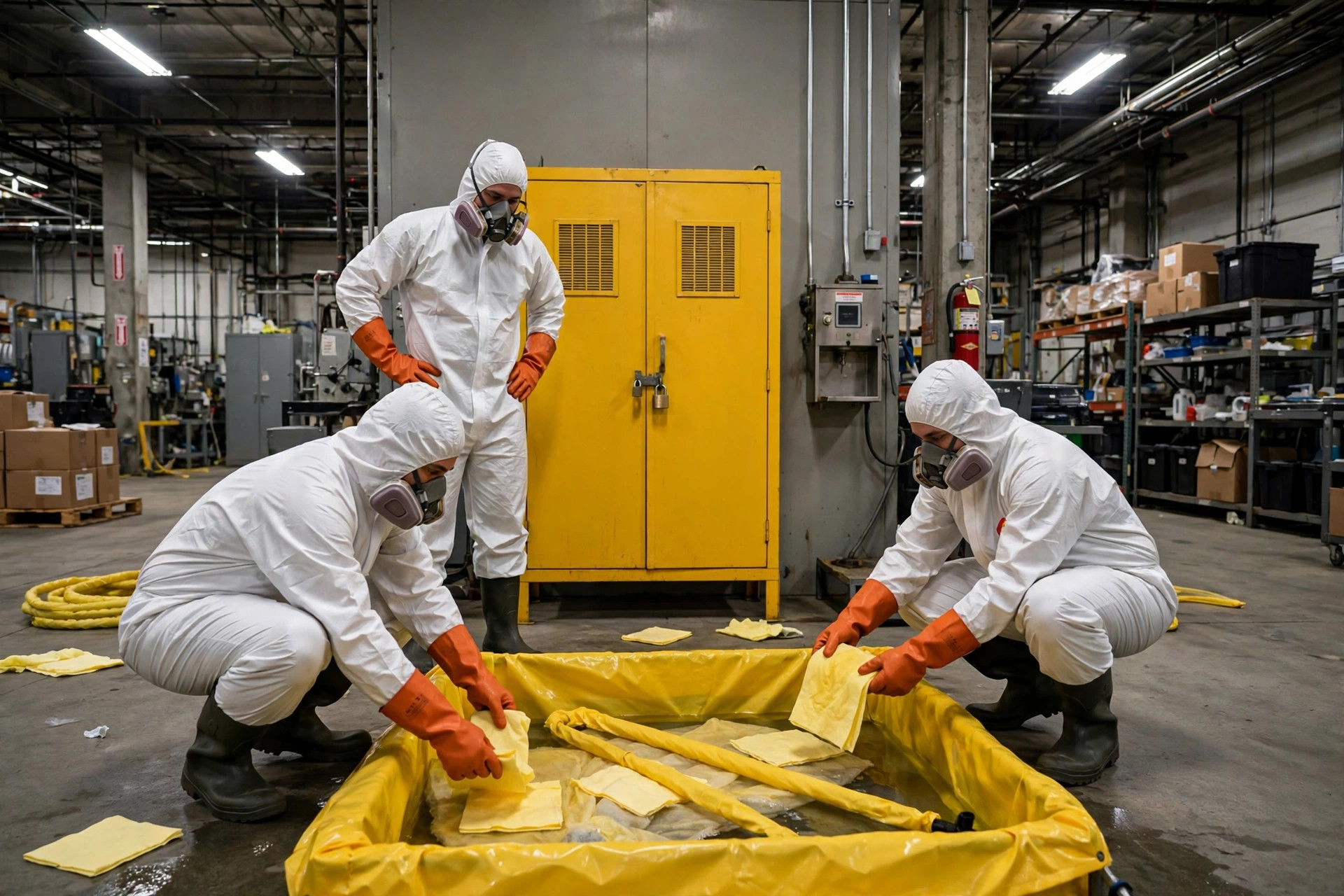
3. Suit up before entry. Chemical-resistant gloves, goggles, apron — all stocked in the spill kit. Iron rule: nobody enters the isolation zone without full PPE. Not even the manager. I chewed out two people for trying to "just take a look" without gear. Nobody tries it anymore.
4. Grab the SDS. Safety Data Sheets, one per chemical, in a waterproof pouch in a file box at the storage area entrance. The SDS tells you what the stuff does on contact with water, what absorbs it, what to do for exposure. We drill "find the right SDS in 30 seconds" — because in a real incident, nobody has time to dig through a filing cabinet.
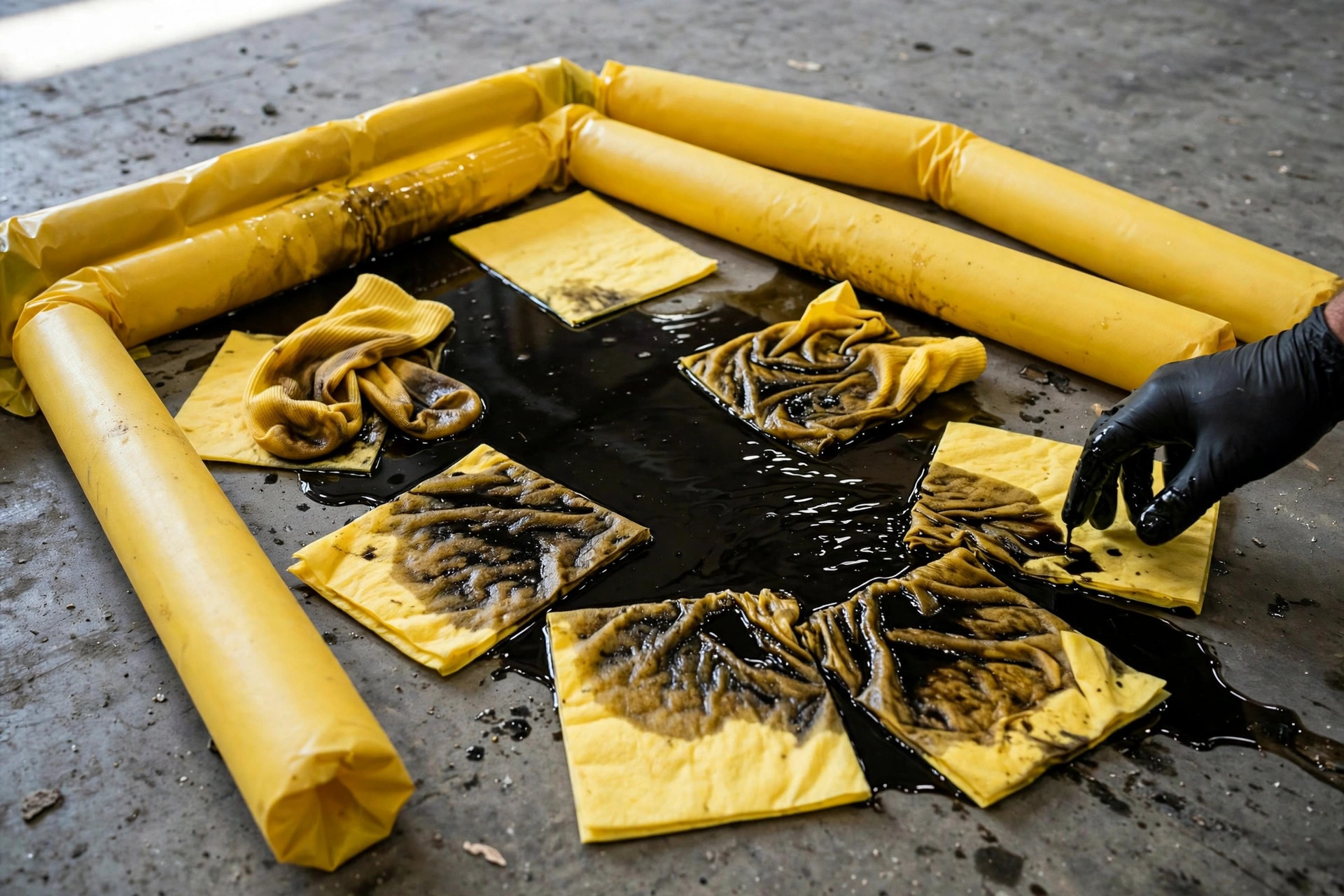
5. Contain and absorb. Work outside-in: ring the spill with absorbent socks first to stop the spread, then lay down pads to soak it up. The order is surround, absorb, collect. Never do what that new hire suggested with the mop — mopping just spreads the contamination and can react with the chemical. Used absorbents go out as hazardous waste: bagged, labeled. That's part of the drill too.
6. Document. Discovery time, substance, estimated volume, who responded, what materials were used — with photos. Records aren't for the inspector. They're for the debrief. That 22-minute response time? We only knew where the minutes went because we wrote it down: 6 minutes finding the spill kit, 4 minutes donning PPE. Once the numbers are on paper, improvement has a target.
7. Report. Internal reporting goes through EHS. If the release hits regulatory reporting thresholds, it gets reported to the authorities as required. Which substances and what quantities trigger reporting — that's a one-page sheet on the EHS office wall, and drills include random pop quizzes on it. This is the step people most want to skip, so our rule is written into the handbook: covering up a spill is punished harder than the spill itself.
Our warehouse spill drill cadence — what stuck
Here's what we actually settled on: a tabletop walkthrough every quarter (30 minutes around a table, talking through the sequence), plus one full live drill per year (real PPE, real absorbent socks, water standing in for the spilled chemical). New hires observe a live drill in week one and run one hands-on in month two. Every drill is logged: date, attendees, scenario, findings, corrective actions.
Our standard spill kit, for anyone wondering: 4 absorbent socks, a pack of absorbent pads, 2 pairs of chemical gloves, 2 goggles, 2 disposable aprons, 5 hazmat bags, a roll of labels, and printed SDS copies for that zone's chemicals. Yellow cabinet, at the hazmat storage entrance, visible within 10 feet. And never lock it — the two minutes spent hunting for a key in a real incident can double the contaminated area.
Three years of drilling, and the failures always happen in the same places. Compare notes:
First, expired kits. Absorbent socks go stale and clump, gloves crack with age. Our rule: the shift lead opens every cabinet on the 1st of the month, checks against the list taped inside the door, and signs off. That sign-off sheet is the first thing an inspector asks to see.
Second, SDSs that don't match the actual product. Supplier changed, formula changed, SDS is still the 2021 version. We got burned once in a drill — the old SDS specified an absorbent incompatible with the new formula. Now EHS reconciles SDSs against physical stock every quarter. New product in, new SDS in — it's a receiving checkpoint.
Third, night and weekend shifts never drilled. Drills always happened on day shift; the night crew had never done one — and spills don't check the schedule. Our rule now: the annual live drill must rotate through all shifts, nights included. The night supervisor's name is highlighted in red on the alarm chain.
Honestly, the hardest part of drills isn't the drill. It's keeping at it. We let it slide in year one when things got busy. Then an EPA regional inspector walked up to one of our forklift drivers and asked where the SDSs were. The kid had the right sheet out of the file box in 20 seconds. The inspector nodded and moved on. That's when I knew three years of drills hadn't been wasted.
One last word for fellow warehouse folks: don't wait for a spill to start drilling. Tonight, walk your floor and ask three random people: where's the spill kit? Where are the SDSs? Who's your first call? If all three answer clean, you're good. If even one can't, schedule a drill this week. Hazmat doesn't care about "next time." It only cares whether you've practiced.
By Chen Feng, Warehouse Operations Manager