Tuesday morning, November 2025. 7:10 AM. I walk into my office, coffee not even poured yet, and there's an email from the fire marshal's office sitting in my inbox: annual fire inspection, next Thursday, 9 AM. Please have the warehouse manager present.
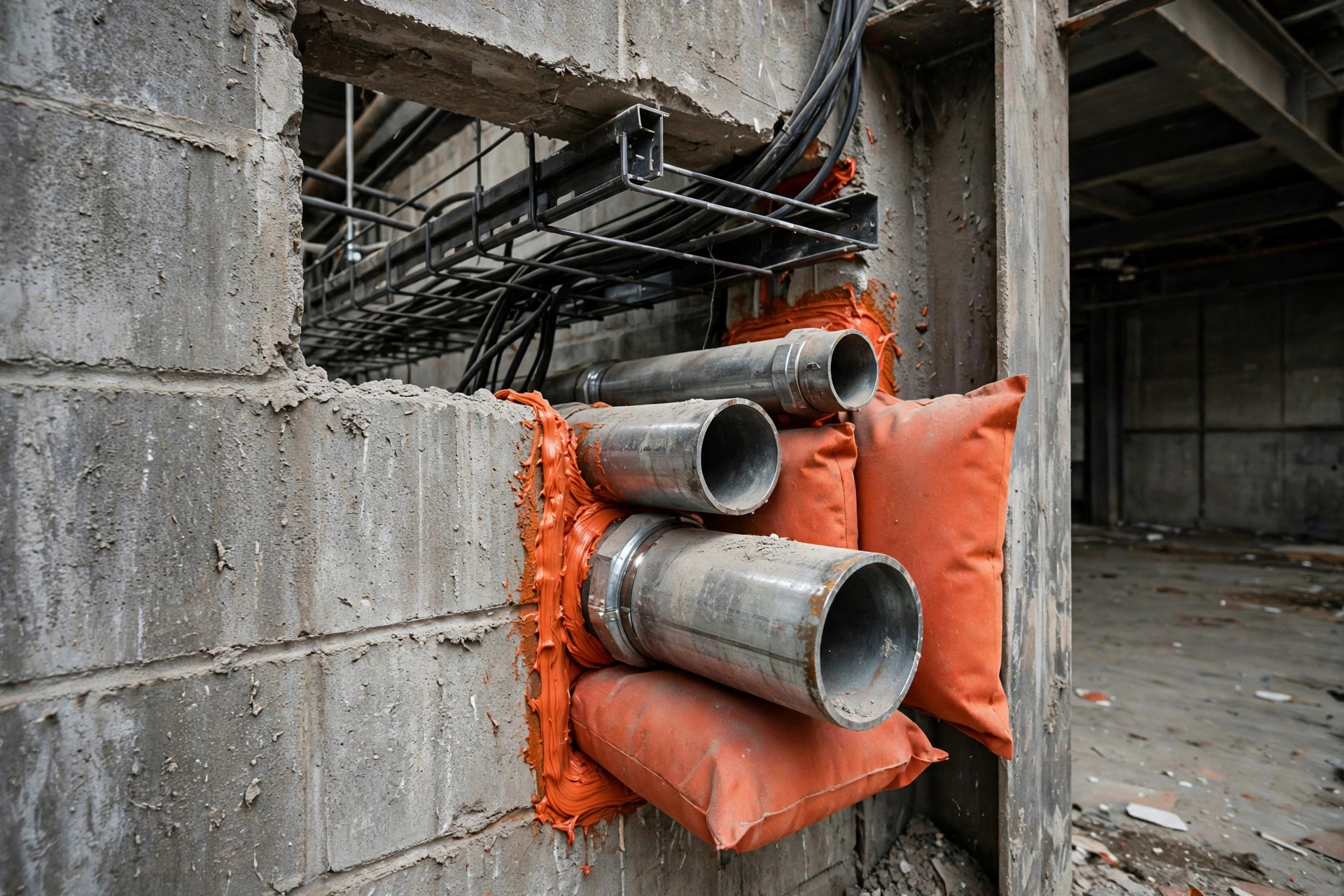
Here's the honest truth. After all these years running warehouses, the thing I dread most isn't the sprinklers. It isn't the fire extinguishers, either. Those are out in the open — somebody wipes them down, somebody checks them, somebody keeps the log. What keeps me up at night is firestopping. That's the seal around every pipe, cable tray, and duct that punches through a fire-rated wall or floor. It lives inside walls, above ceilings, down in pipe chases — places nobody ever looks. And when the inspector shows up, that's exactly where he goes first.
The first time it burned us: turned away on inspection day
Back in 2019, I was running a brand-new facility out in Fontana, California. Pre-opening inspection. The fire marshal walks in, and the first thing he does isn't look at the sprinklers — he grabs a flashlight and starts checking the wall penetrations.
The subcontractor had cut corners. Thirty-some penetrations, and he'd just smeared firestop putty over every one of them by hand. Looked solid enough on the surface. The inspector crouched down, looked at three of them, stood up, and said four words: rip it all out.
Here's what I learned that day, the hard way: firestopping isn't about how solid it looks. It's about whether it has an identity. In the U.S., you can't just seal a penetration any way you like. IBC Section 714 is clear: openings through fire-rated walls and floors have to be sealed with a tested, listed firestop system. The testing follows ASTM E814 or UL 1479, and it measures three things: the F rating (how long it holds back fire — it has to match the wall, so a two-hour wall needs a two-hour seal), the T rating (temperature rise on the unexposed side can't exceed 325°F), and the L rating (how much smoke leaks through, measured under UL 1479).
Those thirty-some holes the sub had smeared over? No listed system number. No backing material. Not enough depth. It took two weeks to redo, and our opening date slid two weeks with it. After that, I finally understood what an inspector actually checks. Four things: a listed system, proper backing, enough depth, and a label on every seal. Miss one, and you fail.
The second time it burned us: the damage came later, from our own people
Once you're up and running, the biggest enemy of firestopping isn't time. It's people.
Summer of 2022, night shift. An IT contractor came in to run fiber. To save time, he cut a fresh hole through our No. 2 fire wall, pulled the cable through, and stuffed the gap with regular expanding foam — the yellow stuff from a hardware store can — then left. Three months later, during our quarterly walk-through, one of our veteran leads, Old Wang, spotted it. That foam burns faster than paper. That penetration was effectively unsealed.
Here's the part that scared me most: you can do firestopping perfectly during construction, and daily operations will still tear it apart. Maintenance cuts a hole for a new pipe run. IT pulls cable. Racking gets moved. A forklift clips a cable tray. Every change can break a seal — and the person who broke it usually has no idea they broke anything.
After that, we made it an iron rule: nobody cuts into a fire-rated wall or floor without a work order first. Whoever opens the hole owns the reseal, and the job isn't closed until it's signed off. Sounds harsh. But fire doesn't care about your feelings, guys.
Two things most people get backwards
After all these years, I've got two judgments about firestopping that go against the grain. Sharing them with fellow operators:
First: smoke kills before fire does. Firefighters will tell you — most fire deaths aren't from burns, they're from smoke inhalation. A lot of people obsess over the F rating and never look at the L rating. Here's the honest truth: a two-hour fire seal with a leaky joint will let smoke flood the next compartment long before the fire gets through. Smoke-sensitive occupancies treat the L rating as a hard requirement, and inspectors check it there too.
Second: thicker isn't better. I've watched guys pump sealant into a hole like they're frosting a cake, thinking more is safer. Wrong. Firestopping is a system: the backing material — usually mineral wool — has to be packed to the specified density, the sealant has to go in at the specified depth, and the annular space has its own limits. Get the backing wrong, pack it loose, and a pound of sealant won't save you. The inspector will poke it and it'll give. Follow the listed system. Exactly as specified — not a bit more, not a bit less.
Four methods, and how to pick
In a warehouse, it comes down to four approaches. Here's the table I wish somebody had handed me years ago:
| Method | Best for | Upside | The trap |
|---|---|---|---|
| Intumescent sealant | Smaller gaps | Fast to apply; expands in heat to choke the gap shut | Useless on big gaps; wrong backing or loose packing and it's wasted work |
| Mineral wool backing + sealant | Medium openings — the warehouse workhorse | Cheap, covers most situations | The wool has to be packed to the specified density; stuffed in loose, it's the same as nothing |
| Firestop mortar | Big openings, pipe chases | Strong, one pour and done | Heavy — check the slab loading; and if you ever need to run another pipe through, you're breaking it open |
| Firestop collars / wrap strips | Plastic pipe (PVC, ABS) through walls | When plastic pipe melts in a fire, the collar tightens and seals the hole | Only works on plastic pipe — put one on a steel pipe and you've installed decoration |
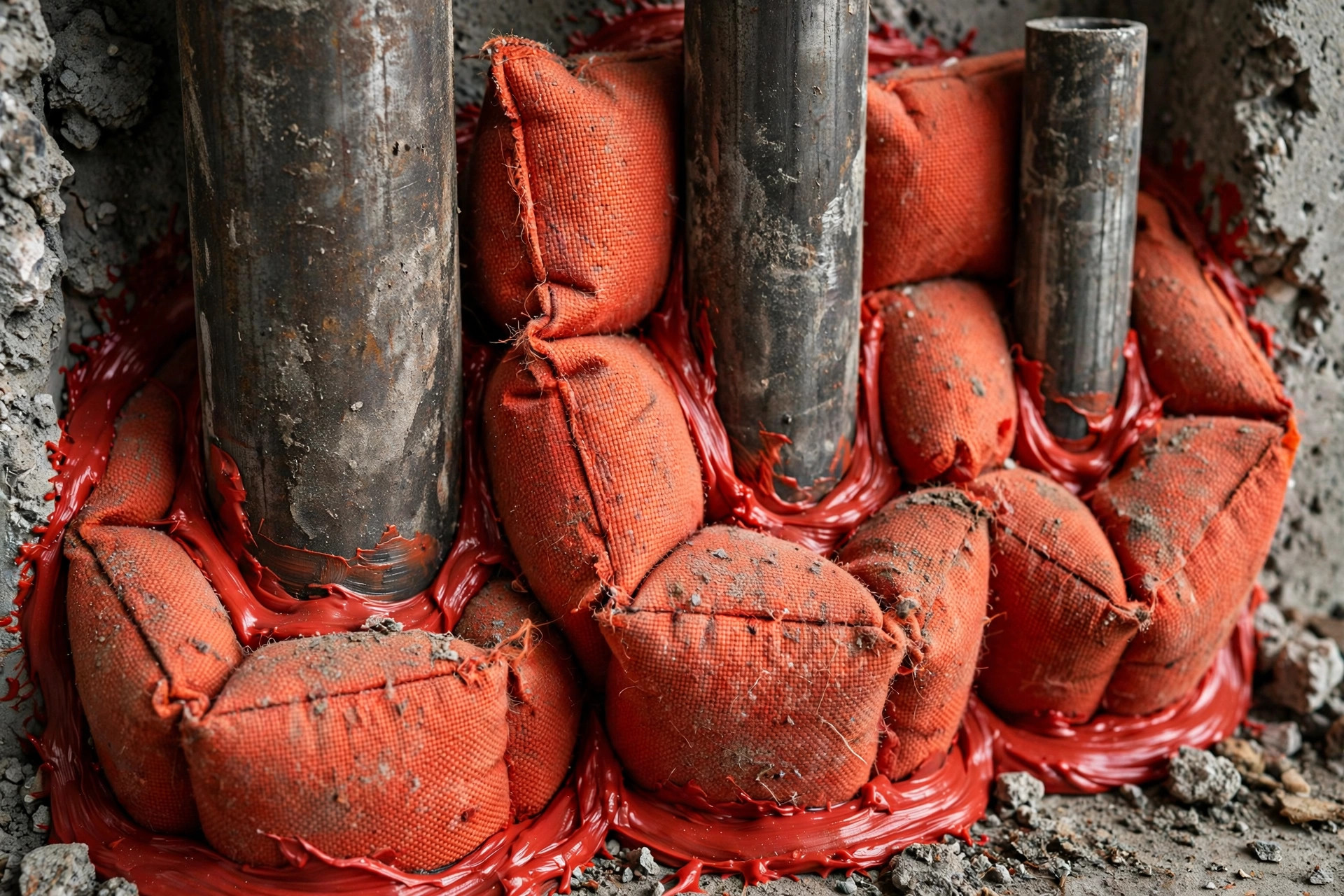
How do you choose? Not by price. Three questions: what the pipe is made of, how big the hole is, and whether you'll ever touch it again. If you'll be running more cable through later, skip the mortar and go with a sealant system — leave yourself room to work. For exact dimensions and details, follow the listed system you're using; don't go by gut feel.
What we do now, every quarter, no exceptions
After getting burned twice, we treat firestopping as living maintenance, not a construction item you finish and forget. Four things, non-negotiable:
1. Document every penetration. Every wall penetration gets a number, a photo, a location, and the listed system used. When the inspector walks in, I put the binder on the table. He flips through two pages, and he's basically satisfied. Old-timer wisdom: do your homework up front, and nobody can pick on you.
2. Label everything. Every seal gets a tag: firestop — do not disturb. Sounds trivial. But when maintenance and outside contractors see it, it puts a thought in their heads.
3. Walk it every quarter. It's on the shift schedule: every quarter, a shift lead walks every penetration in the building, checking for cracks, fallout, and damage from new holes cut since last time. Veteran leads bring the new hires along. Walk it once with your own eyes, and you remember it for life.
4. Work orders for every new hole. The iron rule from above — whoever opens the hole owns the reseal, signed off before the job closes.
One last reminder, guys: passing inspection doesn't mean you're done. A warehouse is alive — somebody is always messing with a wall somewhere. There's really just one job: make sure every penetration has a name on it, a file behind it, and somebody checking it. Do those three, and the next time the inspector shows up, you won't break a sweat.
By Chen Feng, Warehouse Operations Manager