A warehouse manager in Ontario, California, got the fire inspection report back and stared at one line: add in-rack sprinkler coverage. The quote that followed was not a rounding error. It was a five-figure problem with pipe runs, rework, and a schedule attached. Install it, or change the rack layout to avoid it? If you sign before you do the math, you will pay for the wrong answer either way.
I have watched warehouses lose money on this decision in both directions. Some paid for full in-rack sprinkler coverage when their overhead sprinklers were perfectly adequate. Others tried to save money by skipping it, failed inspection, and paid two months of rent on an empty building while the trucks waited outside. Both mistakes come from the same gap: nobody worked out when in-rack sprinkler warehouse requirements actually apply to their building.
When overhead sprinklers cannot reach the fire, in-rack sprinkler coverage steps in
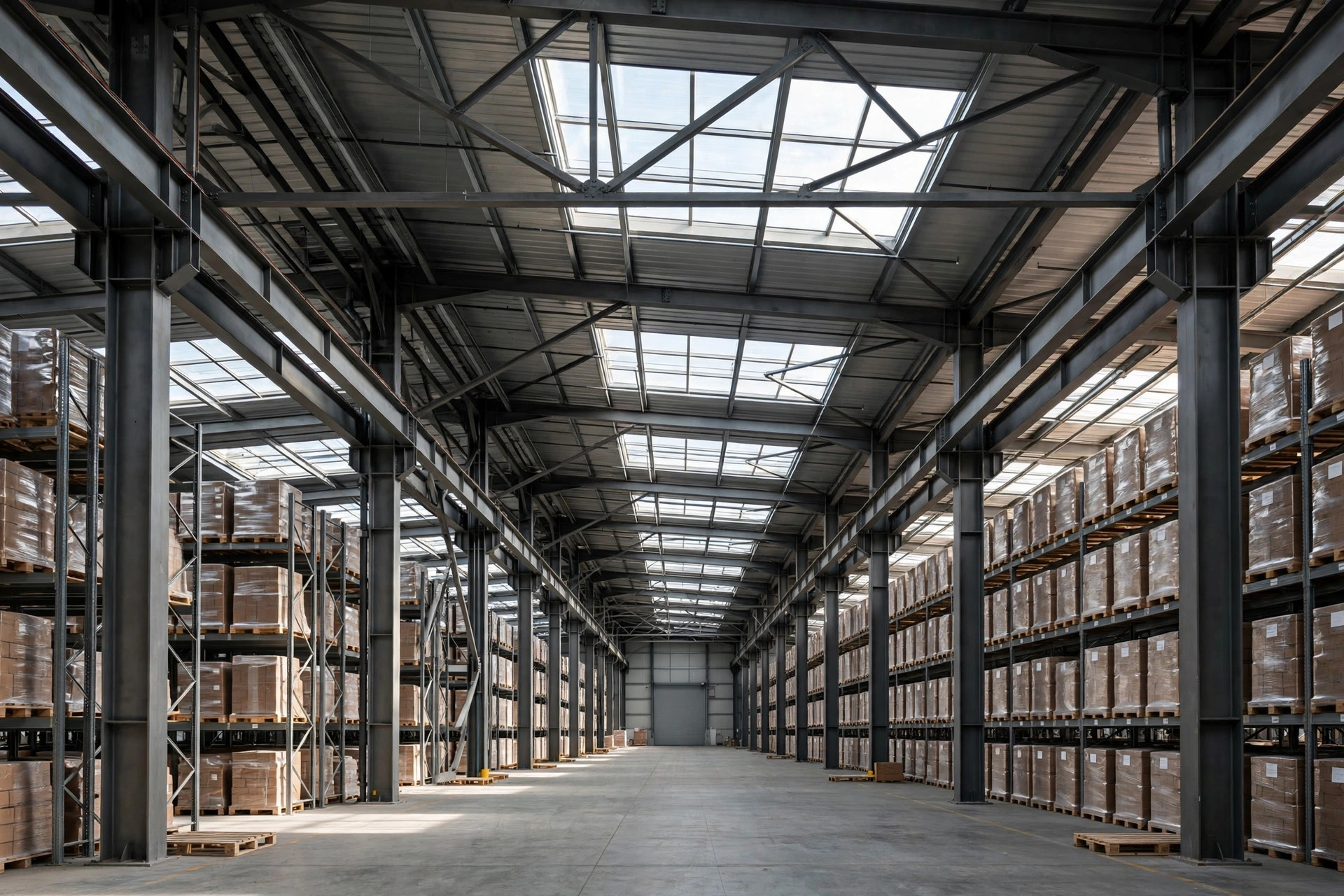
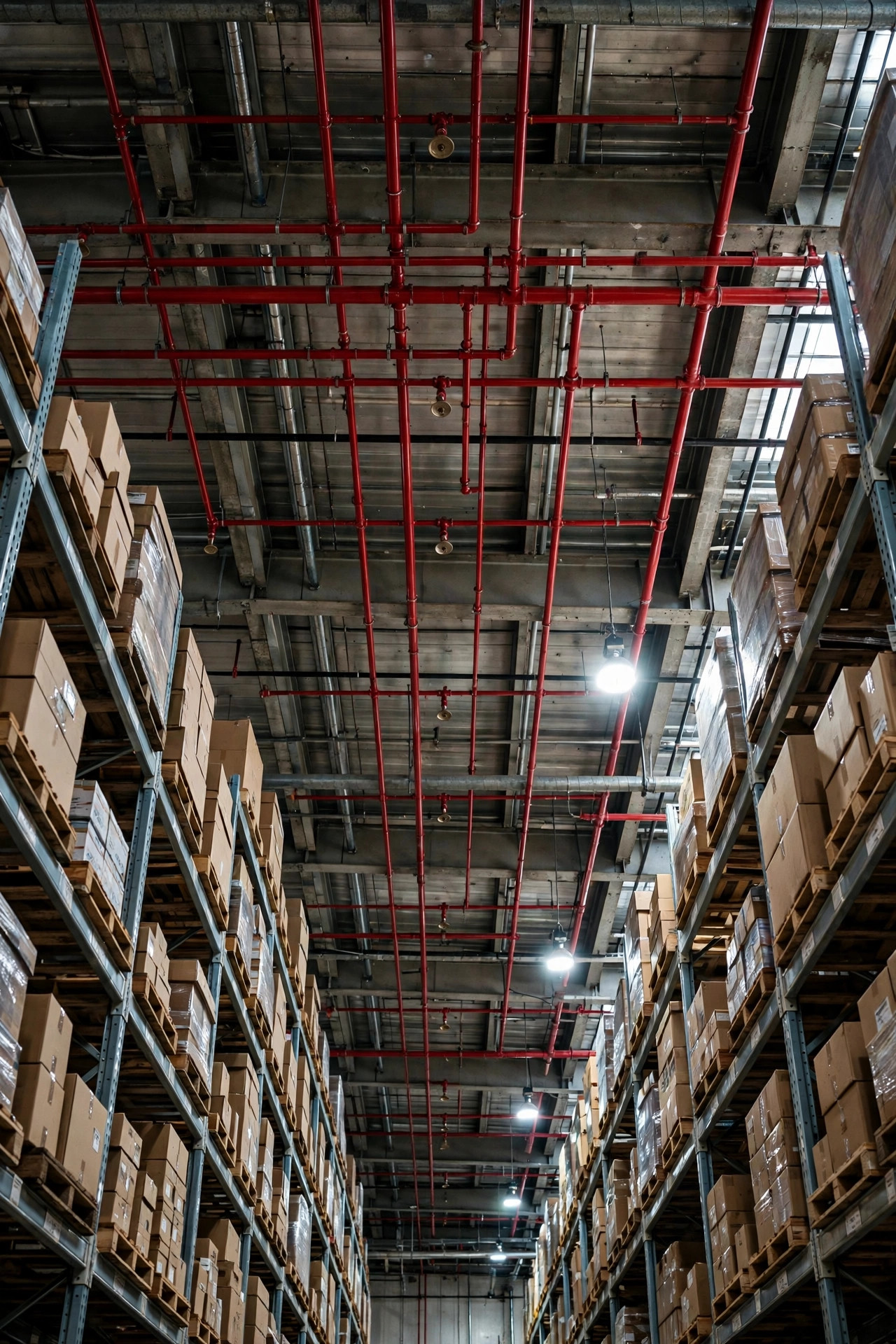
An overhead sprinkler sits on the ceiling. A fire inside a rack sits behind layers of cartons and pallets. The question is simple physics: can the water get to the flame? Low racks, wide aisles, and goods that do not block water make life easy. The taller the rack, the denser the storage, and the more the cartons wrap around the fire, the harder it is for water falling from the ceiling to punch through. A fire burning in the middle of a rack, shielded by the goods above it, is like trying to put out a fire under a blanket by pouring water on top of the blanket.
Commodity type matters just as much. Some goods burn slowly and give overhead sprinklers time to control the fire. Others burn fast, throw off a lot of heat, or come in packaging that catches easily. Once fire gets deep into a rack, overhead water may never reach it. That is when fire protection design calls for sprinklers inside the rack itself, putting water next to the fire instead of hoping it falls through from the roof.
NFPA 13 and similar standards lay out the general principles. But the exact thresholds for your building — what counts as high, which commodities trigger the requirement, which layouts need coverage — are decided by your local fire authority under the current edition of the standard. I have seen two near-identical warehouses in different jurisdictions get different answers. Copying someone else's outcome is a fast way to lose money. Take your rack drawings, your commodity list, and your stacking method to the local fire department and get their position in writing before you spend anything. That one meeting is the cheapest money you will spend on this project.
Early in 2024, a third-party logistics operator leasing roughly 120,000 square feet in Ontario, California, learned this the hard way. They handled home goods, racks stacked six levels high, aisles on the tight side. At inspection they were told to add in-rack sprinkler coverage. Once the crew arrived, some rack positions had to move and pipe runs had to be redone. The delay ran close to two months. Empty-building rent plus construction added up to more than half a year of their equipment maintenance budget. Had they brought rack layout and fire protection to the same table at the start, at least half of that cost could have been avoided.
Where the in-rack sprinkler money actually goes
Most people look at the quote total and stop. That is the wrong way to read it. The total hides three different kinds of money, and only one of them is negotiable in the way people assume.
| Cost bucket | What it covers | Can you cut it? |
|---|---|---|
| Design and approval | Fire protection design, drawings, submittals, inspection coordination | No. Cutting here buys rework later. |
| Pipe and heads | Pipe, sprinkler heads, valves, installation labor | Partly. A smarter rack layout means shorter pipe runs. |
| Downstream impact | Rack moves, ongoing inspection, cleanup and downtime after an accidental discharge | Often ignored, and often the biggest hidden cost. |
A second case shows the smarter path. In 2023, an e-commerce fulfillment warehouse in New Jersey planned an expansion and did the sequence in the right order. They took the new rack plan to the fire authority first, confirmed which zones truly needed in-rack coverage and which could rely on overhead sprinklers, then rearranged the layout in response. They consolidated the hardest-to-protect commodity into one zone, put in-rack coverage only there, and left the rest alone. Total spend came in roughly 40 percent below full-warehouse coverage, and inspection passed on the first attempt. The savings lever was never the sprinkler head itself. It was the layout.
Installed wrong, it is money wasted
In-rack sprinklers are not a product you bolt on and forget. They work as a system with the racking. Head locations must line up with rack openings and the paths fire would travel. Pipes cannot sit behind cartons. Later changes — raising a beam level, swapping commodity types, reconfiguring a bay — can quietly void the original design. I have seen a warehouse add a level to its racks after the sprinkler install, burying heads behind goods. At re-inspection the system failed, because water would have hit cartons before it hit fire. They paid to tear it out and redo it.
Here is the counterintuitive part: more sprinklers do not mean more safety. Denser coverage than the hazard requires raises the odds of an accidental discharge. One false discharge — damaged goods, cleanup, downtime, customer claims — can cost more than the system itself. The goal of fire compliance is not maximum coverage. It is precise coverage: every zone that needs it gets it, and every zone that does not need it does not get billed for it.
Before you sign, answer three questions in writing. First, does the local fire authority require in-rack coverage, in writing, and for which zones? Second, can a different rack arrangement or a lower stacking method in some zones legally shrink the area that needs coverage? Third, what do design, installation, and five years of inspection, maintenance, and discharge risk add up to? If you cannot answer all three with numbers, you are not ready to sign.
The calculable conclusion is this: let the fire authority's written position set the scope, use layout optimization to cut unnecessary coverage, then total up design plus installation plus five years of maintenance and compare that against the cost of changing the layout instead. Pick the lower total. Never sign on a feeling, and never gamble an empty-building rent bill to save a smaller number today.
By Lao Zhou, Logistics Cost Analyst