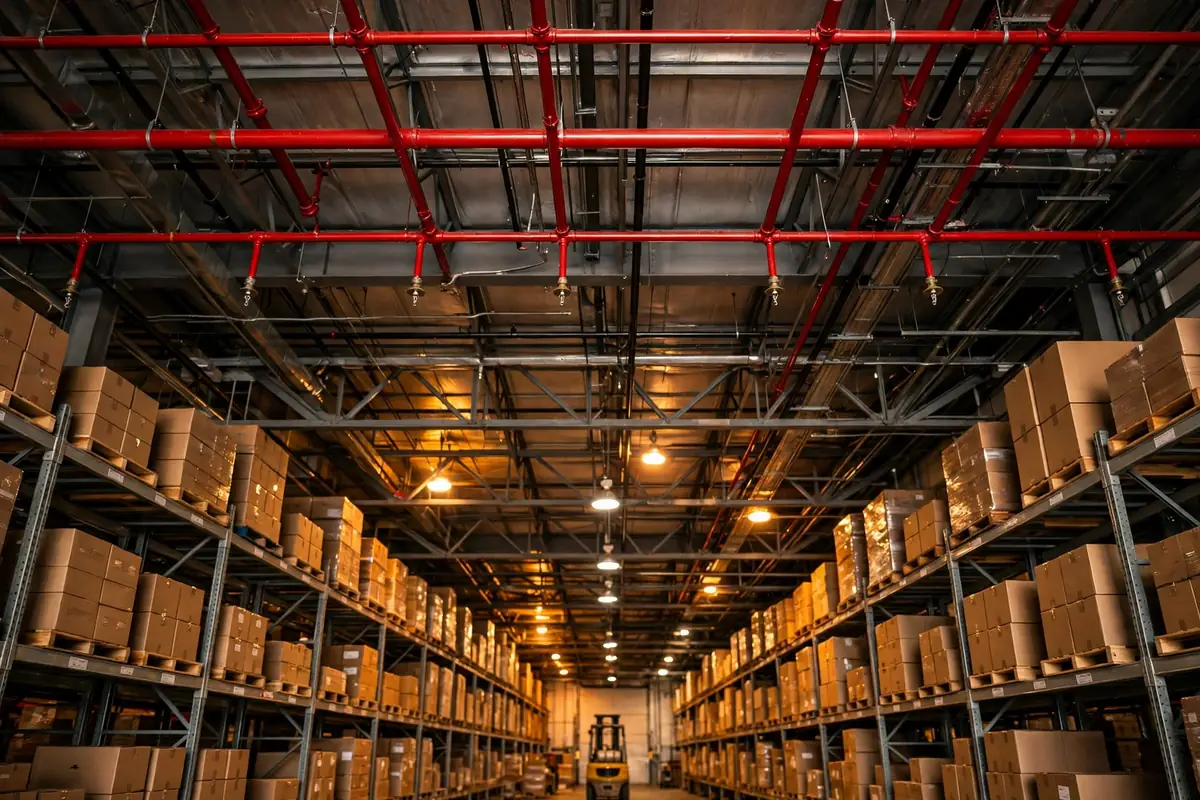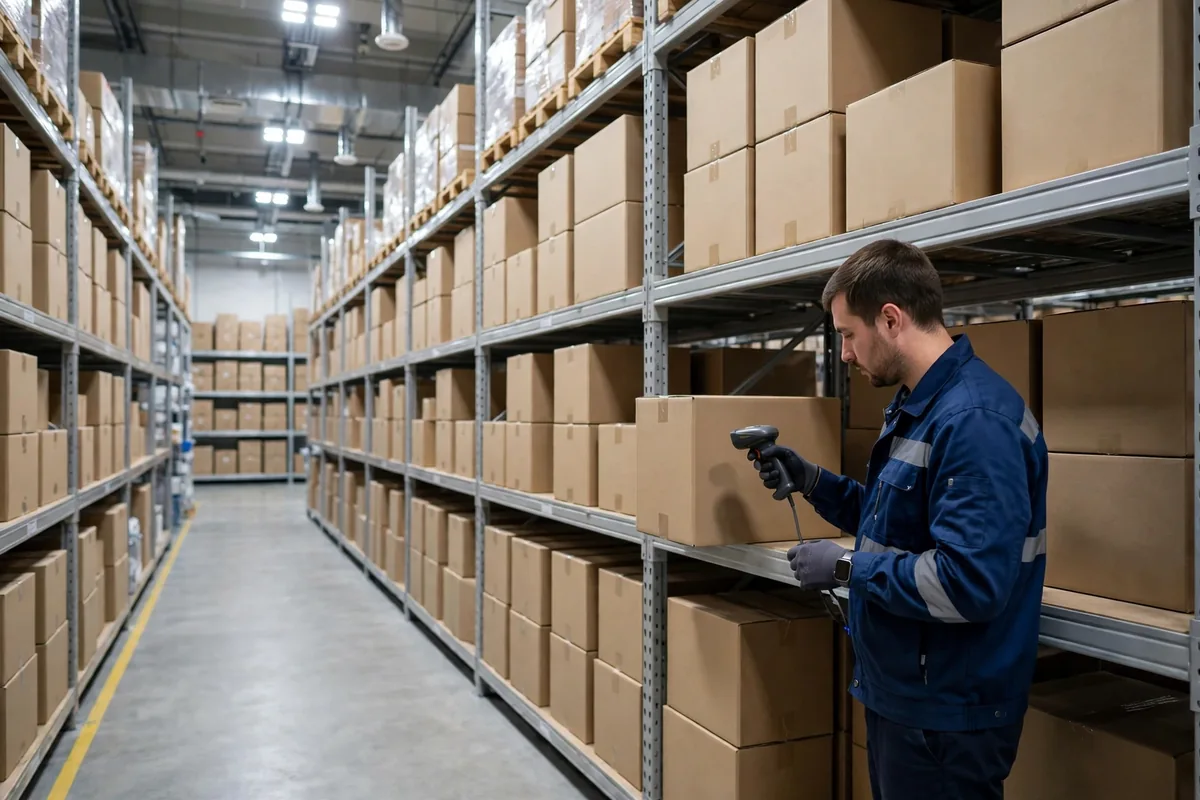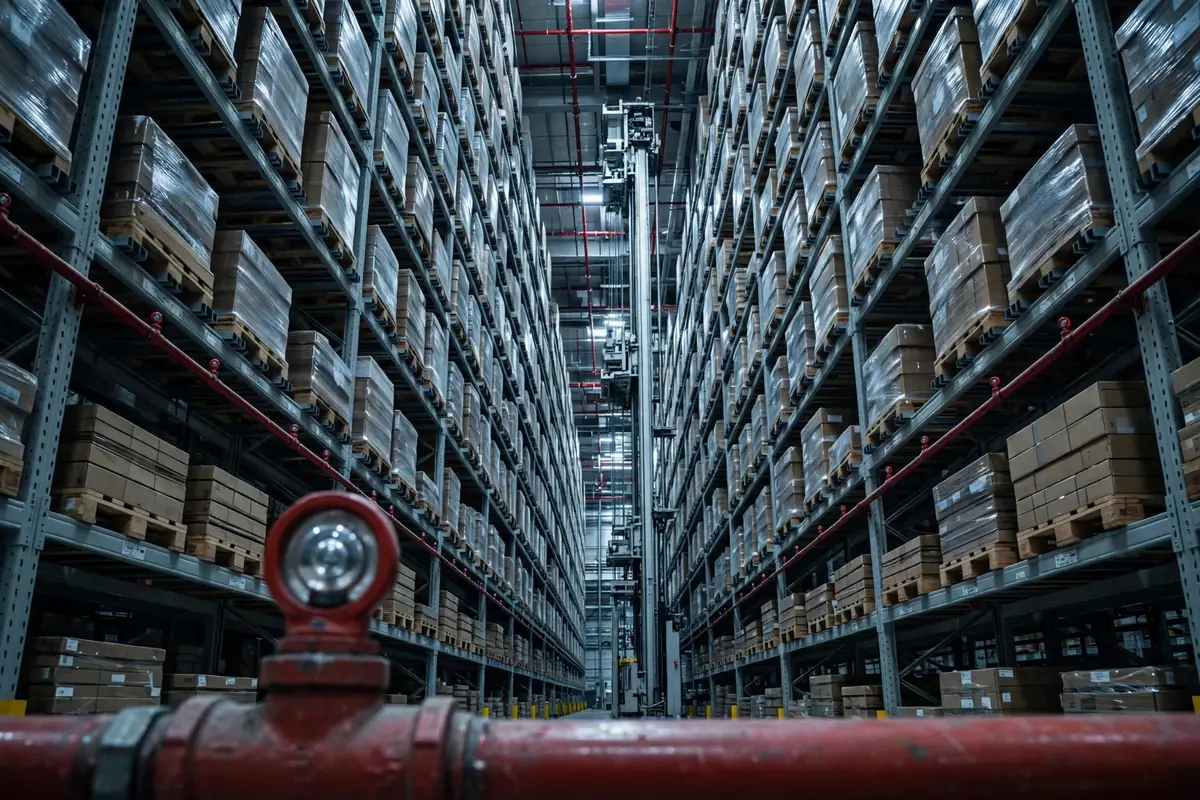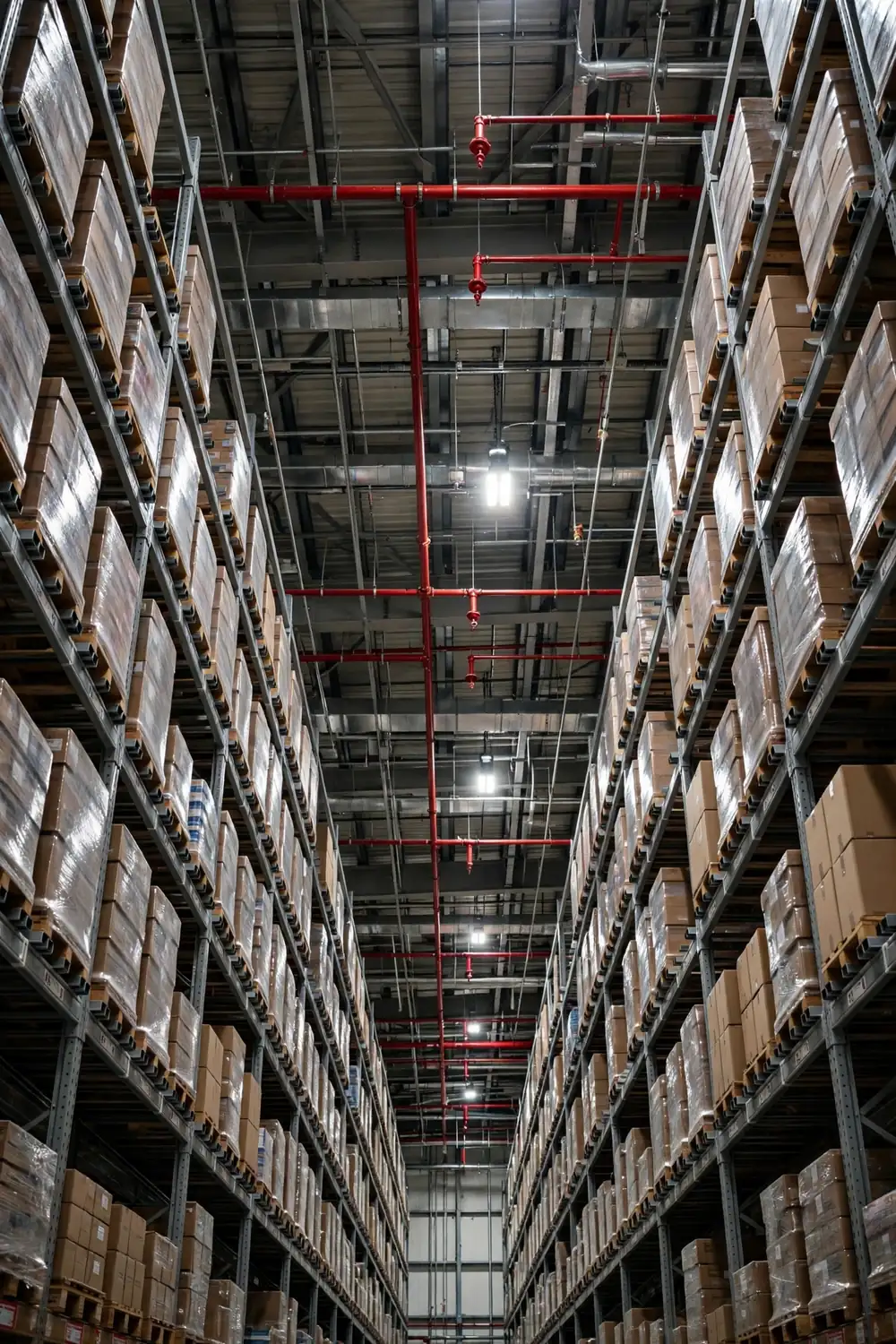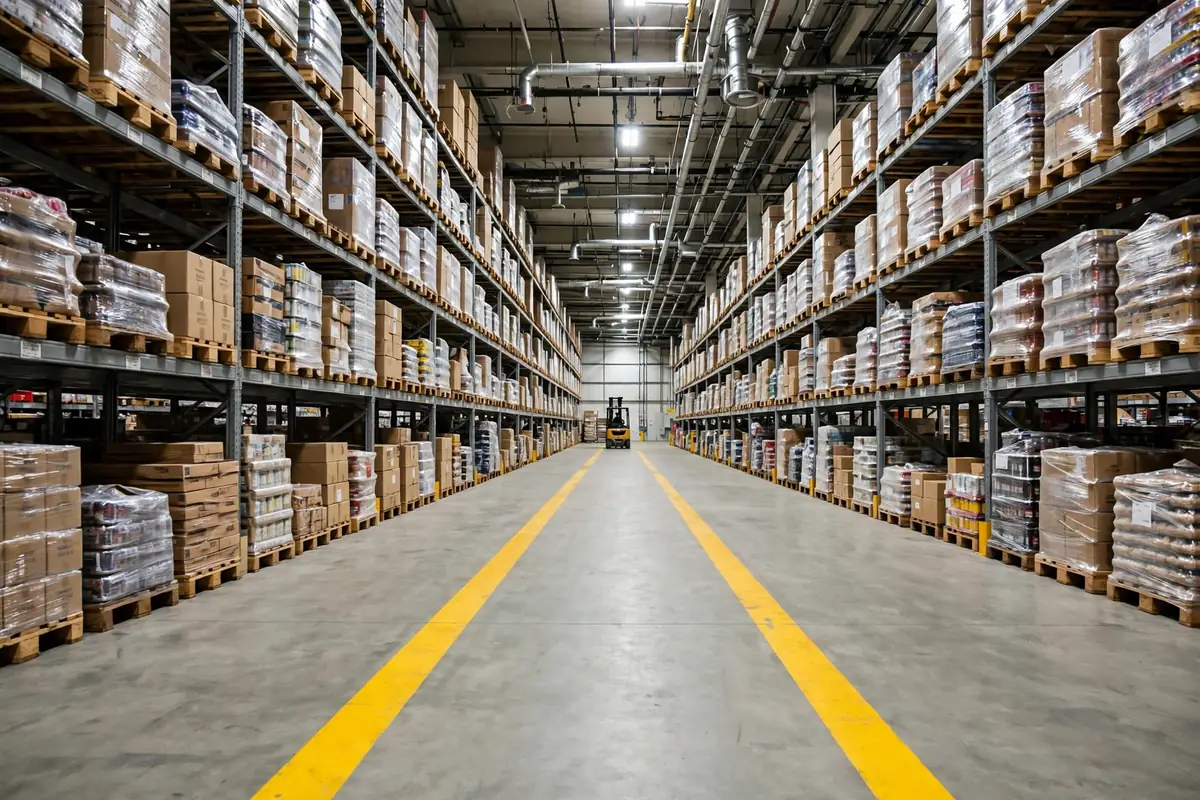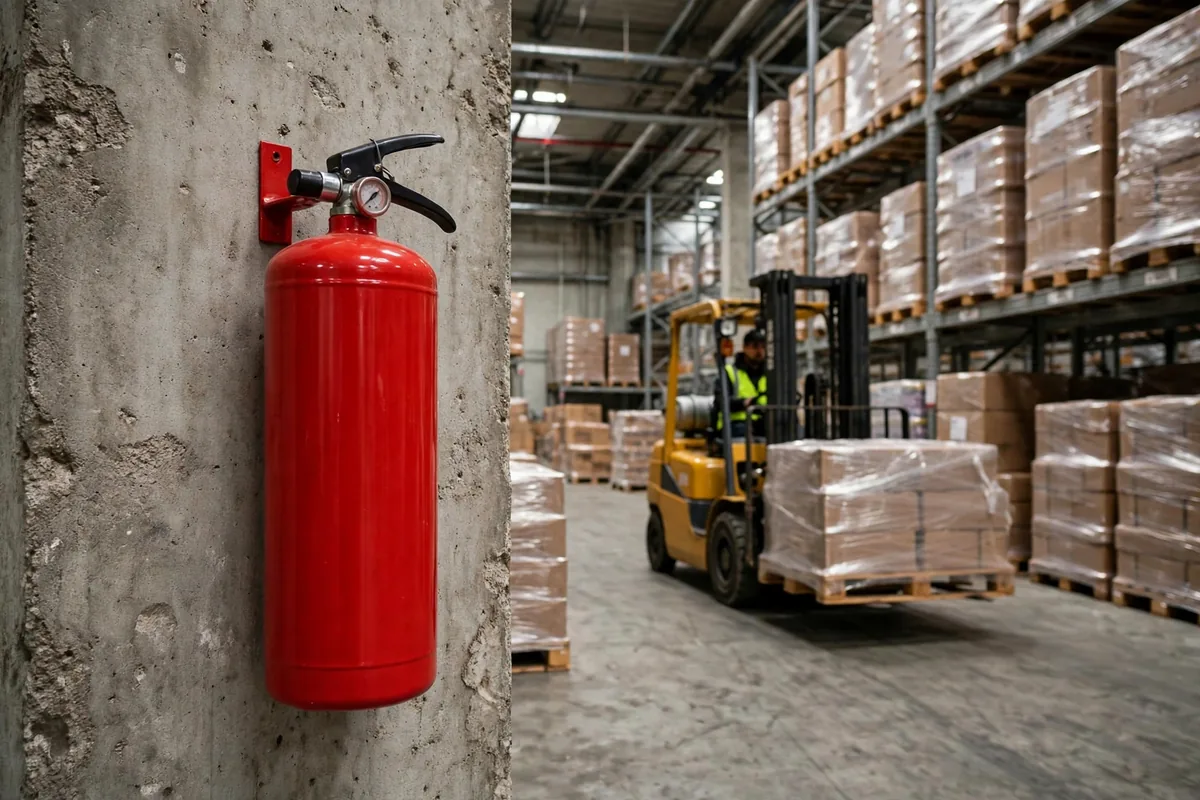
Let me tell you something about warehouse fire extinguisher placement. After all these years on the road, I have backed into more warehouses than I can count. Some of them make you relax the moment you walk in: the red extinguishers hang in a neat row on the wall, and the inspection tags show a date every single month. Others are the opposite. The extinguisher sits buried behind a pallet of boxes, and if a fire ever starts, you would have to move freight before you can fight it. At that point, what is the use?
A couple of years ago, in the fall, I was dropping a load at a warehouse in Ontario, California, and I got talking with the forklift driver while they unloaded me. He pointed at the corner and said that extinguisher usually lives behind the pallets. They only drag it out front when an inspector is coming, for the photo. I did not think much of it at the time. I just drove off. But the further I got down the road, the more it bothered me. That thing looks like it is in the way right up until the second you need it, and then one second is everything. An extinguisher put out for show is the same as no extinguisher at all.
The U.S. Occupational Safety and Health Administration spells it out plainly in standard 29 CFR 1910.157. The whole job breaks down into three parts: how many, where they go, and who checks them every month.
Warehouse Fire Extinguisher Placement Starts With Walking Distance
The rule does not look at floor area. It looks at how far a worker has to walk to reach an extinguisher. Class A fires are ordinary combustibles — cardboard, wood pallets, fabric — and the maximum travel distance is 75 feet, or 22.9 meters. Class B fires are flammable liquids — paint, solvents, gasoline — and the distance tightens to 50 feet, or 15.2 meters. Class D fires are combustible metals like magnesium, titanium, and sodium, and the distance goes back to 75 feet.
| Fire class | Maximum travel distance |
|---|---|
| Class A (ordinary combustibles) | 75 feet (22.9 m) |
| Class B (flammable liquids) | 50 feet (15.2 m) |
| Class D (combustible metals) | 75 feet |
Read that table the way it is meant: the farthest workstation in the building has to be within that distance of the nearest extinguisher that can handle that kind of fire. Rack aisles, charging areas, packing benches — whichever corner runs over the limit gets its own unit. A unit on the wall is not decoration. It has to be easy to spot, easy to reach, and on a path a person can walk without moving freight out of the way.
The fastest way to check your own building is to walk it yourself. Stand at the farthest packing bench, the farthest rack bay, the farthest corner of the charging area, and pace off the distance to the nearest unit that can handle the fire load there. If you have to move a pallet to get to it, it does not count. Count the walk, not the straight line on the floor plan.
How Much Floor One Extinguisher Covers
Distance alone does not settle the count. Under NFPA 10, a 2-A rated extinguisher in an ordinary hazard occupancy — a warehouse like ours — covers a maximum of 3,000 square feet. Divide by that number and you know where you stand.
Worked example: take a 60,000-square-foot ordinary warehouse, fitted out entirely with 2-A units. Sixty thousand divided by 3,000 gives you at least 20 units. That is the floor, not the finish. You still have to check the walking-distance rule separately. The area math can pass while a corner workstation sits more than 75 feet from the nearest unit, and then you add one anyway. And do not forget the corners nobody visits: the far end of bulk storage, the mezzanine, the returns area. Those are the places a fire starts unnoticed, and they are the places people forget to cover.
Here is the part most people get backwards: more extinguishers is not automatically better. Ten small units in the wrong places are worth less than one right unit in the right place. A row of Class A units in an area full of flammable liquid is the same as nothing, and grabbing the wrong type in a hurry can make things worse. Figure out what is actually stored in the building first, then pick the type and the count. Never run it the other way around.
Good warehouse fire extinguisher placement means the closest right unit is always within reach, and that takes a trade-off on size, too. A big unit covers more floor, so you need fewer of them, but it is heavy, and a smaller worker can struggle to pick it up with one hand and move fast. A small unit is light and quick to grab, but it covers less ground, so you need more of them. My view is simple: do not pinch pennies on the count. The real value of an extinguisher is that your people can lift it and use it when it counts.
Monthly Checks Keep Warehouse Fire Extinguisher Placement Honest
Buying the units and hanging them up is only half the job. OSHA calls for a visual inspection every month, and a full maintenance check by a qualified professional once a year, with records kept. The monthly check does not need an outsider. One person in the building can do it, on the same day every month, walking the floor once.
What do you look at? I have watched people do this check for years, and it comes down to five things: the pressure gauge needle sitting in the green, because in the red means it has no charge; the pull pin and tamper seal still in place, and any unit that has been tampered with gets pulled aside; the hose, checked for cracks and blockages; the cylinder, checked for rust and dents; and the inspection tag, signed and dated, because a gap of a month leaves you with nothing to show an inspector.
I remember a morning delivery in Fresno where the driver ahead of me pointed at a gauge sitting in the red while we waited at the dock. The warehouse lead did not argue about it. He pulled the unit off the wall, tagged it, and swapped in a spare from the cage before the truck was even unloaded. That is what a monthly check is for. Nobody had to call a professional. Nobody had to fill in a form. One person looked, one person acted, and the building was covered again before lunch.
Somebody has to own the signature. Do not write "the warehouse is responsible." Write a name — the shift supervisor, the safety lead — with a backup when that person is off. A lost card or a broken run of dates means that month never happened. If something ever goes wrong, those records are the only proof you have.
Now run the money side of it. A monthly check costs a few minutes of one person's time. A single serious violation can carry a maximum penalty of $16,550, the standard adjusted on January 15, 2025. A unit costs a fraction of that, and the check costs minutes. You can do that math yourself.
An extinguisher is one of those things you would rather have for ten years and never touch than miss for a single day. Get the count right by the book, put them where the walking distance says, and check them on schedule. That is what warehouse fire extinguisher placement really comes down to. Do those three things and you will never have to drag pallets out of the way for a photo when the inspector shows up — and you will sleep better at night.
By Shifu Zhao, Trucking Veteran (15 yrs)