Let me tell you something. A couple of winters ago I hauled a load into a California warehouse, got there at seven in the morning, and the guard at the gate said the fire inspection was on that day, so trucks wait outside. Another morning lost to warehouse sprinkler coverage blind spots — I just did not know the name for it yet. I sat in my cab for over three hours watching the inspector walk in and out, and finally I heard the warehouse manager on the phone with the owner: "The high-rack area, the heads are all blocked by goods. We have to fix it." I thought to myself, I know this story by heart. After all these years on the road, I have been in and out of maybe a thousand warehouses, and when a fire inspection gets stuck, eight times out of ten it is the sprinkler coverage. It is not that the owner would not spend the money. Nobody ever thought about it — before the water even comes down, their own racks and goods are in the way.
Sprinklers are one of those things nobody looks at on a normal day. Everyone figures, they are up there on the ceiling, job done. An inspector does not see it that way. The inspector looks at whether the water can actually reach where it is supposed to go. So today, from what I have seen running warehouses, here are the five most common warehouse sprinkler coverage blind spots, plus a checklist you can run yourself before inspection day.
A tall rack turns a sprinkler head into a decoration
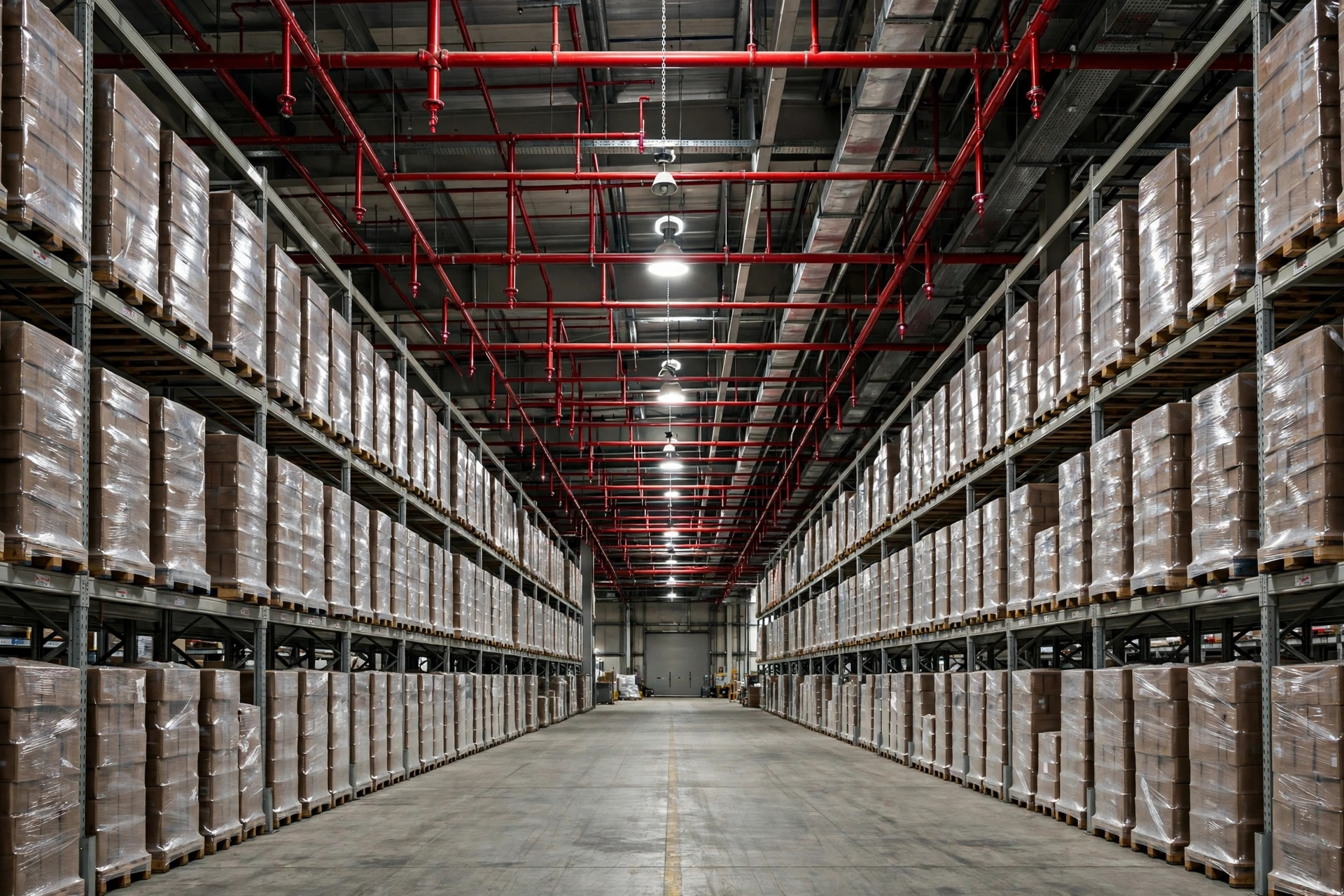
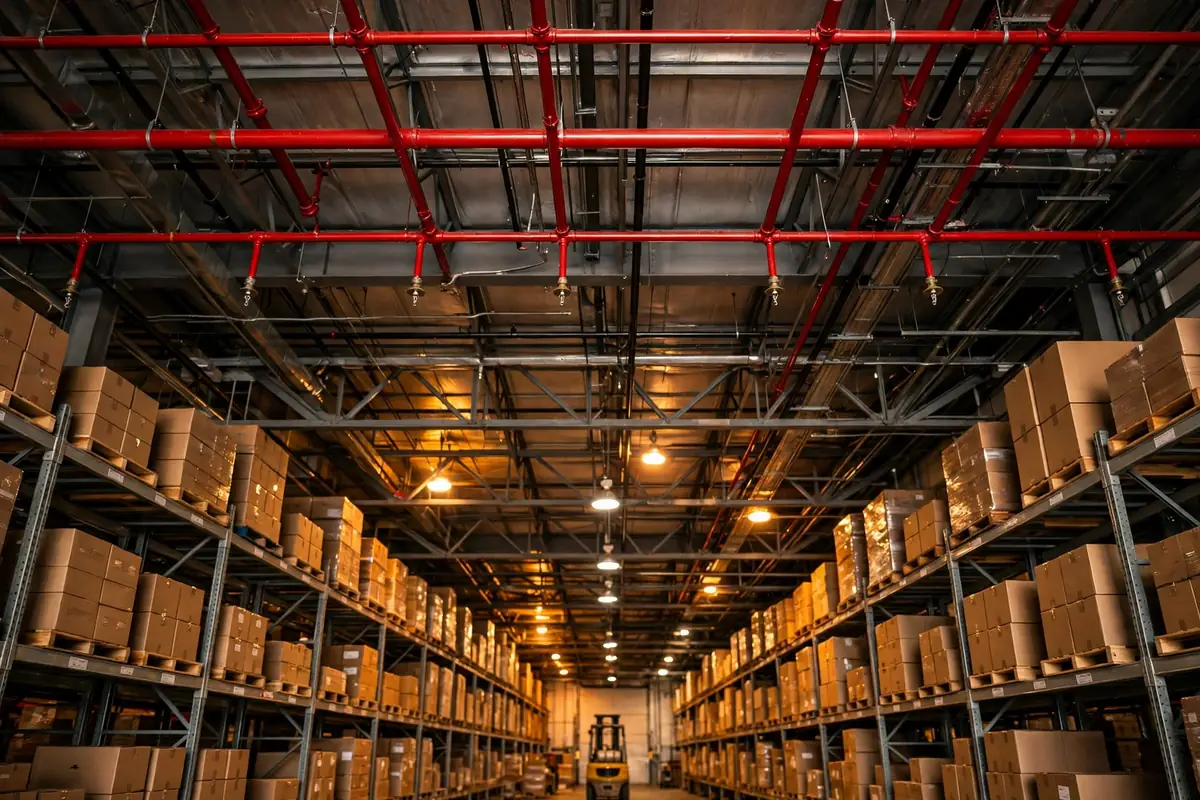
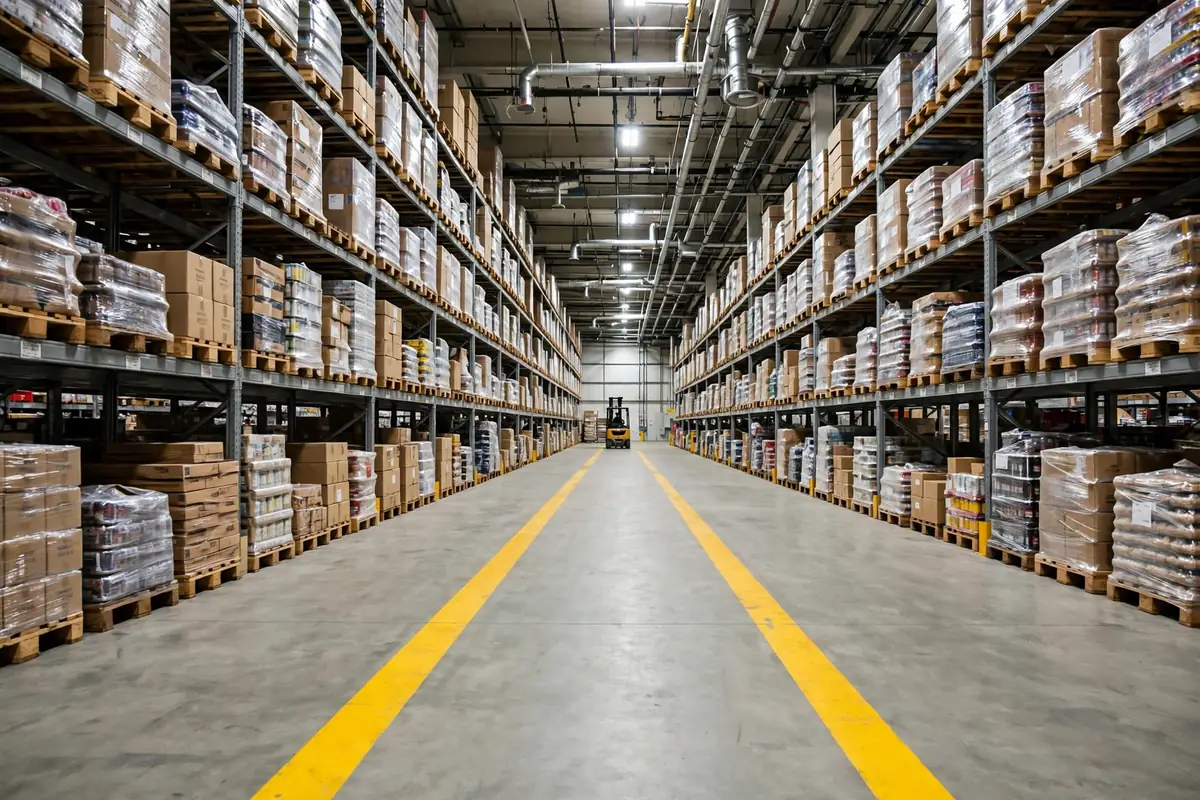
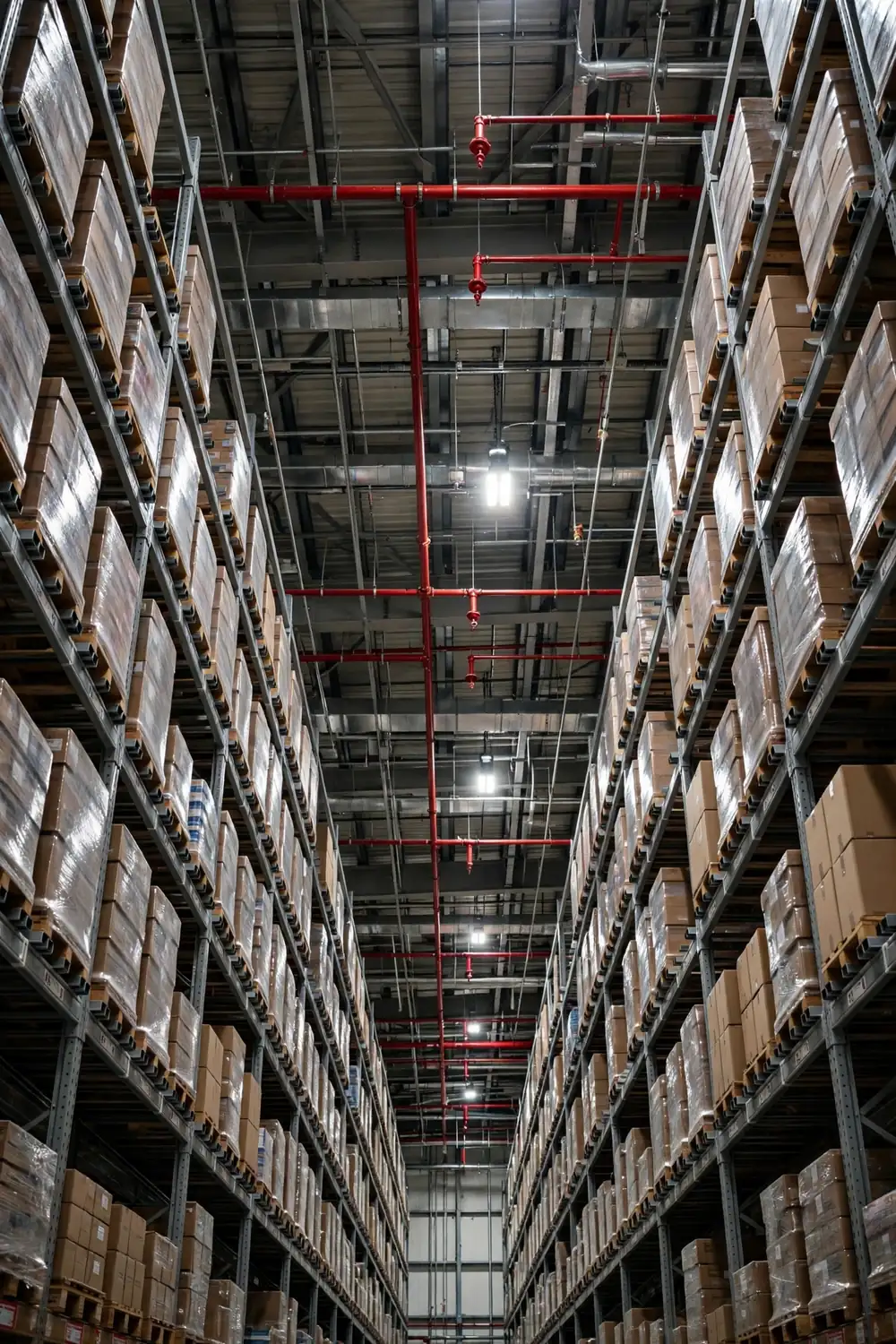
The most common one first: high racks blocking the heads. I have seen an auto-parts warehouse where the racks went up nearly to the ceiling, the top level packed full, with sprinkler heads right above them. The inspector stood underneath, looked up, and shook his head. The water comes down, the top level of goods catches the first of it, and the levels below never get wet.
What does that tell you? Sprinkler coverage is not about whether there are heads on the ceiling. It is about whether the water can make it all the way to the floor. The taller the rack and the fuller the top level, the worse the blocking. Some warehouses, chasing more storage, stack the top level until there is barely a hand's width under the head, and the water cannot even get out. An inspector spots that kind of thing at a glance, no instruments needed.
My advice to shippers and warehouses is this: keep clear space between the top level of goods and the sprinkler heads. How much clearance, exactly, follow the latest official policy and the latest edition of NFPA 25 — do not go by old habit and guess. And do not store water-sensitive goods on the top level. If a fire starts, the top does not get wet and the bottom is not protected either. You lose both ways.
Mezzanines, lofts, and dock canopies: warehouse sprinkler coverage blind spots
The second blind spot is mezzanines and lofts. Plenty of warehouses add a mezzanine later for office supplies or light goods, and to save trouble they never extend the sprinklers up there. A floor deck blocks everything. The inspector climbs up and finds it in seconds: a fire above, the heads below cannot reach it, and there are no heads above at all. This is the most common fix I have seen on the road, and it is not cheap, because you have to run new pipe.
Third is the area under the dock canopy. Goods move in and out all day at the dock, the canopy goes up over it, the heads sit on the canopy roof, and the goods sit underneath, with a layer of roof in between. At inspection time that spot often gets written off as "outdoors," but the goods stacked there are real enough. If a fire starts, the goods under the canopy have nobody looking after them, and the fire runs straight along the dock into the building. You cannot stop it then.
Let me tell you, after all these years on the road, I have one rule of thumb: anything that was added later — a mezzanine, a canopy, a partition — probably never got its sprinklers extended. Before an inspection, list every "added later" spot separately and check them one by one. That beats walking in circles around the old areas.
Charging areas and blocked heads are what inspectors care about most
The fourth blind spot is the charging area. These days a lot of forklifts and handling equipment run on batteries, and a charging area is a row of chargers. Batteries are most likely to cause trouble while they are charging. But I have seen plenty of warehouses put the charging area right beside the racks with no sprinkler head above it at all, or a head that is blocked by goods stacked overhead. Inspectors pay extra attention to charging areas, because that is where trouble is most likely, and a fire there is hard to put out.
The fifth one is the most straightforward: heads blocked by goods. Some warehouse stacks goods under a sprinkler head as a temporary move, meaning to shift it in a couple of days, and six months later it is still there. The inspector walks up, points, and says, "This head is blocked." The warehouse manager tries to explain, and the inspector answers with one line: a blocked head is the same as no head.
One more detail every driver who runs warehouses knows: inspectors notice when things are hung from a sprinkler head, when a head is caked with dust, or when a head has been painted over. Do not brush these off as small stuff. On inspection day, the small stuff is the big stuff.
Before the inspection, walk it yourself
Here is a self-check list I put together from years of running warehouses. A week before the inspection, have someone walk the building with it in hand:
First, look up: is there anything blocking the heads, and is the clearance between the top goods and the heads enough? Second, find the later additions: mezzanines, lofts, partitions, the area under the canopy — did the sprinklers follow? Third, check the charging area: are there heads covering the chargers, and is anything flammable stacked nearby? Fourth, look at the heads themselves: blocked, hung with things, painted over? Fifth, pull the records: when was the last inspection, and were the problems written in that report actually fixed?
Write up what you find. Fix what you can fix yourself, and get a quote from a professional company for what you cannot. Do not wait for the inspector to find the problems, because then the fix plus the re-inspection drags on for longer, the warehouse sits idle, and the losses get bigger. For the technical requirements and inspection intervals, follow the latest official policy and the latest edition of NFPA 25. My list helps you not miss a spot; it does not speak for the code.
Who pays for the fix
Last, the most practical question of all: who pays? I have seen too many warehouses and landlords argue over this. My advice is one sentence: read the lease. Who maintains the fire system, who pays for upgrades — if it is written in black and white, follow that. If it was never written clearly when the lease was signed, and you only discover it before the inspection, then sit down and talk it out. What the landlord owes, do not carry it yourself. What you owe, do not try to dodge it.
There is one more situation: if you raised the racks yourself, or added the mezzanine yourself, then you created the blockage, and the fix will most likely come out of your pocket. Ask one extra question when you sign the lease — "who is responsible for fire system upgrades?" — and you can save yourself a mountain of trouble later. After all these years on the road, I have seen too many people brought down by four little words: "I didn't ask then."
There is an old saying: if you never light incense in ordinary times, hugging the Buddha's feet at the last minute will not help. Fire inspection is like that. Look up at the sprinkler heads once in a while on an ordinary day, and on inspection day you will spend a few less hours standing around. The warehouse is how you make your living, and fire does not care about your feelings.
By Shifu Zhao, Trucking Veteran (15 yrs)