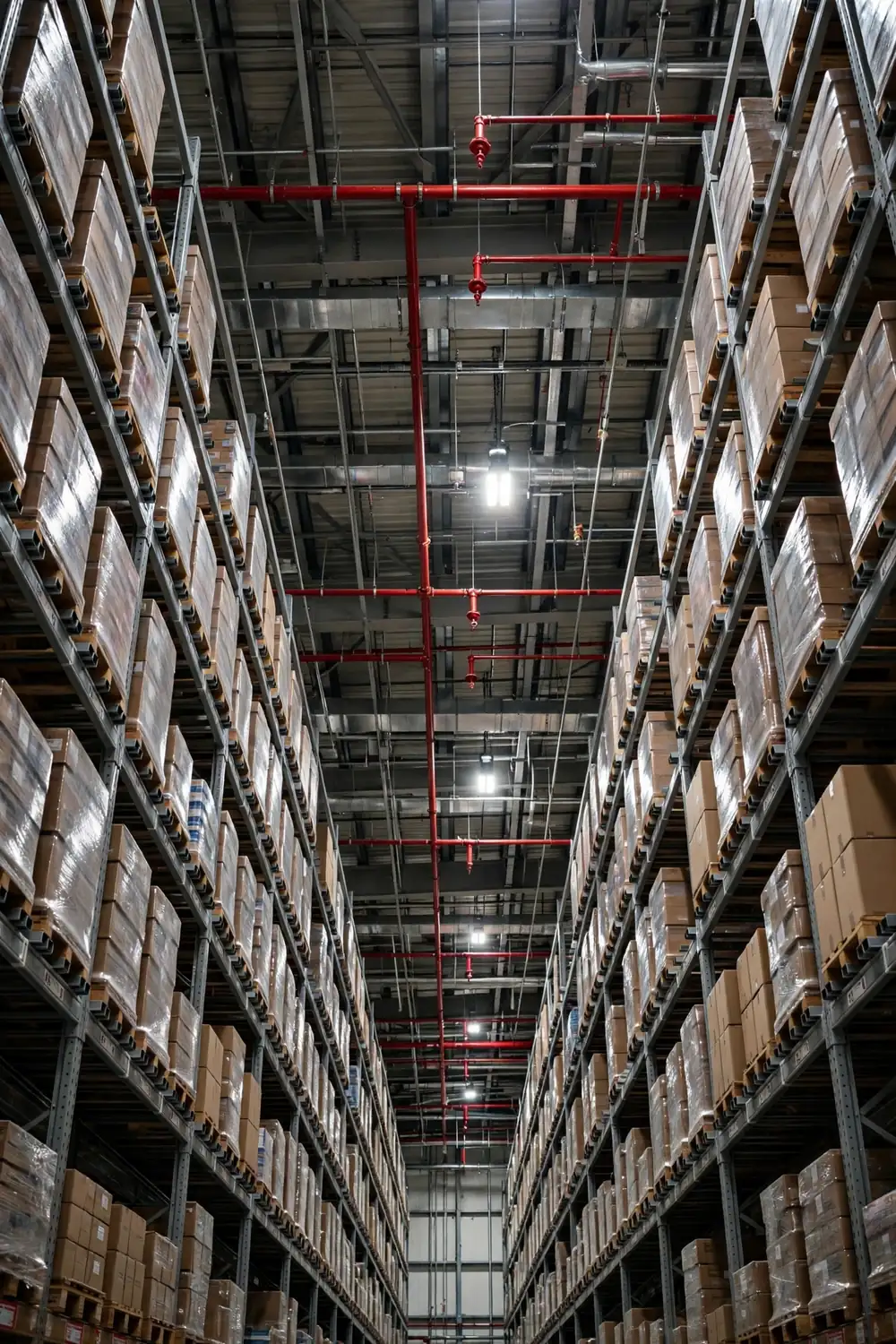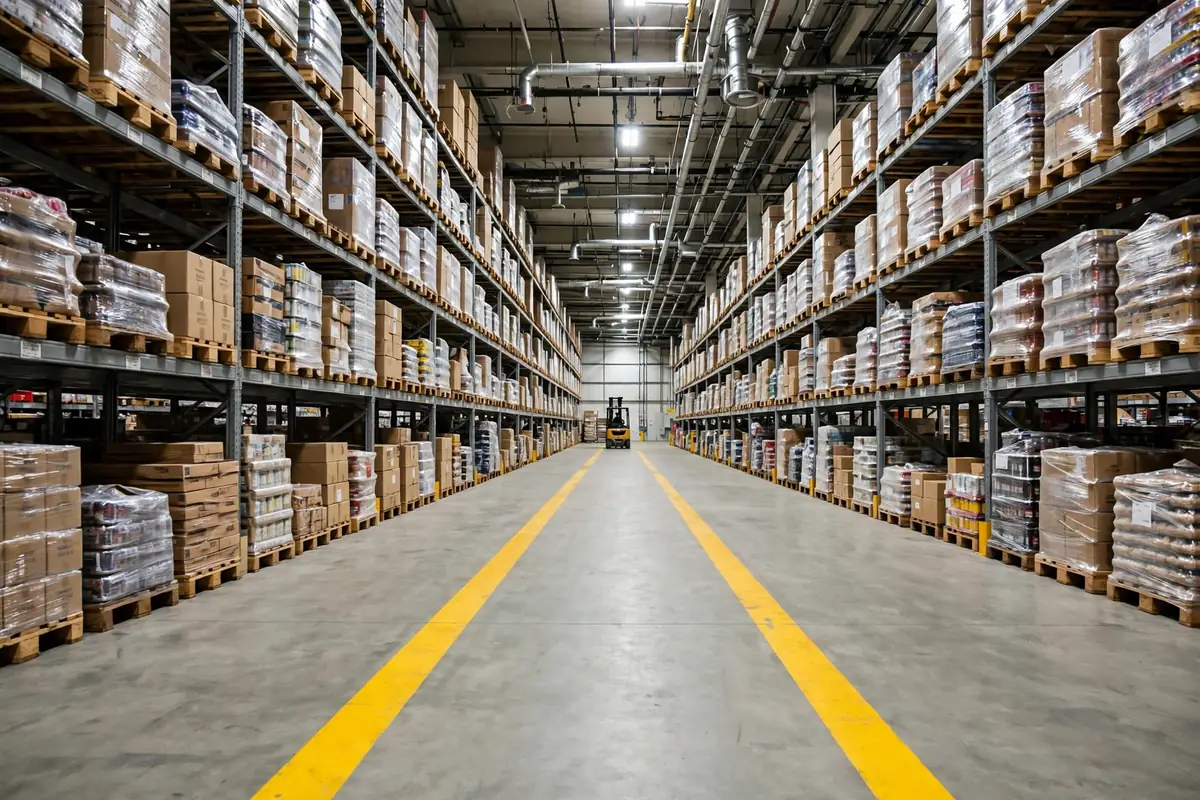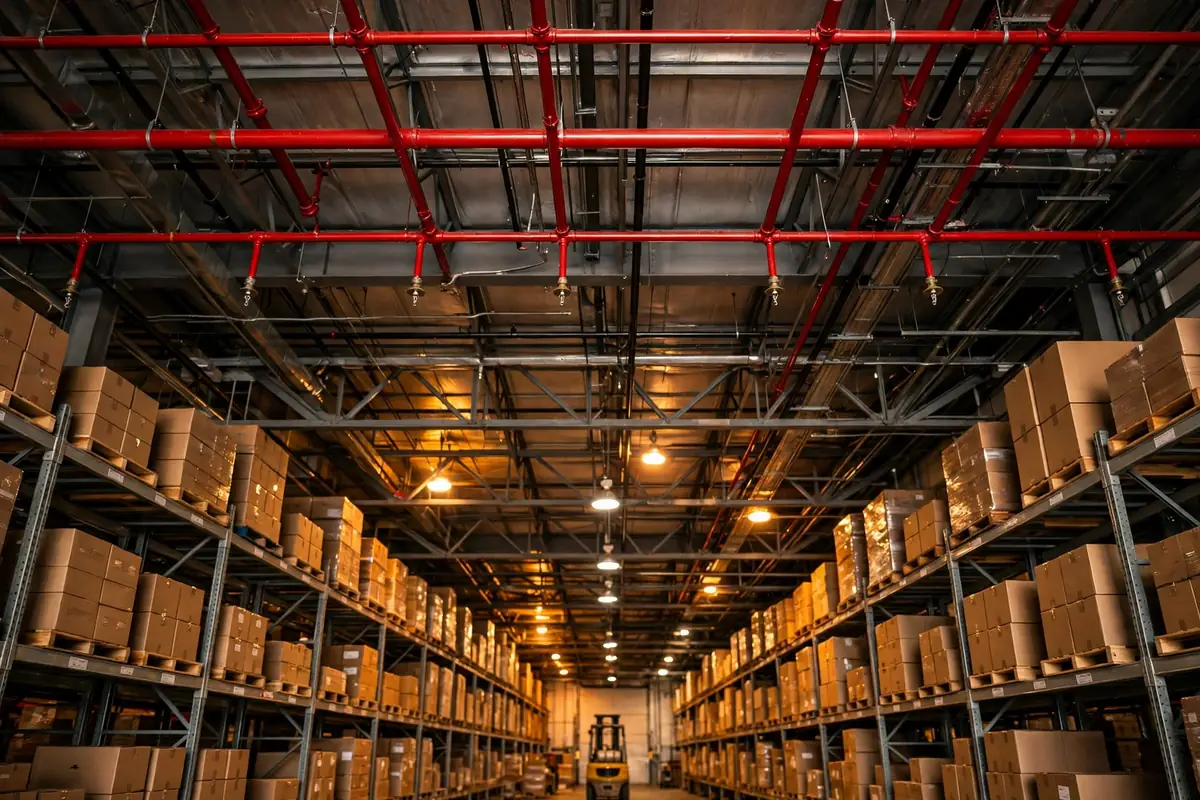
We small warehouses cannot afford to burn money like that. That was the first thought in my head when I saw the first quote for a warehouse fire sprinkler retrofit. I had just signed the lease on a 3,000-square-meter warehouse, the landlord said "fire protection has to meet code," and the numbers on the quote made my hands sweat. This piece is for small warehouse owners like me: where should the sprinkler money actually go, and how do you avoid paying for things you do not need.
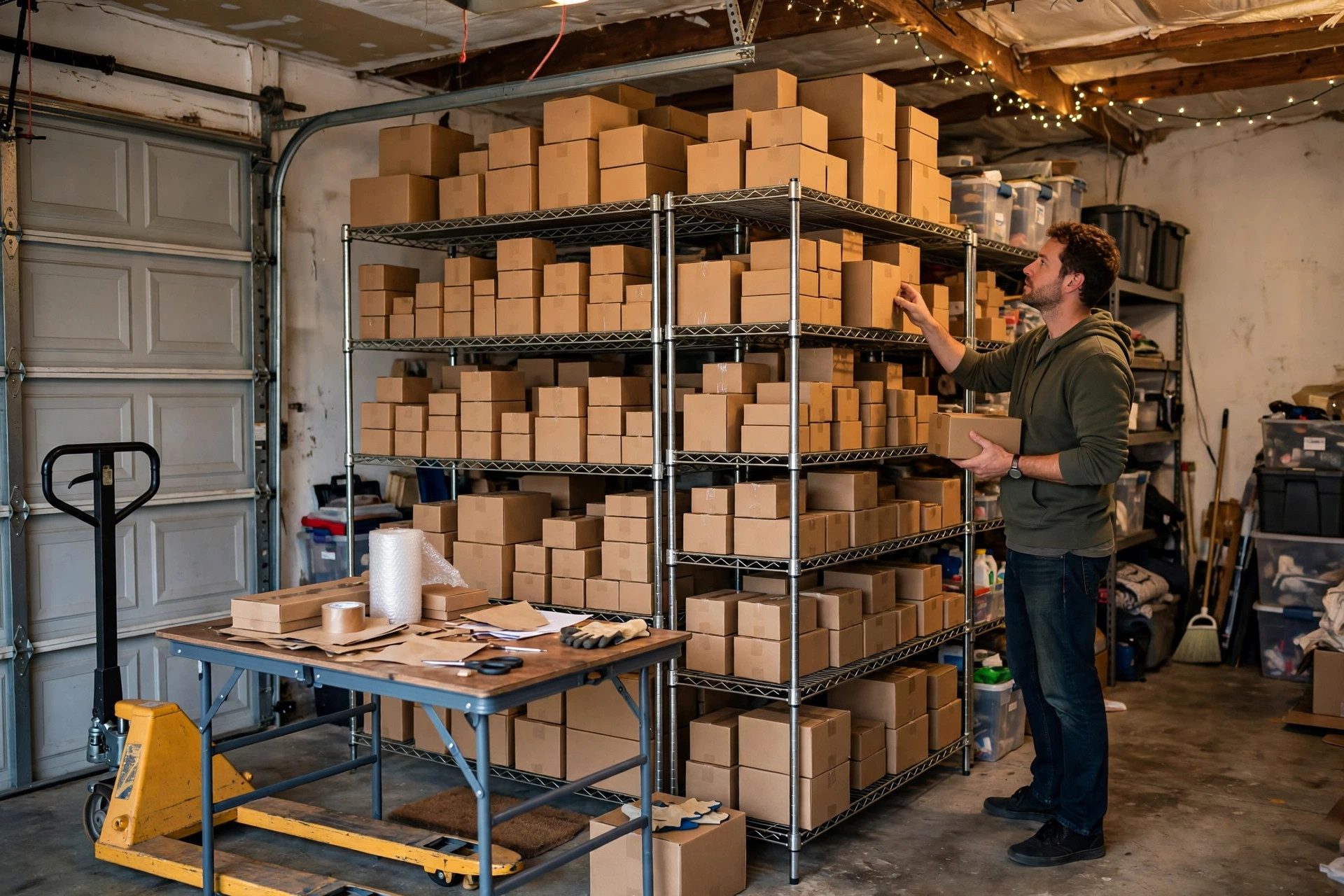
Here is our situation. Our racking is second-hand, the forklift is rented, the team is six people including me, and every dollar in the account already has a job. Big warehouses talk about sprinkler systems and zones. We talk about whether payroll clears this month. What stings most is that a sprinkler system is invisible on a normal day. It only proves itself the day something catches fire. There is zero satisfaction in paying for it. But the compliance hurdle is not optional, so the question is how to clear it without getting fleeced.
What NFPA 13 Asks of a Warehouse Fire Sprinkler System
NFPA 13 is the installation standard for warehouse fire sprinkler systems published by the National Fire Protection Association, and warehouse sprinkler design, spacing, and sprinkler selection all start there. I say "start there" deliberately. Which edition your local fire department has adopted, and what your building's own fire design requires, decide the details. Treat the current edition on the NFPA website and your local fire authority as the final word, not this article, and never use this piece as a construction drawing.
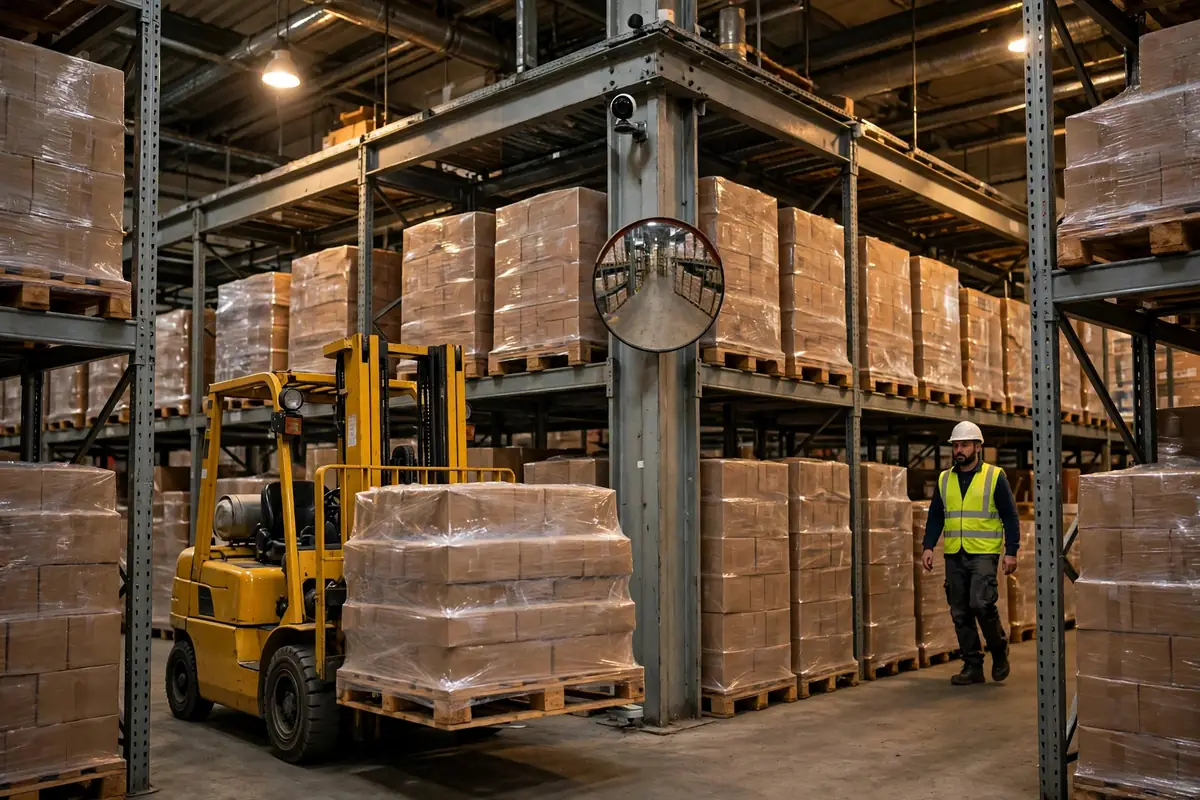
The core logic NFPA 13 applies to warehouses is one sentence long: what you store, and how high you stack it, decides how hard the sprinklers have to work. Commodities are classified by how easily they burn. Plastic goods in cardboard cartons and pallets of paper towels are in different worlds of fire risk. The higher the stack, the faster fire climbs, and the harder the sprinklers have to hit. Once you understand that logic, nobody can upsell you with a straight face.
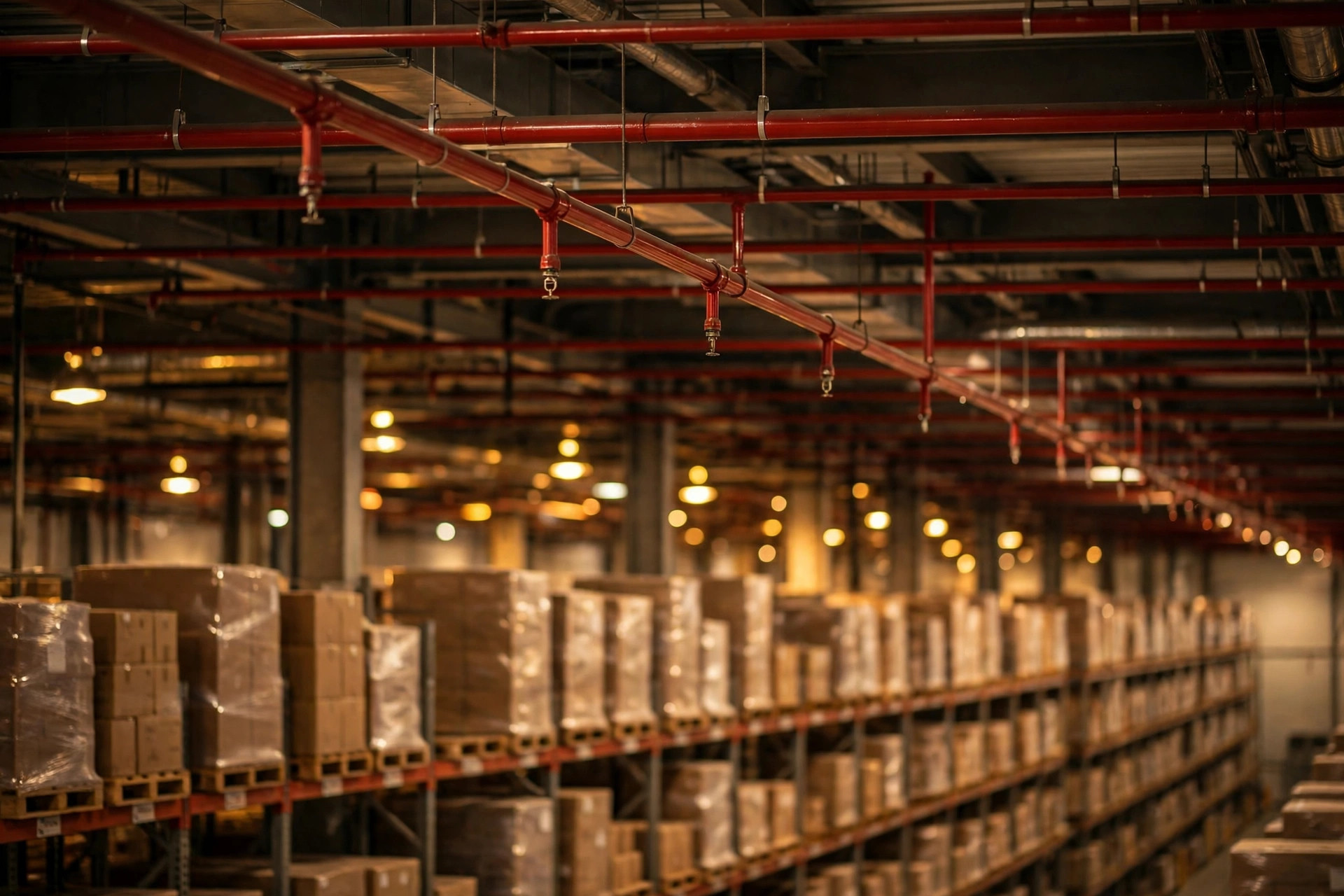
My first trap was a contractor who opened with the most expensive option. "You need ESFR," he said, very sure of himself. ESFR stands for Early Suppression Fast Response, a sprinkler that throws a lot of water fast and is a great fit for high-rack storage. But it also demands high water pressure, high flow, and a supply network to match, which means a bigger retrofit. Our racks were barely over four meters high and our goods were ordinary daily-use products. Standard spray sprinklers with sensible rack spacing were enough, and the fire protection engineer who reviewed the job agreed. That one sentence saved enough to cover two months of payroll.
ESFR vs. Standard Sprinklers: Where the Line Falls
The dividing line comes down to two things: rack height and commodity classification. Tall racks and flammable goods push you toward ESFR. Short racks and ordinary goods usually sit fine with standard sprinklers. The exact thresholds depend on the edition of the standard and the commodity class, so check the current NFPA 13 on the NFPA website rather than taking a number from me. I would rather leave a number out than print a wrong one.
There is a second dividing line people miss: water supply. ESFR needs big flow. An older building's municipal pressure and pipe size may not support it at all, and once you add a booster pump, a water tank, and pipework upgrades, the budget doubles. Before signing anything, get the fire protection contractor to test the water pressure and calculate the flow. If the water supply cannot pass, everything after it is rework. The warehouse next door picked an ESFR design first, discovered mid-job that the pressure was short, added a booster pump, paid extra, and lost a month of schedule.
My low-cost move is this: pay an independent fire protection consultant for one assessment first, lock the design down, and only then take that locked design out for quotes. When the fire protection company designs the job and also builds it, the more expensive the design, the more they earn. That logic needs no explanation. The assessment fee buys you three quotes that can finally be compared on the same sheet of paper.
Where a Warehouse Fire Sprinkler Retrofit Budget Goes
I broke our retrofit cost down into a worked example, clearly labeled as an assumption: sprinkler heads and pipework were the biggest chunk, installation labor second, and fire department filing and acceptance testing third. But the real big-ticket item was not equipment at all. It was the word "retrofit." An old building with low clearance under the beams means pipework has to weave around steel. Rusted old pipework costs more to remove than new pipe costs to install. And moving stock out of the way means two days of lost orders, which is a cost too.
| Cost item | Rough share | Small-warehouse saving | | Sprinkler heads and pipework | Largest share | Buy to the locked design, never the upsell | | Installation labor | Significant | Schedule off-peak, avoid peak-season shutdown | | Filing and testing | Fixed cost | Pass first time, rework is the expensive part | | Lost trading during shutdown | Hidden, often large | Phase the work, keep trading while you retrofit |
Three street-smart ways to save. First, settle fire protection responsibility in the lease before you sign: who pays for the retrofit, the landlord or the tenant, and how much. Get it in writing. I learned that one the hard way because my lease was silent on it. Second, phase the work and retrofit the highest-risk zone first instead of shutting the whole building down at once. Third, walk your own checklist before the acceptance inspection. Sprinkler spacing, obstructions, signage, a fire hose cabinet blocked by stock: small things are the most common reasons for a failed inspection, and every failed inspection means rebooking and another week lost.
The Inspection Failures That Catch Small Warehouses
Failed inspections are rarely about big problems. They are about details. A sprinkler head blocked by a rack beam so the spray cannot reach the fire. Top-level stock stored too close to the sprinkler head, breaking the required clearance. Pipework labels missing, a hose cabinet hidden behind pallets. None of these are hard to fix, but every fix means a re-inspection, and small warehouses cannot afford to burn weeks on re-inspections.
Another trap: the rack layout changes after the retrofit and the sprinkler design never catches up. One extra row of tall racking, or a switch to a more flammable product, and the coverage is no longer enough. My rule now is that any racking change starts with one question: can the sprinklers still reach it. A habit like that is cheaper than a retrofit redo. The same question applies when taking over an old warehouse as a new tenant. Never look only at the rent. Ask what year the sprinklers were installed and to which standard. That one question steers you around a lot of hidden trouble.
Sprinkler money hurts to spend, but it has one virtue: you pay once and it covers you for years, and your insurer notices. Our property insurance premium dropped a tier after the retrofit passed acceptance, and over a few years the premium savings cover a real part of the retrofit cost. I had not counted that in the first place. Once I did, the whole thing felt a lot less painful.
Small warehouses have their own way of surviving. Fire protection is not about throwing money at the problem. It is about putting the money exactly where it counts. Lock the design before you compare quotes, test the water supply before you build, and walk the inspection checklist yourself first. Get those three steps right and a small warehouse sprinkler retrofit will not be money wasted.
By Xiao Ma, Small Warehouse Owner