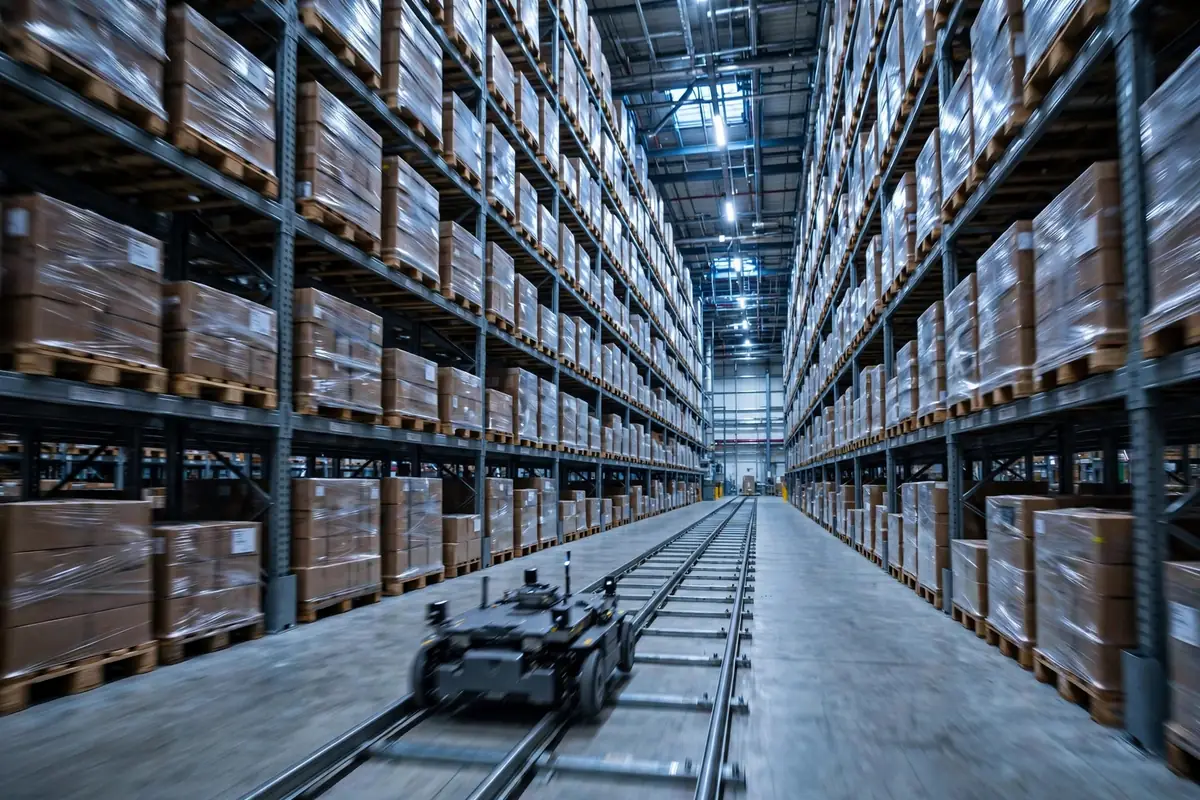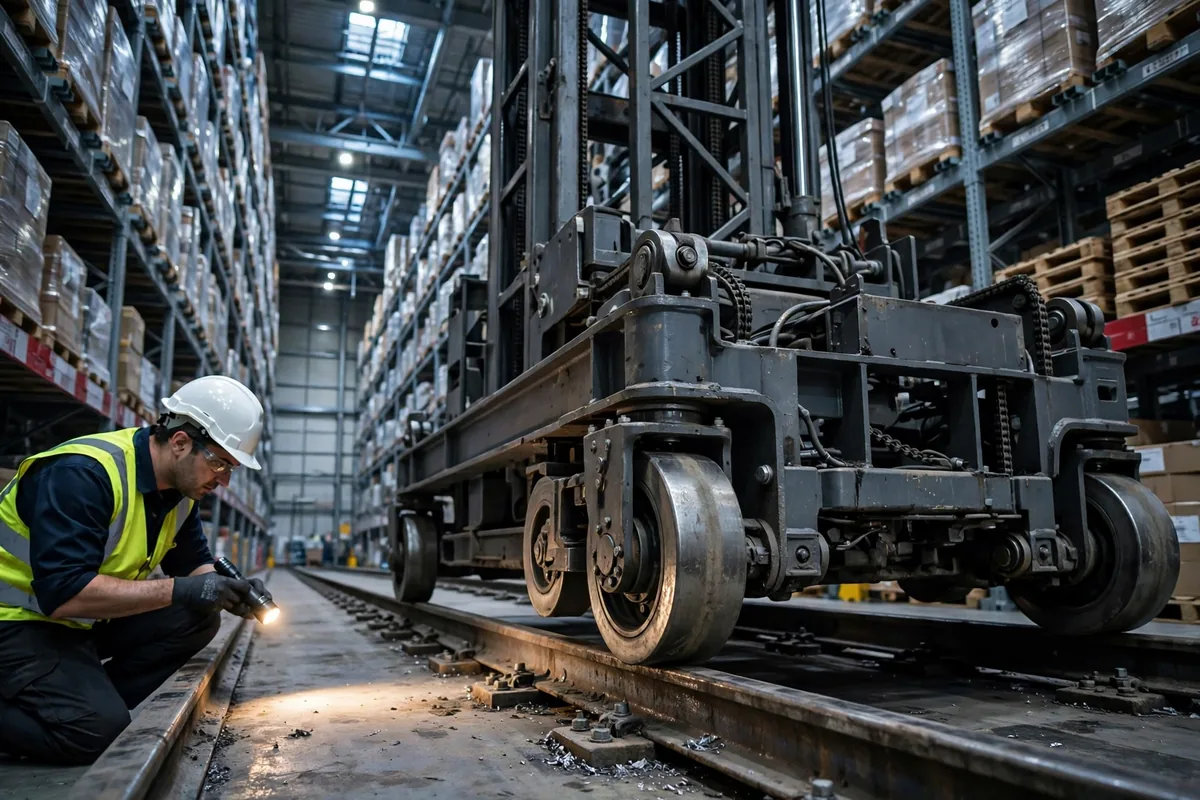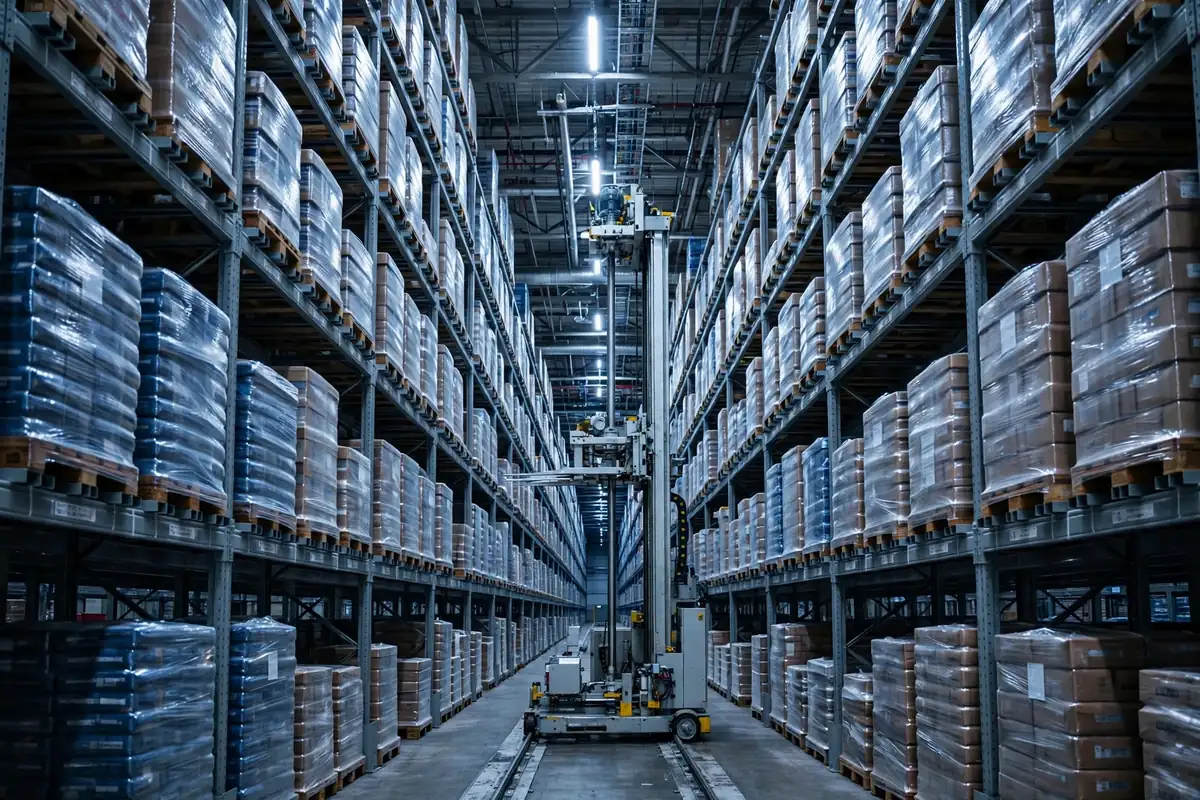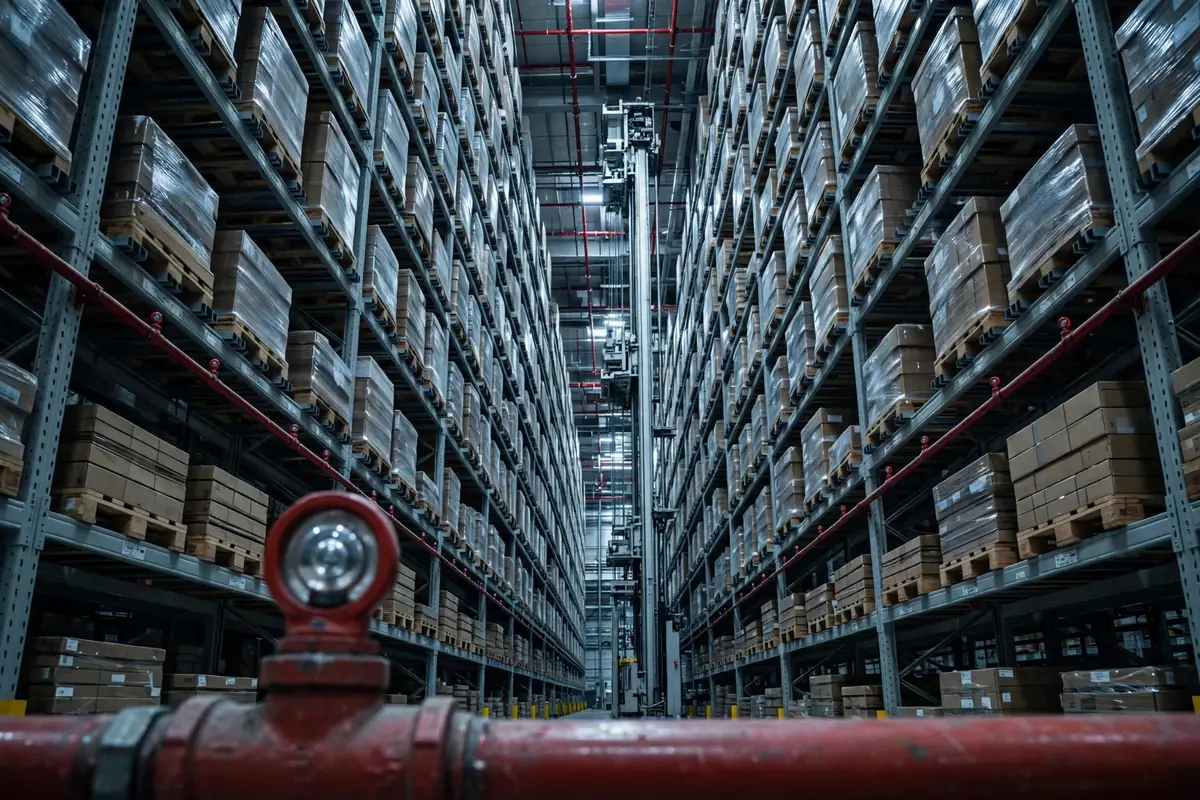
Last fall I walked a high-bay automated warehouse still under construction, and ASRS fire protection was the first thing on my checklist: 16 meters clear height, racking already built to 12 meters, a stacker crane being tested in the aisle. The owner pointed at the ceiling and asked me whether a row of high-flow sprinkler heads up there would cover it. I told him it wasn't that simple. In asrs fire protection, once you cross a height limit, the ceiling system can't reach the fire anymore, and no amount of money spent on bigger heads changes that.
Think of it like fighting a fire in a tall building with a hose on the roof. The water has to pass through floor after floor before it reaches the burning level, and most of it never gets there. In a high-bay warehouse the floors are layers of cartons. A fire burning inside the rack gets water that first hits the top layer of boxes, runs off to the sides, and leaves the burning level almost dry. Ceiling sprinklers handle the fire they can see from above. The fire inside the rack is one they can't see.
ASRS Fire Protection Starts With One Question: How High?
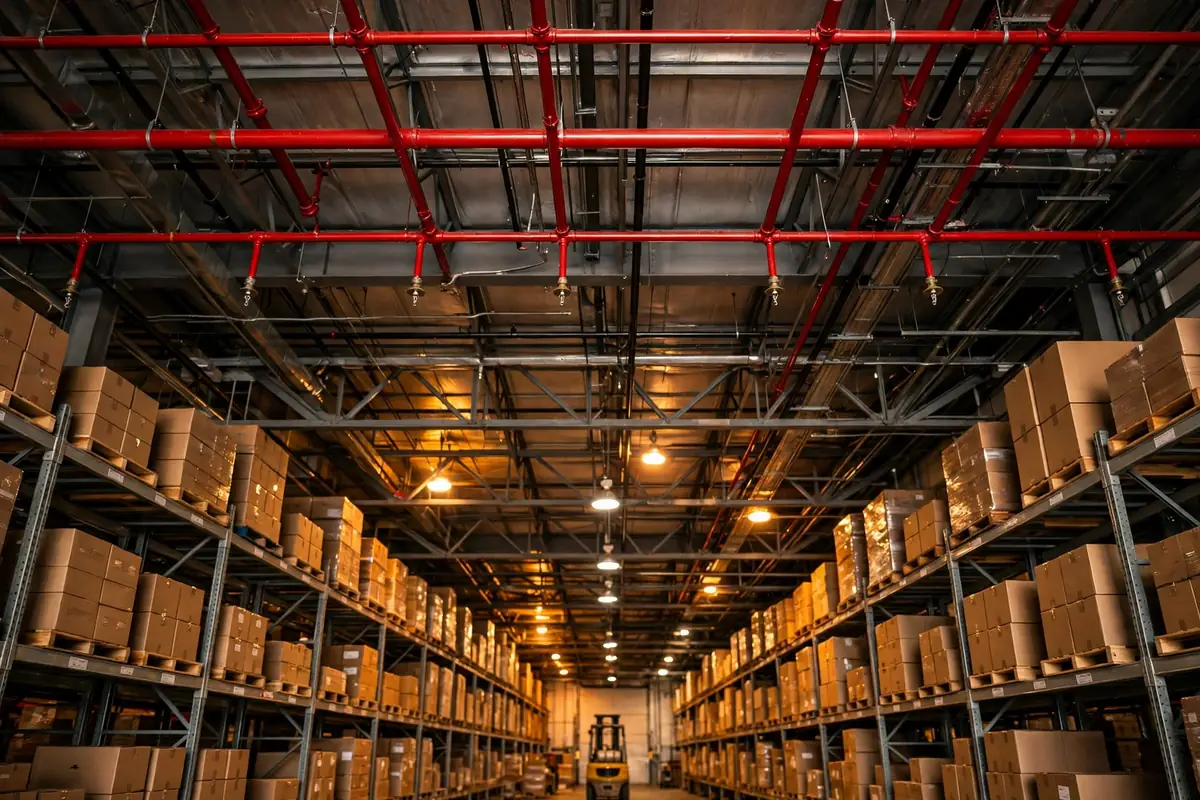
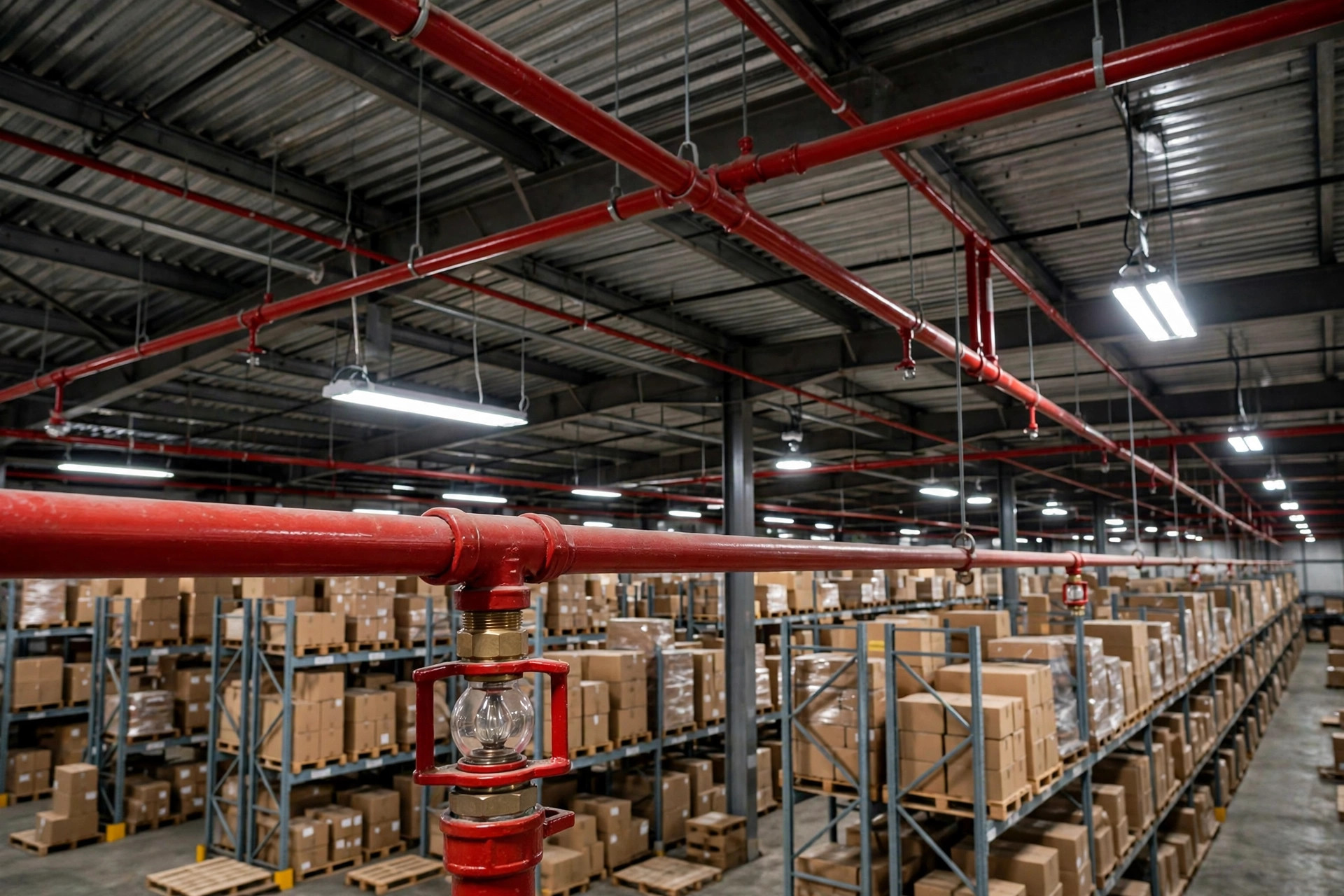
Principle first, then the dividing line. The ceiling sprinkler built for tall storage is the ESFR head — early suppression, fast response — designed to knock a fire down, not just hold it. But its reach has a ceiling of its own. Under NFPA 13 Table 23.3.1, ceiling-only ESFR protection tops out at a 13.7-meter ceiling and 12.2 meters of storage, in the K-factor 200 to 360 range. Past that height, the ceiling-only option is off the table. No discussion.
Here is a hypothetical example — my numbers, but the math is real: a warehouse with 16 meters of clear height and storage stacked to 12.2 meters, which is 2.3 meters over the ceiling limit. Spending more on ceiling heads at that point is money down the drain. The honest options are to lower the racking or add in-rack sprinklers. Two hard rules go with it: keep at least 36 inches, about 900 millimeters, between the sprinkler deflector and the top of storage, or the spray pattern never opens up; and keep the roof slope at or under 4 in 12, because a steeper slope scrambles ceiling coverage.
Then there are two no-go zones where people get caught. ESFR heads must not protect racks with solid shelves unless in-rack sprinklers are installed too, and they must not protect goods in open-top containers. A solid shelf is a steel plate: water from above hits one plate and stops, and everything below it stays dry. At plan review, the first question is usually whether your shelves are solid or wire mesh. If you can't answer, the drawings go back.
According to NFPA research data, U.S. fire departments respond to an average of 1,450 warehouse structure fires a year, causing an average of 2 fatalities and 16 civilian injuries a year, with direct property damage averaging $283 million a year. Divide $283 million by 1,450 and you get about $195,000 of direct property damage per fire on average. That's what asrs fire protection guards against: not a probability problem, a balance-sheet problem.
In-Rack Sprinklers in ASRS Fire Protection: Bringing Water to the Fire
When the ceiling can't reach, change the approach: bring the water to the fire. That's what in-rack sprinklers do. The pipe runs along the rack, the heads sit inside the racking, and whichever level catches fire gets water right there. The dividing line is written down plainly: storage over 25 feet, about 7.6 meters, protected by standard ceiling sprinklers needs in-rack sprinklers. Past that height, a ceiling-only design barely gets through plan review.
In-rack sprinklers only work if the flue spaces stay open. A flue space is the vertical gap inside the rack that lets hot gas rise and water fall. Keep a nominal 6-inch, about 150-millimeter, transverse flue between loads and at the uprights, and above 25 feet a 6-inch longitudinal flue as well. Solid shelving is stricter: if a single shelf tops 64 square feet, or a storage level tops 6 feet, about 1.8 meters, you need sprinklers below every shelf level. Flues look fine on the drawings and get blocked on the floor — a forklift driver stuffs a carton into the gap to save a trip, and the whole in-rack defense is cut in half.
One more hypothetical example, just to show how the layer count works: a 12-meter rack with 1.5-meter levels has 8 levels — 12 divided by 1.5 is 8. One in-rack sprinkler level every 3 levels lands on levels 3 and 6, two levels in total. That's only a counting illustration. Which levels actually get heads depends on the commodity and the rack configuration in the NFPA 13 figures — when in doubt, go by the latest edition on the NFPA website.
The maintenance traps outnumber the design traps. In-rack pipe hugs the racking, so a forklift hit bends it, and a bent pipe left unrepaired means a blind level the next time there's a fire. Heads hate two things: cartons blocking them and dust choking them. Nobody climbs into a high-bay rack every day, so a head can sit blocked behind a carton for six months until inspection day. Our habit is to check heads and flues during every cycle count — two extra lines on the count sheet, signed off when done. It costs nothing, and it can save the building.
Another field defect I see all the time: pipe hangers knocked loose by forklifts, so the pipe slowly sags until every head on it points the wrong way. A head tilted a few inches throws its coverage off by a wide margin, and the burning level ends up outside the spray. Check the hangers with a level during inspection. Five minutes now, or two days on scaffolding after a failed inspection.
Interlocks and Inspections: Stop the Crane First
When a high-bay warehouse catches fire, the stacker crane has to stop first. That's not a suggestion, it's the first line of the interlock logic: the moment detection alarms, the crane parks at the nearest safe position, then power cuts. A running crane does two bad things at once: it carries the fire deeper into the aisle, and it keeps firefighters out of an aisle full of moving machines. The stop sequence belongs in the control program, and it has to be rehearsed for real — written on paper doesn't count.
Detection deserves the same care. A high-bay space is tall and wide, so ordinary point smoke detectors react slowly up there. The usual answers are aspirating detection and beam detection: aspirating systems keep sampling air through a pipe network and catch smoke early, while a beam detector watches a light beam dim as smoke crosses it. Neither is cheap, but both are cheaper than finding the fire after it's already running. Keep the detectors clear of the crane's travel path — a beam that the crane blocks every pass will false-alarm until somebody switches it off.
The punch-list items that fail inspection most often are the ones I've seen on real sites: flues blocked with cartons; heads shadowed by beams so the water hits steel first; cranes with no fire-stop in the interlock program; not enough spare heads on site, so one damaged head means waiting on a purchase order. The most annoying one: pressure-testing the sprinkler pipe unfinished before the roof went on, so a leak dripped inside the racking and the goods were soaked before anyone noticed.
Here's the counterintuitive part: more heads doesn't mean safer, and higher pressure doesn't mean better. A sprinkler system is a calculated set of numbers — flow, pressure, coverage area, commodity — all locked together. Add too many heads and the pressure splits until no single head gets enough water to knock the fire down. ESFR isn't a cure-all either: height, commodity, shelf type — if any one condition is out of range, it stops working. In fire protection, trusting one piece of equipment is the most expensive mistake you can make.
So is the money worth it? Look at this one number: about $195,000 of direct property damage per warehouse fire on average, from the NFPA figures. Put that number in front of an owner and the math gets easy. The extra pipe and heads cost a fraction of one fire's worth of goods. There is no cheap option in asrs fire protection — only spending a little now or spending a lot when it burns.
By Da Liu, Automation Engineer