Let us start with the bill. A mid-sized warehouse keeps two pallets of slow-moving stock parked on its fire egress aisle, year round, on barely a dozen square metres. What it saves is the hassle of finding another slot and a little handling labour, worth next to nothing. Set that against what happens when an audit catches the blocked aisle: corrective work, a re-inspection, production on hold, and the cost runs by the day. If the insurer comes calling as well, a premium increase or an argument at claim time costs more again. Stacking freight on an escape aisle saves pennies and gambles the whole operation. That is money wasted, wasted in the specific way of saving small money to risk big money.
Two Warehouses, Two Expensive Lessons
The first warehouse sits inland in California. Before peak season last year, it brought in a third-party firm for a pre-audit. The inspector's first act was not to look at the racking. It was to walk the escape aisle end to end. Three spots were pinched by pallets and empty cage carts, and at the narrowest point only one person could pass sideways. The report marked that item as a failure. The warehouse spent two days clearing the aisle, repainting markings and replacing signs, then booked a re-inspection. The re-inspection itself was not expensive. What cost money was two days of disrupted outbound flow, delayed orders, and a customer service team answering complaints all day. The manager told me later the freight should have been moved months earlier. Every time, someone had said "just two days." Two days stretched into two months.
The second warehouse learned its lesson during a peak-season surge. Orders flooded in, receiving overflowed, and the floor team pushed the surplus into the escape aisle, reasoning that peak season lasts only a few weeks. A routine fire department inspection ordered the aisle cleared on the spot. The whole shift stopped, half a day of output vanished, and the cleared freight had nowhere to go, so it was moved twice more before a slot was found. Peak season is exactly when time and labour are scarcest, and that is when this warehouse paid to redo work that should never have existed.
Breaking Down the Cost: Where a Blocked Fire Egress Aisle Really Bites
The cost of a blocked aisle is not one line item. It is four, all invisible until they arrive together.
| Cost item | Invisible in normal times | How it is priced when it hits |
|---|---|---|
| Clearing labour | Occasional shifting of freight | Concentrated clearing plus re-inspection meetings, billed by the hour |
| Downtime and delays | Disrupted outbound rhythm | Half a day to several days stopped, plus delayed-order service costs |
| Audit and insurance | One failed item on a report | Corrective re-inspection, premium adjustments, claim disputes running for years |
| Rework and double handling | Freight moved out and moved back | The least valuable handling done when labour is most expensive |
Here is the counter-intuitive point, and most operators get it backwards: an empty aisle looks like wasted floor space. Run the arithmetic the other way around. Every day the aisle stays empty, it is saving you money: an audit passed first time, an insurer with nothing to pick at, and people who can actually get out if something goes wrong. An empty aisle is not idle space. It is insurance against not operating. Treating it as flexible stacking space is the same as cancelling your insurance to rent a few more square metres. However you price it, that trade loses.
The Worked Comparison: A Mid-Sized Warehouse
Take a mid-sized warehouse and run the comparison with your own numbers substituted. Suppose aisle inspection takes fifteen minutes a day at the shift lead's hourly rate. Over a month, that is a small sum, in the low hundreds. Now the other side: a pre-audit failure means at least two days of clearing and re-inspection, disrupted outbound flow, customer explanations and compensation claims that add up well past a full year of inspection cost. That is before insurance, where a premium increase is charged annually, not once. One side is a small monthly payment. The other is a large annualised cost.
There is also a hidden line item that gets left out of most spreadsheets: evacuation itself. A blocked aisle feels harmless until an alarm sounds, and then every minute of slow evacuation is measured in responsibility, not money. A manager pricing this honestly has to include expected loss, probability multiplied by consequence. The probability looks small, but when the consequence is large enough, the expected loss is not small at all. That is the true cost structure here: small probability, large consequence, and a deceptive appearance of zero cost in normal times.
Four Excuses, Answered One by One
The floor always produces the same four sentences, each reasonable-sounding while it loses money. "Just two days" becomes two months, as the California warehouse proved. "Nobody is here after hours" fails because fires and inspectors do not keep office hours. "Empty pallets are not freight" fails because a person tripping over an empty pallet falls just as hard as over a full one. "Peak season is a special case" fails because peak season is when inspections and incidents are most likely to collide with the blockage. The only reliable answer is a zero-tolerance list at the aisle entrance, with the shift lead photographing the aisle daily and logging every exception. Once exceptions are logged, they stop happening.
Keeping the Fire Egress Aisle Clear: The Levers That Actually Save Money
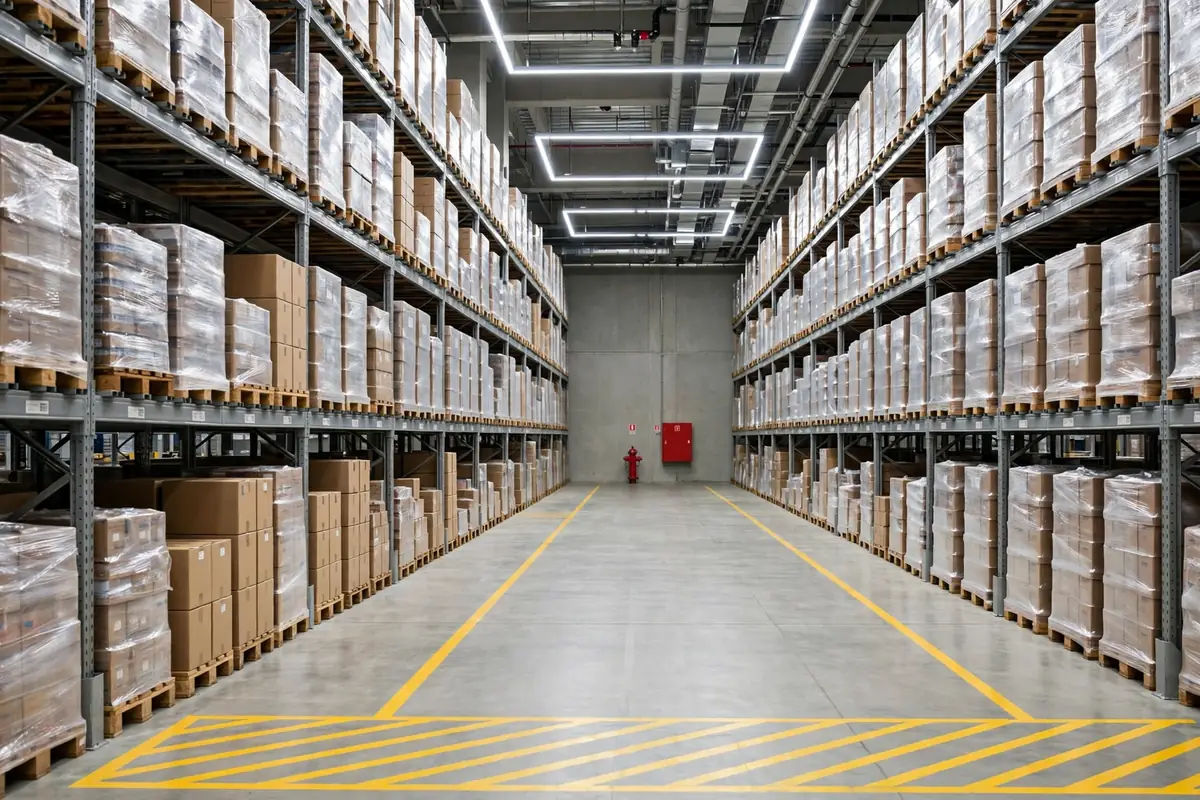
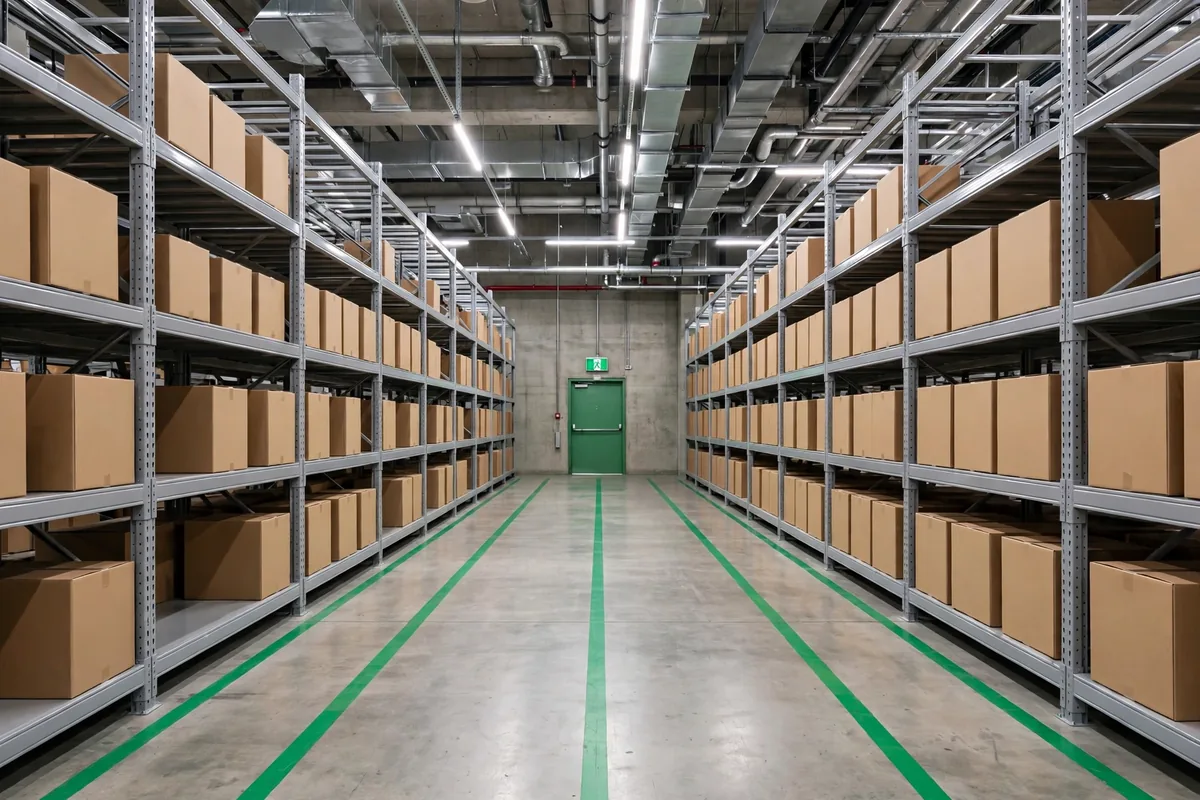
The saving is not in the clearing. It is in the mechanism that makes clearing unnecessary. First, aisle width and signage go on the inspection sheet: before each shift, the lead walks the aisle, photographs it, and clears any blockage on the spot, with a named person responsible. Inspection cannot rely on goodwill. It needs a sheet and a fixed action, costing roughly a quarter of an hour a day. Second, signage must be readable at a glance: floor markings, wall direction signs, and nothing at all at the aisle entrance, including cage carts and empty pallets that are "only there for a minute." Temporary is the most dangerous word in a warehouse; every permanent blockage started as a temporary one.
Sign maintenance belongs on the same sheet: forklifts grind floor markings away within months, and a faded line is the same as no line. Repaint when it fades; one repainting costs far less than one corrective action.
Third, peak season needs a floor plan agreed in advance, not improvised. Before the surge, decide where overflow goes: a short-term overflow space, flexible slots negotiated with a neighbouring warehouse, or split shipments agreed with customers in advance. There are many options, and exactly one forbidden one: the escape aisle. Put the overflow plan in the peak-season playbook with a trigger condition, such as the receiving area reaching a stated occupancy, so the plan starts before freight has nowhere to go. A plan written on paper costs nothing. A plan invented during a stoppage costs production days.
One caution on the rules themselves: specific penalties and aisle-width requirements vary by jurisdiction, so this article states no fixed figures. Local fire department and insurer requirements are the authority; confirm them in writing and post them at the aisle entrance. Compliance has no "approximately." Approximately is the hazard.
Here is the calculable conclusion. Price your own aisle this way: monthly inspection cost equals daily inspection minutes multiplied by the shift lead's hourly rate multiplied by working days. The cost of one incident equals clearing labour plus downtime loss plus re-inspection and insurance costs. Whenever the second number exceeds the first, inspection is a profitable purchase. For most warehouses, a month of inspections costs less than half a day stopped. Fifteen minutes of aisle inspection a day is the cheapest insurance in the whole warehouse. Money not spent there will be spent somewhere else, in larger amounts.
By Lao Zhou, Logistics Cost Analyst