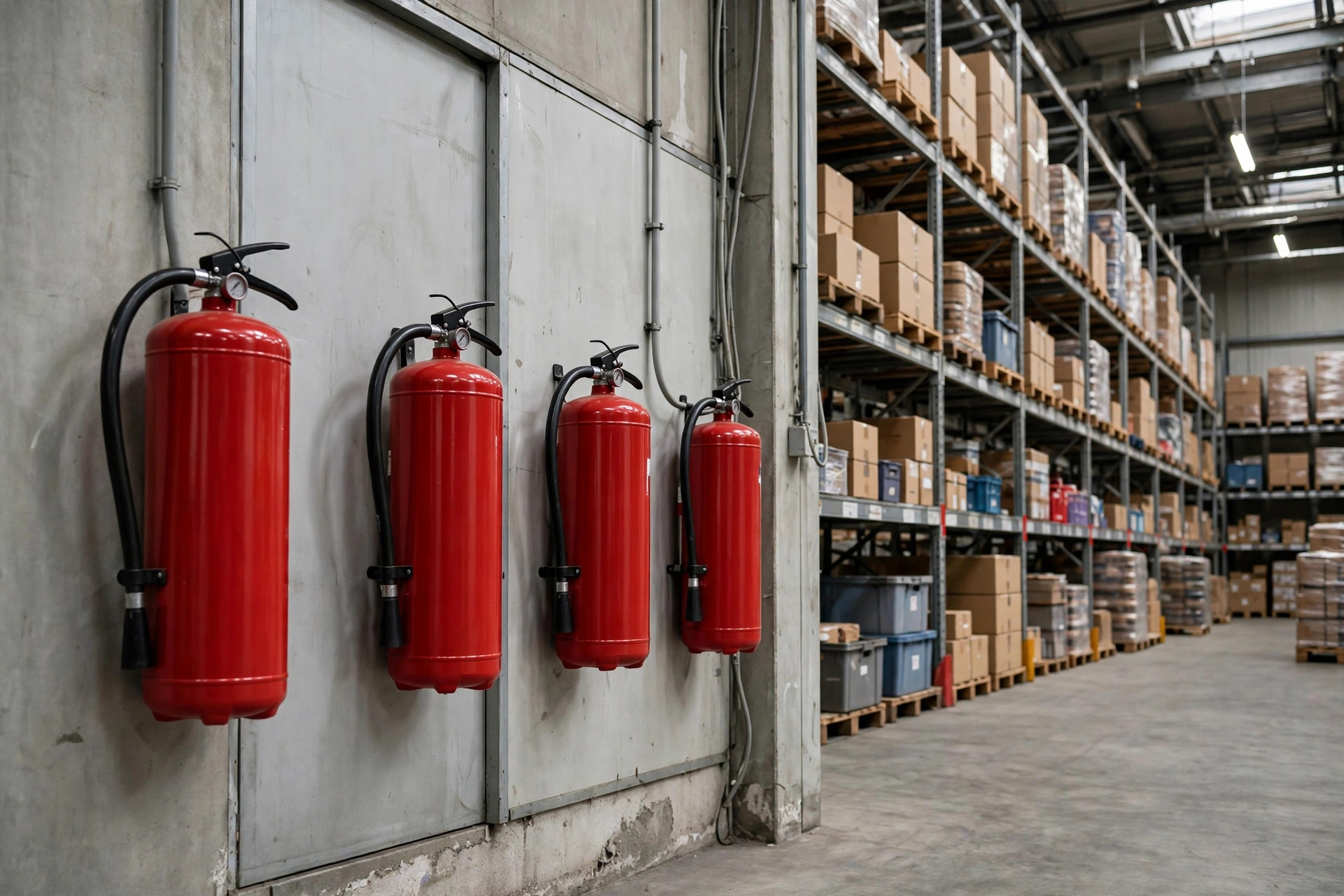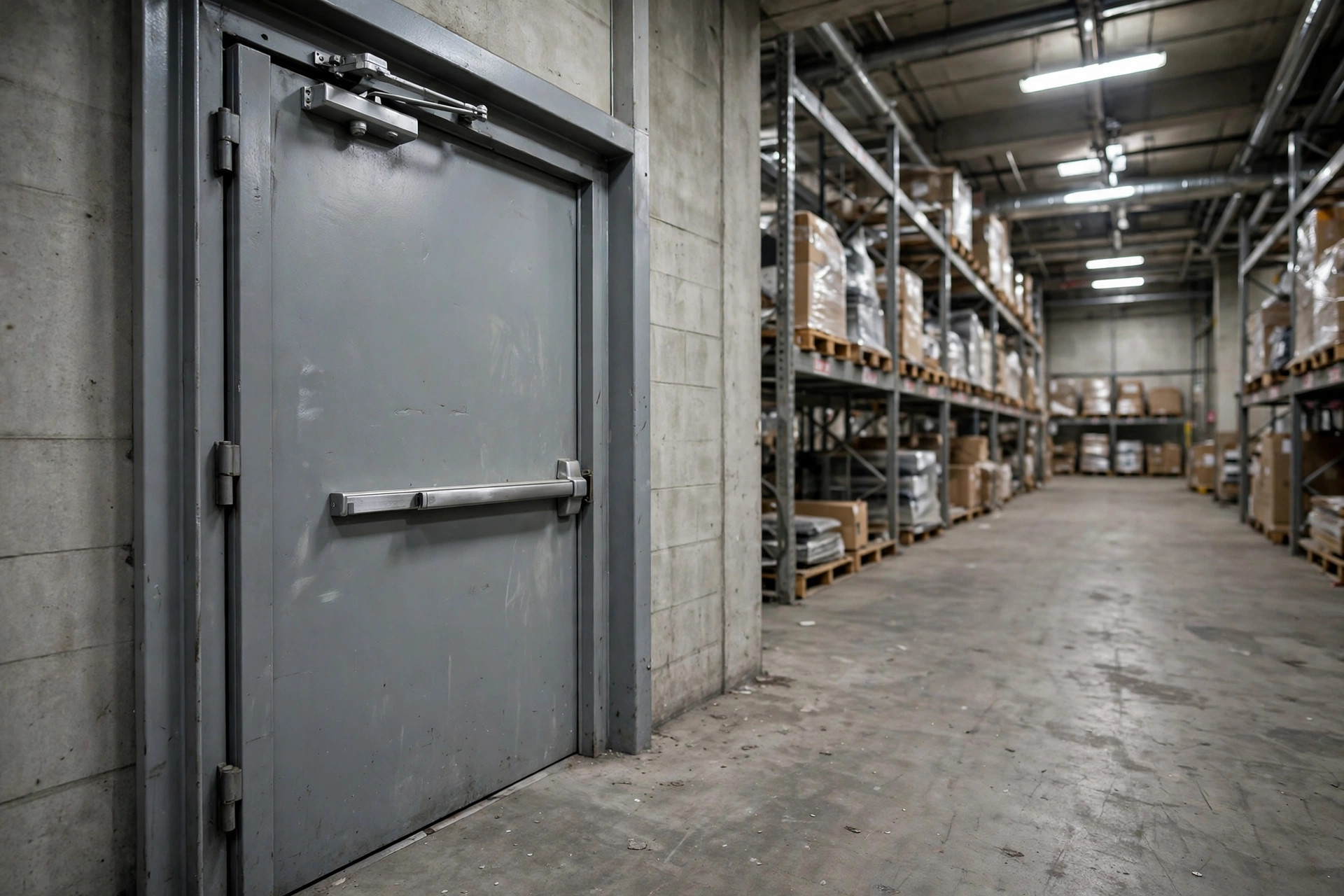
It was 2 a.m. last month at a food warehouse in Fontana. I'd backed into dock 7, got my paperwork stamped, and on my way to the restroom I cut through the corridor between the cooler and the dry goods area — and there it was: a big steel fire door propped wide open with a busted pallet. I looked up at the little metal box on top of the frame. The door closer. Oil streak running down the frame, arm hanging limp. Long dead.
I asked the night supervisor — most folks at the warehouses on my lane know me; after fifteen years out here I could back into these docks blindfolded. "Why's this door open?" He waved it off: "Too heavy. Forklifts go through dozens of times a day. We wedge it for convenience." Let me tell you, I've heard that line at least ten times. And every time, it gives me chills. Because the day that door actually needs to do its job and can't close, the whole building pays for it.
We drivers see more fire doors than office folks ever will. Warehouses out here keep getting bigger, and I roll in and out of a hundred-plus 3PL facilities a year. A fire door has exactly one job: when there's a fire, it closes by itself, trapping fire and smoke on one side, buying people time to get out and firefighters time to work. If it can't close, it's just a heavy steel door. All that thickness means nothing.
Fire doors come in two flavors: self-closing and hold-open
Most warehouse fire doors are one of two types. Self-closing: normally shut. You push through, let go, and the closer up top eases it back — "shhh-click" — latched tight. Simple. No power needed. All mechanical.
Hold-open: normally open, held by an electromagnetic holder on the wall, so forklifts and pallet jacks roll through all day. When the fire alarm trips, the magnet releases, and the door closer pulls the door shut. Fancy, convenient — and fussy. The magnet, the power, the tie-in to the alarm panel: any link in that chain breaks, and the door stays open.
Neither is flat-out better. It depends on where it hangs. High forklift traffic on a main artery? Hold-open saves everyone pushing a heavy door fifty times a day. A partition door or stairwell nobody uses much? Self-closing — simple and dependable. But here's my honest take: small warehouse, tight budget — go self-closing. That electromagnetic rig costs more to install, more to babysit, and you need a specialist to fix it. For a small operation, simple wins.
Is your door closer dead? One glance tells you
August 2023, a 3PL in San Bernardino. Night pickup. I walked through the fire door between their phase two and phase three buildings — propped open with a pallet, again. This time I couldn't help myself and chatted up the shift manager. "Been like that since last year," he said. "Put in a work order, nobody came." I looked up: oil beading under the closer, the arm rusted stiff. That door wasn't closing itself for anyone. On fire day, it might as well not be there.
Then last winter, back at that cold storage in Fontana — the one from the top of this story — their door was the hold-open kind, and the electromagnetic holder had been dead for two weeks. Door just stood open. The safety guy told me the part was on its way. Week three, the fire inspector showed up for the annual — over here, NFPA 80 says fire doors get inspected at least once a year. The inspector went door to door with a checklist, got to that one: magnet dead, door won't self-close. Written up on the spot, fix-it deadline. Those two weeks, the manager was sweating through his shirt, calling the parts supplier every day. And the part cost what? Pocket change next to all that grief. Replace it on day one and none of it happens.
Fifteen years on the road, and I've boiled it down to a three-second check. Walk past a fire door, glance up and down:
One — does it close itself, fully? Push it halfway open and let go. A good door closer brings it back at an even pace and finishes with a click, latched tight. If it slams, or stalls halfway, or closes but leaves a gap — that closer's done.
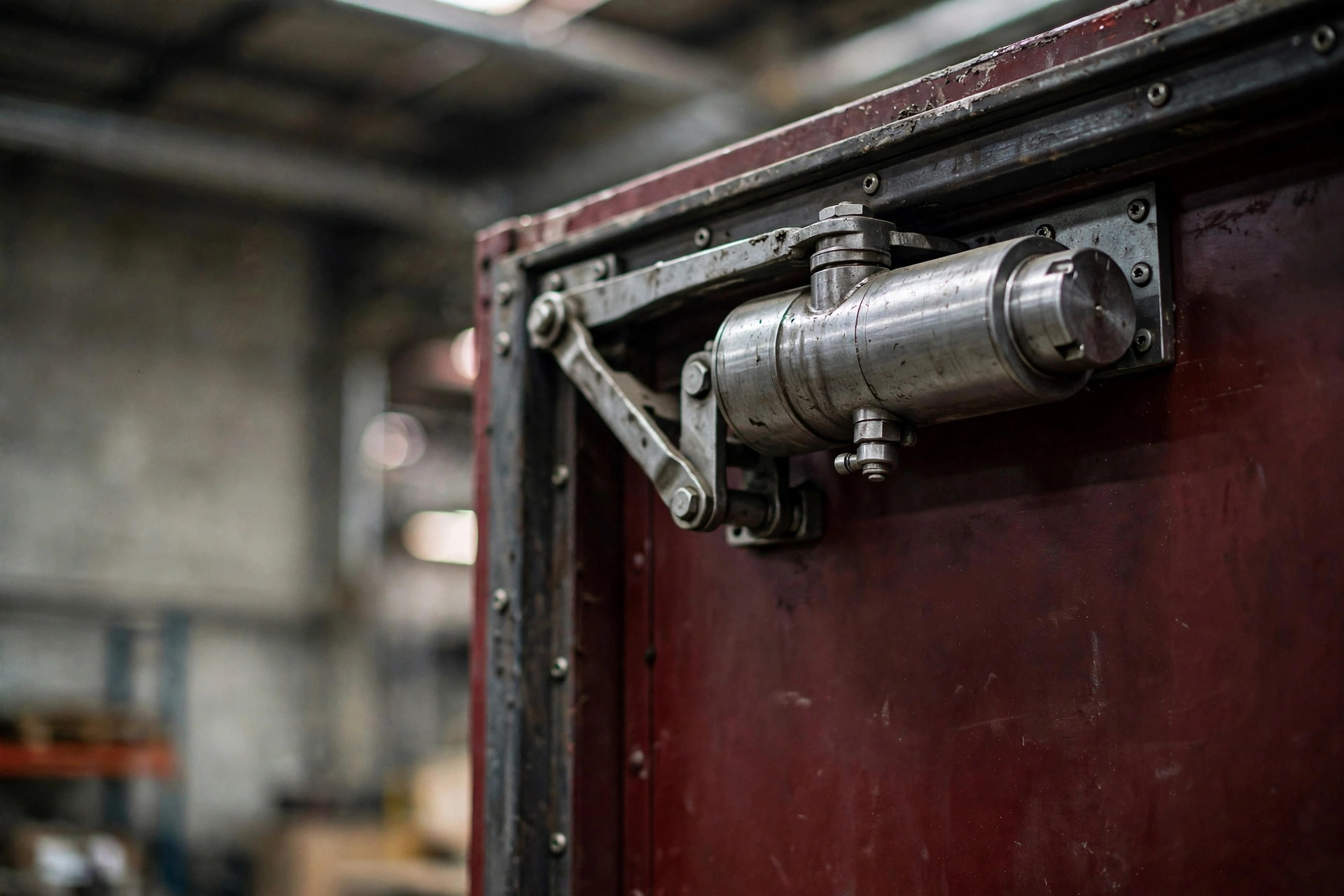
Two — is it leaking? That little metal box on top: oil beads underneath, an oil streak on the frame — the hydraulic fluid's gone, and it's running on borrowed time.
Three — is anything blocking it? Pallets, boxes, a forklift, a floor mat — anything keeping that door from shutting all the way is a hard no. Double doors? Check the closing order too. The leaf with the astragal has to close last, or the seam won't seal and smoke walks right through.
Do the math — it's not even close
Some folks treat a door closer replacement like a real expense, something to put off. Let me run the numbers. A basic commercial door closer: tens of dollars to a bit over a hundred, depending on the brand. A handyman can swap one in an hour or two. That's it. That's the whole bill.
Now the other side of the ledger: the door doesn't close, fire and smoke pour through the gap into the next zone, and now it's not one room burning — it's the building, and everything in it. Insurance finds out the fire protection was out of service? Good luck with that claim. Fail the annual inspection and you're on a fix-it clock at best. And if someone gets trapped behind smoke — who's carrying that? OSHA fines for this kind of thing aren't small either (amounts change year to year — check the current schedule on their site).
So here's my advice, three lines, plain as I can make it:
One — walk your doors once a month. Don't wait for the annual inspection. Twenty minutes, every fire door in the building, run the three-second check, write down what's wrong. Beats everything else.
Two — broken means a work order today, not next month. A part that costs tens of dollars, left broken for two weeks versus two days — that's not the same risk. While the part's in transit, at least have somebody keep an eye on that door. Don't leave it standing open with nobody watching.
Three — never, ever wedge the door. I know the forklifts come through dozens of times a day and pushing that door is a pain. But the minute you wedge it with a pallet, it's dead weight. If the hassle's real, spend the money and convert to hold-open. Buy convenience with dollars, not with safety.
There's an old saying: better safe than sorry. Out on the road, what scares me isn't going slow — it's brakes that don't grab. Same with this fire door: what scares me isn't an old door, it's a door that can't close when it counts. Next time you walk past that steel door in a warehouse, look up at the little box on top. If it's doing its job, you can rest a little easier on your way out.
By Shifu Zhao, Trucking Veteran (15 yrs)