Here's my verdict up front: a warehouse fire hose is decoration 99% of the time and a matter of life and death 1% of the time. What decides which one it is? The maintenance you do — or don't do — the rest of the year.
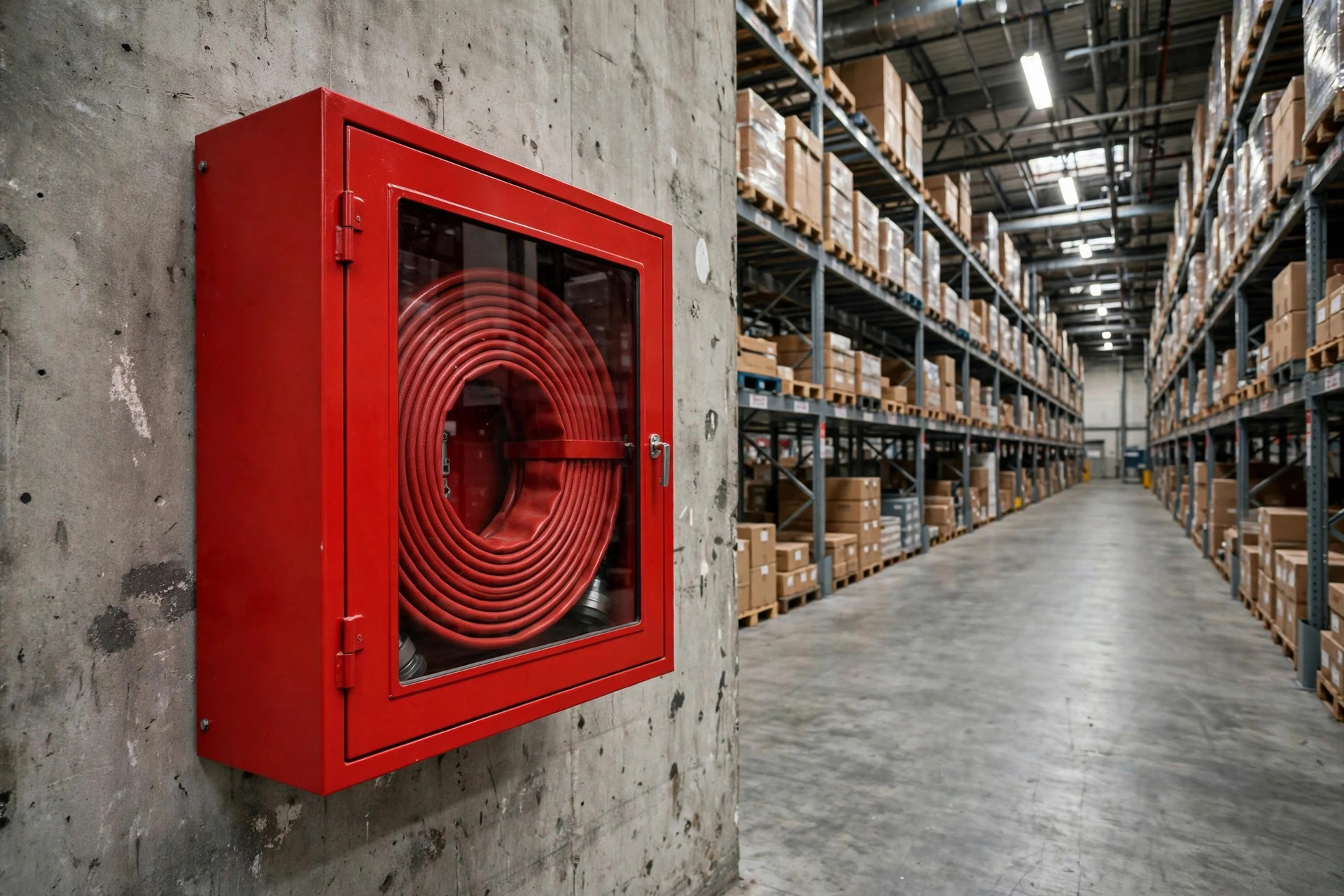
Bluntly put, the fire hose is the humblest link in a warehouse fire system. Sprinklers have pressure gauges watched daily. Alarm panels run self-tests. Extinguishers carry inspection tags. The hose? Coiled in a cabinet, untouched for a year. Then a fire breaks out, someone yanks it out, gives it a shake — cracked, leaking, couplings rusted solid. I've seen this movie too many times.
A hole I watched someone fall into
Winter 2019, a 50,000-square-foot distribution warehouse in Ohio. Packing area caught fire at 3 a.m. Small fire at first — just a stack of cartons. The guy on shift pulled the hose, coupled it, opened the valve — and water sprayed out of three splits in the middle of the hose, reaching maybe six feet. In the 20 minutes before the fire department arrived, half the packing area burned. Direct loss: over $400,000.
The investigation found the hose had been installed with the cabinet six years earlier and pressure-tested exactly zero times since. Rubber aged, plus ice had formed inside the cabinet one winter — the inner lining was already split. At claim time, the insurer cited "fire equipment not maintained per NFPA 1962" and docked 15% of the payout. Fifteen percent of $400k is $60,000. All for skipped pressure tests.
Two sides to this. On one side, hose is cheap — a 100-foot length runs $200–400. On the other, it's your closest line of defense. Sprinklers are automatic; hose is manual. And manual equipment you never drill with will fail you when it counts.
Warehouse fire hose testing maintenance: three jobs, none optional
One: pressure testing. Per NFPA 1962, fire hose gets a hydrostatic test at least annually, at 1.5 times working pressure. The procedure is simple: lay the hose out, hook up a test pump, pressurize, hold three minutes, watch for weeping, bulges, coupling slippage. Two people, half an hour per length. Hire it out at $50–80 a length. A 100,000-square-foot building has maybe 20–30 lengths — $2,000 a year tops. Stack that against a $60,000 claim deduction and do your own math on whether the money is wasted.
Two: how it's coiled. Hose can't sit folded the same way for years. Fixed folds fatigue the rubber fastest at the crease. The right practice: reverse the coil direction every six months, or switch to reel storage. Reels deploy faster with no re-laying, but cost $1,000-plus more per cabinet than a standard box. My recommendation: reels on main aisles and near high fire-risk areas (packing, charging); standard boxes with semi-annual re-coiling everywhere else. Spend where it matters.
Three: freeze protection. The old northern-warehouse problem. If the cabinet sits outdoors or semi-exposed, residual water inside the hose freezes and splits the lining. Three fixes: insulate the cabinet, drain and dry hoses before winter, or switch to freeze-resistant hose (special lining, ~30% premium) if you must. The Ohio warehouse ate exactly this loss — residual water, freeze-split lining, and nobody knew.
One trade-off worth naming: how often to replace hose outright? NFPA 1962 suggests a 10-year retirement. I'm more aggressive — outdoor-cabinet hose gets replaced at 5 years; indoor climate-controlled can go 8. A $300 length times 30 lengths is $9,000. Over five years that's $1,800 a year. Don't gamble $1,800 against a $400,000 fire.
The trap is set at purchase: hose selection
Bluntly put, a lot of hose problems are decided at purchase. Two selection points where price wars do the most damage.
One: lining material. Rubber lining vs. TPU (polyurethane) lining. Rubber resists aging but it's heavy — a 100-foot length runs nearly 90 pounds, a two-person lift. TPU is 30% lighter (one person can deploy it) and more abrasion-resistant, at about 40% premium. For warehouse use I take TPU every time: when there's an actual fire, a hose one person can lay out fast is worth more than the hundred bucks you saved.
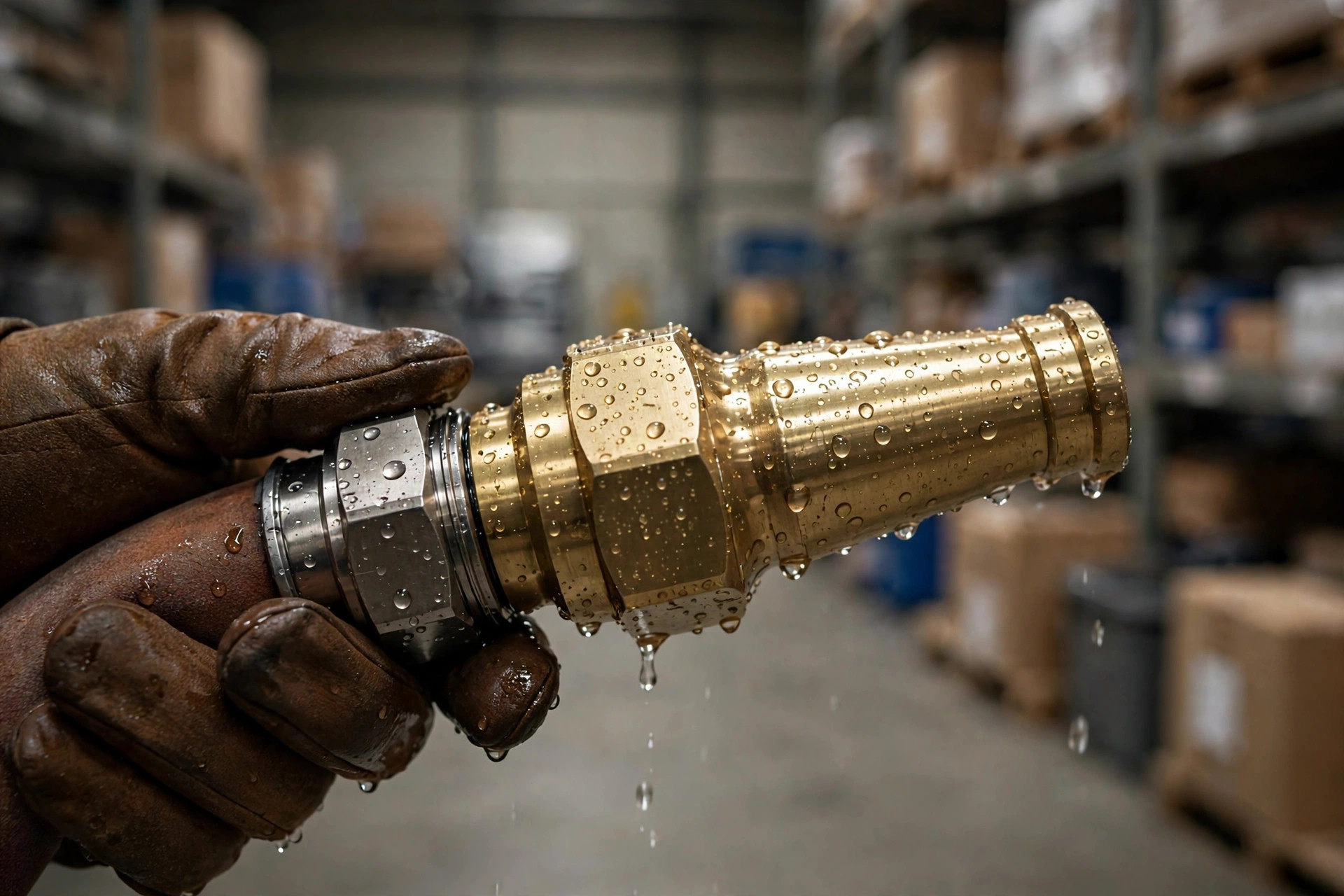
Two: coupling material. Brass vs. aluminum. Aluminum costs half, but threaded onto a steel hydrant outlet it galvanically corrodes — seized solid in three years. The Ohio warehouse had aluminum couplings, which was part of why nothing would unscrew that night. Brass costs more and stays workable for a decade. Don't economize here.
A California 3PL bought hose on price in 2022 — aluminum couplings, rubber lining — saving $4,000. At the 2024 fire drill, three couplings wouldn't budge, the drill was marked unsatisfactory, and they ended up replacing 12 lengths for $6,000 afterward. Save four grand, spend six, plus a failed drill on the record. Classic "save pennies buying, spend dollars using."
One piece of advice
Plenty of warehouse managers treat fire protection as "the fire company's problem" or "the landlord's problem." Wrong. Whether it's NFPA standards or an OSHA inspection, accountability lands on the warehouse operator — not the fire contractor. Your $2,000 a year in testing buys two things: water actually coming out of the hose when there's a fire, and nothing for the insurer to say at claim time.
One more thing: keep the test records. Date, test pressure, pass or fail, photos — filed electronically. At claim time, that file is what the adjuster asks for. That's the unglamorous core of warehouse fire hose testing maintenance: the paperwork matters as much as the wrench work. Don't do the job and leave no trace.
One question to leave you with: when was the last pressure test on your warehouse's fire hose? If you have to think hard about it, the answer is: never. Schedule it tomorrow.
By Lao Mi, Supply Chain Veteran (20 yrs)